Pope Leo Visits Lebanon, Prays for Peaceful Coexistence/ Newslooks/ WASHINGTON/ J. Mansour/ Morning Edition/ Pope Leo XIV visited Lebanon and prayed at the tomb of St. Charbel, a Maronite saint respected by Christians and Muslims. His trip carried a strong message of peace and interfaith unity amid Lebanon’s deep political and economic crises. The historic visit included calls for Christians to remain and rebuild.
Pope’s Peace Mission in Lebanon Quick Looks
- Pope Leo XIV made a historic visit to Lebanon, his first as pope.
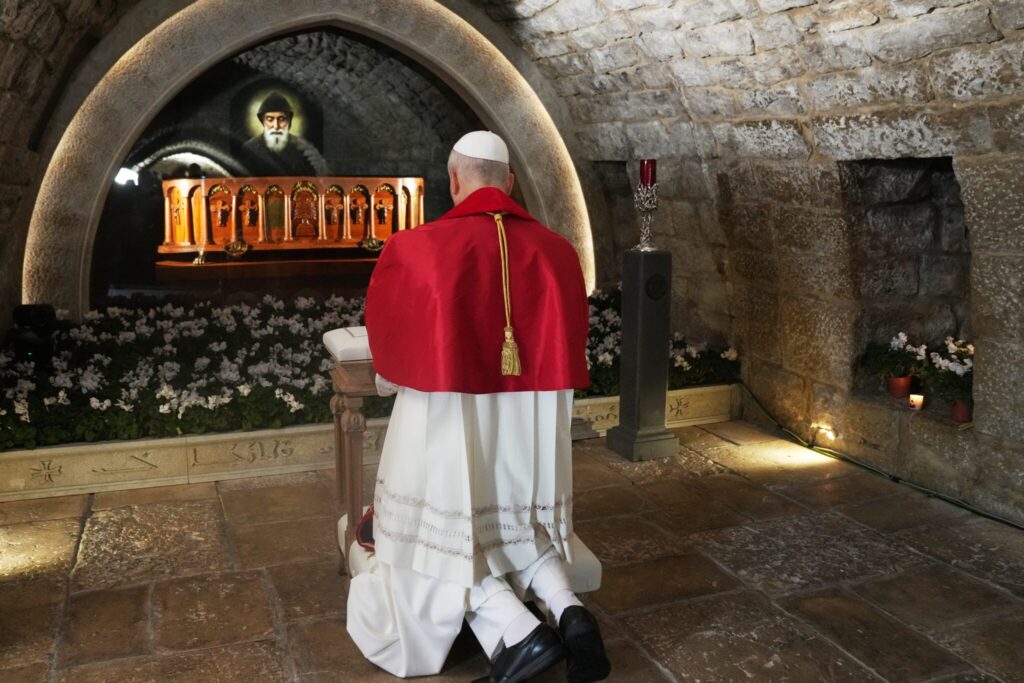
- He prayed at the tomb of St. Charbel, a saint honored by both Muslims and Christians.
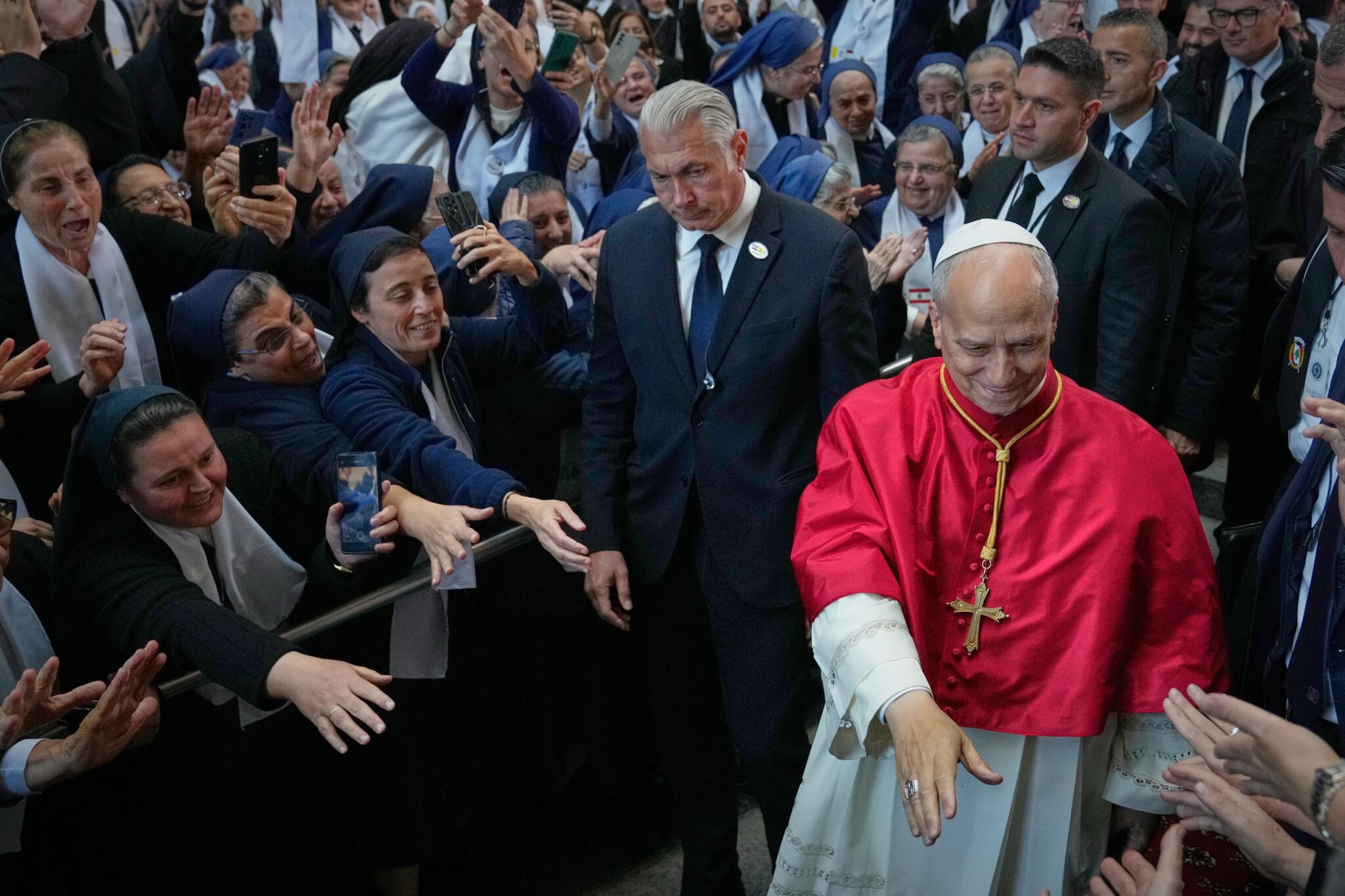
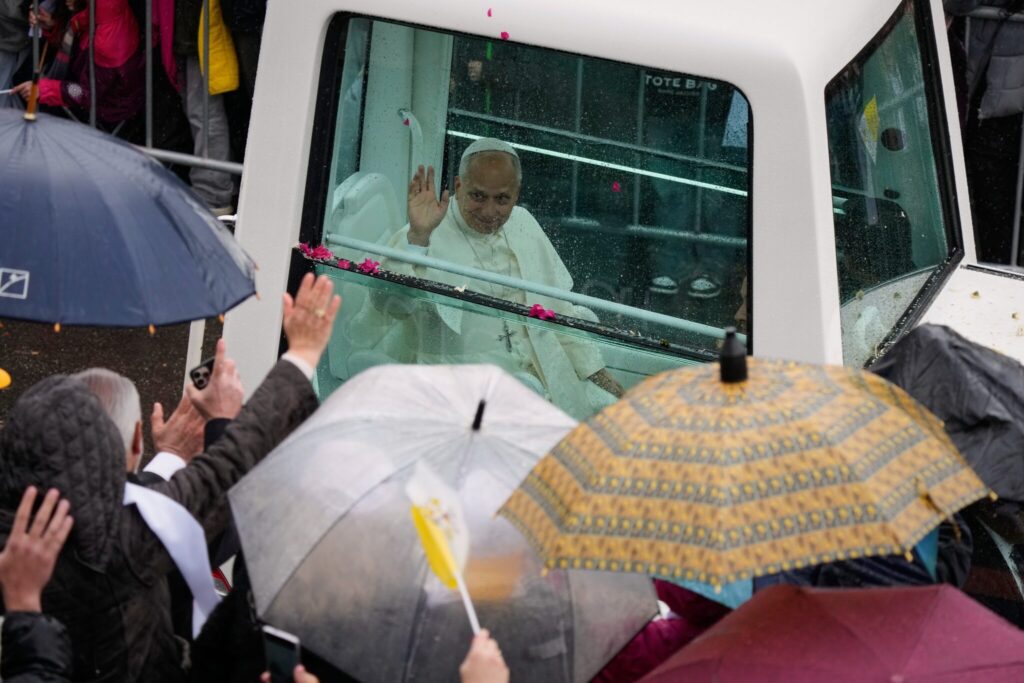
- Thousands welcomed the pope through rain-soaked streets lined with Lebanese and Vatican flags.
- Pope Leo called for peace in Lebanon, Gaza, and the broader Middle East.
- His visit comes amid worsening political tension and economic collapse in Lebanon.
- He addressed clergy and young people, urging hope and perseverance.
- The pope also led an interfaith gathering with Christian and Muslim leaders in Beirut.
- Security was heightened as Lebanese troops lined the pope’s route.
- Leo urged Christians to remain in Lebanon and help rebuild the nation.
- Lebanese Christians represent about one-third of the country’s population.
Deep Look
Pope Leo XIV Prays for Peace at St. Charbel’s Tomb During Historic Lebanon Visit
ANNAYA, LEBANON — On a rain-filled Monday in the Lebanese mountains, Pope Leo XIV made history by becoming the first pontiff to visit the tomb of St. Charbel Makhlouf, a revered Maronite saint whose legacy is cherished by both Christians and Muslims across the Middle East. His message to the crowd was clear: hope, unity, and peace are possible, even in a region long fractured by war and despair.
As the pope’s popemobile slowly made its way through the winding hills of Annaya—roughly 25 miles northeast of Beirut—thousands of Lebanese citizens, despite the weather, lined the streets waving national and Vatican flags. They showered his vehicle with flower petals and rice, a traditional sign of blessing and welcome.
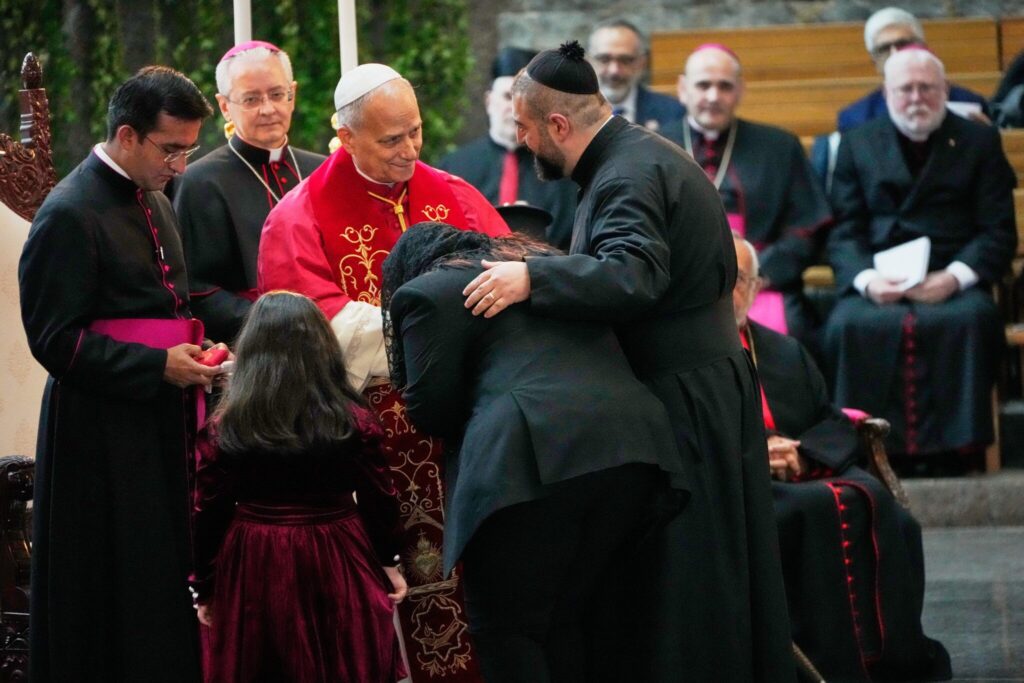
Pope Leo offered a quiet prayer at St. Charbel’s tomb and presented a symbolic lamp to the monastery, calling it a “light for Lebanon.” He then addressed the world in French:
“We entrust to St. Charbel’s intercession the needs of the church, Lebanon, and the world. We especially implore peace—for Lebanon and for the entire Levant.”
The pope’s call for peace is especially poignant given Lebanon’s turbulent backdrop: economic freefall, political paralysis, and ongoing religious tensions. The timing of Leo’s visit—his first international trip since becoming pope—underscores the Vatican’s focus on maintaining Christian presence in the region while encouraging interfaith solidarity.
A Spiritual and Political Symbol
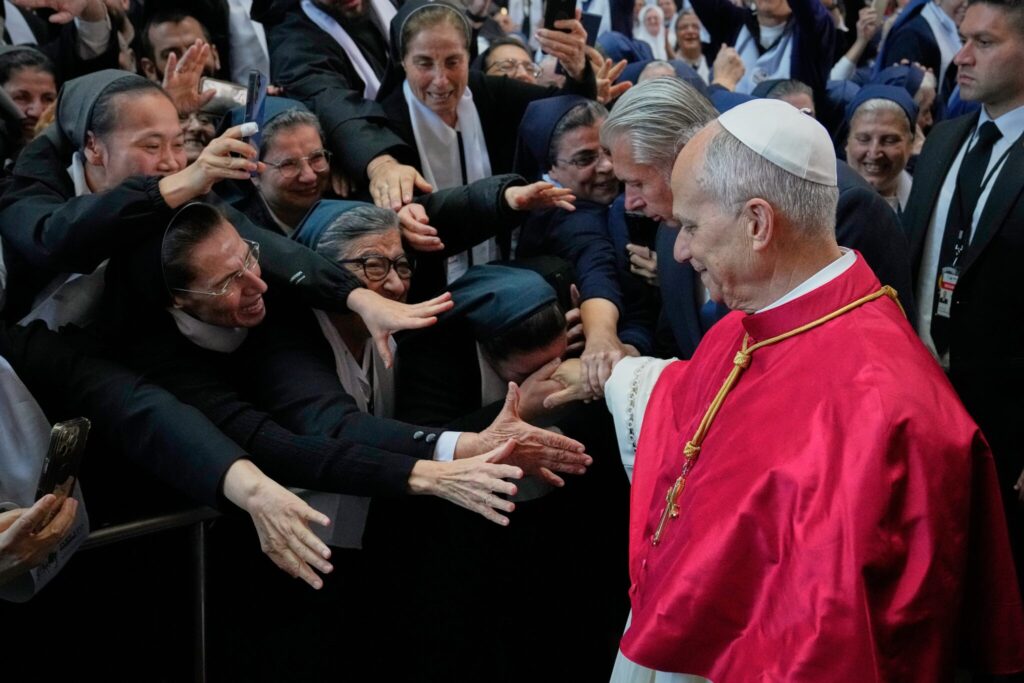
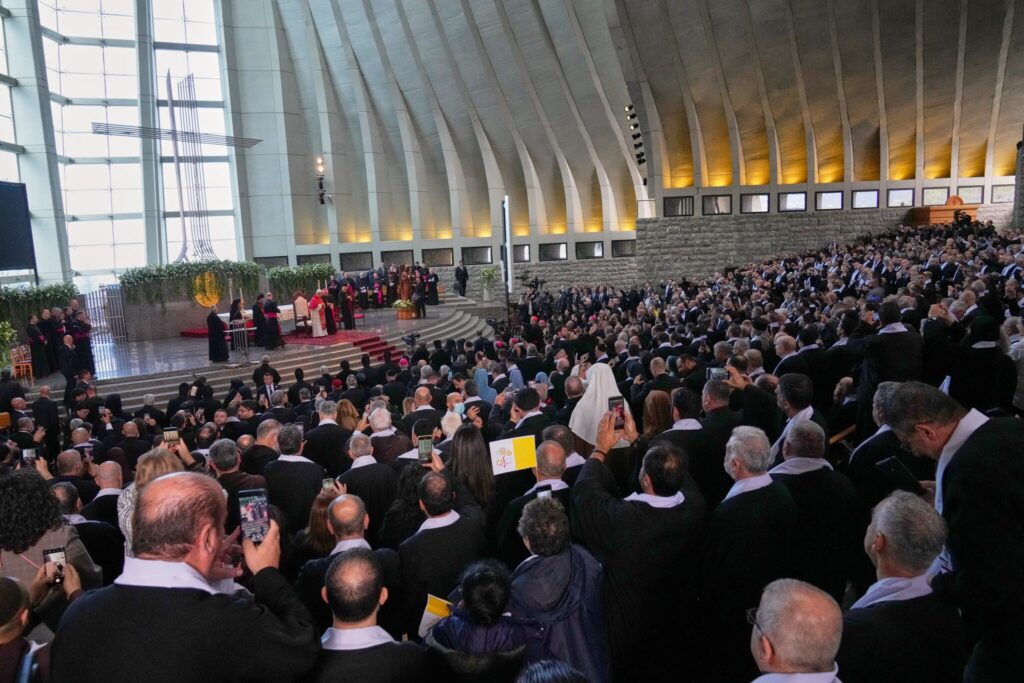
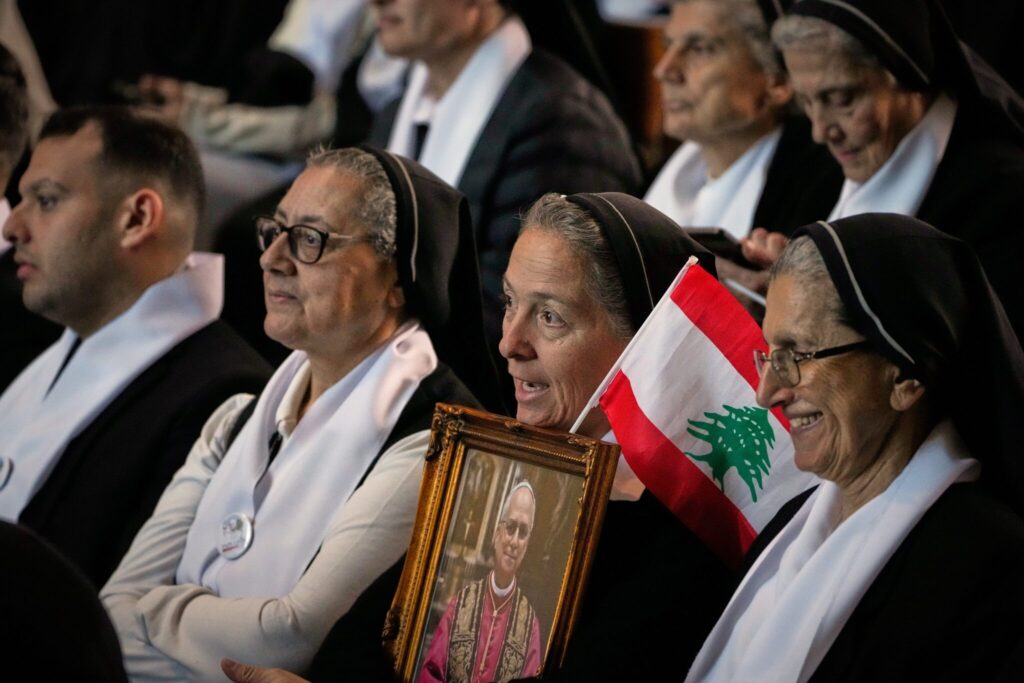
Leo’s pilgrimage to St. Charbel’s tomb wasn’t merely a religious gesture. The pope’s journey through Lebanon was designed to uplift a nation in crisis. He received a joyous welcome at the Our Lady of Lebanon sanctuary in Harissa, where nuns and priests greeted him with chants of “Viva il Papa.”
There, he encouraged clergy and educators to continue offering guidance to the youth, despite what he called “a world that has its own painful failures.” He emphasized the need to provide “concrete and viable prospects for rebirth and future growth.”
In the capital, Beirut, Pope Leo presided over an interfaith gathering that brought together Christian and Muslim leaders—a bold reminder of Lebanon’s historic, albeit strained, religious coexistence.
A Country in Need of Hope
Lebanon, still reeling from the 2020 Beirut port explosion and decades of sectarian strife, remains without a functioning government. Inflation has spiraled, and infrastructure is crumbling. Against this backdrop, many Lebanese have lost hope—especially among the younger generation.
“The pope’s visit gives a new push to the Lebanese to rise and cling to their country,” said Rev. Youssef Nasr, secretary-general of Catholic Schools in Lebanon, who was present in Harissa.
Pope Leo’s itinerary also included a rally with Lebanese youth in Bkerki, the headquarters of the Maronite church. There, he was expected to urge them not to abandon Lebanon, despite rising emigration and despair.
The Vatican’s Concern for Christian Exodus
Since his arrival from Turkey on Sunday, Pope Leo has repeatedly stressed the importance of preserving Lebanon’s Christian community—one of the largest in the Middle East. Christians make up roughly a third of Lebanon’s population, and the country is unique in the Arab world for having a Christian president, a condition set forth in its constitution since independence from France.
Still, the threat of Christian emigration looms large. While Lebanon avoided the mass exodus of Christians seen in Iraq and Syria during the rise of the Islamic State, economic collapse and political instability continue to drive many to leave.
“We will stay here,” said May Noon, a pilgrim at St. Charbel’s monastery. “No one can uproot us. We must live in this country as brothers. The church has no enemy.”
Bishop Antoine-Charbel Tarabay, who accompanied a delegation of Lebanese expatriates from Australia, said the goal of their journey was to “reinforce the Christian presence in Lebanon.” He praised Pope Leo’s decision to visit, especially at a time when many feel forgotten. “He came to say, ‘You’re not forgotten.’”
Interfaith Message Amid Regional Unrest
Pope Leo’s peace message extended beyond Lebanon. With the Israel-Gaza conflict still ongoing and tensions rising across the region, his presence served as a diplomatic call for restraint, dialogue, and compassion.
Throughout his visit, security was tight. Lebanese troops lined his route, and the popemobile remained enclosed—unlike Pope Francis’ preference for open, bulletproof-free vehicles.
The papal visit to Lebanon, though short, was rich with symbolism. It offered a moment of spiritual reflection, political importance, and, most crucially, hope—something Lebanon sorely needs.