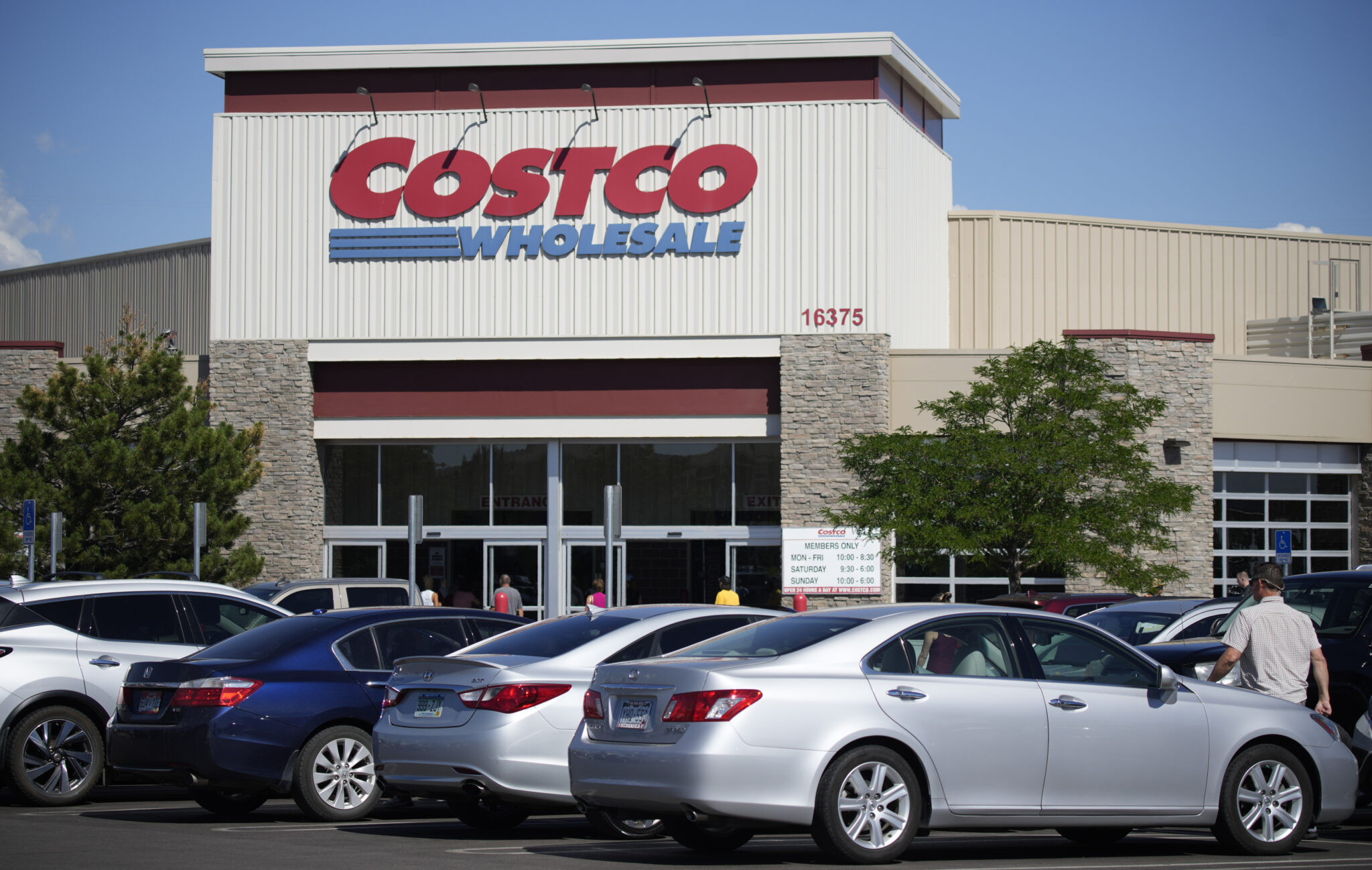
Costco Sues US Government over Tariff Refunds Ahead of Supreme Court Ruling/ Newslooks/ WASHINGTON/ J. Mansour/ Morning Edition/ Costco has filed a lawsuit against the U.S. government to protect its right to tariff refunds if the Supreme Court rules against former President Trump’s broad use of emergency powers. The company argues that denied extensions from U.S. Customs threaten its potential refund claims. The case could impact many large companies facing similar challenges.

Costco Tariff Lawsuit: Quick Looks
- Costco sues U.S. government to secure potential tariff refunds.
- Lawsuit follows Supreme Court review of Trump’s emergency tariff powers.
- Filed in the U.S. Court of International Trade in Manhattan.
- Costco claims Customs denied it time to finalize tariff calculations.
- The outcome may affect dozens of major companies with pending refunds.
- Businesses question legality of tariffs under 1977 emergency powers law.
- Other companies involved include Revlon, Ray-Ban, Kawasaki, and Yokohama.
- Supreme Court held hearings on November 5; ruling date unknown.
- Costco took steps to mitigate tariffs, including supplier reductions.
- The retailer relies more on local sourcing and Kirkland products.
Costco Sues US Government over Tariff Refunds Ahead of Supreme Court Ruling
Deep Look
Costco Wholesale Corporation has launched legal action against the U.S. government to protect its ability to receive refunds on tariffs that may be deemed unlawful by the Supreme Court. The case centers on whether President Donald Trump exceeded his authority by invoking the International Emergency Economic Powers Act (IEEPA) to impose tariffs, a move that now faces judicial scrutiny.
Filed last Friday in the U.S. Court of International Trade in Manhattan, Costco’s complaint highlights the uncertainty facing companies that paid tariffs under Trump-era trade policy. The company contends that U.S. Customs and Border Protection (CBP) has denied its request for more time to calculate the final tariffs owed, a decision that jeopardizes Costco’s right to reclaim potentially refundable duties.
Costco, based in Issaquah, Washington, is one of the largest companies to challenge the U.S. government over tariff-related refund rights. With reported revenues of $275.2 billion in its fiscal year ending August 31, the retail giant joins dozens of other companies that are also seeking to preserve refund eligibility while the Supreme Court deliberates on the legality of Trump’s actions under the 1977 emergency powers law.
The lawsuit comes amid heightened attention on the Supreme Court case, which could set a significant precedent for executive authority in trade matters. During oral arguments on November 5, justices from both liberal and conservative leanings questioned the scope of Trump’s authority under the IEEPA. While the court has not indicated when it will issue a ruling, the implications are expected to be far-reaching.
According to court documents, several major corporations have taken similar legal steps, including Bumble Bee Foods, Kawasaki Motors, EssilorLuxottica (maker of Ray-Ban eyeglasses), Revlon, and Yokohama Tire. All are seeking to protect their potential claims to tariff refunds in case the court rules against the former president’s interpretation of his trade powers.
For Costco, the issue isn’t simply theoretical. The company asserts that by refusing to grant more time to finalize its tariff calculations, U.S. Customs is effectively blocking the pathway to securing refunds — even if those tariffs are ultimately invalidated by the court.
While both U.S. Customs and Costco declined to comment publicly on the lawsuit, the case highlights the ongoing economic and legal ripple effects of the trade policies initiated during Trump’s presidency. Businesses are still navigating the financial consequences of emergency tariffs imposed on goods from countries such as China.
In response to the tariffs, Costco has made several strategic adjustments to minimize their impact. These include reducing the number of suppliers in its global supply chain, increasing reliance on domestic sourcing, and expanding use of its in-house Kirkland Signature brand, which provides the company with more pricing control and production flexibility.
Though the lawsuit focuses specifically on procedural issues — namely, the right to recalculate tariffs in a timely manner — the broader context underscores the business community’s anxiety over unresolved trade rules. Many companies are now stuck in limbo, unsure whether their paid tariffs will be recoverable depending on the Supreme Court’s final decision.
The stakes are high. If the court finds that Trump unlawfully used the IEEPA to impose tariffs, affected companies could be entitled to billions in refunds. But if the ruling favors the former president’s interpretation, those payments may be considered final.
The Supreme Court took the case on an expedited schedule, reflecting its national importance. Still, the justices have not set a specific date for issuing a verdict.
For now, Costco and other corporations are positioning themselves legally to ensure they can claim refunds should the court side against Trump’s broad use of emergency authority. The outcome will not only affect Costco’s bottom line but may reshape how future administrations approach emergency economic powers and international trade.