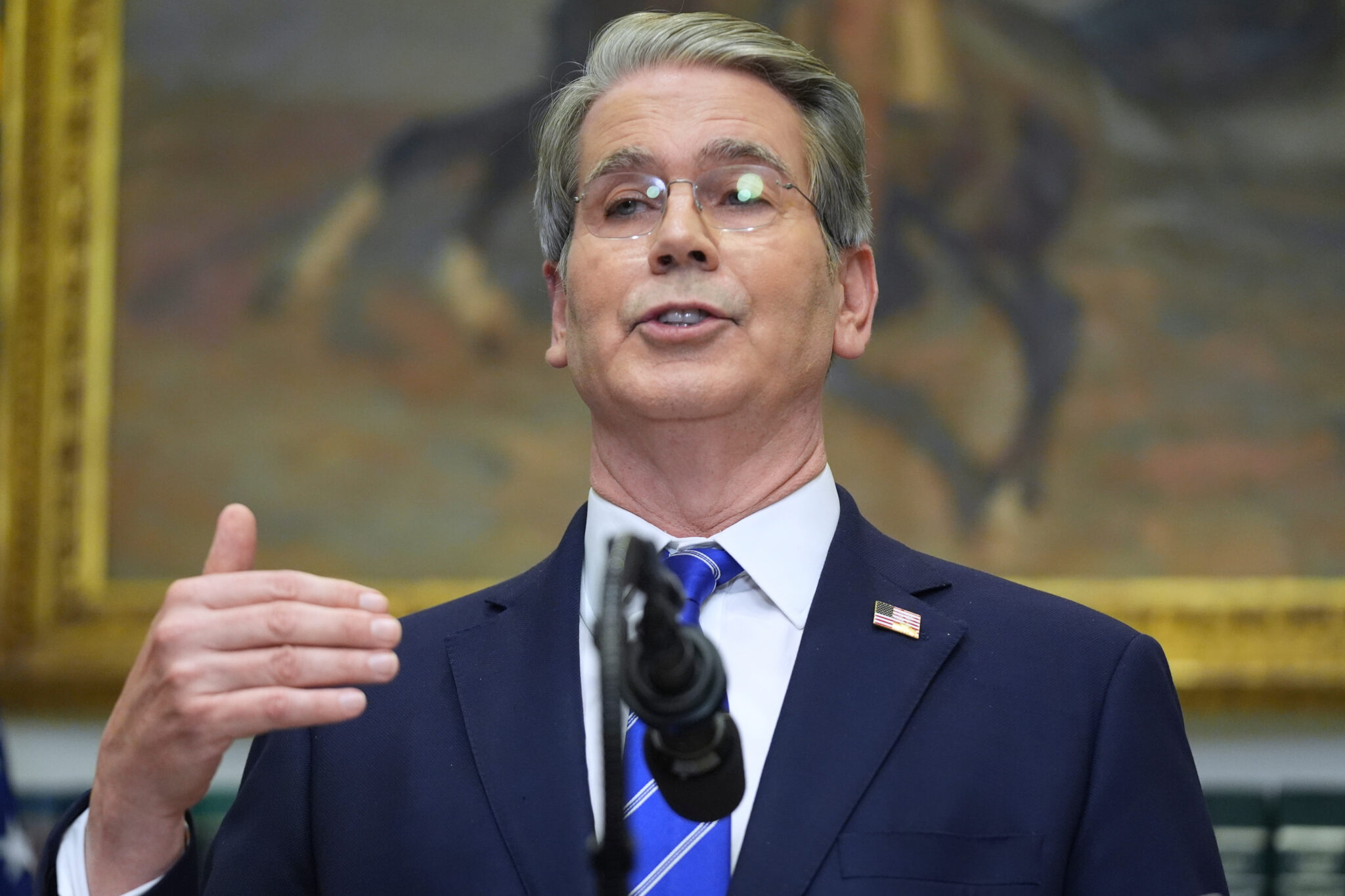
Bessent: White House May Veto Future Federal Reserve Presidents/ Newslooks/ WASHINGTON/ J. Mansour/ Morning Edition/ Treasury Secretary Scott Bessent proposed a new rule requiring Federal Reserve regional bank presidents to live in their district for three years before appointment. He suggested the White House may “veto” those who don’t meet this criterion. Critics say this could challenge the Fed’s independence.
Federal Reserve Appointment Control + Quick Looks
- Treasury Secretary Bessent proposes a 3-year residency requirement for regional Fed bank presidents.
- White House may “veto” nominees not meeting the residency standard.
- The move would increase executive influence over the independent central bank.
- Bessent criticizes current Fed leaders for being disconnected from regional economies.
- The proposal targets what Bessent calls a “New York hold” on monetary policy.
- Fed’s 12 regional banks are meant to reflect local economic interests.
- Economists and critics warn of increased politicization of the Fed.
- Bessent’s push follows Fed resistance to rate cuts favored by Trump.
- No official legislative action has been taken yet.
- The next Fed interest rate decision is due in mid-December.
Deep Look:
White House Eyes Veto Power Over Regional Fed Presidents Amid Bessent Proposal
WASHINGTON, D.C. — Treasury Secretary Scott Bessent on Wednesday proposed a controversial new rule that could give the White House de facto veto power over appointments to the Federal Reserve’s 12 regional banks. Speaking at the New York Times’ DealBook Summit, Bessent said he would push to require that any nominee for a regional Federal Reserve presidency must have lived in the district for at least three years prior to their selection.
“Unless someone has lived in their district for three years, we’re going to veto them,” Bessent stated, signaling a sharp departure from the Federal Reserve’s longstanding tradition of independence from political influence.
The statement comes during rising friction between the Trump administration and Federal Reserve leaders, particularly over interest rate policy. Several Fed regional presidents have opposed further rate cuts, despite President Donald Trump’s calls to lower borrowing costs to stimulate the economy heading into the 2026 election cycle.
Bessent’s Plan: Reshaping the Federal Reserve’s Structure
Currently, the Federal Reserve System is composed of a seven-member Board of Governors based in Washington and 12 regional banks, each led by a president responsible for representing their district’s economic perspective. Only a few of these presidents vote on interest rate decisions at a given time, but all participate in monetary policy discussions.
Bessent argues that this structure has been dominated by appointees from financial hubs like New York, undermining the purpose of regional banks: to reflect the needs of diverse communities across the U.S.
He pointed out in an earlier interview that three to four of the current Fed regional presidents did not reside in their districts before being appointed — some coming directly from New York. “That’s not what the Federal Reserve was designed to be,” he said.
The proposed residency requirement, though not yet formalized in legislation, would amount to a significant power grab by the executive branch. Historically, regional Fed presidents are chosen by their respective bank’s board of directors, then approved by the Board of Governors — with no involvement from the White House.
Independence at Risk?
If the administration moves forward with implementing a veto mechanism, it would mark an unprecedented intrusion into the Federal Reserve’s independent governance, raising concerns among economists and lawmakers alike.
Critics warn that such changes could politicize monetary policy, weakening the central bank’s ability to make impartial decisions based on economic data rather than political pressure.
The Federal Reserve’s primary function is to stabilize inflation and support full employment by adjusting its benchmark interest rate. These rate decisions affect virtually every corner of the U.S. economy — from mortgage rates and business loans to consumer credit and savings.
Bessent’s remarks suggest the administration is unhappy with what it sees as Fed inaction, especially as Trump allies push for aggressive rate cuts amid slowing job growth.
Reaction and Implications
The financial world is watching closely, especially with the next Fed policy meeting approaching in mid-December. Any move to centralize control over Fed leadership could rattle markets and stoke fears about long-term economic stability.
While Bessent hasn’t outlined a clear legislative path, insiders say the administration may seek to influence upcoming Fed vacancies by insisting nominees meet the new residency requirement.
In his DealBook Summit appearance, Bessent emphasized that the goal was to “break the New York hold” on interest rate policy, suggesting that regional perspectives are being drowned out by coastal elites.
The proposal appears to be part of a broader strategy by the Trump administration to reshape America’s economic institutions and realign power structures in favor of populist, regionally-grounded leadership — especially ahead of what is expected to be a contentious 2026 election.
As it stands, no official policy change has been enacted, and the Federal Reserve continues to operate independently. However, Bessent’s comments have ignited a fierce debate on the boundaries of presidential influence over one of the most powerful economic tools in government.
What’s Next?
Congressional leaders on both sides of the aisle have yet to formally respond to the proposal, but analysts say it could trigger a wider legislative and constitutional battle over Fed governance and executive power.
In the meantime, all eyes are on the Fed’s upcoming meeting — where any movement on interest rates will be seen through the lens of increasing political pressure from the White House.