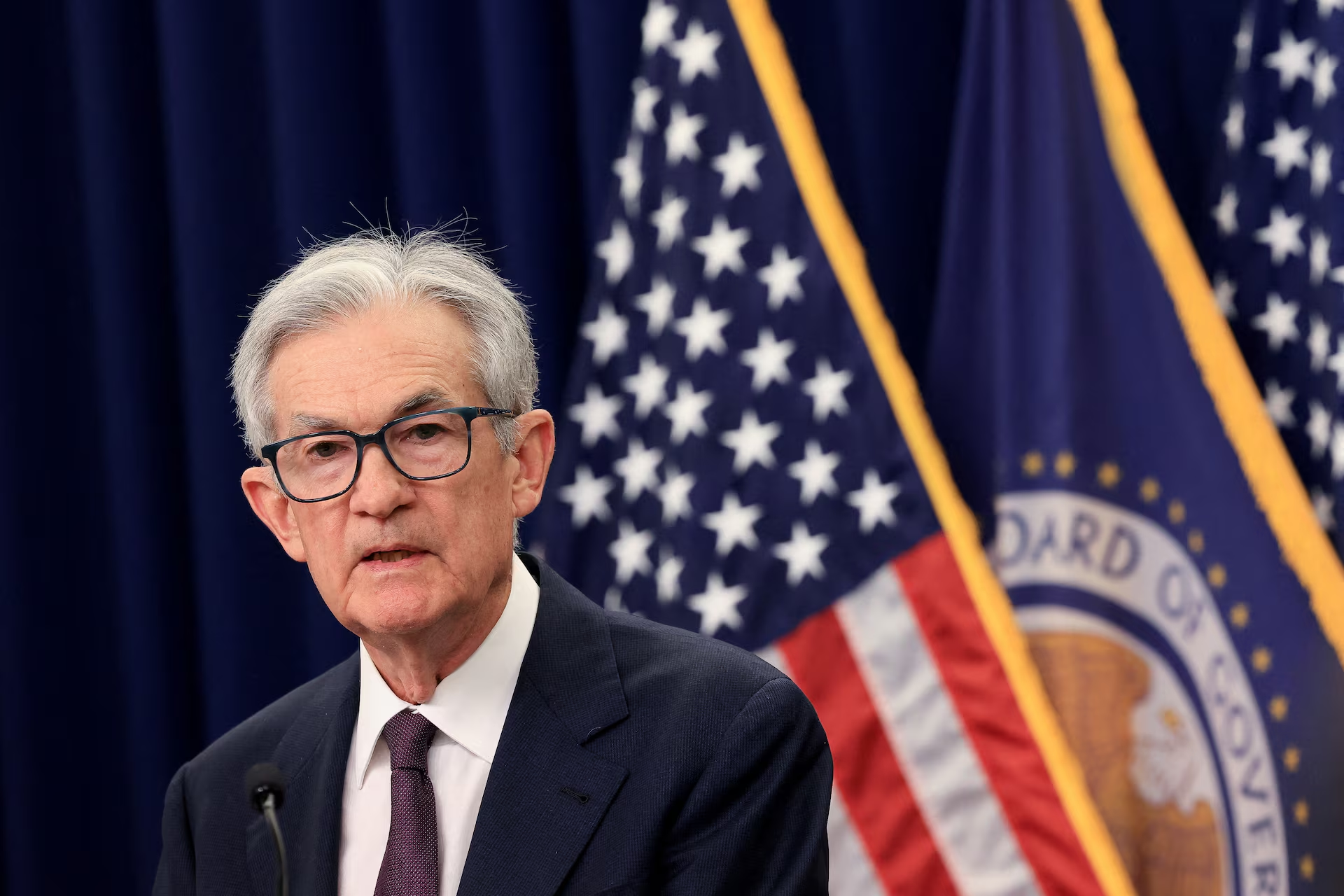
Fed’s Inflation Gauge Holds Steady as Spending Slows/ Newslooks/ WASHINGTON/ J. Mansour/ Morning Edition/ The Federal Reserve’s preferred inflation measure remained steady in September, reinforcing expectations of an interest rate cut next week. While inflation stayed above the 2% target, consumer spending growth slowed, signaling potential economic cooling. Some Fed officials remain cautious due to stubborn service-sector inflation.
Fed’s Inflation Gauge Flat in September: Quick Looks
- Fed’s core inflation metric rose just 0.2% in September
- Overall annual inflation increased slightly to 2.8% from 2.7%
- Consumer spending rose 0.3%, down from 0.5% in August
- Data delayed five weeks due to government shutdown
- Core inflation pace aligns with Fed’s 2% annual target
- Weak hiring and slowing wages pressure Fed toward rate cuts
- Service-sector inflation remains sticky and could concern policymakers
- Tariffs under Trump administration contributing to elevated prices
- Incomes rose 0.4% for the second straight month
- ADP reported 32,000 private job losses in November
Fed’s Preferred Inflation Measure Steady in September as Consumer Spending Slows
Deep Look
WASHINGTON — The Federal Reserve’s closely watched inflation gauge remained mostly unchanged in September, keeping inflation above the central bank’s 2% target but suggesting a softening trend that could support an interest rate cut next week.
According to the Commerce Department’s report — delayed due to the recent government shutdown — prices rose 0.3% from August to September, matching the previous month’s increase. Core inflation, which strips out food and energy costs, rose 0.2% month over month, also unchanged from August. If sustained annually, that pace would bring inflation closer to the Fed’s ideal range.
Compared to a year earlier, overall inflation increased to 2.8%, slightly up from 2.7% in August. Core inflation came in at 2.8% year-over-year, a modest drop from 2.9% previously.
The relatively tame core numbers offer more breathing room for the Fed ahead of its next policy meeting on December 9–10, where a rate cut is widely anticipated.
Economic Signals Mixed Ahead of Fed Meeting
While inflation appears to be stabilizing, the U.S. economy is flashing a mix of warning signs. Consumer spending, a key driver of economic growth, rose 0.3% in September, down from 0.5% in August — indicating households may be starting to feel the squeeze from high prices and limited wage growth.
At the same time, personal income increased 0.4% for the second month in a row, suggesting that some consumers still have capacity to spend.
Yet, recent private sector data shows that the labor market may be weakening. Payroll processor ADP reported 32,000 private-sector job losses in November, a potential sign that businesses are starting to pull back on hiring.
The government’s official jobs report, due December 16, is forecast to show a modest employment gain, according to FactSet. However, if layoffs accelerate, consumer spending could rapidly decline — posing a broader threat to economic growth.
Services Inflation Still Elevated
While headline and core inflation metrics appear to be trending downward, services-sector inflation remains stubbornly high, raising concern among some Federal Reserve policymakers.
Omair Sharif, chief economist at Inflation Insights, said that while the report will mostly reassure the Fed about inflation trends, the stickiness of services inflation is a red flag.
“It hasn’t really shown any sign of slowing down,” Sharif noted. “That has to be concerning for them.”
This sector’s inflation isn’t driven by tariffs, like some goods-related inflation, but by more embedded pressures — such as wages, rent, and healthcare — that can be harder to reverse.
Trump Tariffs Still Impacting Prices
Economists also point to President Donald Trump’s ongoing tariffs as a contributing factor in keeping inflation above the Fed’s 2% goal. While the tariffs have been politically popular in some sectors, they have added cost pressure to goods, particularly those reliant on imported components or materials.
Despite this, many Fed officials believe other forces — like slower wage growth, soft hiring, and muted economic expansion — will gradually push inflation down in the months ahead.
Consumer Resilience Faces Test
Even amid inflation concerns and job market uncertainty, Americans showed surprising resilience during the start of the holiday shopping season. Adobe Analytics reported a 7.7% increase in online spending during the five-day period following Thanksgiving compared to last year.
If that trend continues through December, it could boost fourth-quarter GDP and offset slowing momentum in sectors like manufacturing and housing.
Yet warning signs remain. Home sales are sluggish, factory jobs are declining, and the unemployment rate recently rose to 4.4%, a four-year high.
Meanwhile, a surge in investment in artificial intelligence infrastructure, particularly data centers, has helped prop up growth, though that boom hasn’t translated broadly across industries.
Looking Ahead: Fed’s Balancing Act
With inflation inching downward and economic cracks forming, the Federal Reserve is walking a fine line. On one hand, officials want to avoid slashing rates too quickly and risking inflation resurging. On the other, prolonged high rates could exacerbate job losses and undercut consumer spending — key components of U.S. economic stability.
The inflation and spending data from September provides ammunition for those within the Fed who support a measured rate cut, particularly as the central bank tries to prevent a recession without losing its grip on inflation.
The upcoming December 9–10 Fed meeting and December 16 jobs report will now be watched even more closely by Wall Street and policymakers alike.