Every Coach Claims Toughest World Cup 2026 Group/ Newslooks/ WASHINGTON/ J. Mansour/ Morning Edition/ After the 2026 World Cup draw, coaches from all over the globe echoed the same sentiment: their groups are the most difficult. With 48 nations participating for the first time, the expanded tournament format introduces new unpredictability. From seasoned teams like France and Spain to emerging squads, every coach is stressing the need to respect all opponents.
2026 World Cup Group of Death Quick Looks
- Coaches at the 2026 World Cup draw universally labeled their groups as challenging.
- The expanded 48-team format increases unpredictability and competition.
- U.S. coach Mauricio Pochettino emphasized the difficulty of all group opponents.
- France’s Didier Deschamps expressed caution despite his team’s top-tier status.
- Coaches used “coach speak” to temper expectations and respect rivals.
- Spain’s Luis de la Fuente highlighted the tournament’s rising global parity.
- Players like Tyler Adams echoed the sentiment of no easy matches.
Deep Look: Coaches Downplay Expectations After 2026 World Cup Draw
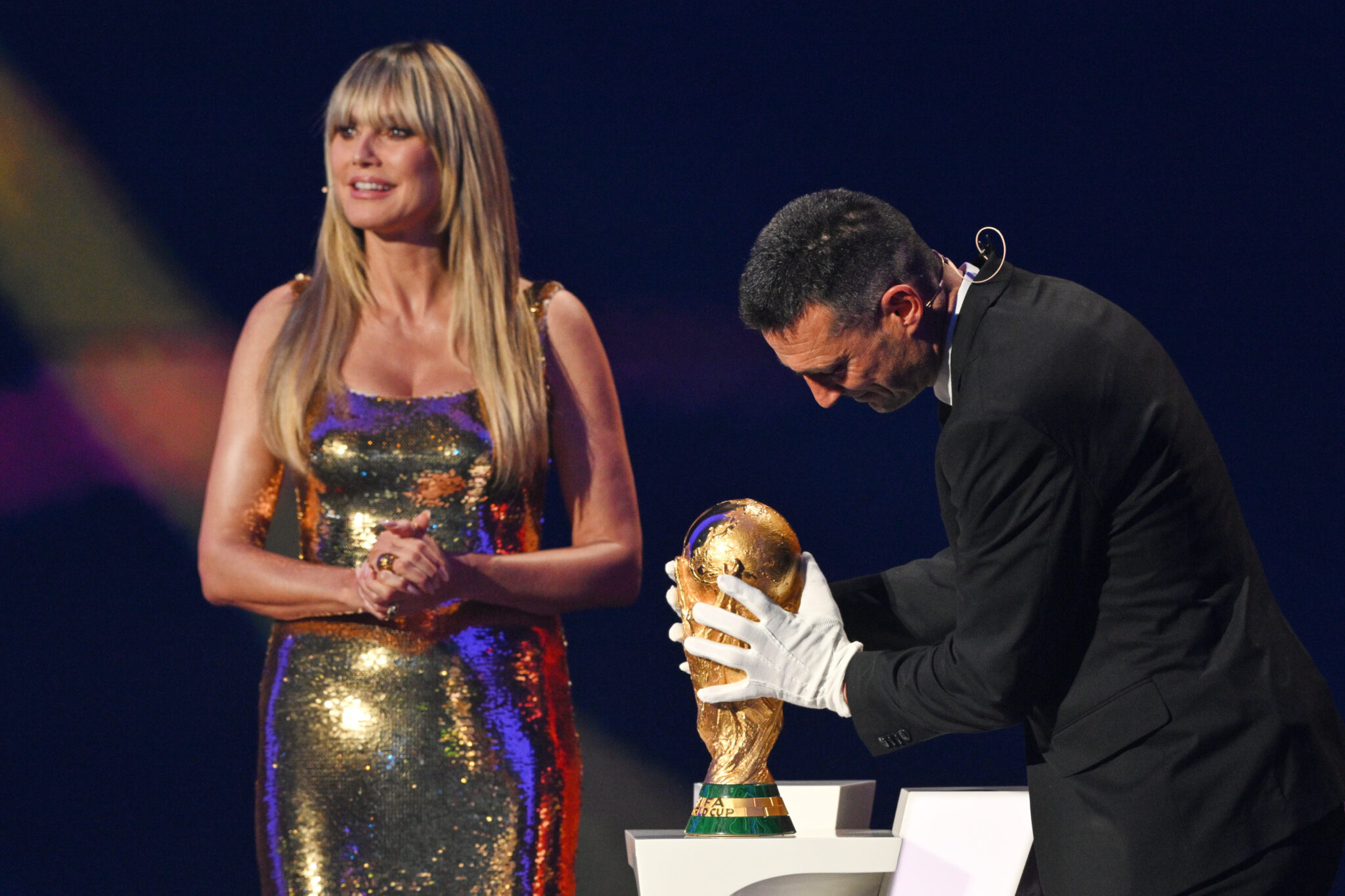
WASHINGTON (AP) — With the draw for the expanded 2026 FIFA World Cup completed, one thing became immediately clear: according to every coach, their group is the toughest. Held at the Kennedy Center on Friday, the draw revealed the matchups for the tournament that will run from June 11 to July 19 across the United States, Canada, and Mexico. Yet from the post-draw interviews, you’d think every team had landed in the “Group of Death.”
This time around, the tournament will feature 48 nations — up from 32 — making it the largest World Cup in history. With more teams comes more variables, and more opportunity for surprise. That reality wasn’t lost on the coaches, who universally expressed cautious respect for their group opponents.
U.S. coach Mauricio Pochettino, leading the national team into Group D, is set to face Paraguay on June 12, followed by matches against Australia and a yet-to-be-determined qualifier. Pochettino, a veteran manager, wasn’t shy about expressing the challenge ahead.
“We need to respect all of the opponents. It’s always going to be difficult,” he said. “My message to the players is: We need to compete better than Paraguay; that is going to be difficult. Australia is going to be difficult. And the team that is going to join us is going to be difficult.”
That cautious tone was repeated by many others. It’s a textbook example of “coach speak” — the practice of building up rivals, dampening expectations, and promoting humility — widely seen in other sports, particularly in the NFL. Coaches prefer to manage risk and pressure by appearing wary, regardless of whether they are actually the stronger side.
France coach Didier Deschamps, who has lifted the World Cup as both a player (1998) and manager (2018), was another leading voice of caution. Despite France being among the favorites, Deschamps framed his Group I — which includes Senegal, Norway, and a yet-to-be-determined playoff team — as anything but easy.
“We know this is a very tough group. We cannot rest,” said Deschamps, reinforcing the narrative that no match can be taken for granted.
From Norway’s coach, Ståle Solbakken, came similar sentiments. Though he praised France as “maybe the strongest in Europe,” he quickly balanced his praise by reminding the press that “there’s two other teams in the group.” His careful language reflected both respect for France and a desire to stay grounded.
Meanwhile, Spain’s Luis de la Fuente, fresh off winning the 2024 European Championship, downplayed the idea of “easy” groups entirely. His squad, positioned in Group H, will face Uruguay, Saudi Arabia, and Cape Verde. While Spain is heavily favored, de la Fuente avoided overconfidence.
“People think there are easy groups, but it is a very similar level,” he said. “This will be a historic World Cup, because there’s an exceptional level all-round. These games force you to play at your best.”
Even players are buying into the messaging. Tyler Adams, a key midfielder for the U.S. team, said during a video interview that there are “no easy games in the World Cup.” He pointed out that during the 2022 tournament, the most challenging games for the U.S. came against teams that weren’t considered top-tier — a reminder that rankings often go out the window during international play.
As the world gears up for a record-setting World Cup across three nations and 16 cities, one narrative is already dominating the conversation: every group is the hardest, and no one is safe. While this may be a calculated PR approach to lower expectations and avoid overconfidence, the coaches’ consistent tone reflects the genuine uncertainty brought by an expanded tournament.
Whether it’s coach speak or a true reflection of the increasing balance in international soccer, one thing is certain: the 2026 World Cup promises competitive drama from the opening match to the final whistle.