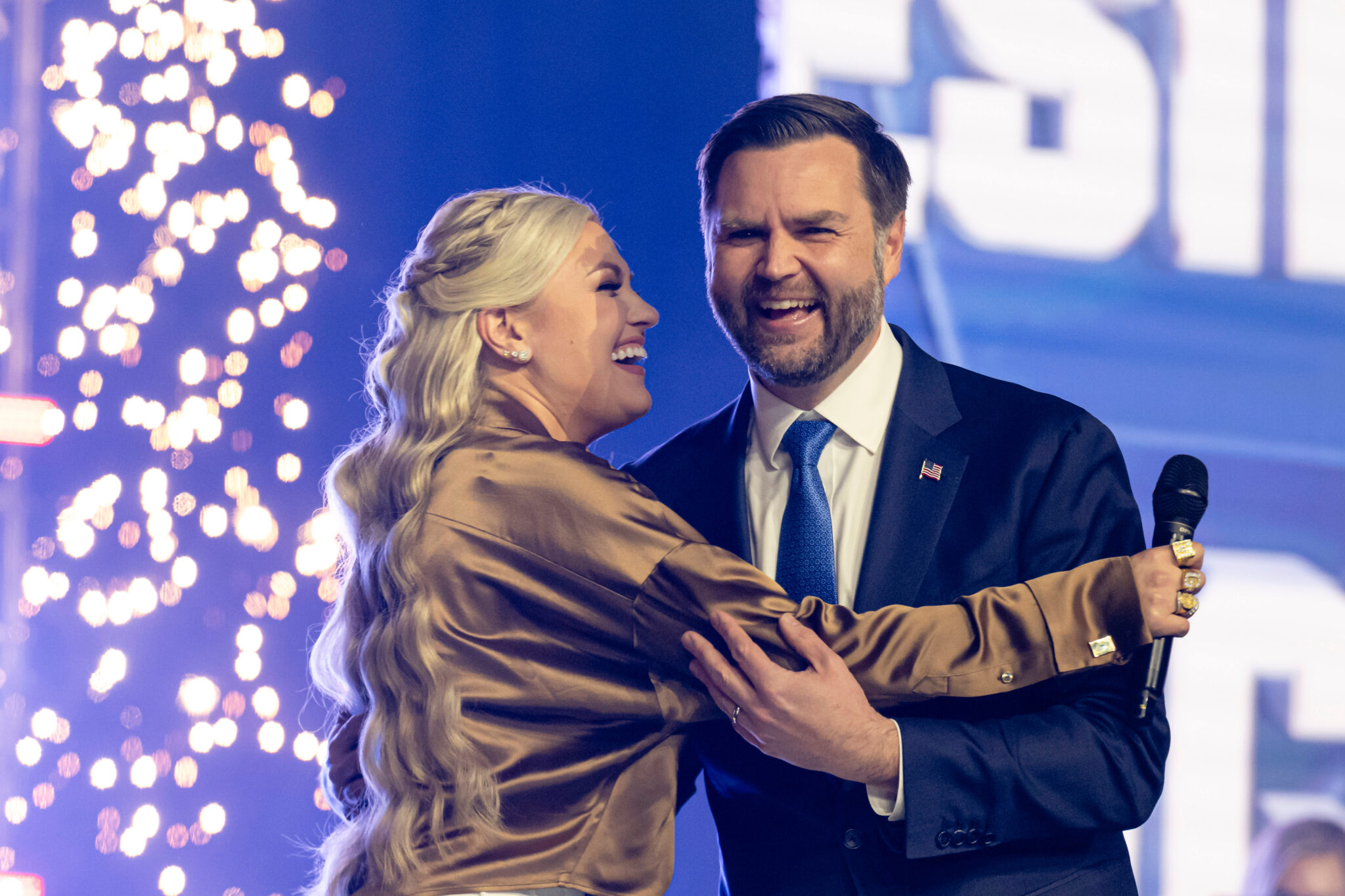
Vance Refuses Red Lines over Bigotry; Conservatives Feud at Turning Point/ Newslooks/ WASHINGTON/ J. Mansour/ Morning Edition/ Vice President JD Vance refused to condemn antisemitic figures during Turning Point USA’s convention, urging conservatives to focus on patriotism over internal feuds. His comments spotlighted divisions within the Republican movement as debates over bigotry, identity, and inclusion intensified. Vance positioned himself as a unifying figure for the post-Trump GOP.
Turning Point Tensions Quick Looks
- VP JD Vance avoided condemning controversial figures, emphasizing unity through patriotism.
- Conservative leaders clashed over bigotry, antisemitism, and party identity at the four-day convention.
- Vance opposed “purity tests” and called for a broad conservative tent.
- Turning Point leader Erika Kirk publicly backed Vance as Trump’s potential successor.
- Commentators Ben Shapiro and Tucker Carlson sparred over antisemitism and political grifting.
- Carlson defended Vance, calling him the heir to Trump’s “America First” coalition.
- Vance said diversity, equity, and inclusion policies are “in the dustbin of history.”
- He declared the U.S. a Christian nation, echoing themes of cultural nationalism.
- Young conservatives expressed support for Vance’s inclusive message.
- Trump has hinted at Vance as a leading 2028 candidate.

Deep Look
Vance Sidesteps Bigotry Debate at Turning Point, Urges Conservative Unity Over Division
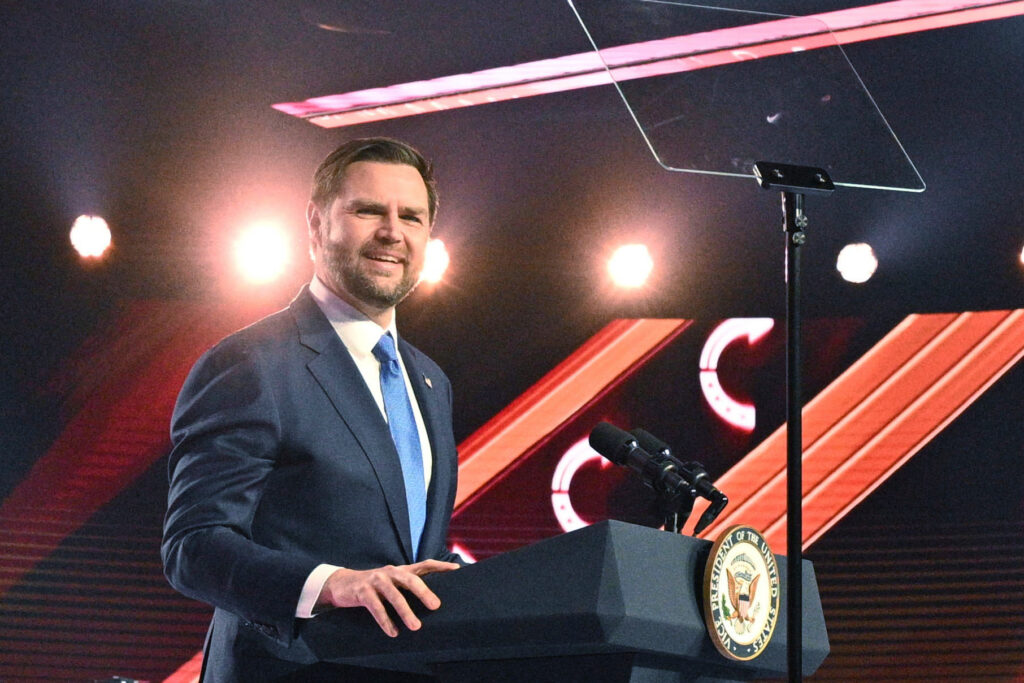
PHOENIX — Vice President JD Vance took the stage at Turning Point USA’s annual convention with a message of unity, resisting calls to denounce antisemitism and controversial figures as factions within the Republican movement engaged in fierce ideological debates. As questions about the future of the party intensify post-Trump, Vance made clear he would not engage in what he called “purity tests.”
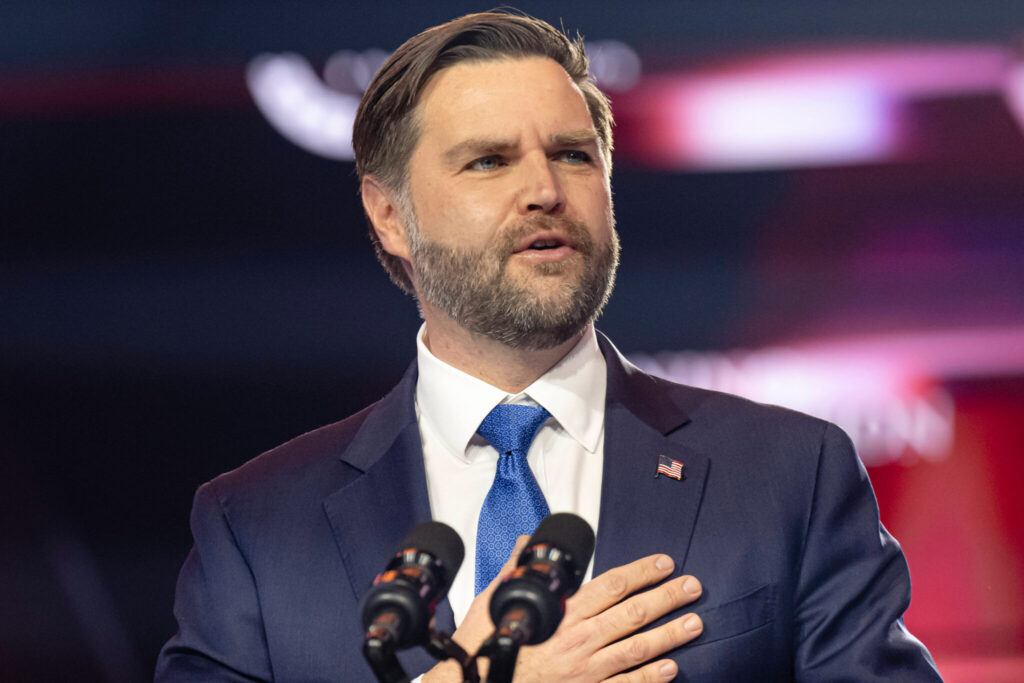
In a closing address to the four-day event, Vance declared that the conservative movement must remain open to anyone who “loves America,” regardless of their background or beliefs. “I didn’t bring a list of conservatives to denounce or to de-platform,” he told a charged crowd, emphasizing his opposition to cancel culture within the right.
His remarks came as Turning Point’s 2025 AmericaFest unfolded amid sharp internal disputes about the role of antisemitic voices such as Nick Fuentes and divisive right-wing influencers. Though Vance didn’t mention Fuentes or others by name, the context of his remarks was unmistakable.
Navigating a Post-Trump GOP
Turning Point USA, a major force in conservative youth activism, served as a proving ground for the future direction of the Republican Party. With Donald Trump constitutionally barred from seeking another term, attention has turned to who will inherit the MAGA mantle.
Conservative media figure Tucker Carlson summed up the stakes during his speech: “People are wondering who gets the machinery when the president exits the scene?”
The power vacuum has intensified longstanding tensions. On the opening night, Daily Wire co-founder Ben Shapiro denounced “charlatans” in the movement who traffic in “conspiracism and dishonesty.” Shapiro directly criticized Carlson for previously hosting Fuentes on his podcast.
Carlson, unfazed, downplayed the disagreement and dismissed the notion of a Republican “civil war.” Instead, he framed the backlash as an orchestrated attack on Vance by those threatened by his rising popularity. “There are people who are mad at JD Vance, and they’re stirring up a lot of this,” Carlson said, endorsing Vance as “the one person” who fully embraces Trump’s America First platform.
Turning Point spokesperson Andrew Kolvet defended the convention’s intense debates as a “healthy” process of ideological refinement. “We’re not hive-minded commies,” he posted online. “Let it play out.”
Vance Stresses Patriotism Over Ideology
In his speech, Vance addressed the controversy without diving into specifics.
“We don’t care if you’re white or black, rich or poor, young or old, rural or urban, controversial or a little bit boring, or somewhere in between,” he said, positioning patriotism as the only real requirement for inclusion.
He urged conservatives to move past internal feuds and focus on shared goals, saying, “We have far more important work to do than canceling each other.”
While Vance did not denounce any individuals directly, his silence on antisemitic rhetoric has drawn criticism from some quarters. Fuentes and other figures associated with white nationalist ideas have gained attention in conservative media spaces, adding pressure to leaders like Vance to clarify their positions.
Still, Vance remained focused on touting the administration’s accomplishments as it nears the end of its first year. He highlighted efforts to secure the border, stimulate economic growth, and dismantle diversity, equity, and inclusion (DEI) initiatives.
“DEI has been relegated to the dustbin of history,” he said to applause.
Vance also doubled down on cultural themes, declaring, “In the United States of America, you don’t have to apologize for being white anymore.” He called America a “Christian nation,” saying Christianity is the country’s moral foundation “from the Revolution to the Civil War and beyond.”
Turning Point Support for Vance Builds
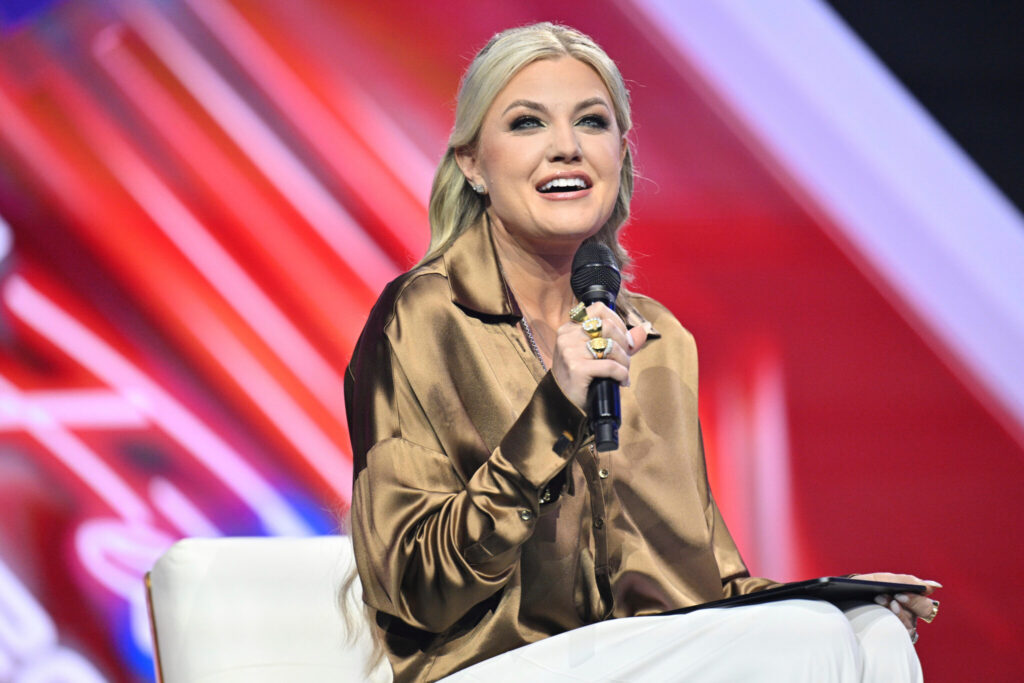
Vance, who has yet to announce future political plans, received strong public backing from Turning Point’s new leader, Erika Kirk.
“We want Vance elected for 48 in the most resounding way possible,” she said, referring to the presidency’s numerical order.
Kirk, who took over the organization following the assassination of her husband Charlie Kirk earlier this year, represents a key endorsement in the MAGA movement. Turning Point’s extensive grassroots network could prove critical in early GOP primaries.
The connection between Vance and Charlie Kirk ran deep. After Kirk was fatally shot on a Utah college campus, Vance traveled aboard Air Force Two to retrieve his remains and personally assisted in the military honor guard that returned Kirk’s body to Arizona.
At the convention, support for Vance’s approach was evident among younger attendees. Emily Meck, 18, from New York, said she appreciated the vice president’s willingness to tolerate ideological diversity.
“We are free-thinkers,” she said. “We’re going to have our own thoughts.”
Isaiah White-Diller, 18, from Arizona, also praised Vance’s message. “I have my right to be Christian here, I have my right to say whatever I want,” he said.
The Race for 2028 Begins
Though President Trump has not named a successor, he has spoken positively about both Vance and Secretary of State Marco Rubio. Trump has floated the possibility of the two teaming up for a future Republican ticket.
When asked in August if Vance was the “heir apparent,” Trump replied, “most likely.” While acknowledging it’s too early to make formal announcements, he added, “He’s doing a great job, and he would be probably favorite at this point.”
As the conservative base grapples with its future and internal conflicts continue to simmer, JD Vance appears to be navigating the turbulence with strategic ambiguity — refusing to alienate any wing of the movement while slowly positioning himself as the frontrunner in the next phase of Republican leadership.