Judge Dismisses Trump Challenge to New York Immigration Law/ Newslooks/ WASHINGTON/ J. Mansour/ Morning Edition/ A federal judge dismissed the Trump administration’s lawsuit challenging New York’s immigration-related driver’s license law. The court found the Justice Department failed to show the law violated the U.S. Constitution. State officials called the ruling a victory for privacy and public safety protections.

New York Green Light Law Ruling Quick Looks
- Federal judge dismissed the Justice Department’s lawsuit
- The case challenged New York’s Driver’s License Access and Privacy Act
- The law allows undocumented migrants to obtain driver’s licenses
- The judge rejected claims of constitutional violations
- New York officials praised the ruling as a legal win
- The decision limits federal efforts to access DMV data
Deep Look: New York Green Light Law Ruling
A federal judge on Tuesday dismissed a lawsuit brought by the Trump administration challenging a New York law that restricts how state motor vehicle officials share information with federal immigration authorities, dealing another legal setback to efforts aimed at curbing so-called sanctuary policies.
U.S. District Judge Anne Nardacci, sitting in Albany, ruled that the United States Department of Justice failed to show that New York’s immigration-related driver’s license law violates the U.S. Constitution or improperly interferes with federal immigration enforcement.
The lawsuit targeted New York’s Driver’s License Access and Privacy Act, commonly known as the Green Light Law. Enacted in 2019, the law allows immigrants who are in the United States illegally to obtain standard driver’s licenses. It also limits the ability of the state’s Department of Motor Vehicles to share vehicle and address information with federal immigration authorities.
The Trump administration argued that the law impeded its ability to address what it described as a national immigration crisis. Federal lawyers claimed the statute conflicted with federal immigration law, improperly regulated the federal government, and should be blocked from enforcement.
Judge Nardacci rejected those arguments, concluding that the administration had not plausibly alleged any constitutional violation. In her decision, she noted that federal law does not require New York to provide DMV data related to standard driver’s license applicants to immigration authorities.
“The administration has identified no federal statute mandating such disclosures,” Nardacci wrote, undercutting the Justice Department’s claim that the state law was preempted by federal immigration policy.
The ruling was welcomed by Letitia James, whose office defended the law in court. James praised the decision on social media, calling the lawsuit baseless and reiterating that New York’s laws are designed to protect residents and promote public safety.
“As I said from the start, our laws protect the rights of all New Yorkers and keep our communities safe,” James said. She, along with Kathy Hochul and another state official, had been named as defendants in the case.
The Justice Department declined to comment on the ruling. The lawsuit was announced in February by Pam Bondi as part of a broader legal campaign by the Trump administration against immigration-related laws enacted by Democratic-led states and cities.
The Green Light Law directs New York’s DMV to accept a range of foreign documents as proof of identity and age when issuing standard driver’s licenses. It also bars DMV officials from asking applicants about their immigration status, a provision intended to encourage unlicensed drivers to come forward and obtain licenses.
Supporters of the law have long argued that it enhances road safety by ensuring more drivers are tested, licensed, and insured. They also say the privacy protections are critical to preventing immigration enforcement from deterring residents from interacting with state agencies.
The Trump administration countered that the law undermined immigration enforcement by limiting federal access to information that could assist in identifying undocumented immigrants. Federal lawyers argued that the statute obstructed cooperation between state and federal authorities.
Judge Nardacci’s ruling firmly rejected that position, emphasizing that states are not required to assist federal immigration enforcement absent a clear congressional mandate. She concluded that New York’s law represents a lawful exercise of state authority and does not intrude on federal powers.
The decision reinforces a series of court rulings across the country that have limited the federal government’s ability to compel state and local cooperation with immigration enforcement. Courts have repeatedly held that while the federal government controls immigration policy, states retain discretion over how their agencies operate and what information they share.
The case also highlights ongoing tensions between the Trump administration and Democratic-led states over immigration policy. New York has been a frequent target of federal legal challenges due to its expansive protections for immigrants and resistance to federal enforcement initiatives.
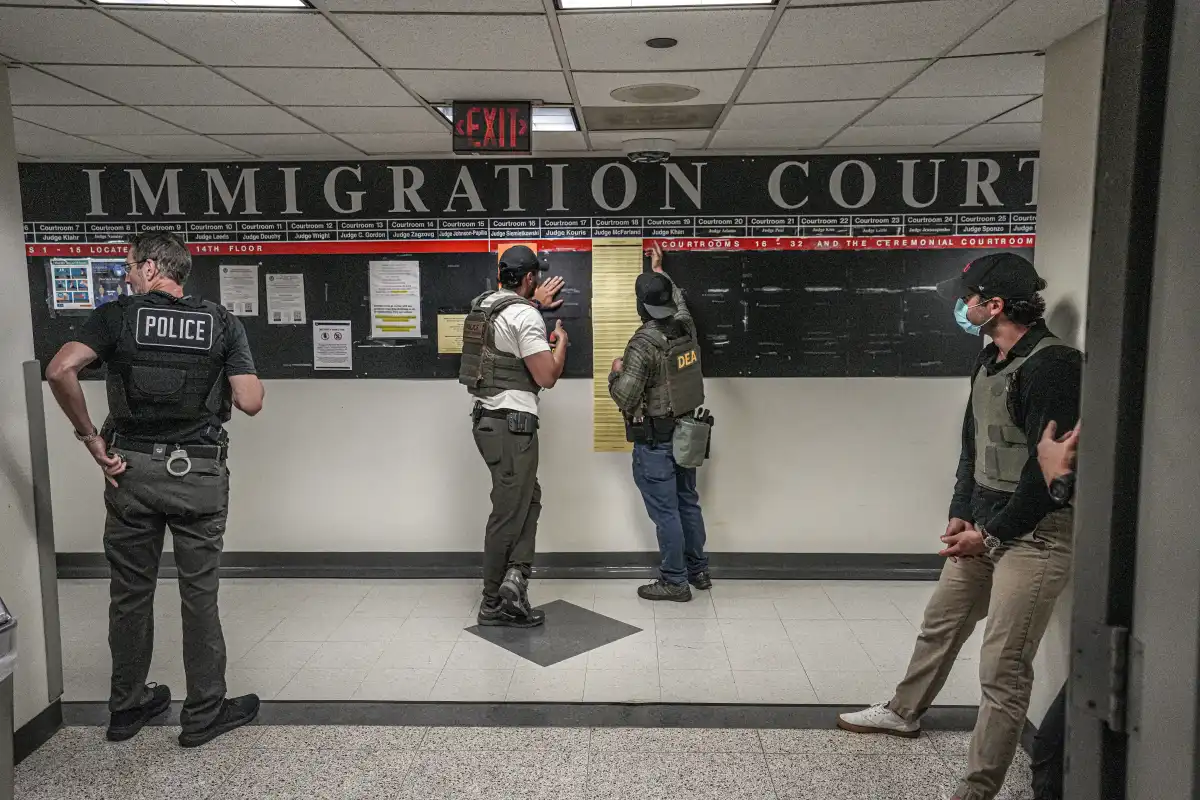
Immigration courts and federal facilities in New York City have remained focal points in the broader debate. Images of Immigration and Customs Enforcement agents at Manhattan immigration courts have become emblematic of the administration’s aggressive enforcement posture, which state officials argue has fueled fear in immigrant communities.
Legal experts say the ruling could discourage similar lawsuits against state driver’s license and privacy laws unless Congress acts to explicitly mandate information-sharing requirements. Without such legislation, courts are likely to continue rejecting claims that state privacy protections violate federal authority.
For New York, the decision preserves a cornerstone of its immigration policy and affirms the state’s ability to regulate its own agencies without federal interference. State officials framed the ruling as both a legal and symbolic victory, signaling that federal courts remain skeptical of attempts to use constitutional arguments to dismantle state-level immigration protections.
While the Trump administration retains the option to appeal, Judge Nardacci’s ruling stands as a clear statement that New York’s Green Light Law is constitutional and enforceable. The outcome adds to a growing body of case law defining the limits of federal power in the ongoing clash over immigration enforcement and state sovereignty.