Trump’s 2025 Tariff Wars Reshape Global Trade/ Newslooks/ WASHINGTON/ J. Mansour/ Morning Edition/ President Donald Trump launched aggressive global tariff campaigns throughout 2025, triggering trade wars with allies and rivals alike. His on‑again, off‑again import taxes rattled markets, raised consumer prices, and sparked legal challenges. Here’s a month‑by‑month recap of the year’s most consequential U.S. trade actions.
Trump’s 2025 Tariff Wars: Quick Looks
- Trump imposed sweeping new tariffs across nearly all major trading partners
- Canada, Mexico, and China were early targets
- “Liberation Day” tariffs triggered market turmoil in April
- U.S.–China tariffs surged as high as 145%
- Steel, aluminum, autos, copper, and furniture faced steep duties
- Brazil and India hit with punitive 50% tariffs
- Courts challenged Trump’s emergency‑powers authority
- Supreme Court agreed to hear tariff legality case
- Some tariffs eased late in year amid inflation concerns
Deep Look: How Trump Launched Global Tariff Wars in 2025
The year 2025 proved to be one of the most turbulent periods for U.S. trade policy in decades as President Donald Trump unleashed a relentless wave of tariffs that reshaped global commerce and rattled markets worldwide.
From the moment he returned to office, Trump made clear that tariffs would once again be his primary economic weapon. Throughout the year, he framed import taxes as a tool to rebalance trade, punish unfair practices, and reclaim wealth he claimed had been “stolen” from the United States. But the scope, speed, and unpredictability of the tariffs often left businesses, consumers, and foreign governments scrambling to respond.
January to March: Early Targets and Renewed Trade Battles
Trump’s tariff campaign began quickly, focusing on America’s three largest trading partners: Canada, Mexico, and China. Duties were announced, delayed, reinstated, and revised in rapid succession, creating immediate uncertainty.
At the same time, the administration raised global tariffs on steel and aluminum to 25%, expanding on measures Trump originally imposed during his first term in 2018. Trading partners responded with retaliatory tariffs, reigniting trade disputes that had never fully cooled.
April: “Liberation Day” Shakes Global Markets
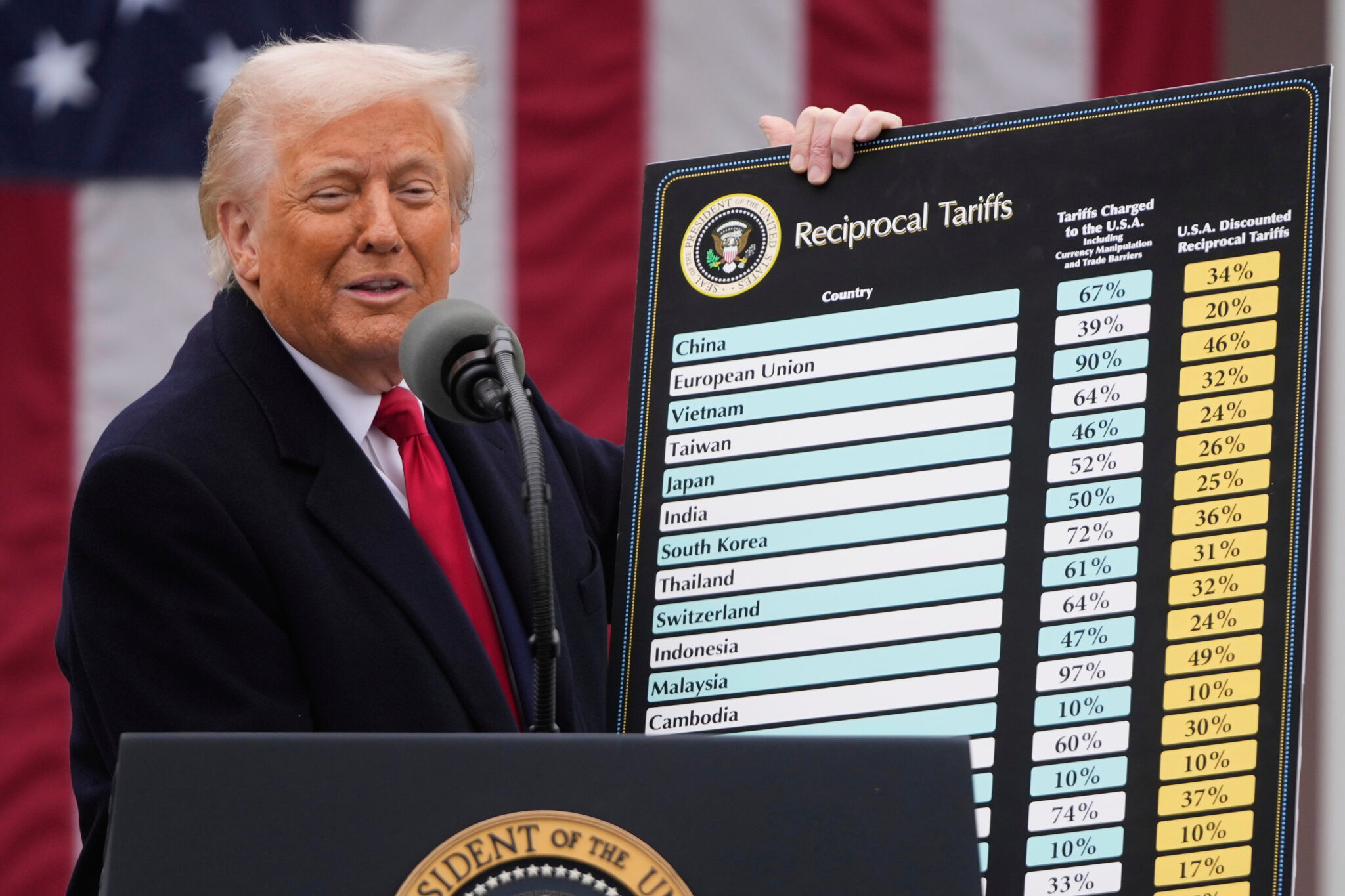
April marked a dramatic escalation. Trump unveiled sweeping “Liberation Day” tariffs that applied to imports from nearly every country in the world. Markets reacted sharply, with stocks tumbling amid fears of a prolonged global trade war.
Adding to the volatility, Trump publicly encouraged investors to buy stocks just hours before delaying dozens of the steepest tariffs. The sudden reversal fueled accusations of market manipulation and deepened investor anxiety.
China, however, was excluded from any relief. Instead, Washington and Beijing exchanged increasingly severe tariffs, with U.S. rates on Chinese goods climbing to 145% and China’s retaliatory tariffs reaching 125%.
That same month, a 25% tariff on imported automobiles took effect, sending shockwaves through the global auto industry and prompting swift retaliation from Canada and other allies.
May to July: Framework Deals and Legal Trouble
During the summer, the Trump administration touted what it called trade “framework” agreements with China, the United Kingdom, and Vietnam. While officials promoted these as breakthroughs, many lacked detailed commitments or enforcement mechanisms.
At the same time, the White House sent warning letters to dozens of other countries signaling that higher tariffs were imminent. Trade tensions escalated sharply with Brazil and India, while sector‑specific tariffs continued to expand.
Steel and aluminum duties were raised again, this time to a punishing 50%, increasing costs for manufacturers and construction firms across the U.S.
Meanwhile, Trump’s tariff authority faced mounting legal scrutiny. A federal court ruled that the president had exceeded his emergency‑powers authority when imposing some of the broadest tariffs. An appeals court temporarily paused the ruling, allowing tariff collections to continue while the case moved forward.
August: Tariffs Go Fully Global
August became the most consequential month of the year for trade. After multiple delays, heightened tariffs on imports from more than 60 countries and the European Union officially took effect.
Canada saw its tariff rate jump to 35%, while Brazil and India were hit with 50% levies on a wide range of goods. The administration also imposed a new 50% tariff on most imported copper worldwide, a move that disrupted supply chains for electronics and renewable energy.
In another major shift, the U.S. eliminated the “de minimis” exemption, ending duty‑free treatment for low‑value imports. The change hit online retailers and small businesses particularly hard.
At the same time, the U.S. extended a fragile trade truce with China. An appeals court ruled that Trump had gone too far in declaring national emergencies to justify tariffs, but allowed the measures to remain in place while the administration prepared to appeal to the Supreme Court.
September to December: Supreme Court and Selective Retreat
In the fall, the Trump administration formally took its tariff fight to the Supreme Court. During early arguments, several justices expressed skepticism about the president’s sweeping use of emergency powers, raising questions about the long‑term legality of the tariffs.
Even as the case moved forward, Trump continued to announce new sector‑specific tariffs. A 25% duty on kitchen cabinets and other furniture took effect, while additional threats loomed over other industries.
However, rising inflation pressures prompted some reversals. The administration reduced or eliminated tariffs on certain consumer goods, including beef and fruit, in an effort to ease grocery prices.
Late in the year, Trump floated the idea of distributing $2,000 payments to Americans funded by tariff revenue. Details of the proposal remained vague, and no legislation had been introduced by year’s end.
A Year That Redefined U.S. Trade Policy
By December, Trump’s 2025 tariff strategy had transformed global trade relationships and intensified debates over presidential power. Businesses faced higher costs, consumers felt price pressures, and allies questioned the reliability of U.S. trade commitments.
With legal challenges unresolved and retaliatory tariffs still in place, the long‑term economic consequences of Trump’s tariff wars remain uncertain — but their impact on global trade in 2025 was undeniable.