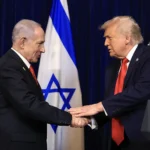
Netanyahu Discusses Second Strike on Iran with Trump/ Newslooks/ WASHINGTON/ J. Mansour/ Morning Edition/ Israeli Prime Minister Benjamin Netanyahu raised the idea of a potential second strike on Iran during a recent meeting with Donald Trump. Both leaders praised their 2025 military action, but Israel is concerned Iran could rebuild. The talks highlighted growing tensions and a shared willingness to respond if Iran resumes nuclear development.
Netanyahu Iran Strike Talks Quick Looks
- Netanyahu proposed the possibility of a second strike on Iran in 2026 during a meeting with Trump.
- U.S. and Israeli sources confirmed the topic was discussed but with no formal timeline or agreement.
- Trump said if Iran resumes nuclear efforts, the U.S. would act decisively again.
- Netanyahu believes Iran’s missile and nuclear rebuild efforts require further preemptive action.
- Trump expressed a desire for a new nuclear agreement with Iran but warned against reconstitution.
- U.S. officials indicated support for action depends on Iran’s verifiable steps toward nuclear redevelopment.
- Israel’s June strikes targeted both nuclear and conventional missile sites, unlike the U.S. approach.
- Netanyahu also raised concerns about Hezbollah’s growing missile arsenal in Lebanon.
- Iranian leaders responded with threats and calls for renewed diplomacy.
- Trump and Netanyahu also advanced discussions on Gaza’s ceasefire and governance roadmap.
Netanyahu Discusses Second Strike on Iran with Trump
Deep Look
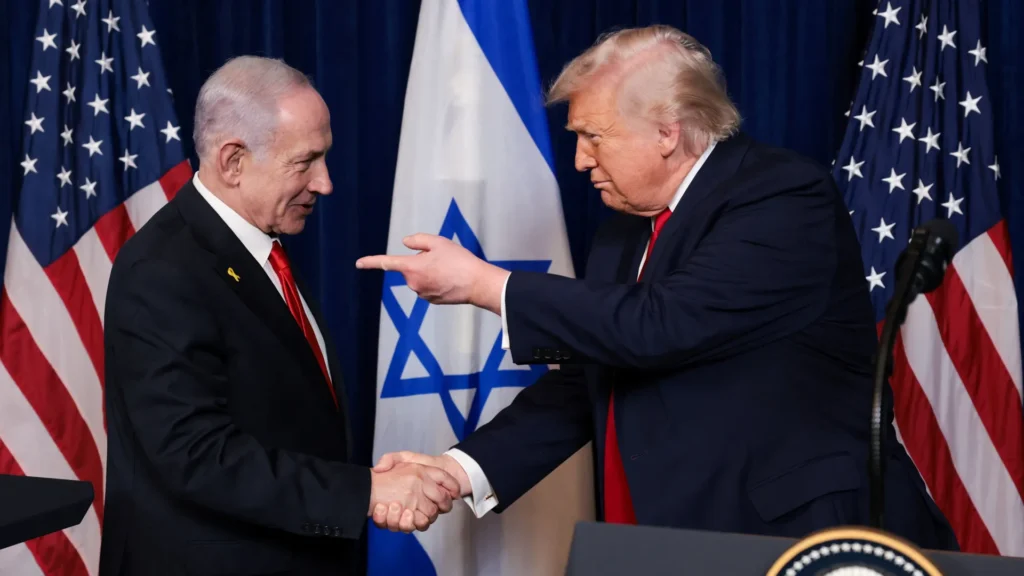
Israeli Prime Minister Benjamin Netanyahu presented the idea of a potential second military strike on Iran during a meeting with Donald Trump on Monday at Mar-a-Lago, according to one U.S. official and two others briefed on the matter. The conversation centered around concerns that Iran may be attempting to rebuild its nuclear and missile programs following the June 2025 conflict, which both leaders hailed as a strategic success.
The discussion reveals that despite public claims by Trump that Iran’s nuclear infrastructure was “obliterated,” Israeli intelligence now believes Tehran is working to recover its weapons capabilities. Netanyahu reportedly emphasized the need to keep military pressure on Iran and said additional action may be required to prevent the Islamic Republic from regaining strategic ground.
Sources familiar with the meeting say Trump reiterated his belief that the 2025 strikes sent a strong message. However, he indicated that if Iran moves to restart its nuclear weapons program, the United States would not hesitate to intervene again. Still, Trump added that he would prefer to resolve the situation through a new diplomatic agreement.
One U.S. official explained that Trump would likely back another round of strikes — but only if intelligence proves Iran is taking “real and verifiable steps” to reestablish its nuclear program. However, the official added, defining what constitutes “reconstitution” remains a potential point of tension between the U.S. and Israel.
While the United States primarily targeted nuclear infrastructure in its 2025 strikes, Israel focused on broader military assets, including ballistic missile systems. In recent weeks, Israeli officials have expressed alarm over new signs of activity related to Iran’s missile development programs, which were also raised during the Mar-a-Lago meeting.
Netanyahu reportedly presented updated intelligence assessments to Trump and raised concerns about Hezbollah’s military buildup in Lebanon. Israeli intelligence has observed efforts by the militant group to replenish its stockpile of long-range missiles, which could pose a significant threat to Israel and the region.
Despite the high-stakes nature of the meeting, no specific timelines or conditions for future strikes were agreed upon, according to officials. The Israeli Prime Minister’s Office declined to comment on the report, while the White House referred questions to Trump’s public statements.
On the Iranian side, the rhetoric quickly intensified. President Masoud Pezeshkian warned of a “harsh” retaliation if Israel or the U.S. initiated any future strikes. Iranian Foreign Minister Abbas Araghchi also called for Trump to return to negotiations based on mutual respect. While he and U.S. envoy Steve Witkoff held informal talks as recently as September, there have been no serious discussions since.
Analysts say the most immediate risk of renewed conflict stems from potential miscalculations on either side. According to one senior Israeli source, Iran’s recent missile drills could serve as cover for an actual military maneuver — a theory that was reportedly conveyed to the Trump administration just last week.
In addition to discussing Iran, the Trump-Netanyahu meeting addressed the Gaza ceasefire. Two U.S. officials confirmed that Netanyahu agreed to proceed with “phase two” of the agreement, which includes establishing a Gaza Board of Peace and a transitional Palestinian technocratic government.
Trump pledged support for further Israeli action against Hamas if the group fails to begin disarming under the terms of the ceasefire. According to officials, Netanyahu voiced skepticism but did not obstruct plans to move forward.
The second phase of the Gaza roadmap is expected to be announced in January, with the first meeting of the newly formed Gaza Board of Peace scheduled to take place at the World Economic Forum in Davos on January 23.
As geopolitical tensions persist, the Trump-Netanyahu alliance appears poised to play a central role in shaping the U.S.-Israel approach to Iran, Gaza, and broader Middle East policy going into 2026.