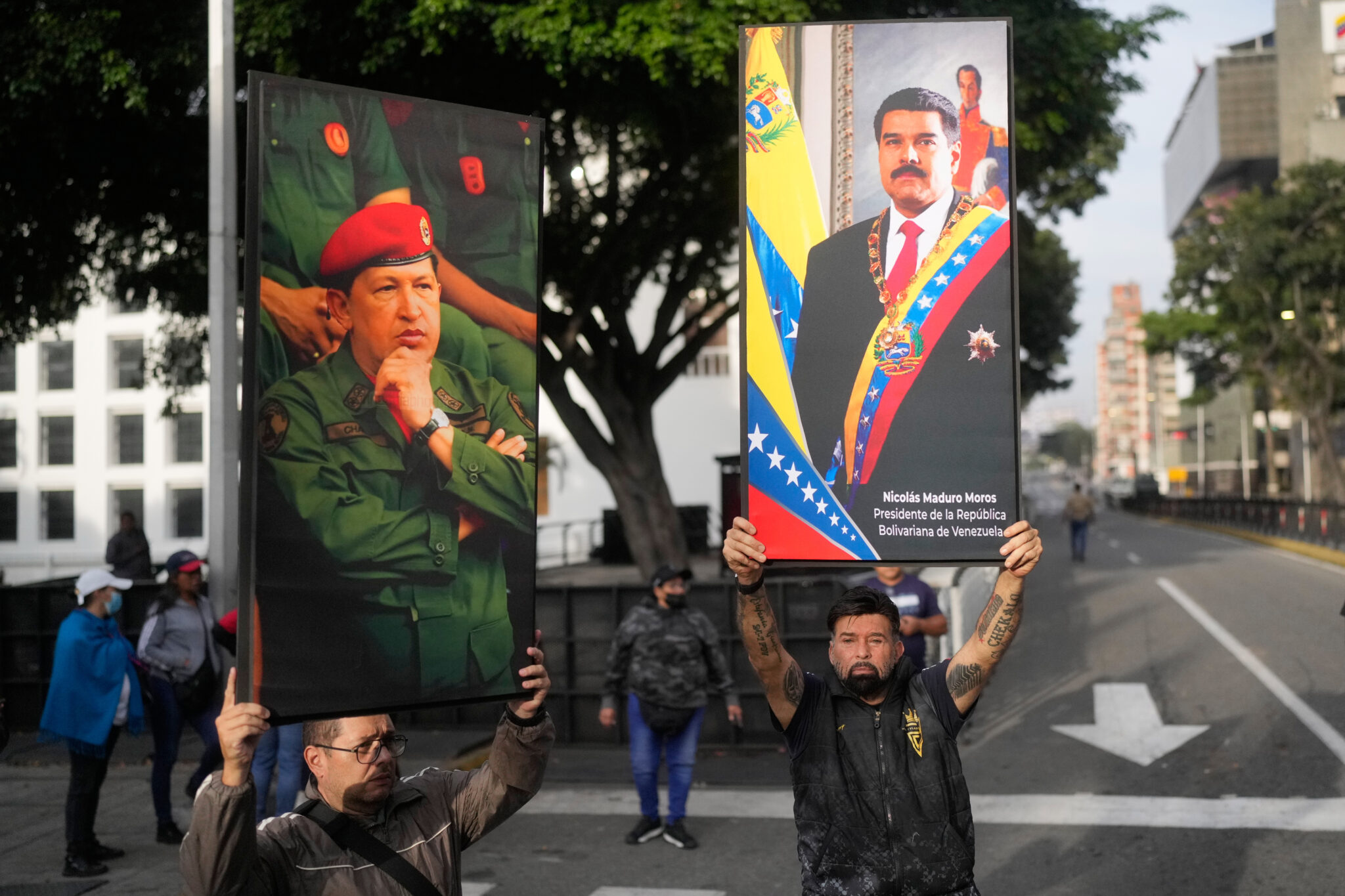
Nicolás Maduro’s Long Shadow Under Hugo Chávez, From Bus Driver to President/ Newslooks/ WASHINGTON/ J. Mansour/ Morning Edition/ Nicolás Maduro rose from a Caracas bus driver to Venezuela’s president under Hugo Chávez’s shadow. His rule oversaw economic collapse, mass migration, and democratic erosion. U.S. forces captured Maduro after years of mounting pressure from Washington.
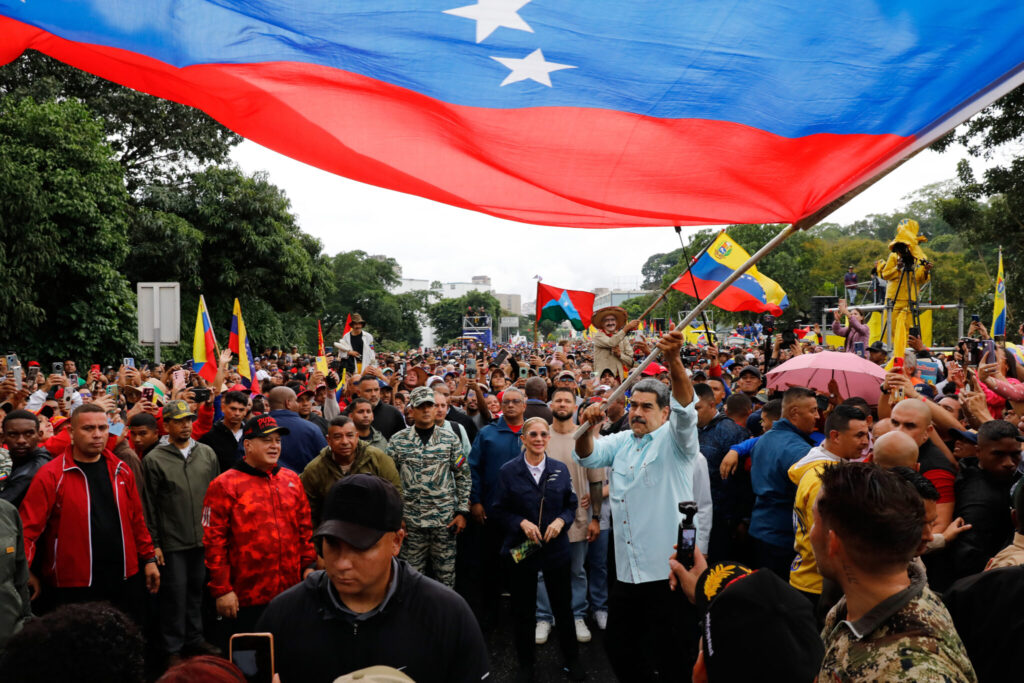

Nicolás Maduro Rise and Fall Quick Looks
- Nicolás Maduro was captured during a U.S. strike on Caracas.
- He rose from unionized bus driver to Chávez’s chosen successor.
- Maduro never matched Hugo Chávez’s popularity or charisma.
- His presidency coincided with economic collapse and mass migration.
- Millions fled Venezuela amid shortages, inflation, and repression.
- Maduro consolidated power by dismantling democratic institutions.
- The opposition won key elections that Maduro refused to recognize.
- International courts opened probes into alleged crimes against humanity.
- U.S. sanctions and military pressure intensified during Trump’s presidency.
- Maduro’s fall marks the end of Venezuela’s Chávez-era leadership.
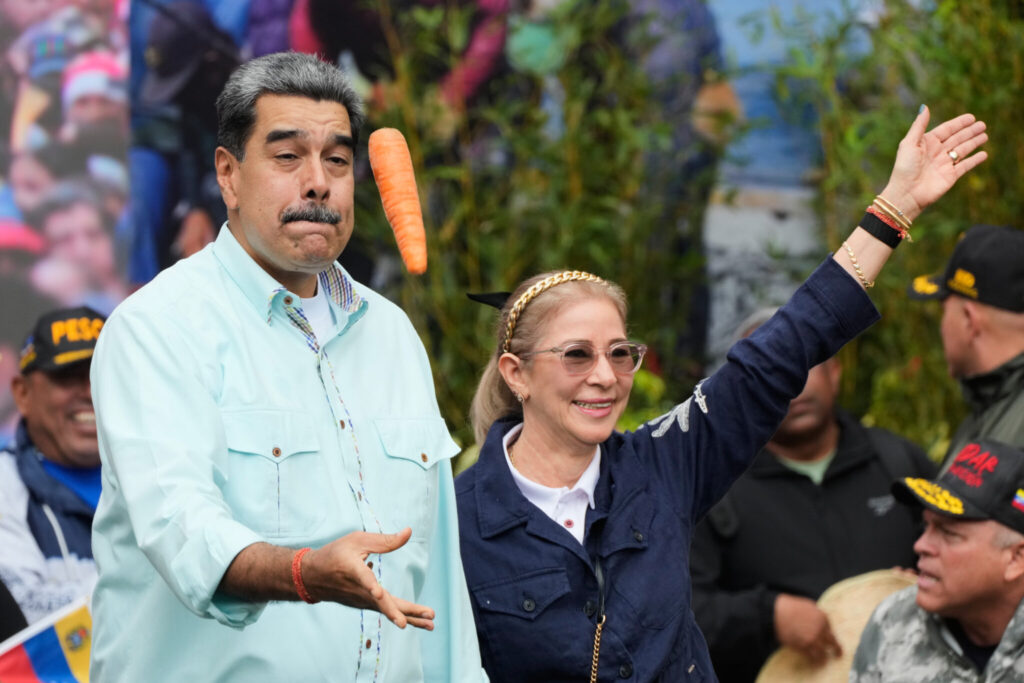
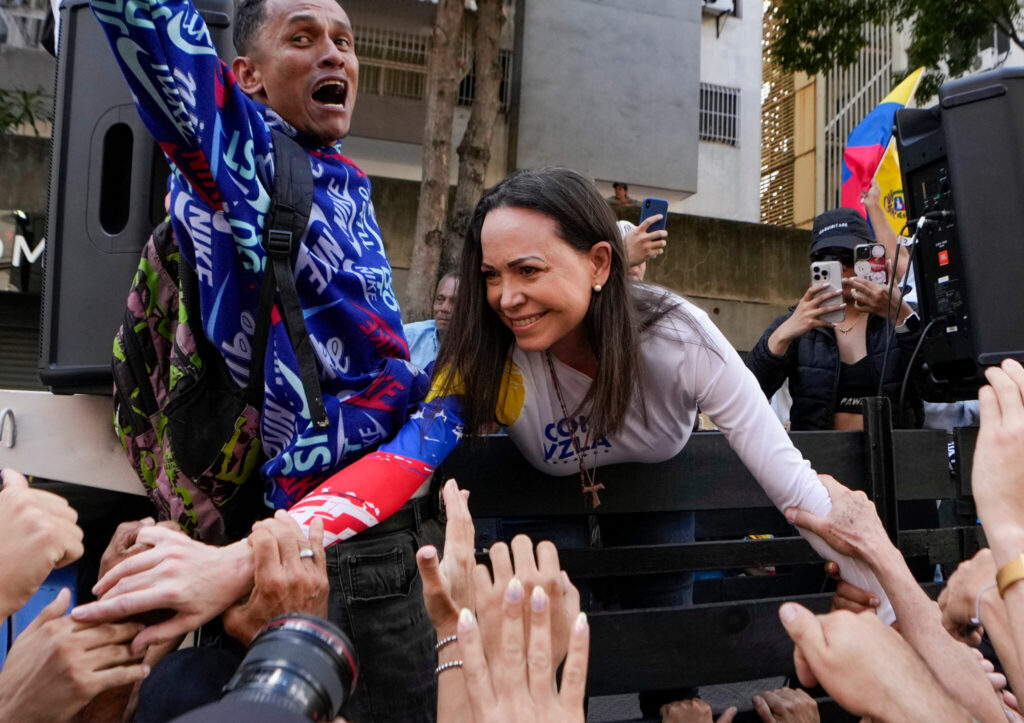
Nicolás Maduro’s Long Shadow Under Hugo Chávez, From Bus Driver to President
Deep Look
Nicolás Maduro’s journey from working-class obscurity to the pinnacle of power was one of the most improbable political ascents in modern Latin American history. A former bus driver and labor organizer, Maduro became president of Venezuela in 2013 after being personally anointed by his mentor, Hugo Chávez. Yet despite inheriting Chávez’s movement, Maduro never escaped his predecessor’s shadow — and his rule ultimately collapsed under economic ruin, political repression, and international isolation.
Maduro’s presidency came to an abrupt end early Saturday when U.S. forces struck Caracas and captured him in a dramatic overnight operation. U.S. President Donald Trump announced the arrest on social media, while Venezuela’s vice president, Delcy Rodríguez, later said Maduro and his wife, Cilia Flores, were missing. U.S. Attorney General Pam Bondi confirmed that Maduro would face long-standing criminal charges in New York.
For months, Maduro had warned Venezuelans that the United States was plotting an invasion to dismantle the socialist revolution launched by Chávez in 1999. Like his mentor, Maduro framed Washington as Venezuela’s greatest enemy, accusing both Democratic and Republican administrations of attempting to overthrow his government. Those warnings ultimately proved prophetic.
Maduro’s political roots stretch back four decades. In the mid‑1980s, he traveled to Cuba for ideological training — his only formal education beyond high school. Upon returning to Venezuela, he worked as a bus driver for the Caracas metro system and quickly emerged as a union leader. By the 1990s, Venezuelan intelligence agencies had labeled him a leftist radical with close ties to Havana.
His fortunes changed after Chávez received a presidential pardon in 1994 for leading a failed coup attempt. Maduro joined Chávez’s political movement and rose steadily through its ranks. After Chávez won the presidency, Maduro served as a lawmaker, later becoming head of the National Assembly, then foreign minister, and briefly vice president.
In his final address before dying of cancer in 2013, Chávez stunned the nation by naming Maduro as his political heir. The endorsement carried immense weight. Chávez’s popularity delivered Maduro a narrow election victory that year, though it quickly became clear he lacked his mentor’s charisma and mass appeal.
Maduro married longtime partner Cilia Flores shortly after taking office, referring to her as the “first combatant” rather than first lady. She became one of his closest advisers as his presidency descended into crisis.
From the outset, Maduro governed amid economic collapse and political unrest. Venezuela’s economy spiraled downward, inflation soared to unprecedented levels, and shortages of food and medicine became widespread. Entire families went hungry, while millions fled the country — more than 7.7 million by 2025 — creating one of the world’s largest migration crises.
Political dissent was met with force. Street protests erupted in 2014 and again in later years, with security forces killing dozens and imprisoning thousands. Institutions were purged of dissenters, and critics were jailed, tortured, or driven into exile. International human rights organizations documented widespread abuses, prompting the International Criminal Court to open an investigation into alleged crimes against humanity.
Maduro’s grip on power tightened after his party lost control of the National Assembly in 2015. He responded by creating a pro-government Constituent Assembly that sidelined the opposition-controlled legislature. Months of protests followed, leaving more than 100 people dead.
Economic mismanagement compounded the political crisis. Between 2012 and 2020, Venezuela’s economy shrank by more than 70%, while inflation reached staggering levels. Oil production — once the backbone of the economy — collapsed to historic lows. Meanwhile, images of Maduro dining lavishly abroad fueled public outrage at home.
In response, the first Trump administration imposed sweeping sanctions targeting Maduro, his allies, and state-owned companies, including the oil sector. Assets were frozen and international business restricted, tightening financial pressure on the regime.
Facing limited options, Maduro introduced market-friendly reforms in 2021 that eventually curbed hyperinflation. He paired those measures with negotiations involving the U.S.-backed opposition, raising hopes for a democratic election in 2024. Those hopes were dashed when Maduro’s government barred leading opposition figure María Corina Machado from running and intensified repression.
Despite opposition claims of a landslide victory by Edmundo González, electoral authorities declared Maduro the winner without releasing detailed vote counts. Protests erupted once again, statues of Chávez were toppled, and thousands were detained. Maduro was sworn in for a third term in January 2025.
Trump’s return to the White House that same month marked a turning point. U.S. pressure intensified through deportation demands, sanctions enforcement, and a major military buildup in the Caribbean. By late 2025, Washington openly accused Maduro of narco-terrorism.
For Maduro, who spent his presidency invoking Chávez’s legacy, the end came not with revolutionary triumph but with capture — a final chapter that underscored how fully he remained defined by the shadow of the man who put him in power.