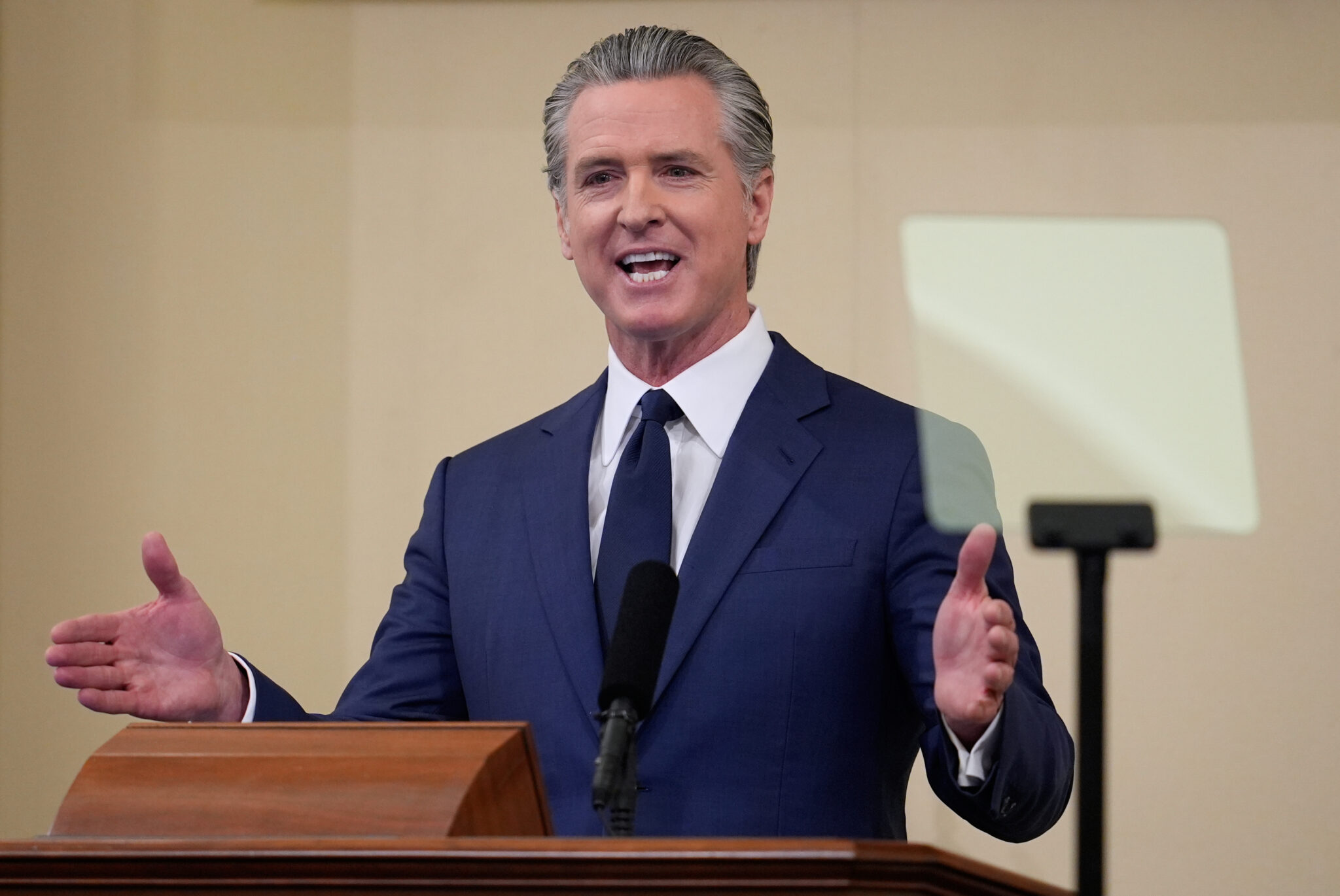
Newsom Confronts Trump and GOP in State Final Speech/ Newslooks/ WASHINGTON/ J. Mansour/ Morning Edition/ California Gov. Gavin Newsom delivered a forceful final State of the State speech, pushing back against critics and President Donald Trump’s federal policies. Newsom called California a model of progress on homelessness, climate action, crime reduction and health care, rebuffing what he described as federal interference. Republicans countered that high costs and persistent challenges show his leadership falls short of his rhetoric.
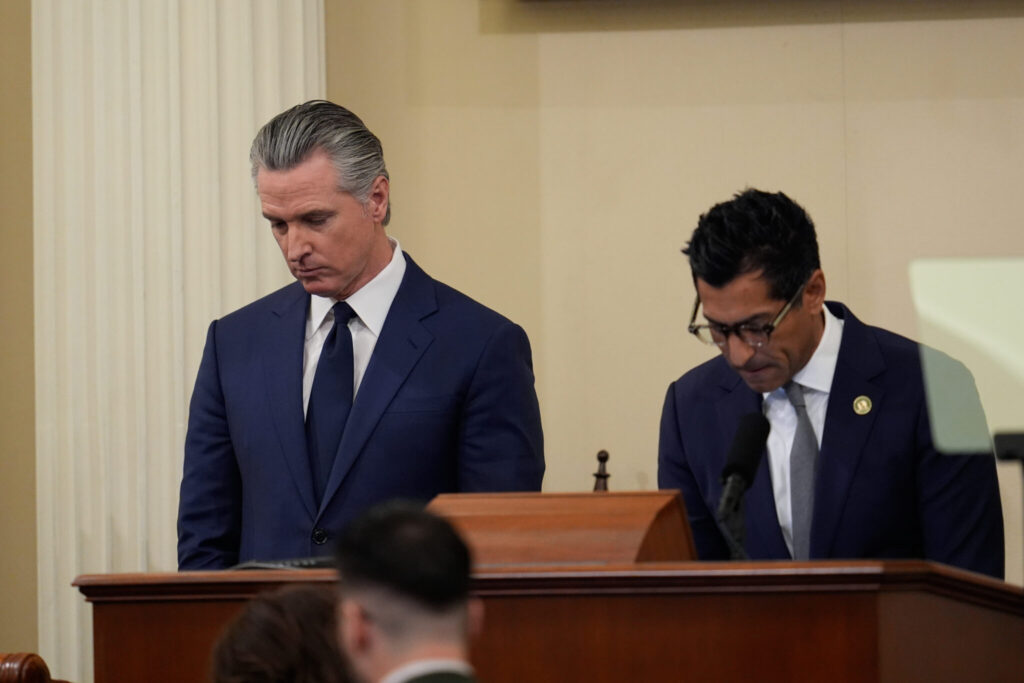
Newsom State of the State Quick Looks
- California Gov. Gavin Newsom blasts Trump’s “assault on values”
- Final in‑person State of the State address before potential 2028 presidential run
- Newsom defends state’s efforts on homelessness, climate, crime, healthcare
- Calls federal government a “carnival of chaos,” cites lawsuits against Trump
- Republicans criticize gas and electricity prices under his leadership
- Newsom accuses critics of “California Derangement Syndrome”
- Highlights disaster recovery needs from L.A.‑area wildfires
- Notes decline in unsheltered homelessness and crime rate improvements
Newsom Confronts Trump and GOP in State Final Speech
Deep Look
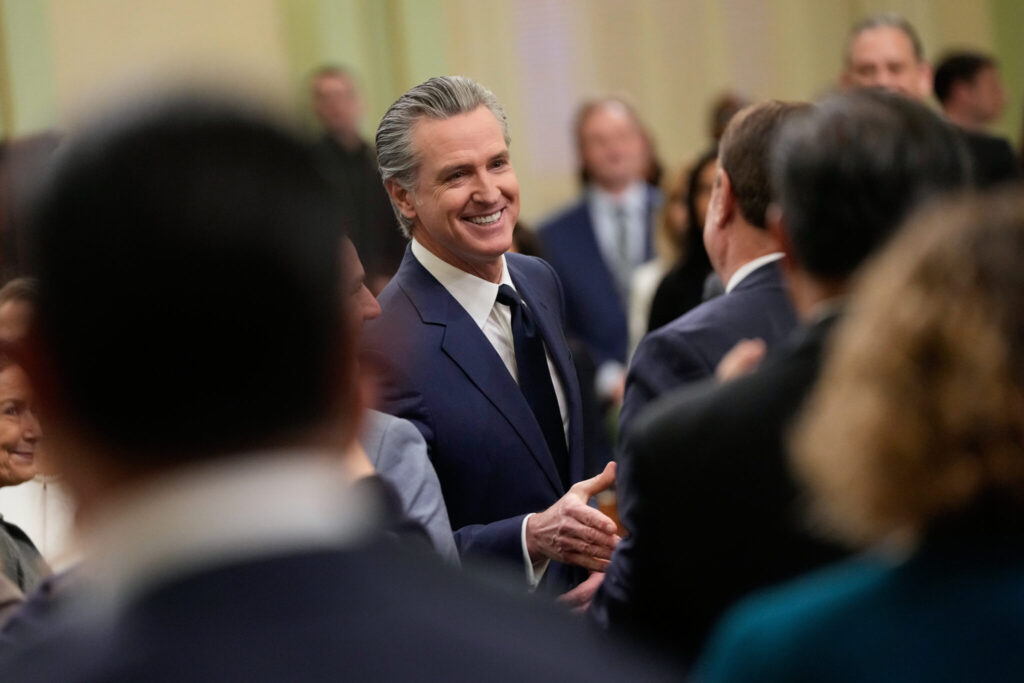
SACRAMENTO, Calif. — California Governor Gavin Newsom delivered a bracing final in‑person State of the State address Thursday, using the podium to push back against critics at home and Republican President Donald Trump’s federal agenda. Newsom, a Democrat eyeing a potential 2028 presidential run, portrayed California as a stronghold of progressive success and resilience despite what he called a chaotic and adversarial federal government.
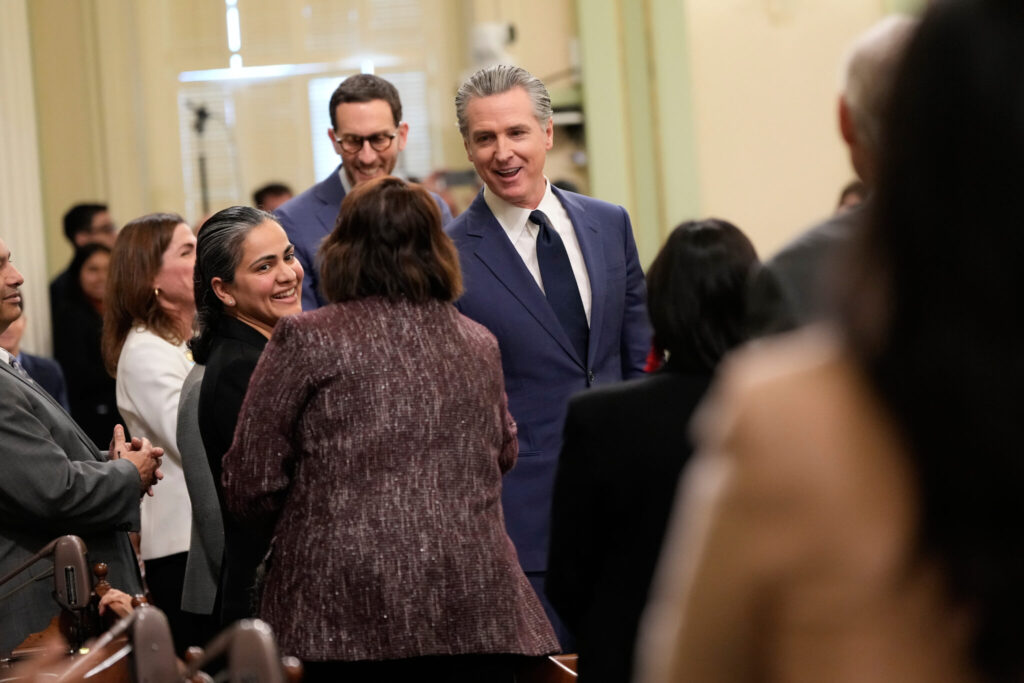
Newsom’s speech to lawmakers in Sacramento struck a defiant tone, framing his eight years leading the country’s most populous state as evidence of policy achievements amid national turbulence. He specifically attacked the Trump administration’s policies and rhetoric, accusing the White House of protecting powerful interests over vulnerable citizens.
“The federal government, respectfully, it’s unrecognizable, protecting the powerful at the expense of the vulnerable,” Newsom said. He labeled federal actions a “carnival of chaos,” citing National Guard deployments to Democratic cities, disputes over federal food aid, and cuts to medical research funding.
Highlighting California’s independence from federal pushback, Newsom noted that the state has filed more than 50 lawsuits against the Trump administration, defending state policies he says benefit residents and align with California values.
While the address focused heavily on criticism of federal leadership, Newsom also took time to promote his own policy record. He touted a 9% drop in unsheltered homelessness last year, improvements in public safety including declining homicide rates in major cities, and the state’s efforts to provide mortgage relief and cleanup after last year’s deadly Los Angeles‑area wildfires.
Newsom called for accelerated rebuilding efforts and highlighted California’s actions combating crime, including a $267 million investment in local law enforcement for retail and property crime prevention.
But not all statewide leaders were moved by Newsom’s speech. Republican lawmakers, including State Sen. Rosilicie Ochoa Bogh, criticized him for failing to address issues like high electricity and gas prices.
“After years of one‑party rule under Gov. Gavin Newsom, the results don’t match the rhetoric,” Bogh said.
The White House attacked Newsom’s speech, calling his policies responsible for damaging the economy of California, and used critical language for political effect.
Beyond internal state dynamics, Newsom’s address also referenced federal climate and automotive policy disputes. He reiterated criticism of Trump’s efforts to block California’s nation‑leading ban on new gas‑powered cars by 2035, a move he said was essential to the state’s climate strategy.
The address came one day after the one‑year anniversary of the L.A. wildfires that killed 31 people and destroyed neighborhoods. Newsom said he has requested nearly $34 billion from Congress and the federal government for wildfire recovery and faulted Trump for insufficient response.
“It’s time for the president of the United States to do his job,” Newsom said. “Not turn his back on Americans who happen to live in the great state of California.”
In addition to policy, Newsom took a personal moment in the speech, briefly discussing his lifelong experience with dyslexia and how it has shaped the way he delivers public addresses.
This year’s speech also marked a return to in‑person delivery for the governor — the first since 2022 — after several years where circumstances led him to submit written reports or prerecorded remarks to fulfill constitutional requirements.
Newsom also announced plans to expand efforts statewide on areas such as climate resilience and economic support programs, positioning California as a national model. He rejected what he labeled “California Derangement Syndrome” among critics, a phrase echoing jokes about political overreach used in national political discourse.
As he looks ahead to his final budget proposal, expected Friday, Newsom continues to balance defending his record with setting a course for California’s next phase — one he needs to sell to voters and political allies alike.