How Iran’s Nationwide Protests Escalated in Two Weeks/ Newslooks/ WASHINGTON/ J. Mansour/ Morning Edition/ Widespread protests erupted across Iran on December 28 in response to economic collapse and currency devaluation. The demonstrations quickly evolved into anti-government movements, with dozens killed and thousands arrested. Internet blackouts and mass arrests have followed as the government attempts to suppress unrest.
Iran Protest Timeline Quick Looks
- Protests began Dec. 28 after Iran’s rial hit record low
- Initial unrest focused on inflation and food price spikes
- Thousands of protesters have since been arrested nationwide
- Clashes have turned deadly with rising civilian casualties
- President Pezeshkian promised action but unrest escalated
- Protesters now chant anti-regime slogans openly
- U.S. President Trump issued a warning against violence
- Iran’s Supreme Leader called for crackdown on “rioters”
- Internet and phone services were blocked to limit communication
- Over 60 people killed and more than 2,300 detained
How Iran’s Nationwide Protests Escalated in Two Weeks
Deep Look
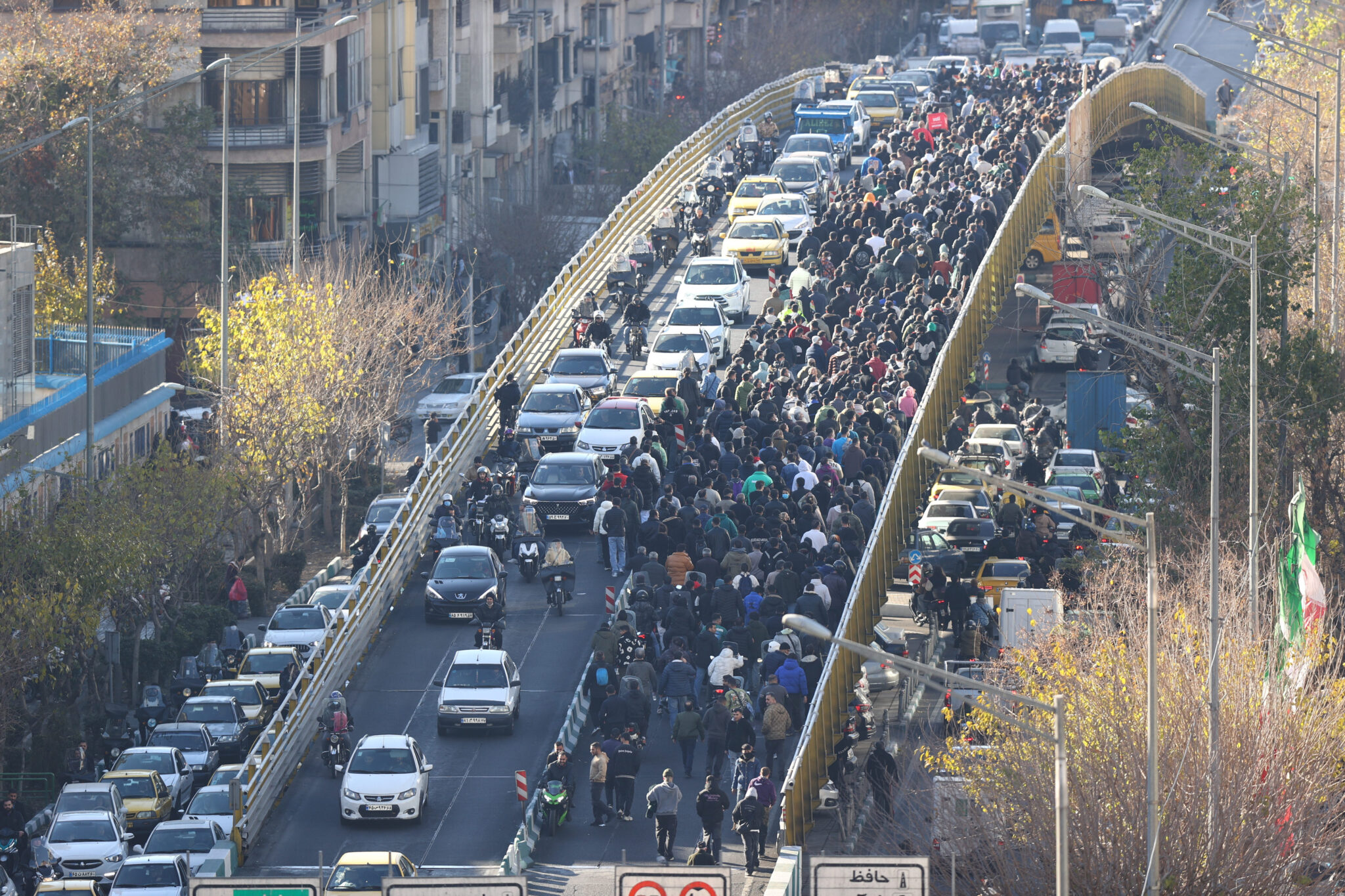
DUBAI, United Arab Emirates — What began as outrage over inflation and a collapsing currency has erupted into a widespread movement of civil unrest in Iran. Since December 28, protests have grown from isolated economic frustration to nationwide demonstrations openly challenging the authority of the Islamic Republic.
This timeline traces the key developments in the unfolding protests, which have resulted in dozens of deaths and thousands of arrests as Iranian authorities respond with escalating force.
Dec. 28 — Protests erupted in two major marketplaces in downtown Tehran after the Iranian rial plummeted to a record low of 1.42 million to the U.S. dollar. The falling currency worsened inflation and drove up prices for basic necessities. Discontent had been brewing for weeks following government hikes in subsidized fuel prices.
Dec. 29 — The unrest spread, prompting the resignation of Central Bank head Mohammad Reza Farzin. Police in Tehran used tear gas to disperse demonstrators as protests extended to other cities.
Dec. 30 — President Masoud Pezeshkian met with business leaders in an attempt to calm public anger. He pledged that his administration would not hold back in efforts to resolve the nation’s economic challenges. Demonstrations continued to spread, including to several university campuses.
Dec. 31 — Abdolnasser Hemmati was appointed as Iran’s new central bank governor. In the southern city of Fasa, protests turned violent, with crowds storming the local governor’s office and injuring police.
Jan. 1 — Authorities confirmed the first fatalities of the unrest. At least seven people were reported killed in various provinces, including Lorestan, Bakhtiari, and Isfahan. Online videos from the city of Azna showed fires and sounds of gunfire amid chants of “Shameless! Shameless!” A 21-year-old member of the Basij paramilitary force was also reported killed.
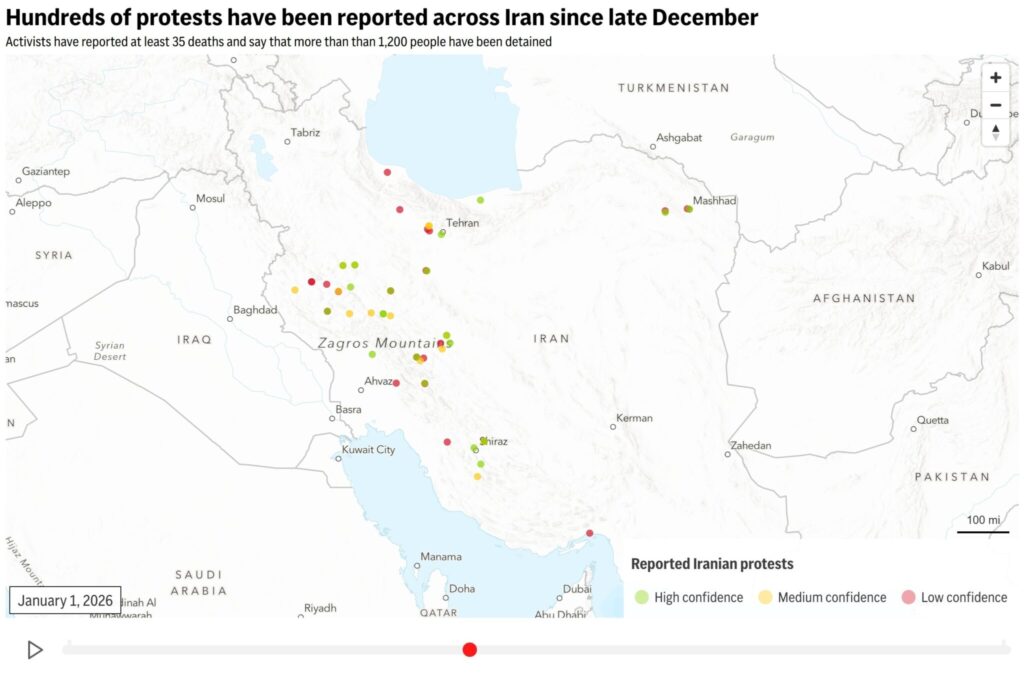
Jan. 2 — U.S. President Donald Trump issued a stark warning via his Truth Social platform, stating that the U.S. would intervene if Iran “violently kills peaceful protesters.” Referring to recent airstrikes on Iranian nuclear sites, Trump added, “We are locked and loaded and ready to go.” On the ground, demonstrations spread to more than 100 locations across 22 provinces, according to the U.S.-based Human Rights Activists News Agency (HRANA).
Jan. 3 — Supreme Leader Ayatollah Ali Khamenei stated that “rioters must be put in their place,” interpreted by many as a directive to security forces to intensify suppression. Protests expanded to 170 sites in 25 provinces. HRANA reported at least 15 new deaths and 580 arrests.
Jan. 6 — A sit-in at Tehran’s Grand Bazaar was violently dispersed with tear gas. HRANA reported that 36 people had been killed, including two members of Iran’s own security forces. Demonstrations had now occurred in over 280 locations across 27 of the country’s 31 provinces.
Jan. 8–9 — Following a call by Iran’s exiled crown prince, a surge of overnight protests erupted, with people shouting anti-regime slogans from windows and gathering in the streets. In response, the Iranian government moved to cut off communication with the outside world, blocking internet access and international phone services. According to HRANA, at least 62 people have now been killed, and more than 2,300 detained.
What began as protests over economic despair has evolved into a national crisis for Iran’s leadership. The government’s increasing use of force, the growing death toll, and efforts to silence communication with the outside world reflect the scale of the threat perceived by the ruling authorities.