Trump Imposes 25% Tariffs On Iran Trade Partners/ Newslooks/ WASHINGTON/ J. Mansour/ Morning Edition/ President Donald Trump announced a 25% tariff on all countries conducting business with Iran, a sweeping move that could escalate tensions with major trade partners like China. The sudden order applies “immediately,” though specifics remain unclear. China and others have condemned the policy as economically damaging.

Trump Global Tariff Move Quick Looks
- Trump imposes 25% tariffs on all Iran trade partners
- Order applies to any country doing business with Tehran
- Announced via Truth Social with no White House details
- Policy could significantly impact Chinese exports to the U.S.
- China denounces move, vows to defend economic interests
- Trump does not define “doing business” with Iran
- Experts say new tariffs may raise Chinese goods by 45%
- India, UAE, Turkey also major Iran trade partners at risk
- Trump invoked emergency economic powers for tariff authority
- Supreme Court ruling expected on legality of Trump’s tariff powers
- U.S. may face $130 billion in tariff refunds if blocked
- Announcement follows Trump warning over Iran protest crackdown
Deep Look: Trump Imposes 25% Tariffs On Iran Trade Partners
WASHINGTON — President Donald Trump announced Monday that the United States will impose a 25% tariff on all countries that continue to do business with Iran, a sweeping order that could affect multiple global economies and reignite tensions with key trading partners, especially China.
Trump made the announcement through a post on Truth Social, stating, “Effective immediately, any Country doing business with the Islamic Republic of Iran will pay a Tariff of 25% on any and all business being done with the United States of America. This Order is final and conclusive.”
The message offered no specifics regarding how the tariffs will be implemented, what qualifies as “doing business” with Iran, or whether services—as well as goods—would be subject to the new import penalties. The White House declined to clarify further, referring inquiries back to the president’s post.
The announcement raises immediate questions about the reach of this policy and its global implications. China, Iran’s largest trading partner, could face significant cost increases if its exports to the U.S. are targeted under the new tariff order. Analysts suggest that if applied, the combined duties on Chinese goods could rise from the current 20% to as high as 45%.
In a direct response on Tuesday, China’s foreign ministry criticized the new tariffs. “China’s position on tariffs is very clear: there are no winners in a tariff war, and China will firmly safeguard its legitimate rights and interests,” said spokesperson Mao Ning during a press briefing.
According to customs data, China exported $6.2 billion in goods to Iran and imported $2.85 billion from the country during the first 11 months of 2025. That figure does not include oil, which is not publicly reported but believed to make up the bulk of Iran’s trade with China. Analysts estimate that over 90% of Iranian oil exports in recent years have gone to China, often through intermediary arrangements designed to circumvent U.S. sanctions.
India, the United Arab Emirates, and Turkey are also likely to be affected, as they maintain substantial trade relationships with Iran. India, in particular, has already faced tariff hikes from Trump, who doubled import duties on Indian goods this past summer in retaliation for its purchases of Russian oil. He has also threatened similar actions against other nations continuing to do business with Moscow.
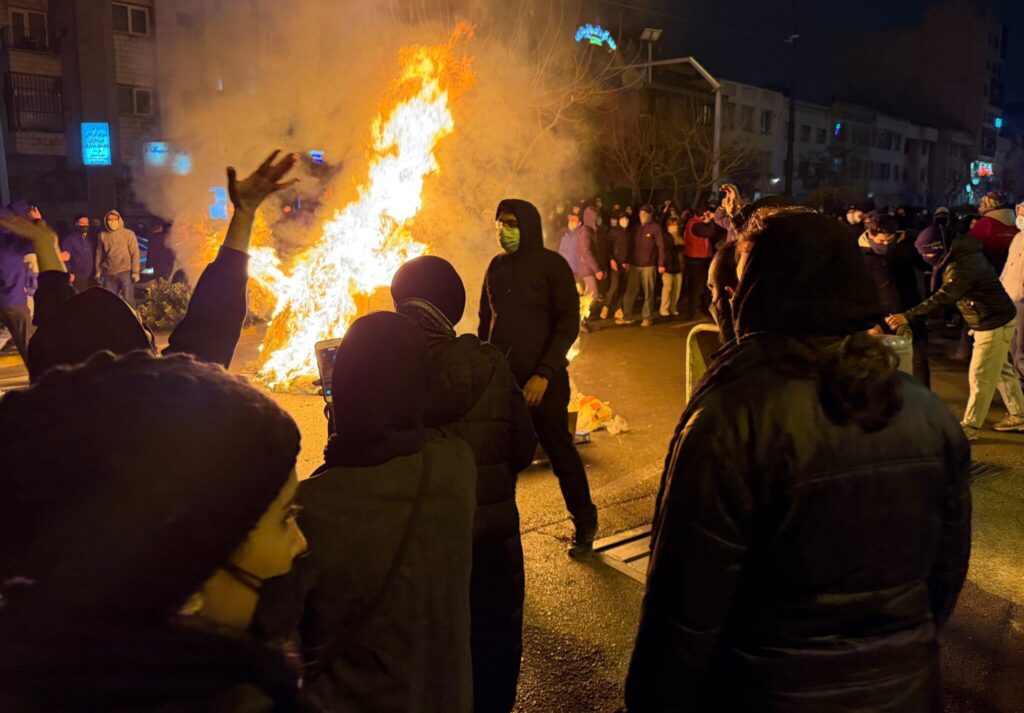
The announcement comes just days after Trump warned of potential U.S. military intervention to support anti-government protesters in Iran, hundreds of whom have reportedly been killed in a brutal crackdown by Iranian security forces. A communications blackout imposed by Iranian authorities has limited the flow of information in and out of the country, further heightening international concern.
While the tariff policy is framed as part of Trump’s broader strategy to pressure Tehran, the lack of clarity on enforcement mechanisms and target definitions could complicate trade flows between the U.S. and multiple global economies.
Trump has frequently utilized the International Emergency Economic Powers Act (IEEPA) to impose tariffs unilaterally during his second term. That law allows the president to restrict commerce in response to a declared national emergency. However, his aggressive interpretation of the statute is now being challenged before the U.S. Supreme Court.
A ruling is expected this month that could significantly alter presidential authority over tariffs. If the court finds that Trump exceeded his legal powers, it could strip him of the ability to raise tariffs without congressional approval and potentially require the U.S. government to repay up to $130 billion in tariff revenues collected under contested circumstances.
The looming legal battle adds uncertainty to an already volatile global trade environment. The last major tariff escalation between the U.S. and China triggered a sharp sell-off in global stock markets, disrupted supply chains, and raised consumer prices across the board.
In this case, analysts warn that unilateral action without defined terms could lead to confusion, retaliatory tariffs, or legal challenges from affected nations. U.S. businesses may also face increased costs on goods imported from countries with even indirect commercial ties to Iran.
Whether the order leads to immediate enforcement or is used primarily as a geopolitical signal remains to be seen. Still, it underscores Trump’s willingness to wield economic tools broadly in pursuit of foreign policy goals—regardless of potential fallout in international markets.