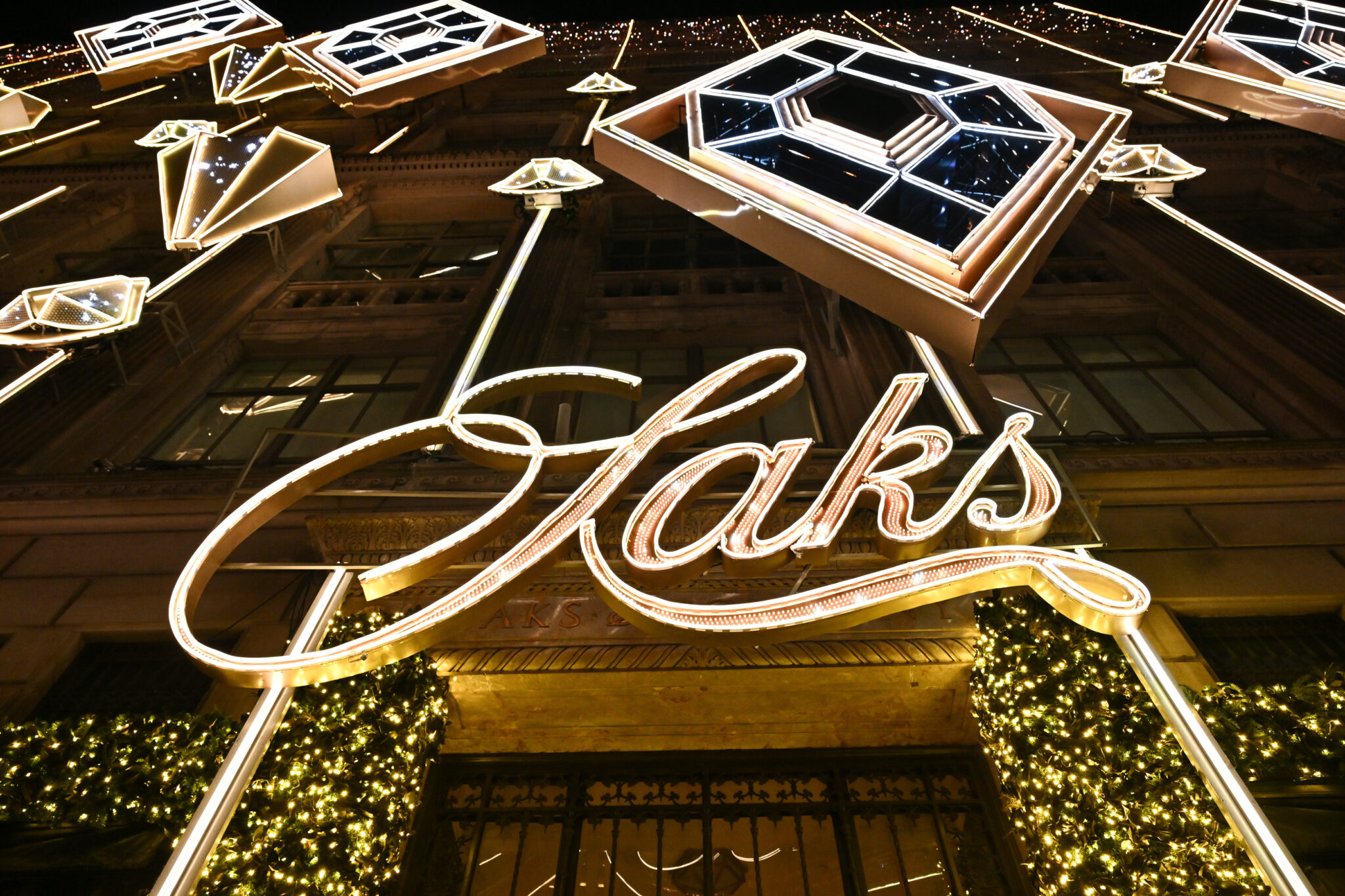
Saks Global Files Bankruptcy Amid Luxury Retail Slowdown/ Newslooks/ Washington/ J. Mansour/ Morning Edition/ Luxury retailer Saks Global has filed for Chapter 11 bankruptcy as it restructures billions in debt tied to its Neiman Marcus acquisition. The company secured $1.75 billion in financing and says operations will continue uninterrupted. The move highlights growing pressure across the global luxury retail sector.


Saks Global Bankruptcy Quick Looks
- Saks Global files for Chapter 11 bankruptcy protection
- Company owns Saks Fifth Avenue and Neiman Marcus
- Bankruptcy filed in Southern District of Texas
- $1.75 billion in financing commitments secured
- Leadership shakeup follows debt from Neiman Marcus deal
- Luxury consumers pushing back on steep price increases
- Global luxury market expected to shrink again in 2026
- Company says stores, payroll, and customer programs unaffected
- Hudson’s Bay previously split off Saks e-commerce business
- Restructuring aims to reduce debt and refocus operations
Deep Look: Saks Global Files Bankruptcy Amid Luxury Retail Slowdown
Luxury retail conglomerate Saks Global has filed for Chapter 11 bankruptcy protection as it prepares to restructure its balance sheet and reposition itself in an increasingly competitive and cooling high-end retail market.
The New York–based private company, which owns Saks Fifth Avenue and Neiman Marcus, announced Wednesday that it filed for bankruptcy in the U.S. Bankruptcy Court for the Southern District of Texas. The filing comes after the company secured approximately $1.75 billion in financing commitments to support its restructuring.
Saks Global said the Chapter 11 process will allow it to reduce its heavy debt load while continuing normal operations. The retailer emphasized that stores will remain open, suppliers and employees will continue to be paid, and customer loyalty programs will be honored throughout the proceedings.
The bankruptcy marks a significant moment for one of the most prominent names in American luxury retail, following years of financial strain intensified by shifting consumer behavior, rising interest rates, and aggressive price increases across the luxury sector.
Much of Saks Global’s financial pressure stems from its $2.65 billion acquisition of Neiman Marcus in 2024, a deal that saddled the company with substantial debt just as demand for luxury goods began to soften globally.
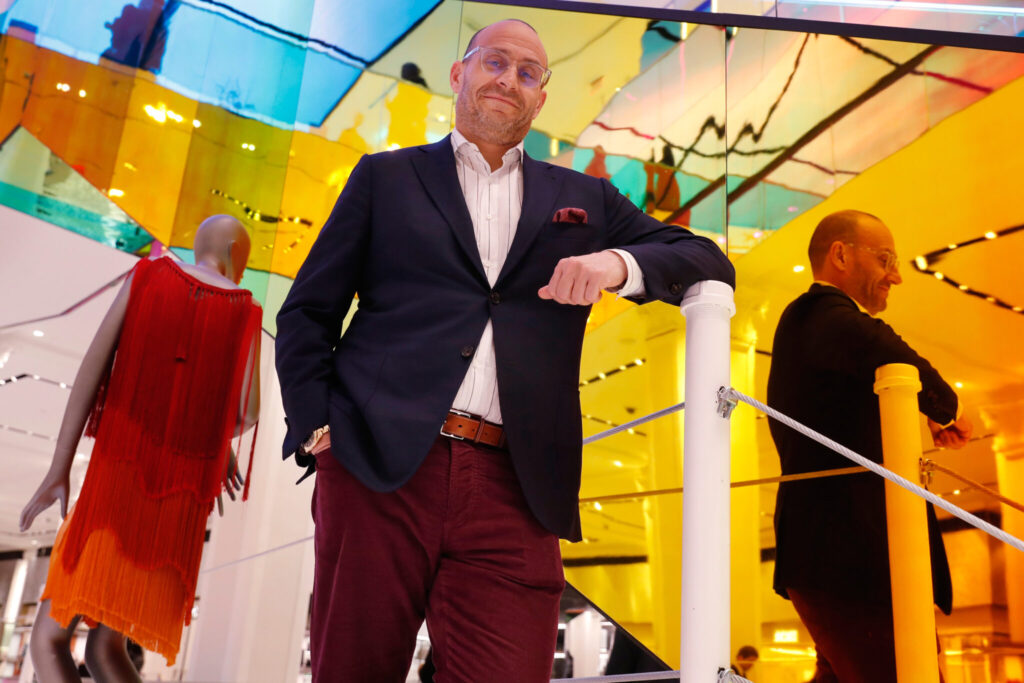
Earlier this month, Saks Global CEO Marc Metrick stepped down amid the company’s mounting financial challenges. He was initially replaced by executive chairman Richard Baker, who soon after resigned from both roles. Leadership of the company has since passed to Geoffroy van Raemdonck, a veteran retail executive now tasked with guiding the restructuring effort.
In a statement, Saks Global said it is “evaluating its operational footprint to invest resources where it has the greatest long-term potential,” signaling that store closures, asset sales, or further consolidation could be part of the restructuring process.
The company disclosed that it has secured $1.5 billion in financing commitments from certain creditors, along with an additional $240 million in incremental liquidity from lenders. These funds are expected to provide the company with sufficient runway to stabilize operations while negotiating with creditors.
Saks Global’s bankruptcy reflects broader challenges facing luxury retailers worldwide. After years of rapid growth fueled by affluent consumers and post-pandemic spending, demand has cooled as inflation, economic uncertainty, and geopolitical tensions weigh on discretionary spending.
According to a study released in November by Bain & Company, global luxury goods sales are expected to contract for a second consecutive year in 2026. The report cited cautious consumer behavior, reduced tourism spending, and resistance to repeated price hikes as major factors behind the slowdown.
Saks Global has felt those pressures acutely. While its core customers remain relatively affluent, even high-income shoppers have shown signs of fatigue with escalating prices for designer apparel, accessories, and luxury goods. Competition from online platforms, resale marketplaces, and luxury brands selling directly to consumers has further eroded traditional department store dominance.
The company’s structure has evolved significantly in recent years. Hudson’s Bay Company, Canada’s oldest company and longtime owner of Saks Fifth Avenue, spun off the retailer’s e-commerce business, Saks.com, in 2021. Following the Neiman Marcus acquisition in 2024, the combined luxury operations were rebranded as Saks Global.
Hudson’s Bay itself has been retrenching aggressively. In March 2025, the Canadian retailer began liquidating all but six of its remaining stores as part of its own restructuring efforts, underscoring the challenges facing legacy department store chains across North America.
Despite the bankruptcy filing, Saks Global stressed that the Chapter 11 process is intended to be a restructuring rather than a liquidation. The company said it expects no disruption to day-to-day business and will continue serving customers throughout the process.
Retail analysts say the success of Saks Global’s restructuring will depend on its ability to streamline operations, renegotiate leases, reduce debt, and redefine its value proposition in a market that is no longer expanding at its previous pace.
“Saks Global is not alone,” said one industry analyst. “This is part of a broader reset across luxury retail. The companies that survive will be the ones that adapt to slower growth, digital competition, and more value-conscious consumers.”
The bankruptcy also raises questions about the future of large-scale luxury department stores, which once dominated high-end shopping districts but now face competition from both nimble digital brands and experiential luxury concepts.
For now, Saks Global is betting that a court-supervised restructuring, combined with fresh financing and new leadership, will allow it to emerge leaner and better positioned for the next phase of the luxury retail cycle.