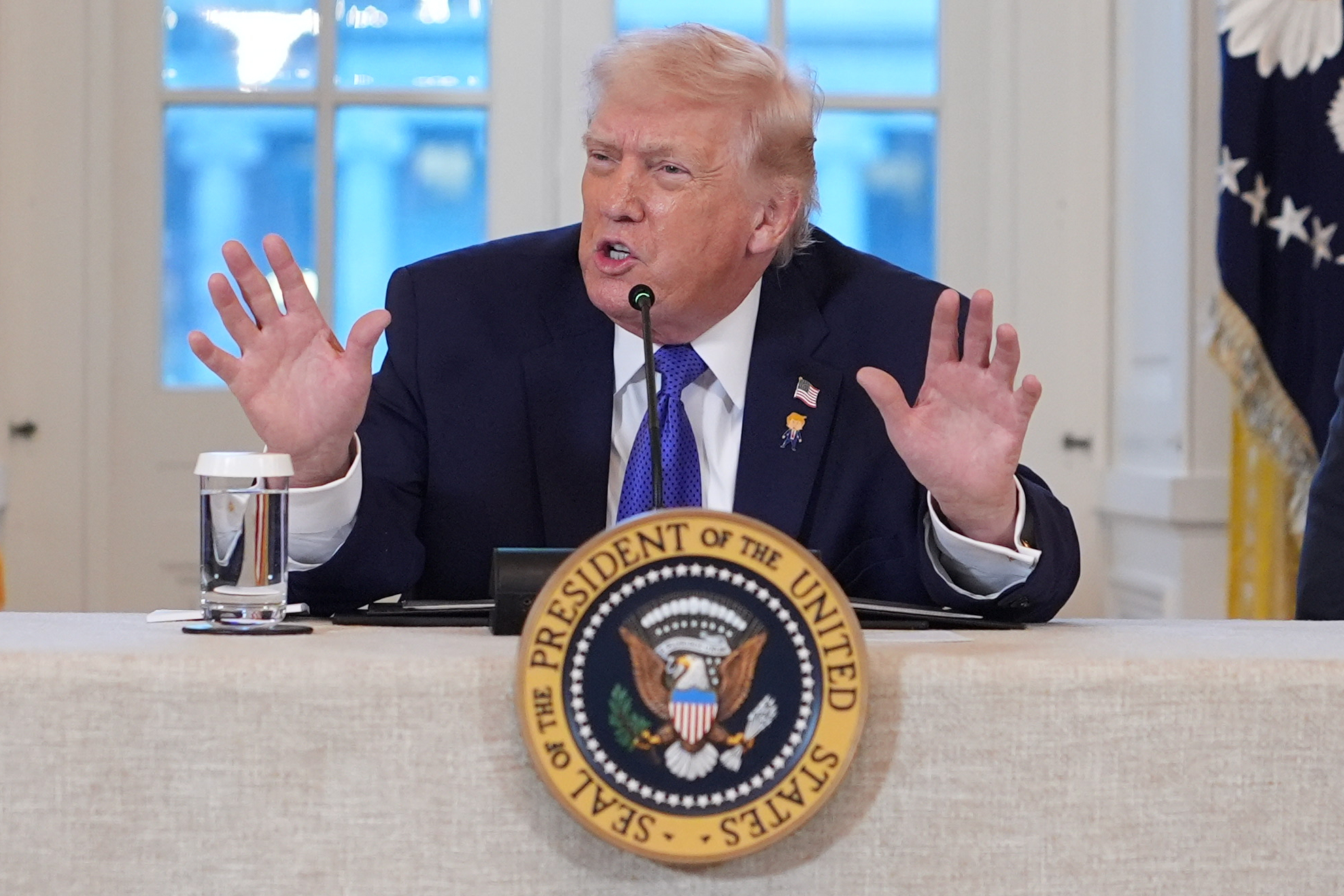
Trump Pressures GOP as Senate Eyes Venezuela War Powers Vote/ Newslooks/ WASHINGTON/ J. Mansour/ Morning Edition/ The Senate is preparing for a crucial war powers vote aimed at limiting Trump’s ability to take military action in Venezuela. Trump is aggressively pressuring GOP senators to oppose the measure, calling defectors “losers.” The vote tests congressional oversight amid growing executive war powers.
Venezuela War Powers Clash Quick Looks
- Trump urges Senate Republicans to reject war powers resolution
- Five GOP senators initially backed advancing the bill with Democrats
- Legislation follows U.S. capture of Venezuelan leader Nicolás Maduro
- Trump lashes out at GOP senators including Rand Paul and Susan Collins
- Sen. Josh Hawley reconsiders support after calls with Trump, Rubio
- Sen. Todd Young may cast decisive vote in upcoming floor debate
- Democrats push to reassert Congress’ constitutional war powers authority
- Trump claims Maduro’s capture was a law enforcement, not military, operation
- Resolution unlikely to become law but signals Senate pushback
- Legal justifications for U.S. action remain classified, sparking criticism
Trump Pressures GOP as Senate Eyes Venezuela War Powers Vote
Deep Look
WASHINGTON — A high-stakes showdown is brewing in the U.S. Senate as lawmakers prepare to vote on a resolution that would limit President Donald Trump’s authority to take further military action in Venezuela. The measure, brought forward by Democrats and initially supported by five Republican senators, has drawn fierce opposition from Trump, who is working aggressively to sway GOP defectors ahead of the floor vote.
The resolution gained traction after a surprise U.S. military operation earlier this month resulted in the capture of Venezuelan leader Nicolás Maduro. The raid, carried out under the direction of Trump’s administration, has sparked sharp debate in Congress about the scope of presidential war powers.
“Here we have one of the most successful attacks ever and they find a way to be against it. It’s pretty amazing. And it’s a shame,” Trump said during a campaign-style speech in Michigan on Tuesday. He didn’t hold back in targeting Republican senators who supported advancing the resolution, labeling Sen. Rand Paul of Kentucky a “stone cold loser” and calling Sens. Lisa Murkowski of Alaska and Susan Collins of Maine “disasters.”
Despite the personal attacks, some Republicans are still weighing their positions. Sen. Josh Hawley of Missouri, who previously supported advancing the resolution, said he is reconsidering his vote after phone calls with Trump and Secretary of State Marco Rubio. According to Hawley, Rubio assured him there would be no deployment of ground troops in Venezuela and that any military action would be constitutionally justified.
“I’m in listening-and-receive mode at this time,” Hawley said, noting he hadn’t made a final decision on the Senate floor vote.
Sen. Susan Collins, however, said she intends to vote in favor of the resolution again, despite previously opposing similar measures. The resolution’s fate may rest with Sen. Todd Young of Indiana, who has declined to reveal his stance but acknowledged he is “giving it some thought.”
Democratic Senator Tim Kaine, a longtime advocate for reasserting congressional authority over war-making decisions, framed the resolution as a necessary check on executive overreach.
“They’re furious at the notion that Congress wants to be Congress,” Kaine said of the backlash. “But I think people who ran for the Senate, they want to be U.S. senators and they don’t want to just vote their own irrelevance.”
The Broader Context of War Powers
The constitutional authority to declare war resides with Congress, but modern presidents have increasingly initiated military actions without formal congressional approval. The War Powers Resolution of 1973 was designed to curb this trend by giving Congress a mechanism to vote on restrictions for specific conflicts.
Military historian and retired Army colonel Peter Mansoor of Ohio State University said the post-World War II era has seen presidents expand their military authority while lawmakers sidestep responsibility.
“Politicians tend to like to evade responsibility for anything — but then this gets you into forever wars,” Mansoor said. He argued that congressional debate ahead of military action would force the government to set clearer strategic goals.
Trump’s Legal Maneuvering
Trump has employed several legal arguments to justify the U.S. military campaign against Maduro. The administration claimed that drug trafficking operations originating in Venezuela fall under the broader global war on terror framework by labeling cartels as terrorist organizations. It also asserted that the capture of Maduro was a law enforcement action tied to criminal charges filed in U.S. courts in 2020.
These justifications were presented to lawmakers in a classified briefing on Tuesday. The legal rationale has not been released publicly, drawing sharp criticism from some senators.
Rand Paul, after exiting the classified briefing, said, “Legal arguments and constitutional arguments should all be public, and it’s a terrible thing that any of this is being kept secret because the arguments aren’t very good.”
Concerns about Trump’s expansive view of executive military authority have grown in recent weeks. The president has pledged to control Venezuela for “years to come,” floated military options for taking control of Greenland, and promised aid to Iranian protesters — raising questions about the limits of U.S. global engagement under his leadership.
Senate Democratic Leader Chuck Schumer criticized the double standard in Trump’s rhetoric.
“It’s amazing. He’s concerned about the protesters in Iran, but not concerned about the damage that ICE is doing to the protesters and Americans in Minnesota and other places,” Schumer said, referencing the recent fatal shooting of a woman by a federal immigration officer in Minneapolis.
The Vote’s Impact and GOP Dilemma
While the war powers resolution is unlikely to become law — it would ultimately require the president’s signature or a veto-proof majority — it serves as a powerful symbol of Senate discontent with unchecked military actions. It also puts Senate Republicans in a difficult political position: choose between reaffirming constitutional checks or maintaining party loyalty ahead of a contentious election year.
Senate Majority Leader John Thune of South Dakota tried to downplay the significance of the resolution in a floor speech on Wednesday.
“We have no troops on the ground in Venezuela. We’re not currently conducting military operations there,” he said. “But Democrats are taking up this bill because their anti-Trump hysteria knows no bounds.”
Still, Republican leaders are wary of alienating Trump, who maintains considerable influence over the party’s base. One possible procedural move could be to dismiss the resolution entirely, arguing that it is irrelevant to the current situation. That, too, would require a vote.
Schumer urged Republicans not to back down under pressure. “I hope at least the five Republicans who initially supported it hold to their position. They understand how important this is,” he said.
More on US NewsAs the Senate prepares to vote, the outcome may not alter U.S. policy in Venezuela immediately, but it will underscore the ongoing struggle over war powers, the role of Congress, and how far a president can go in using the military without direct approval from the lawmakers elected to oversee those decisions.