Speaker Johnson Tells British Parliament He Came to ‘Calm the Waters’/ Newslooks/ WASHINGTON/ J. Mansour/ Morning Edition/ House Speaker Mike Johnson addressed the British Parliament, aiming to ease rising tensions between the U.S. and its allies, sparked in part by Trump’s renewed Greenland acquisition ambitions. Johnson emphasized unity and collective strength among Western democracies. Meanwhile, the U.S. Supreme Court prepares to hear arguments over Trump’s controversial attempt to fire Federal Reserve Governor Lisa Cook via social media.
Mike Johnson UK Parliament Speech and Trump Fed Firing Case Quick Looks
- Mike Johnson becomes the first sitting U.S. House Speaker to address Parliament in the UK
- Johnson said his goal was to “calm the waters” amid diplomatic friction
- He reaffirmed strong U.S.-UK ties and collective responses to global threats
- Trump’s firing of Fed Governor Lisa Cook is under Supreme Court review
- Cook challenges the legality and constitutionality of being dismissed via Truth Social
- The outcome could reshape presidential power and central bank independence
Deep Look
Speaker Mike Johnson Aims to Cool Tensions in Historic UK Parliament Speech as Trump’s Fed Firing Hits Supreme Court
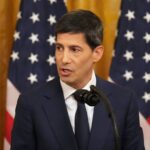
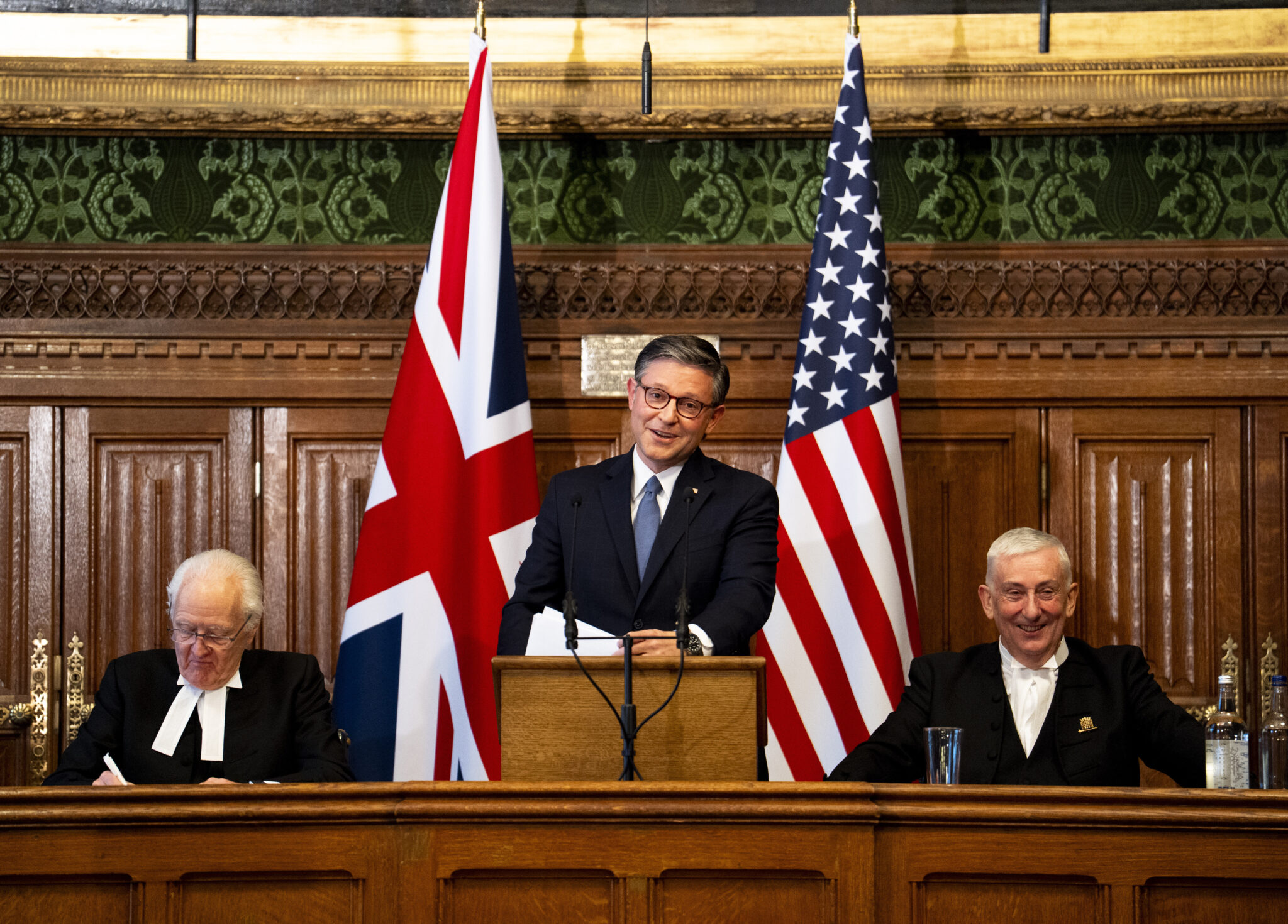
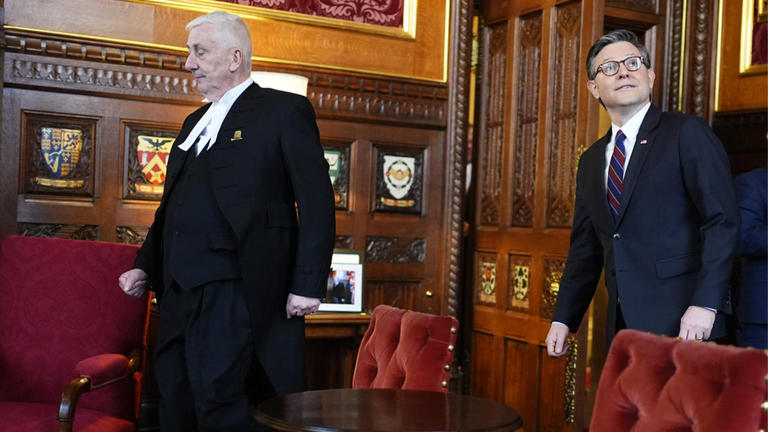
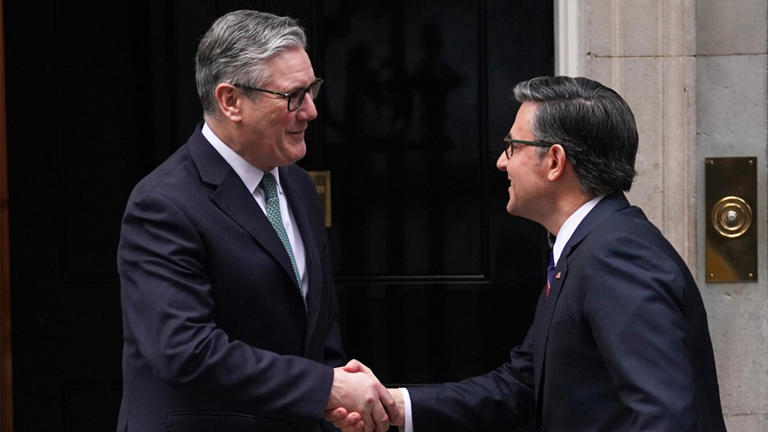
In a historic address, U.S. House Speaker Mike Johnson appeared before the British Parliament, becoming the first sitting speaker to do so. His visit came at a critical time for U.S.-European relations, strained in recent weeks by President Donald Trump’s revived push to acquire Greenland and his public criticism of UK Prime Minister Keir Starmer regarding the Chagos Islands.
Johnson, speaking just ahead of America’s 250th Independence anniversary, said he came to “calm the waters” and emphasized that the United States remains committed to its long-standing alliance with Britain. “I spoke to President Trump at length yesterday, and I told him that I really felt that my mission here today was to encourage our friends and help to calm the waters, so to speak,” he said during his address.
While tensions have increased, Johnson reassured British lawmakers that cooperation remains vital. He praised the durability of the U.S.-UK relationship, founded on shared democratic values, security interests, and centuries of cooperation. “We’ve always been able to work through our differences calmly as friends. We will continue to do that,” he said.
Johnson tied the timing of his visit to the upcoming U.S. semiquincentennial, framing it as a moment not only for celebration but for recommitment to democratic ideals. He emphasized that external threats from nations like China, Russia, and Iran demand renewed solidarity among Western allies.
He warned of escalating aggression by America’s chief adversaries, pointing to economic sabotage, human rights abuses, and widespread intellectual property theft. “We see China, Russia and Iran grow more aggressive and emboldened as they intensify their efforts to exert economic, political, and military influence around the world,” Johnson declared. “We see a callous disregard for basic human rights.”
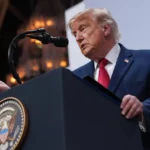
Regarding Trump’s Arctic ambitions, Johnson stated that the president is taking global security threats seriously, particularly those emerging in the Arctic region. He dismissed rumors of imminent military action in Greenland, stating, “No boots on the ground,” in reference to concerns surrounding Trump’s acquisition plans.
He also aimed to correct misconceptions about the “America First” policy, clarifying that it doesn’t equate to isolationism. “America First does not mean America alone,” he said, applauding NATO’s recent increases in defense funding and noting the success of the AUKUS alliance in deepening cooperation on undersea security. “Whether it’s NATO’s nations’ historic commitment to raise their investment in defense… or the AUKUS alliance deepening its cooperation in submarines and undersea defense, our partnership is proving that nations can prioritize their individual interests responsibly.”
In closing, Johnson warned that military strength and economic success are hollow without a shared moral foundation. “Strong and lethal militaries matter. Robust and thriving economies matter, but they mean little if we forget what we’re fighting for.”
Back in Washington, however, a legal battle looms that could significantly alter the scope of presidential authority and redefine the boundaries of institutional independence.
On Wednesday, the U.S. Supreme Court will hear arguments surrounding Trump’s attempt to fire Federal Reserve Governor Lisa Cook—an unprecedented move carried out through his Truth Social account. On August 25, 2025, Trump posted a message informing Cook that she was “hereby removed” from her position, making her the first Fed governor ever dismissed since the central bank’s creation in 1913.
Cook and her legal team argue that the firing violated the U.S. Constitution’s Fifth Amendment, which guarantees due process. A lower court blocked Trump’s removal order while the case is pending, and the Supreme Court’s upcoming decision could have lasting implications.
The Trump administration’s rationale for firing Cook rests on mortgage fraud allegations made by Federal Housing Finance Agency Director Bill Pulte. Cook, who denies the accusations, was appointed in 2022 by President Joe Biden and made history as the first Black woman to serve on the Federal Reserve Board.
Beyond the allegations, legal experts say the case touches on broader questions—whether a president can use social media platforms to take official action and what safeguards exist to prevent abuse of executive power.
If the Court rules in Trump’s favor, it could embolden future presidents to use informal methods for formal acts of governance, blurring the lines between communication and policy enforcement. On the other hand, upholding Cook’s challenge could set new precedent limiting presidential authority and reinforcing institutional checks.
As Mike Johnson works to fortify America’s standing abroad, the Supreme Court’s decision may determine how far presidential power extends at home—especially in the age of social media.