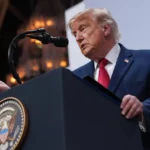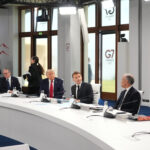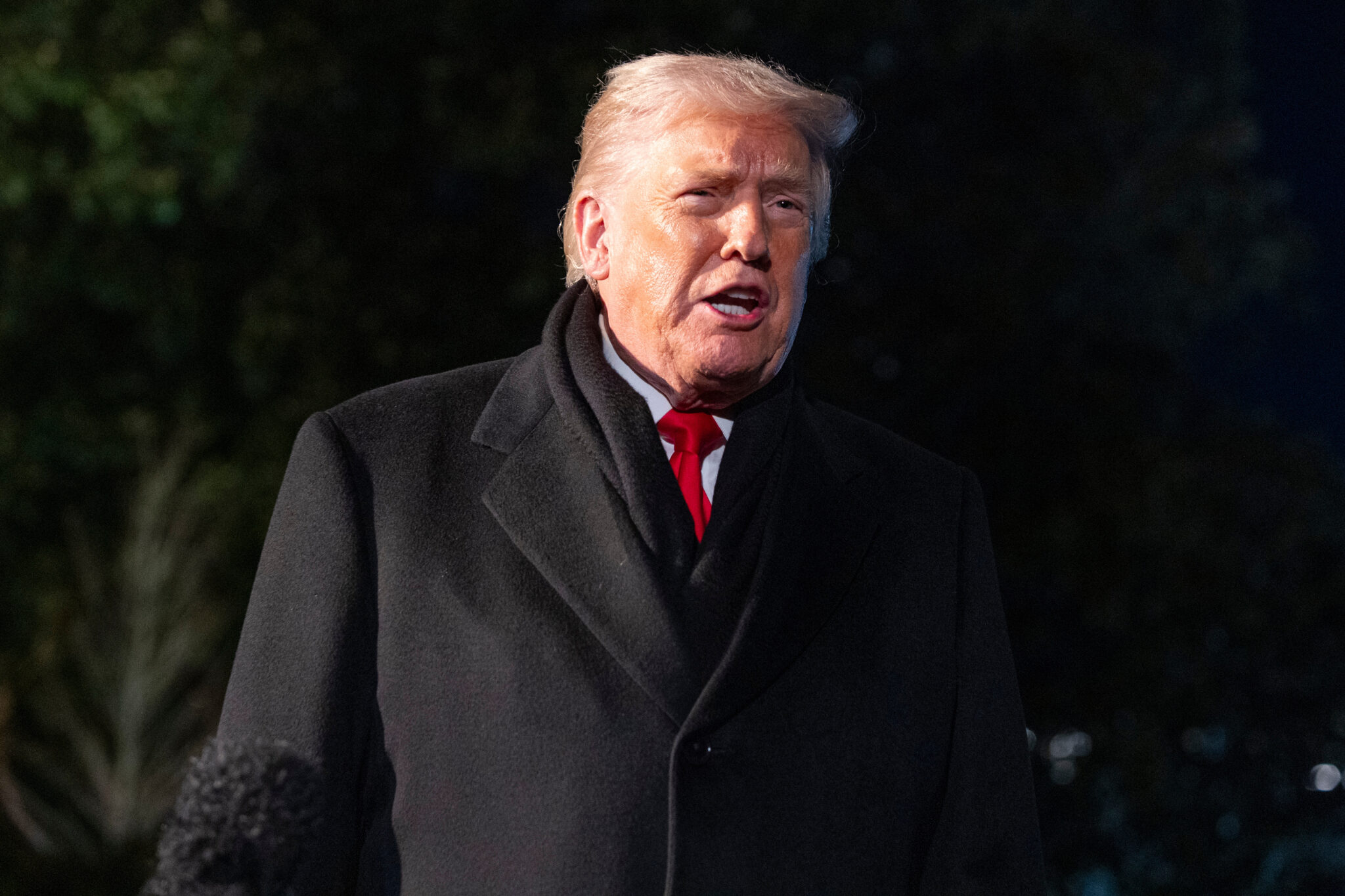
Trump’s Domestic Agenda Faces Global Headwinds as Greenland Tensions Erupt at Davos/ Newslooks/ WASHINGTON/ J. Mansour/ Morning Edition/ President Trump arrived in Davos for the World Economic Forum with plans to focus on domestic policy, including housing affordability, but his ongoing efforts to acquire Greenland and new tariff threats against U.S. allies risked overshadowing his economic message. Trump’s creation of a “Board of Peace” and criticism of NATO and the UN added to rising global tensions. European leaders warned that his trade tactics could unravel key international agreements.
Trump’s Davos Visit and Greenland Tensions Quick Looks
- Trump arrived late in Switzerland after aircraft trouble but will speak on schedule
- His Davos speech is expected to cover domestic affordability, housing, and global security
- Ongoing Greenland acquisition push strains U.S.-European relations
- Trump threatens 10% tariffs on Denmark and others unless Greenland talks progress
- European leaders vow retaliation, calling U.S. action a threat to past trade deals
- Trump’s “Board of Peace” aims to rival or replace the United Nations
- Only a few nations have accepted invites to join the peace board
- Trump links Greenland frustration to not receiving the Nobel Peace Prize
- Wall Street reacts negatively to the uncertainty, with sharp drops in major indexes
- Trump pushes plans to lower housing costs and ban corporate home ownership
Deep Look
Trump’s Domestic Agenda Faces Global Headwinds as Greenland Tensions Erupt at Davos
President Donald Trump’s arrival at the 2026 World Economic Forum in Davos was delayed by an unexpected aircraft issue, but the turbulence that followed was geopolitical rather than mechanical. Originally intended as a platform to showcase his domestic agenda—particularly housing affordability and economic stability—Trump’s visit has been overshadowed by growing fallout over his persistent efforts to acquire Greenland from Denmark.
After a small electrical malfunction forced Air Force One to return to Washington on Tuesday night, Trump resumed his journey and landed in Zurich early Wednesday. According to the White House, the delay would not affect the president’s keynote address, which is expected to touch on U.S. economic matters while signaling an aggressive foreign policy stance.
That foreign policy includes Trump’s controversial “Board of Peace,” a new initiative positioned as a successor to the United Nations. The board was introduced as part of his strategy to broker peace in Gaza following the Israel-Hamas war. Trump has invited roughly 50 world leaders to join the new body, but only about 30 are expected to participate. So far, fewer than 10 nations have accepted—including several with authoritarian leanings—while traditional U.S. allies like France, Germany, and the United Kingdom have been hesitant or outright declined.
Trump insists the United Nations “hasn’t lived up to its potential” and says the Board of Peace “might” eventually replace it. Still, he noted, “I believe you got to let the UN continue, because the potential is so great.”
On Thursday, Trump is expected to host a dedicated session on the board, alongside bilateral meetings with approximately five foreign leaders. Specific names were not disclosed.
Despite this international focus, Trump claimed his speech would primarily center on domestic challenges. “I’ll be talking about affordability, especially housing,” he told reporters. With housing costs and mortgage rates at historic highs, Trump has floated proposals such as purchasing $200 billion in mortgage securities to drive down interest rates and banning large financial firms from buying residential properties.
Yet this message may be drowned out by escalating tensions with Europe over Greenland.
Trump has warned that unless Denmark and seven other countries agree to negotiate the transfer of the semi-autonomous Arctic territory, the U.S. will impose tariffs starting at 10% next month, rising to 25% by June. These threats, aimed at NATO allies, could undermine trade deals and global markets.
The stakes are high. Trump reportedly sent a message to Norwegian Prime Minister Jonas Gahr Støre, lamenting not receiving the Nobel Peace Prize and declaring he no longer felt obligated to prioritize peace above all. European leaders, many of whom are gathered at Davos, are increasingly alarmed.
French President Emmanuel Macron, without naming Trump directly, urged attendees to reject a world where “the law of the strongest” prevails. European Commission President Ursula von der Leyen issued a stern warning that any U.S. tariffs would be met with “unflinching, united, and proportional” retaliation.
“The European Union and the United States agreed to a trade deal last July,” von der Leyen said. “And in politics as in business — a deal is a deal. When friends shake hands, it must mean something.”
U.S. Commerce Secretary Howard Lutnick added fuel to the fire by declaring on a Davos panel that “globalization has failed the West and the United States,” aligning with Trump’s protectionist rhetoric. “This will be an interesting trip,” Trump remarked before leaving Washington. “I have no idea what’s going to happen, but you are well represented.”
Markets responded with concern. On Tuesday, the S&P 500 dropped 2.1%, the Dow Jones fell 1.8%, and the Nasdaq slid 2.4%—their worst single-day performance since October.
Trade experts warn that if Trump’s tariff threats damage investor confidence or unravel existing deals, it could slow the economy and worsen affordability, the very issue Trump aims to highlight. “If rates rise due to uncertainty, housing becomes even more out of reach,” said Scott Lincicome of the Cato Institute.
Meanwhile, Trump continues to frame the Greenland issue not just as a strategic Arctic interest but as a personal crusade. According to leaked texts, Trump expressed disappointment that failing to secure Greenland may have cost him the Nobel Peace Prize.
The Davos stage—typically reserved for climate policy, global finance, and cooperative diplomacy—has now become a battleground for Trump’s unconventional worldview. Whether he can advance his domestic agenda in such a tense international climate remains to be seen.