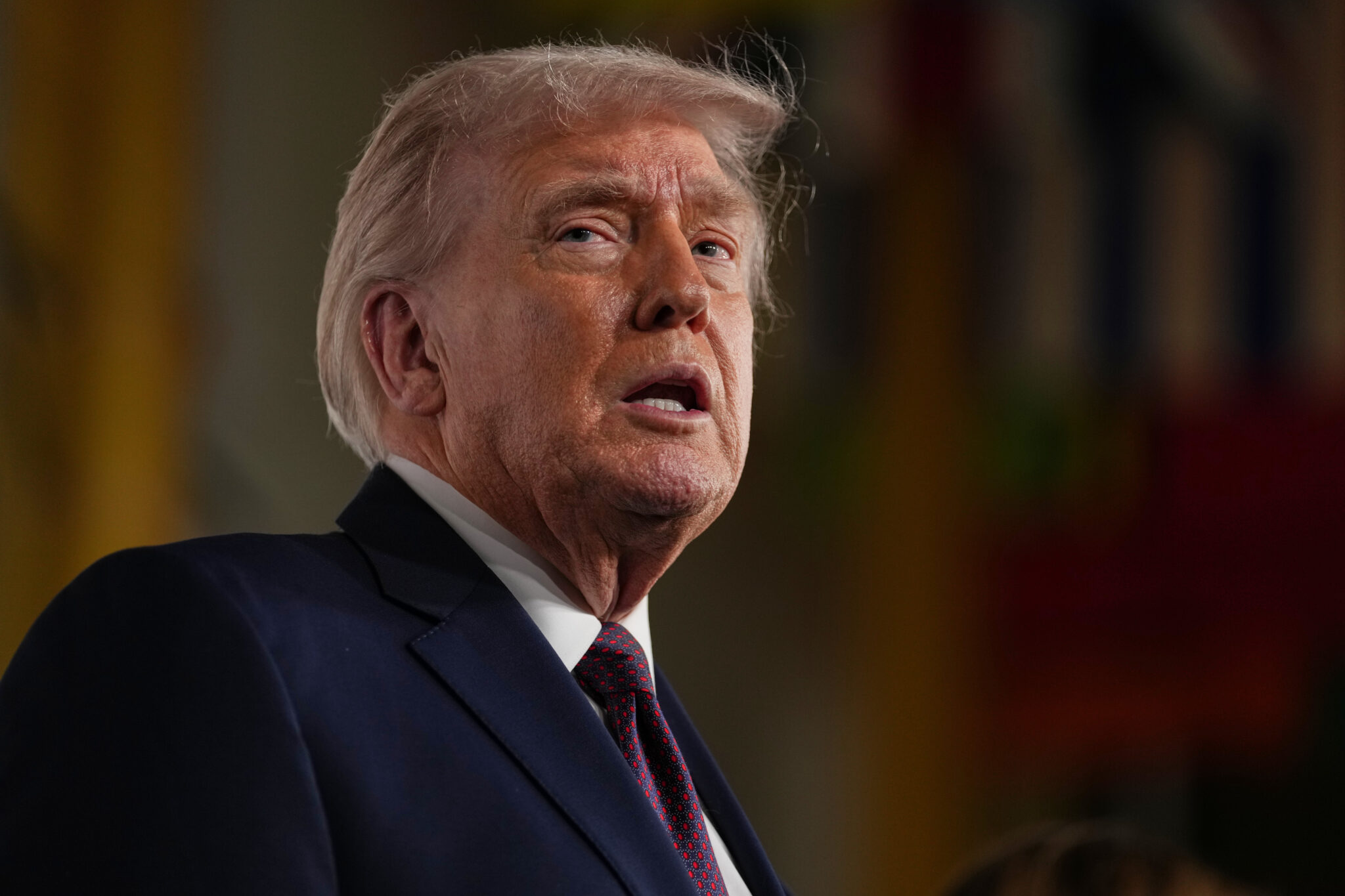
Trump Threatens 50% Tariff on Canadian Aircraft, Expanding Trade War/ Newslooks/ WASHINGTON/ J. Mansour/ Morning Edition/ Donald Trump threatened a 50% tariff on all Canadian aircraft sold in the U.S., escalating trade tensions with Canada. The move retaliates against Canada’s alleged refusal to certify U.S.-made Gulfstream jets. Bombardier, a key Canadian aircraft manufacturer, warned the action could disrupt air traffic and global trade relations.

Trump Aircraft Tariff Threat Quick Looks
- Trump threatens 50% tariffs on Canadian jets sold in U.S.
- Move targets Bombardier amid Gulfstream certification dispute.
- Canada’s trade deal with China sparks additional U.S. threats.
- Trump decertifies Bombardier’s Global Express aircraft in retaliation.
- Bombardier warns of major disruption to U.S. air traffic.
- Aviation experts say decertification over trade is unprecedented.
- Canada has not yet officially responded to the threat.
- Escalation follows Carney’s anti-coercion remarks at Davos.
- Bombardier, Airbus, and De Havilland operate extensively in Canada.
Deep Look
Trump Threatens 50% Tariff on Canadian Aircraft Amid Rising Trade Tensions
WASHINGTON — President Donald Trump issued a bold new trade threat Thursday, vowing to impose a 50% tariff on all Canadian aircraft sold in the United States. The statement, shared via social media, deepens his trade feud with Canada and its Prime Minister Mark Carney, while injecting fresh tension into U.S.-Canada economic relations.
The threat follows Trump’s earlier warning over the weekend to double tariffs on Canadian imports should the country move forward with a trade agreement with China. Despite Canada already finalizing that deal, Trump offered no timetable for when the new tariffs might be enforced.
In this latest confrontation, Trump accuses Canada of blocking certification of jets manufactured by Georgia-based Gulfstream Aerospace, a key U.S. aircraft manufacturer. In retaliation, Trump announced the decertification of all Canadian aircraft, directly targeting Bombardier — Canada’s flagship aircraft producer.
“If, for any reason, this situation is not immediately corrected,” Trump wrote, “I am going to charge Canada a 50% tariff on any and all Aircraft sold into the United States of America.”
Trump specifically named Bombardier’s Global Express business jets, which he claimed were no longer recognized by the U.S. Federal Aviation Administration (FAA). According to aviation data firm Cirium, about 150 Global Express jets currently fly under U.S. registration, operated by 115 distinct entities.
The Montreal-based Bombardier responded cautiously, acknowledging the president’s post and affirming it is working closely with the Canadian government. The company defended its aircraft as fully FAA-certified and emphasized its growing U.S. footprint.
“Thousands of private and civilian jets built in Canada fly in the U.S. every day,” Bombardier stated. “We hope this is quickly resolved to avoid a significant impact to air traffic and the flying public.”
Canadian government officials did not respond to media inquiries Thursday night.
John Gradek, an aviation management expert at McGill University, emphasized that aircraft certification is a rigorous safety process and should not be weaponized for trade purposes.
“Certification is not trivial. It is a very important step in getting planes to operate safely,” Gradek said. “Decertification for trade reasons does not happen. This is taking it to the extreme.”
Gradek suggested Trump’s move may be more about political optics than aviation policy. “This is a smokescreen,” he said. “It’s a new salvo in the trade war with Canada.”
This is not the first time Trump has clashed with Bombardier. During his first term, the U.S. Commerce Department imposed duties on Bombardier’s commercial jets, alleging that they were sold below market value with unfair Canadian government support. However, the U.S. International Trade Commission ultimately ruled that Bombardier had not harmed U.S. industry, and the duties were lifted.
Bombardier has since pivoted to focus on the business and private jet sector, with its Global and Challenger models enjoying popularity among individual and corporate buyers. Major fractional jet services like NetJets and Flexjet also rely on Bombardier’s aircraft. A disruption in access to the U.S. market would be a severe setback for the Quebec-based firm.
Beyond Bombardier, Canada is home to other major aerospace players, including De Havilland Aircraft of Canada — known for its turboprops and reconnaissance planes — and European conglomerate Airbus, which builds the A220 in Canadian facilities.
Tensions between the U.S. and Canada have been rising in recent weeks. Treasury Secretary Scott Bessent warned Prime Minister Carney that his public criticisms of U.S. trade tactics could jeopardize ongoing reviews of the U.S.-Mexico-Canada Agreement (USMCA), a key trilateral trade pact. Carney, however, refused to walk back his remarks made at the World Economic Forum in Davos, where he condemned the use of economic coercion by powerful nations against smaller ones — a pointed but indirect critique of the U.S. approach under Trump.
Carney reportedly reiterated to Trump in a private call that Canada would continue diversifying trade through new international agreements — signaling a shift away from dependence on the U.S. market.
As of now, no formal policy action has followed Trump’s latest threats, but the escalating rhetoric suggests broader economic friction may soon materialize — with aerospace trade caught in the middle.