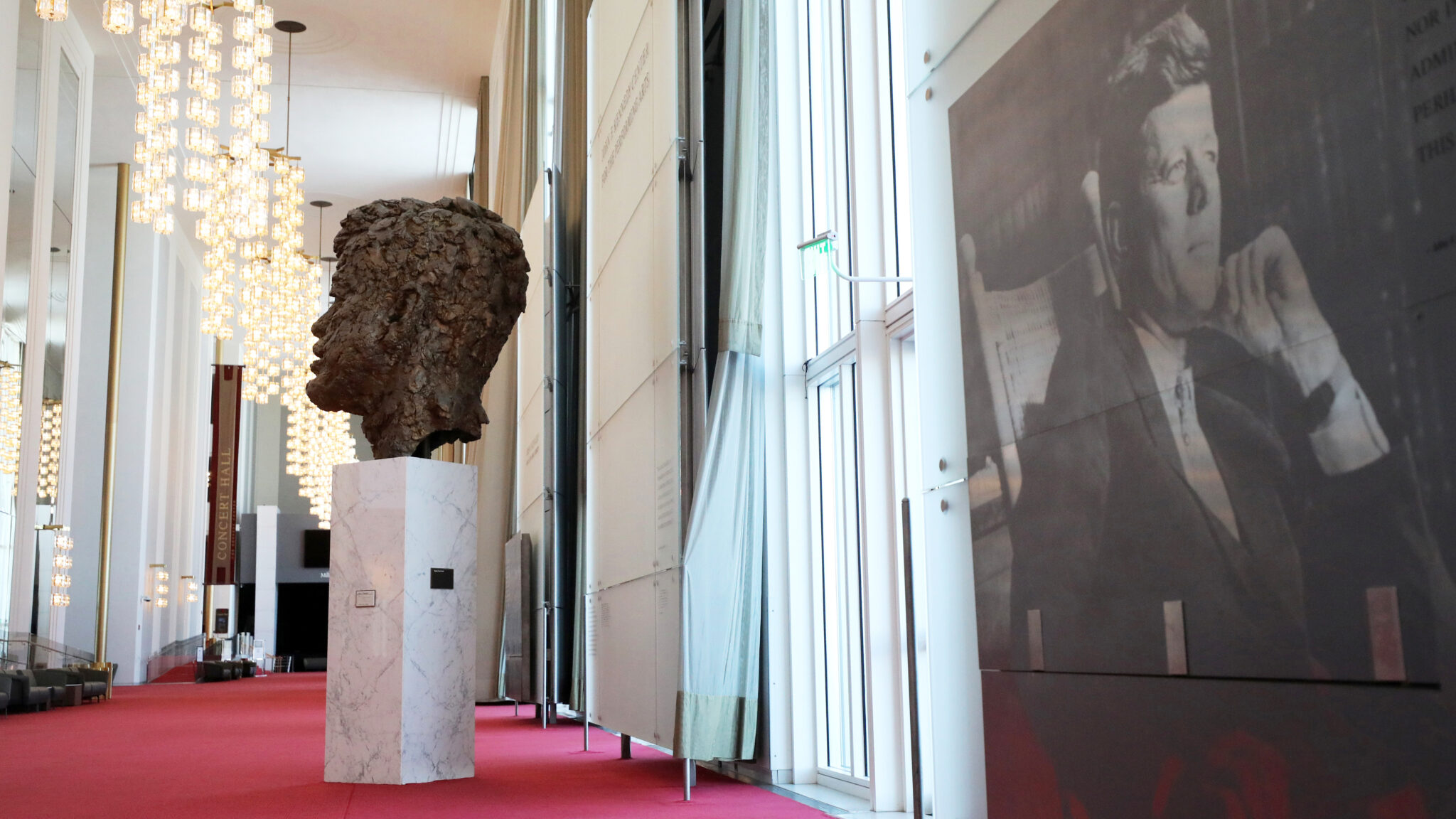
Trump Says He Won’t Tear Down Kennedy Center But It Needs to be Closed for Repairs/ Newslooks/ WASHINGTON/ J. Mansour/ Morning Edition/ President Donald Trump clarified he doesn’t intend to demolish the Kennedy Center but says the arts venue requires a two-year closure for urgent repairs and renovations. He cites unsafe conditions and deferred maintenance as reasons for the extensive project. Union leaders and lawmakers expressed concern over the lack of notice and political motives.
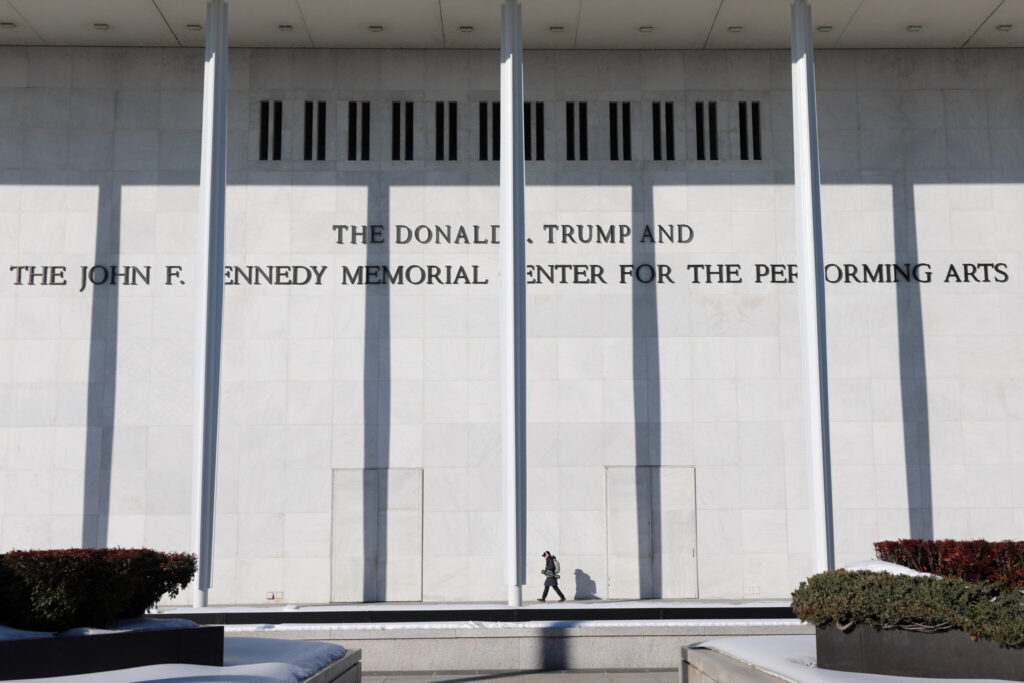
Trump Kennedy Center Renovation Quick Looks
- Trump says the Kennedy Center will close for two years for full renovations.
- Insists it’s “not being ripped down” but needs structural and safety upgrades.
- Says the building is “dilapidated” and “sort of dangerous” due to neglect.
- Closure would allow use of “highest-grade” materials without patron disruption.
- Cites a worker’s complaint that renovations can’t proceed with people present.
- Announced the closure would begin on July 4, pending board approval.
- Kennedy Center unions vow to defend worker rights amid possible displacement.
- Trump reshaped the board, added his name to the venue, and became chair.
- Renovation estimated at $200M; $257M already earmarked by Congress.
- Critics, including Sen. Whitehouse, call it part of Trump’s “demolition tour.”
Deep Look: Trump Defends Kennedy Center Closure for Major Renovations
WASHINGTON (AP) — President Donald Trump declared Monday that he does not plan to demolish the John F. Kennedy Center for the Performing Arts, but stressed that the iconic cultural venue must close for approximately two years to undergo substantial repairs and modernization.
Speaking from the Oval Office, Trump dismissed rumors of destruction. “I’m not ripping it down,” he said, clarifying that the original structure would be preserved and improved. “I’ll be using the steel. So we’re using the structure.”
Trump’s announcement follows his broader push to reshape Washington landmarks during his second term and assert influence over long-established institutions. Since taking office again, he has replaced Democratic-appointed Kennedy Center board members with loyalists, who subsequently named him chairman and even voted to add his name to the center’s branding.
According to Trump, the decision to shut down the center temporarily stems from both safety concerns and the impracticality of operating during renovations.
He claimed the building is in poor condition, describing it as “run down,” “dilapidated,” and even “sort of dangerous.”
“The place needs a full overhaul,” Trump said. “You can’t do any work because people are coming in and out.”
The renovation, Trump estimated, will cost around $200 million, with plans to use the “highest-grade marbles, the highest-grade everything.” A total of $257 million had already been appropriated for the Kennedy Center in a 2025 tax and spending bill he signed into law.
Trump plans to begin the closure on July 4, 2026—pending board approval. He says the full shutdown will enable a faster, more efficient restoration, contrasting it with earlier plans to conduct repairs while the center remained open. “That’s no longer feasible,” Trump said Monday, reversing earlier statements.
Roma Daravi, a Kennedy Center spokesperson, echoed Trump’s concerns, blaming “decades of gross negligence” for creating a backlog of $250 million in deferred maintenance. She said a full closure was “the most logical choice” for cost-effective, responsible upgrades.
Planned renovations include overhauling key infrastructure such as heating, cooling, electrical systems, stage technology, plumbing, and fire protection. The project will also cover exterior work, parking improvements, and enhanced security.
Still, the announcement has triggered unease. Kennedy Center Arts Workers United, a coalition of labor unions representing employees at the venue, said they had received no official notification. They emphasized the importance of job security and fair compensation if operations are suspended.
“We will enforce our contracts and exercise all our rights under the law,” the group said. “We expect continued fair pay, enforceable worker protections, and accountability if our members cannot work due to an operational pause.”
Trump invoked his construction experience, suggesting he had studied the building carefully before committing to such a large-scale overhaul. He claimed a marble-layering worker recently complained to him that constant patron traffic was hindering progress.
“I was thinking maybe there’s a way of doing it simultaneously, but there really isn’t,” Trump said. “We’re going to have something that when it opens, it’s going to be brand new, beautiful.”
He also referenced inspecting the exposed steel in the building, claiming it “wasn’t kept well, before I got there.”
Trump’s sweeping redesigns aren’t limited to the Kennedy Center. He has initiated or proposed high-profile infrastructure projects across the capital region, including demolishing the White House East Wing for a $400 million ballroom, proposing a triumphal arch near the Lincoln Memorial, and developing plans for Washington Dulles International Airport.
The latest move has prompted political backlash. Senator Sheldon Whitehouse (D-R.I.), who launched an investigation into the Kennedy Center’s finances last year, criticized Trump’s actions as part of a “demolition tour of Washington.” As the top Democrat on the Environment and Public Works Committee—which has jurisdiction over public buildings—Whitehouse holds ex-officio status on the Kennedy Center board.
Trump’s interference with the Kennedy Center extends beyond structural changes. He also took a more active role in cultural programming. After avoiding the Kennedy Center Honors during his first term, he participated in selecting 2025 recipients and hosted the ceremony himself. Whether this year’s Mark Twain Prize and Kennedy Center Honors events will proceed remains uncertain, as officials have not addressed how the closure would impact them.
Former Kennedy Center President Deborah Rutter, who was dismissed by Trump, declined to comment. Likewise, David Rubenstein, the former board chair forced out by Trump, offered no public remarks.
The Kennedy Center, a tribute to President John F. Kennedy, opened in 1971 and has long served as the nation’s most prominent performing arts venue. With Trump now asserting direct control over its future, the cultural and political implications of this extended closure are likely to remain contentious in the months ahead.