Vance Pushes Global Minerals Alliance Against China’s Control/ Newslooks/ WASHINGTON/ J. Mansour/ Morning Edition/ Vice President JD Vance unveiled a U.S.-led global alliance to secure critical minerals and reduce reliance on China. The initiative includes tariffs, a $10 billion reserve, and incentives for allied cooperation. The move follows mounting concerns over China’s control of rare earth supply chains.
Critical Minerals Strategy Quick Looks
- U.S. to form global critical minerals trading bloc
- Initiative aims to counter China’s market dominance
- Vice President Vance emphasizes allied self-reliance
- Includes $10B government-backed stockpile, $1.67B private capital
- Japan joins, citing global economic sustainability
- Pentagon, Ex-Im Bank, and private firms backing initiative
- Bipartisan support strengthens domestic mineral production
- Critics urge support for EV and clean tech demand
Deep Look: Vance Pushes Global Minerals Alliance Against China’s Control
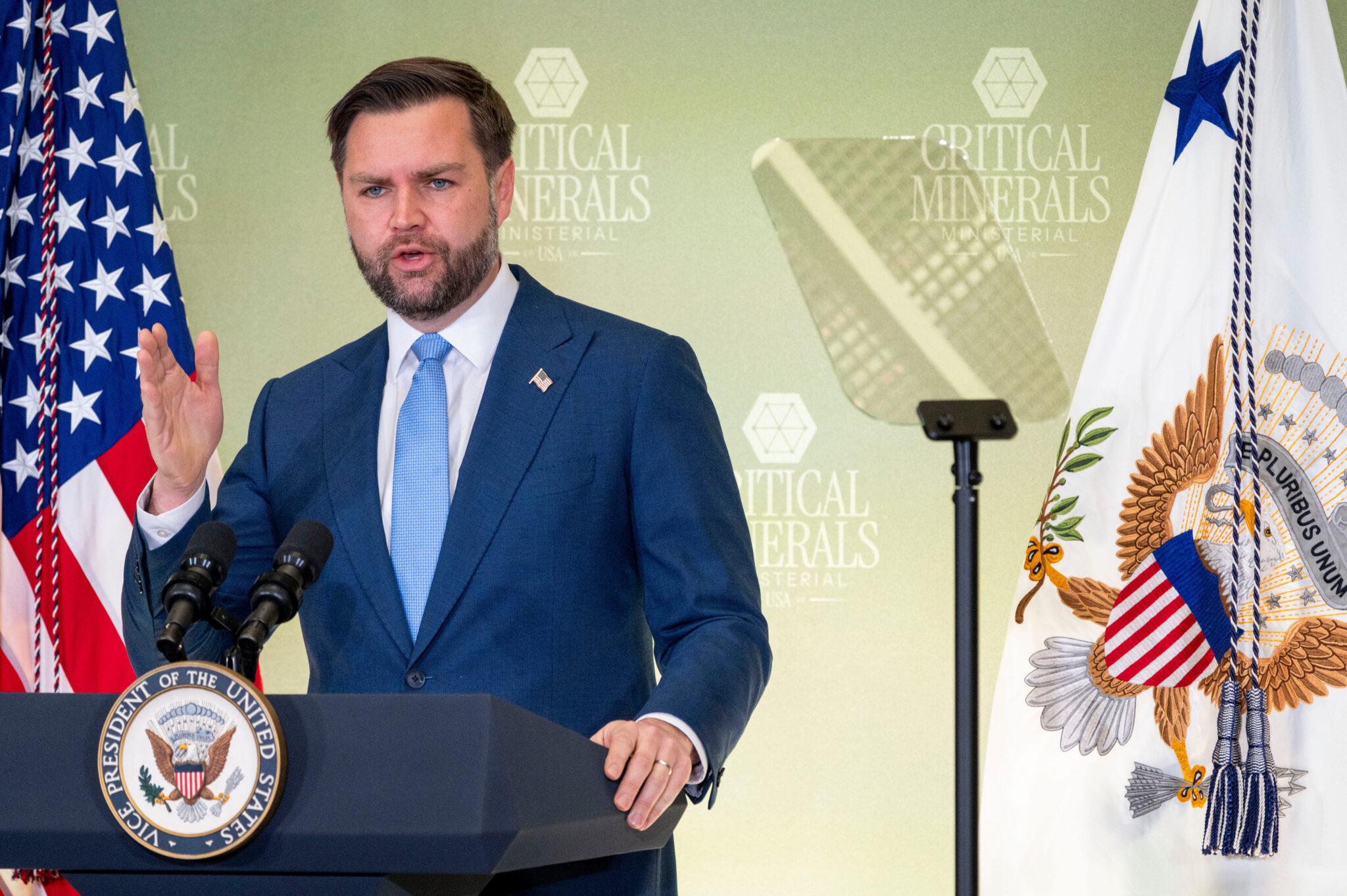
In a bold move to challenge China’s grip on global rare earths and critical minerals, the Trump administration is spearheading a new international initiative designed to realign mineral supply chains and boost self-reliance among allies. Vice President JD Vance announced plans on Wednesday to form a U.S.-led critical minerals trading bloc aimed at securing access, stabilizing prices, and deterring China’s alleged manipulation of the market through aggressive pricing.
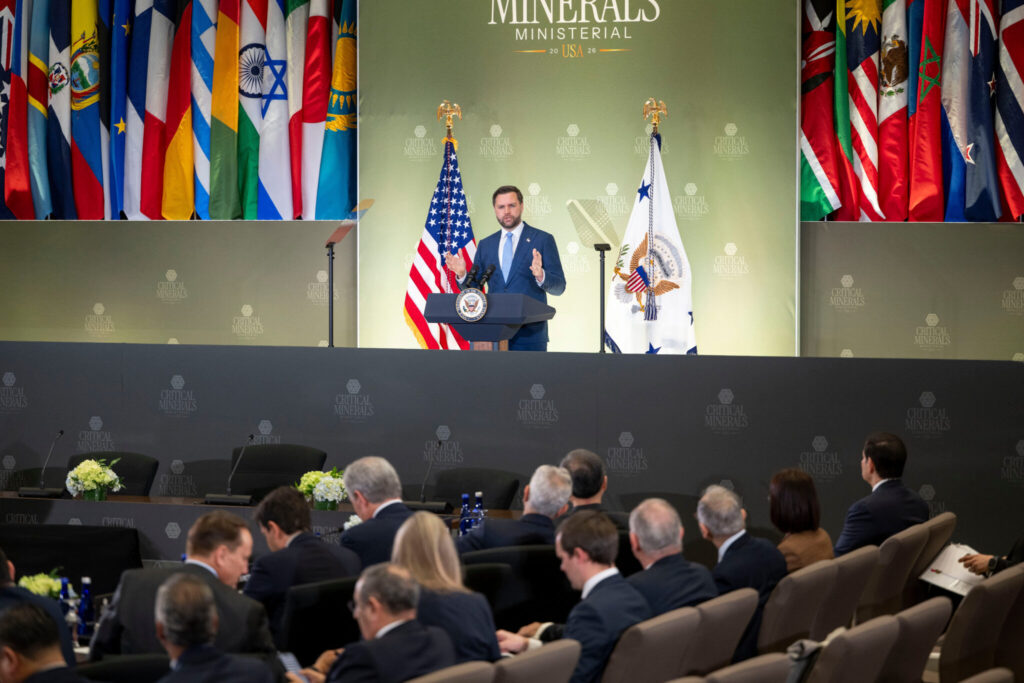
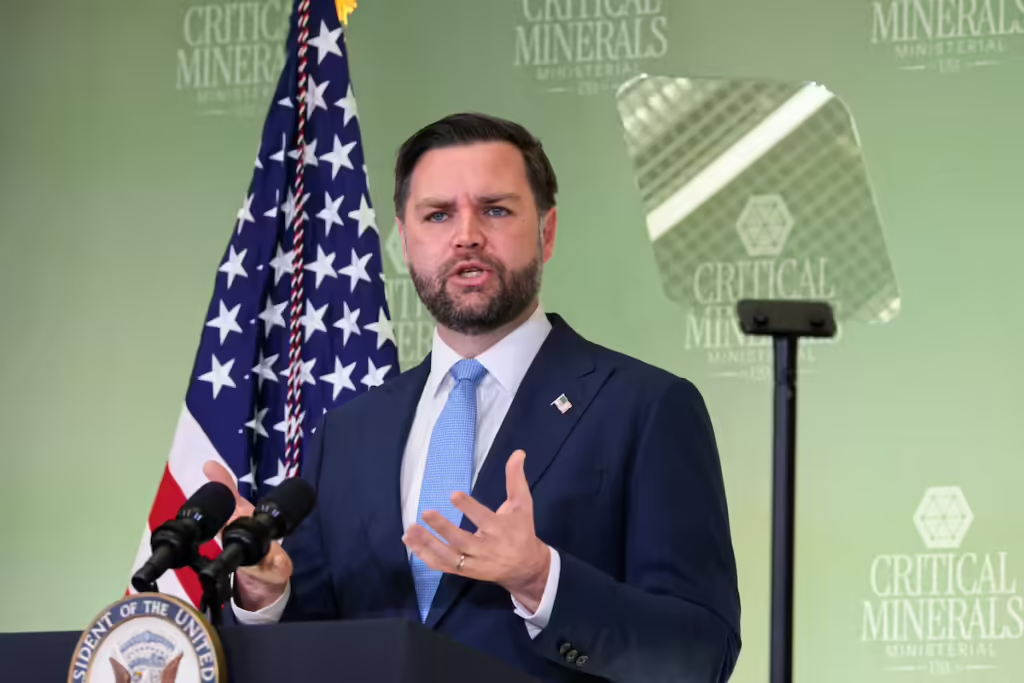
Speaking to dozens of foreign ministers at the State Department, Vance emphasized the urgency of breaking dependency on China for materials essential to modern technology, such as jet engines, smartphones, batteries, and renewable energy systems.
“We want members to form a trading bloc among allies and partners, one that guarantees American access to American industrial might,” Vance said. He described the effort as a chance to achieve a level of mutual independence among aligned nations.
The initiative includes a range of strategies: a $10 billion loan through the U.S. Export-Import Bank, $1.67 billion in private investment for Project Vault—a strategic reserve of critical minerals—and direct federal funding to support domestic mining and processing. Just this week, the government made a $1.6 billion investment in USA Rare Earth, an Oklahoma-based company founded in 2019, bringing the total public contribution to the sector to nearly $5 billion in the past year.
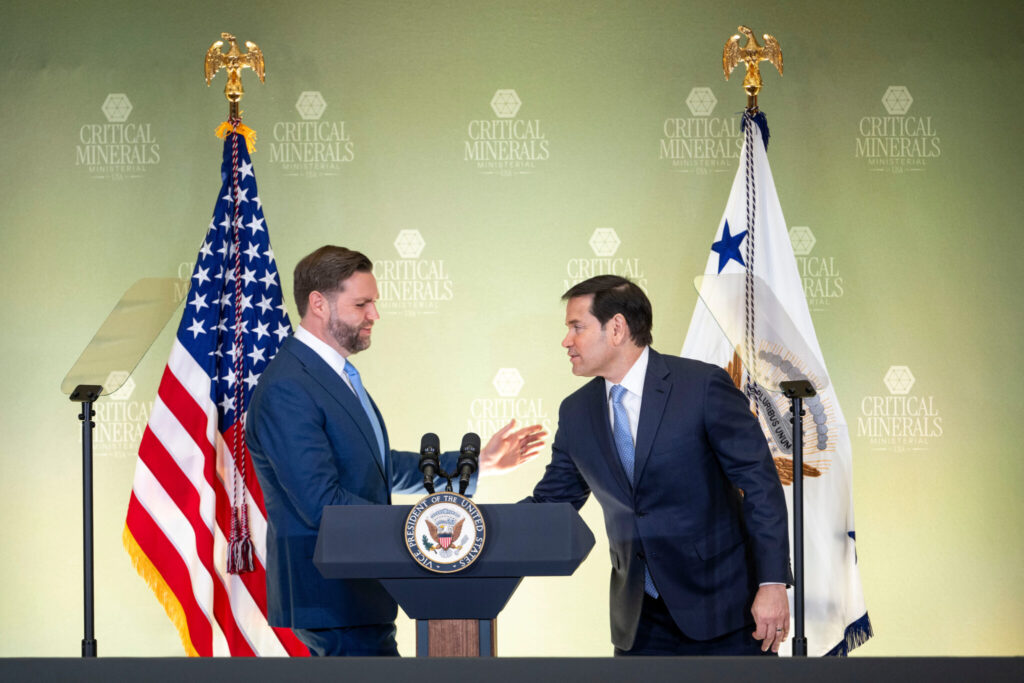
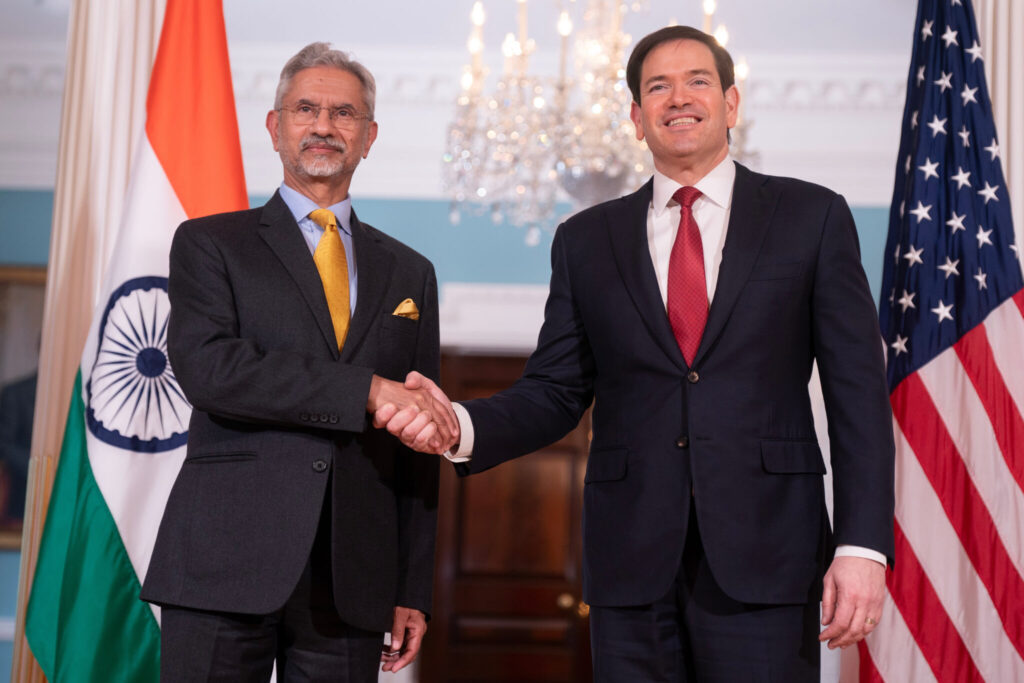
Vance and Secretary of State Marco Rubio hosted counterparts from Europe, Asia, and Africa at the announcement. Rubio stressed the necessity of taking concrete steps beyond diplomatic summits.
“Everyone here has a role to play,” he said, urging action from attendees to formalize commitments.
Project Vault will serve as a stockpile system for strategic minerals critical to American industry. The Export-Import Bank approved the largest loan in its history to fund it. Key beneficiaries include manufacturing giants like Clarios, GE Vernova, Western Digital, and Boeing. John Jovanovic, president of the Ex-Im Bank, said the project forms a sustainable public-private partnership that avoids freeloaders. “Everybody pitches in to solve this huge problem,” he said.
Japan quickly endorsed the initiative. Iwao Horii, Japan’s minister of state for foreign affairs, committed Tokyo to working with the U.S. and other nations. “Stable supply of critical minerals is indispensable to global economic growth,” Horii said.
Meanwhile, President Trump recently announced a one-year truce with China on tariffs and rare earths, after meeting with Chinese President Xi Jinping in October. However, restrictions from Beijing remain stricter than they were prior to Trump’s first term, prompting the U.S. to push for a long-term alternative path to mineral security. Trump and Xi held another phone call Wednesday, but the Chinese embassy did not release details.
The initiative also enjoys growing bipartisan support. A group of lawmakers, including Senators Jeanne Shaheen (D-NH) and Todd Young (R-IN), proposed a $2.5 billion federal agency to boost rare earth production. They praised the Trump administration’s latest moves.
“It’s a clear sign that there is bipartisan support for securing a robust domestic supply,” they said in a joint statement.
David Abraham, author of The Elements of Power and a long-time analyst of the rare earths industry, welcomed the strategic stockpile plan but warned that supply challenges won’t be fixed overnight. He emphasized the need for demand-side policies as well, such as restoring incentives for electric vehicles and renewable energy technologies—two sectors heavily dependent on rare earths.
Critics argue that while the supply push is valuable, scaling up processing and manufacturing domestically must be met with consistent policy support. Recent rollbacks in clean energy subsidies under the Trump administration have discouraged industrial demand for these materials within the U.S.
Still, proponents say the trading bloc, combined with a secure reserve and long-term financing, lays a foundation for breaking free of China’s dominance. The administration is positioning this as a legacy-defining effort to not only protect national security but rewire the global economy’s dependence on critical resources controlled by a geopolitical rival.