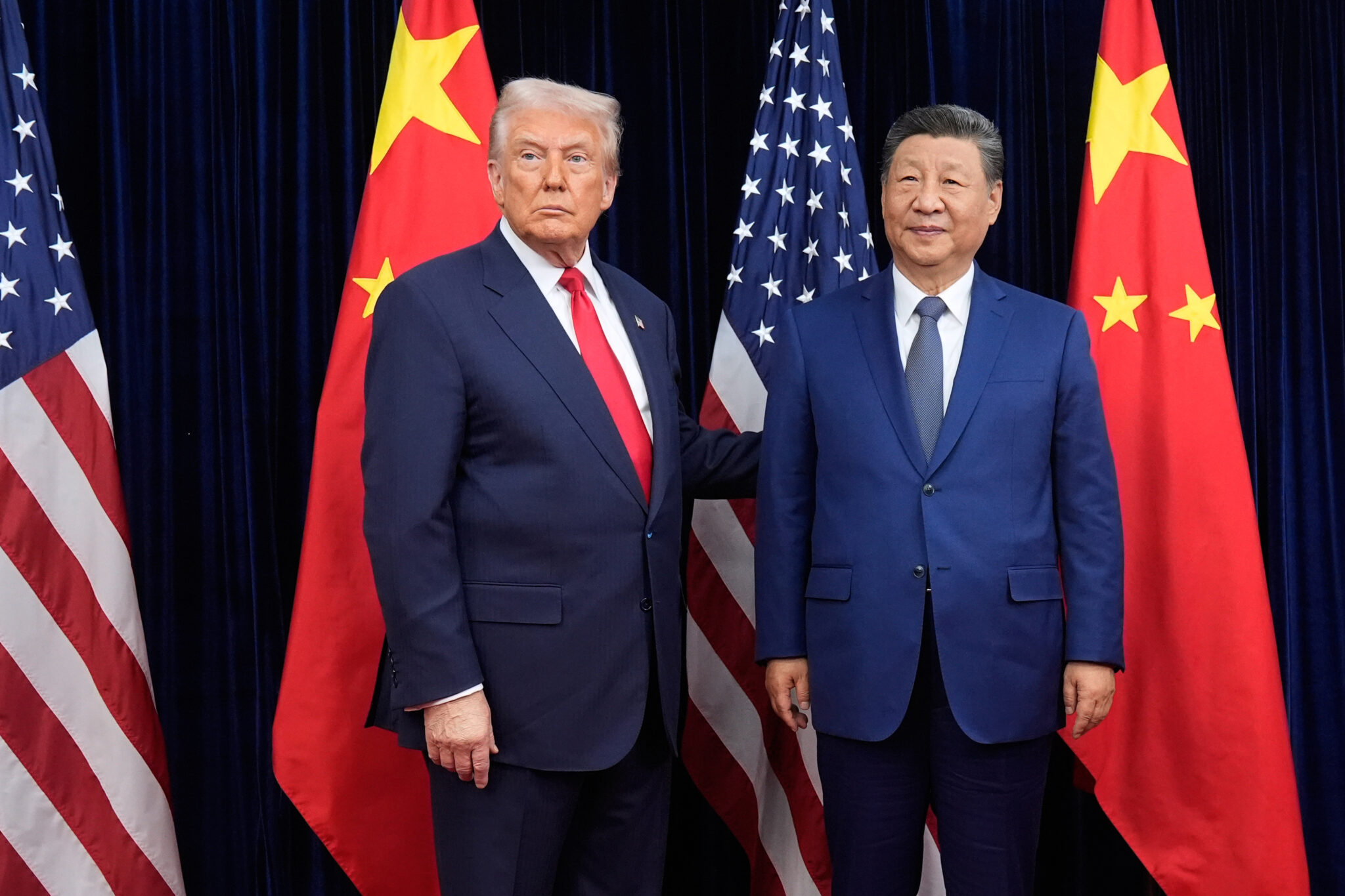
Trump, Xi Discuss Iran, Trade, Taiwan as US Urges China to Isolate Tehran/ Newslooks/ WASHINGTON/ J. Mansour/ Morning Edition/ President Donald Trump and Chinese President Xi Jinping held a wide-ranging call focused on Iran, trade, Taiwan, and global security. The conversation comes as Washington presses Beijing and others to isolate Tehran over its nuclear program and crackdown on protests. The call also coincided with U.S. efforts to reshape critical minerals supply chains without China.
Trump–Xi Call Quick Looks
- Trump and Xi discuss Iran amid rising US–Tehran tensions
- US pushing China and others to distance from Tehran
- Iran nuclear program and sanctions central to talks
- China reiterates Taiwan will not separate from mainland
- Trump seeks limits on nuclear weapons with China involved
- Call coincides with US-led critical minerals meeting
- Beijing deepens outreach to global partners amid US tariffs

Deep Look
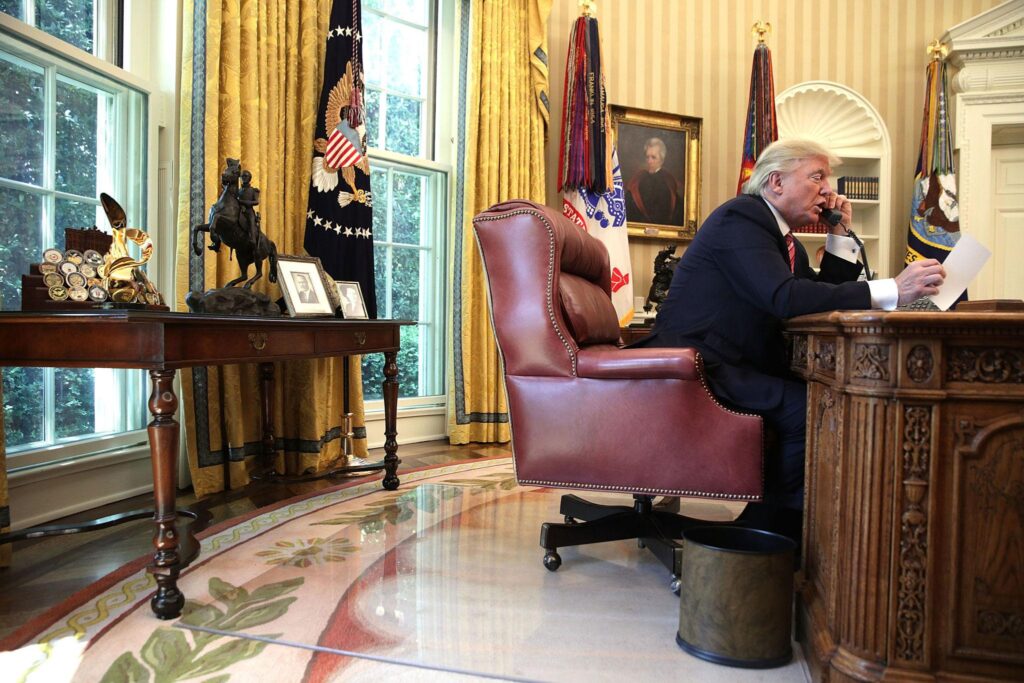
President Donald Trump said Wednesday that he held a wide-ranging phone call with Xi Jinping, covering Iran, trade disputes, Taiwan, and the future of global security, as Washington ramps up pressure on Beijing and other governments to distance themselves from Tehran.
In a social media post, Trump described his relationship with Xi as “extremely good,” emphasizing the importance of maintaining stable ties between the world’s two largest economies. He said the leaders also discussed trade issues and his intention to visit Beijing in April, though China’s official readout of the call did not confirm any upcoming visit.
According to Beijing, the conversation focused on major international summits planned for the coming year and the possibility of future leader-level meetings. China’s government used the opportunity to reaffirm its long-standing position on Taiwan, declaring that the self-governing democratic island “will never be allowed to separate from China.”
The call comes at a delicate moment in global diplomacy, with Iran at the center of escalating tensions. Trump and Xi discussed Tehran as the United States seeks to isolate the Iranian government following its violent crackdown on nationwide protests last month. Washington is also pressing Iran to make concessions on its nuclear program, which the Trump administration says was significantly damaged by U.S. airstrikes on Iranian nuclear facilities during Israel’s 12-day war with Iran in June.
The White House has said that U.S. special envoy Steve Witkoff is expected to participate in talks with Iranian officials later this week, signaling continued diplomatic engagement even as pressure intensifies. Last month, Trump announced a 25% tariff on imports from countries that continue doing business with Iran, a move designed to further squeeze Tehran’s economy.
Despite years of sanctions, Iran remains economically connected to several major partners. According to World Trade Organization figures, Iran conducted nearly $125 billion in international trade in 2024, including $32 billion with China, $28 billion with the United Arab Emirates, and $17 billion with Turkey—highlighting the challenge Washington faces in convincing allies and rivals alike to sever economic ties.
Xi’s call with Trump came on the same day he spoke with Russian President Vladimir Putin, as global attention turns to the looming expiration of the last remaining U.S.–Russia nuclear arms control agreement. Trump has said he favors maintaining limits on nuclear weapons but insists that China should be included in any future framework, given Beijing’s growing arsenal.
“I think China should be a part of the agreement,” Trump told The New York Times last month, underscoring his administration’s push for a broader, multilateral approach to arms control.
The Trump–Xi conversation also coincided with a ministerial-level meeting in Washington, where the administration convened dozens of European, Asian, and African nations to discuss rebuilding global supply chains for critical minerals without relying on China. These minerals are essential for everything from smartphones and batteries to jet engines and defense systems, and China currently dominates their production and processing.
Vice President JD Vance told participants the gathering represented an opportunity for allied self-reliance. “We never have to rely on anybody else except for each other,” Vance said, emphasizing the strategic importance of securing mineral supplies outside Beijing’s control.
Meanwhile, Xi has stepped up diplomatic engagement with Western and Asian leaders seeking to strengthen economic ties with China amid uncertainty driven by Trump’s tariff policies and broader disruptions to global trade. In recent weeks, the European Union and Vietnam both upgraded their relationships with key partners, reflecting a shifting trade landscape as countries hedge against volatility in U.S.–China relations.
The Trump–Xi call underscored the complexity of the current moment: cooperation and competition unfolding simultaneously, with Iran, nuclear arms control, trade, and supply chains all tightly intertwined. As Washington presses Beijing to break from Tehran, both sides appear intent on managing rivalry without letting tensions spiral into open confrontation.