
Inside Hostage Negotiations as Savannah Guthrie’s Mother Missing/ Newslooks/ WASHINGTON/ J. Mansour/ Morning Edition/ The apparent kidnapping of Savannah Guthrie’s mother has drawn national attention to how hostage negotiations work. Experts say kidnappings for ransom are rare and far more complex than television portrayals suggest. Law enforcement stresses patience, proof of life, and limiting public exposure to protect victims.


Kidnapping Negotiations Explained: Quick Looks
- Ransom kidnappings are rare in the U.S.
- Law enforcement prioritizes proof of life
- Negotiations often involve long periods of silence
- Media attention can complicate investigations
- Families are often involved under guidance
- Most hostage cases differ from TV portrayals

Deep Look: Inside Hostage Negotiations as Savannah Guthrie’s Mother Missing
The apparent abduction of Nancy Guthrie, the 84-year-old mother of Today show host Savannah Guthrie, has prompted renewed attention on how law enforcement handles hostage and ransom negotiations — and how real-life cases differ sharply from fictional portrayals.
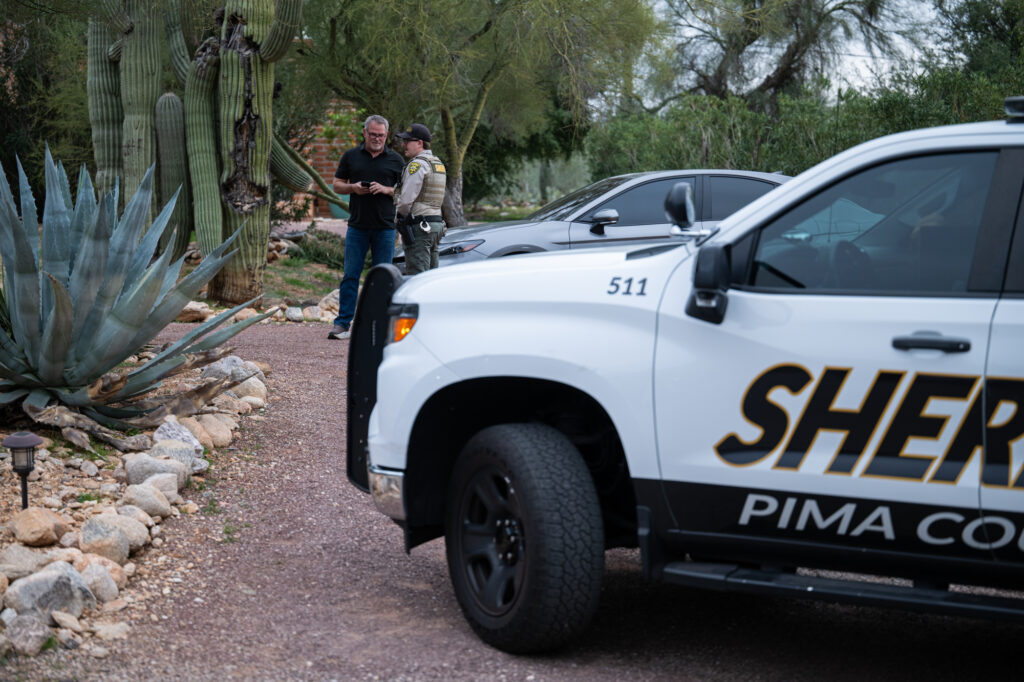
Authorities in Arizona have not publicly confirmed that Guthrie was kidnapped for ransom, nor have they identified a suspect. However, in the days after she disappeared from her home near Tucson, a local television station reported receiving messages that appeared connected to the case. One message demanded money and included details about Guthrie’s property, including her Apple Watch and floodlights.
In response, Guthrie’s children released two public video appeals directed at the apparent abductors, asking for proof that their mother is alive and expressing willingness to communicate.
While such cases attract intense attention, experts emphasize that kidnappings for ransom are among the rarest types of hostage situations in the United States.
According to Scott Tillema, most hostage scenarios encountered by law enforcement do not involve premeditated financial demands. Instead, they typically stem from emotional crises or crimes gone wrong.
“There are three general categories of hostage situations,” Tillema explained. “Kidnapping for ransom is the least common.”
In cases involving ransom demands, the abduction itself is used as leverage to extract money, publicity or political concessions. These operations are usually planned in advance, with designated locations and a specific individual assigned to communicate with the victim’s family or authorities.
Scott Walker, author of Order Out of Chaos: A Kidnap Negotiator’s Guide to Influence and Persuasion, said the first step in any suspected ransom case is confirming proof of life.
“Everything hinges on that,” Walker said. “From there, negotiators work to establish communication and build trust, very slowly.”
Walker stressed that victims in ransom cases are rarely chosen at random. “It’s extremely uncommon for someone to be kidnapped just because they were in the wrong place at the wrong time,” he said, though authorities in Arizona have said it is still unclear whether Nancy Guthrie was specifically targeted or why.
Contrary to dramatic depictions in movies and television, negotiations are often defined by long stretches of silence. Communication may stop entirely for days or longer, a tactic experts say is sometimes used to increase pressure on families.
“There’s far more waiting than people realize,” Walker said. “Waiting for contact, waiting for demands, waiting for responses.”
That silence can be emotionally devastating. Calvin Chrustie, a senior partner at the private firm Critical Risk Team, said families and investigators face extreme psychological stress during such periods.
“The public often underestimates how intense these situations are,” Chrustie said. “Add constant media scrutiny, and it becomes even more dangerous.”
Chrustie warned that public dissemination of alleged ransom messages — particularly those sent to news outlets — may be intended to increase leverage or mislead investigators. He said widespread coverage can unintentionally complicate negotiations and put the victim at greater risk.
The Guthrie case has drawn national attention partly because of Savannah Guthrie’s public profile. Experts say high visibility can be a double-edged sword: it may pressure abductors, but it can also embolden them or disrupt law enforcement strategy.
Beyond ransom kidnappings, Tillema said there are two other hostage scenarios that are far more common.
The most frequent is known as “expressive hostage taking,” typically involving a person in emotional or psychological crisis who takes a hostage — often a family member — to force police to withdraw or listen to grievances. These cases are rarely about money and are usually resolved through de-escalation.
The second-most common type is “incidental hostage taking,” which occurs during another crime, such as a robbery, when a suspect uses a hostage as leverage after being confronted by police. These situations are often chaotic and unplanned.
Unlike those cases, ransom kidnappings require prolonged negotiation, strategic restraint and close coordination between law enforcement and families. Patience, experts say, is essential.
“We make better decisions when we’re regulated and calm,” Walker said. “That’s incredibly difficult under these circumstances, but it’s critical.”
As the investigation into Nancy Guthrie’s disappearance continues, authorities have remained cautious, releasing limited information while evaluating tips and messages connected to the case.
For families facing such crises, experts emphasize that every decision — including when and how to speak publicly — can have consequences. Real-life hostage negotiations, they say, are far quieter, slower and more fragile than anything portrayed on screen.