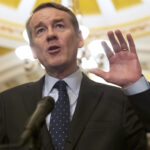
3 Democrats Compete in Michigan Senate Race, Focus on Affordability/ Newslooks/ WASHINGTON/ J. Mansour/ Morning Edition/ Three Democrats are vying for Michigan’s open U.S. Senate seat in a critical 2026 primary. Each candidate is offering a different approach to tackling affordability and economic anxiety.
The outcome could shape control of the Senate in the midterm elections.
Michigan Senate Primary Affordability Debate: Quick Looks
- Open seat held by retiring Sen. Gary Peters.
- Democratic contenders: Haley Stevens, Mallory McMorrow, Abdul El-Sayed.
- Affordability and cost of living dominate campaign themes.
- GOP likely nominee: Mike Rogers.
- Michigan remains a key 2026 battleground state.
- Senate control may hinge on this race.
Deep Look: 3 Democrats Compete in Michigan Senate Race, Focus on Affordability
In Michigan — one of the nation’s most competitive political battlegrounds — three Democrats are testing different strategies to address voter frustration over the rising cost of living as they compete in a high-stakes U.S. Senate primary.
The August contest will determine who carries the Democratic banner into November’s midterm elections, where control of Congress hangs in the balance. The seat is currently held by retiring Democratic Sen. Gary Peters, and party leaders view it as essential to any path back to a Senate majority.
The Democratic primary features U.S. Rep. Haley Stevens, state Sen. Mallory McMorrow and physician Abdul El-Sayed. Each is making a distinct case for how Democrats should respond to economic anxieties that helped fuel Donald Trump’s 2024 return to the White House — particularly in working-class regions like Michigan.
The likely Republican nominee is former U.S. Rep. Mike Rogers, who narrowly lost a Senate race in 2024 and is seeking another opportunity.
Haley Stevens: Manufacturing and Moderation
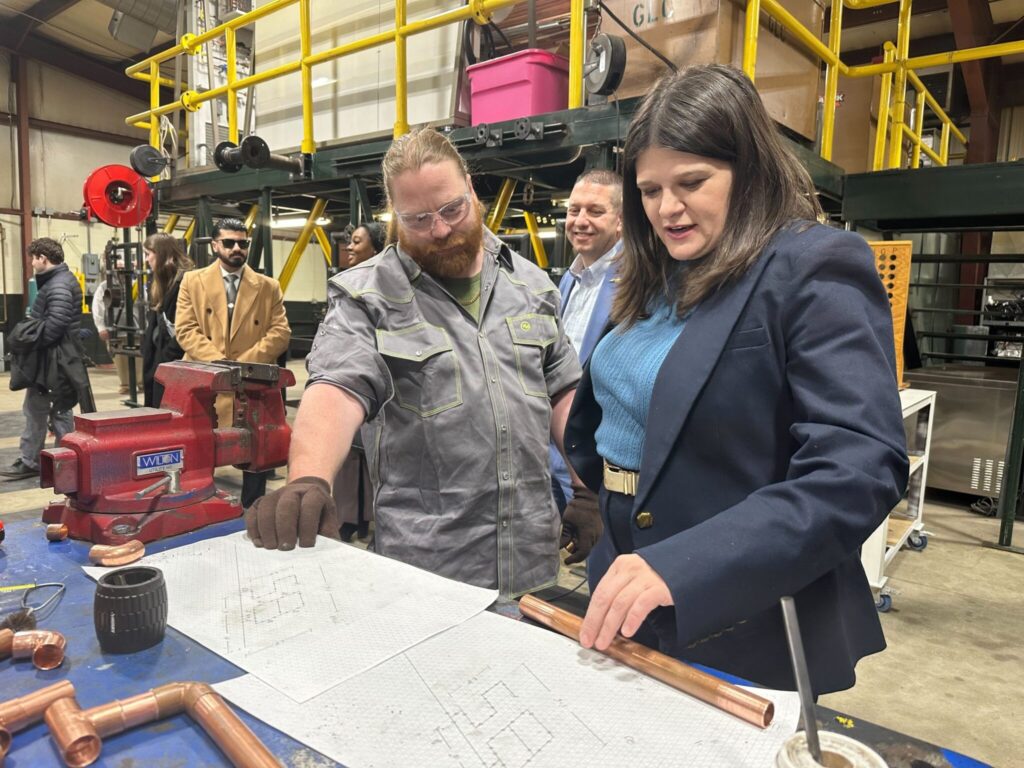
Stevens is leaning heavily into Michigan’s industrial roots, highlighting manufacturing jobs and organized labor as central to her campaign message.
During a visit to a union training facility in Saginaw, she donned protective gear and toured workshops where apprentices practiced welding and plumbing techniques. Her message centered on economic stability and infrastructure investment, particularly in communities tied to the automotive industry.
Representing a suburban Detroit district, Stevens has built close ties with labor groups. She argues that Trump’s tariff policies have introduced instability into Michigan’s manufacturing sector and raised consumer prices.
“He’s been more focused on cutting deals around the world than here at home,” Stevens said, criticizing trade strategies she believes have led to job insecurity.
Positioning herself as a pragmatic moderate, Stevens has emphasized listening to workers and bridging political divides. Union leaders at campaign stops have voiced appreciation for her engagement, even as some voters express frustration with both the political left and right.
Mallory McMorrow: Expanding Michigan Models
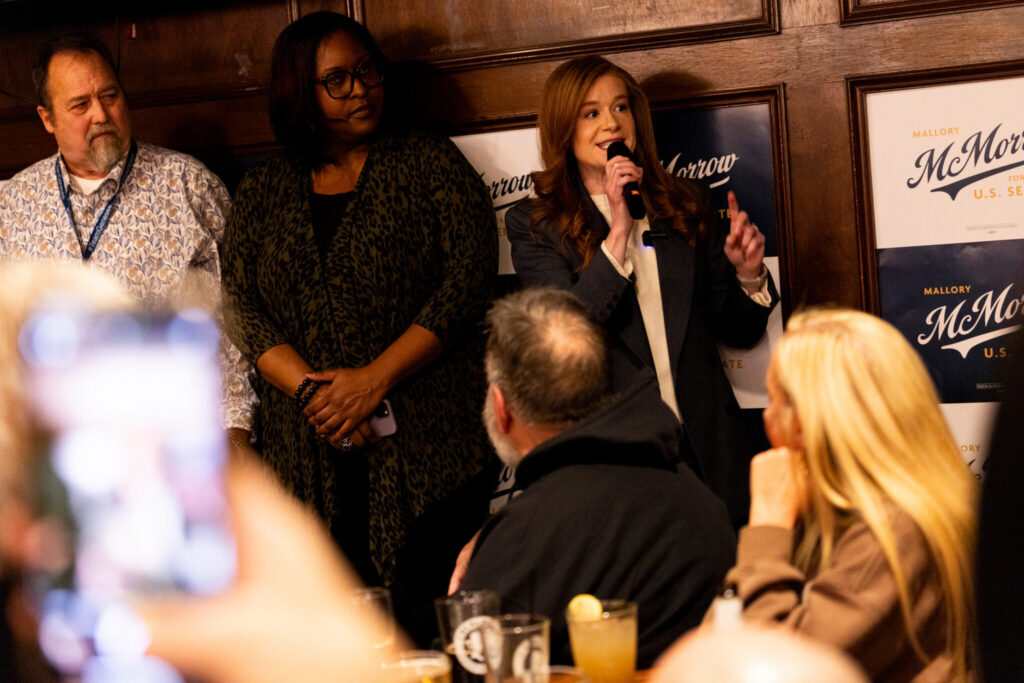
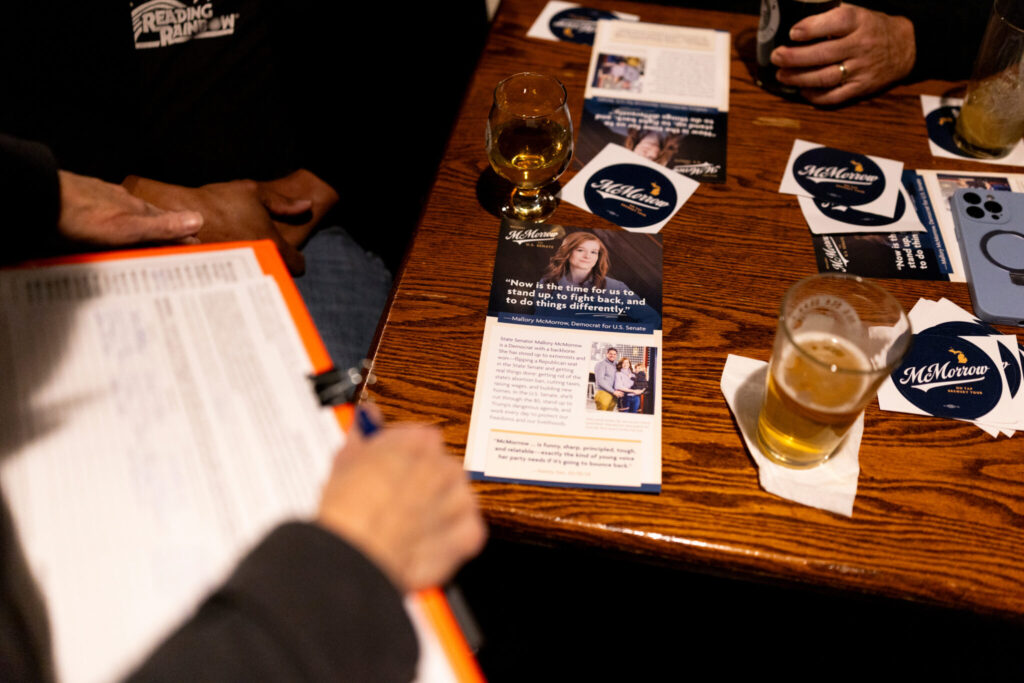
McMorrow is highlighting state-level Democratic policies as a blueprint for national solutions. At campaign events — including brewery stops across the state — she has focused on programs aimed at supporting families and boosting economic opportunity.
A member of the Michigan Senate’s Democratic leadership, McMorrow first entered politics following Trump’s 2016 election. She has gained national attention for high-profile moments, including her critiques of conservative policy agendas at national party events.
Now a mother of a young daughter, McMorrow frequently frames her campaign around long-term stability for families.
One policy priority she touts is expanding a Michigan initiative that provides direct cash assistance to new mothers. She argues that successful state programs should be scaled nationally.
“When something works, you build on it,” she said.
McMorrow has also addressed concerns from rural voters, including farmers impacted by tariffs. She has pledged to avoid what she calls a condescending approach toward agricultural communities — a nod to the importance of balancing urban and rural interests in a statewide race.
Some supporters compare her to former Sen. Debbie Stabenow, known for championing agriculture and Michigan’s working families.
Abdul El-Sayed: Corporate Accountability and Health Care
El-Sayed, a physician and former county health official, has framed affordability as fundamentally tied to corporate power and health care costs.
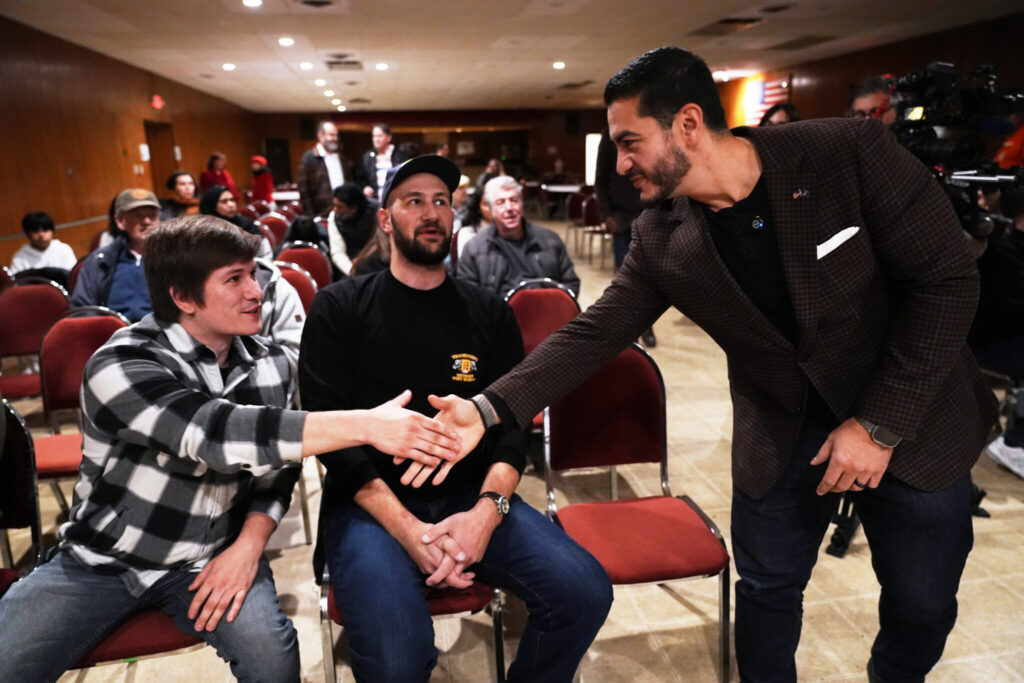
At a recent Detroit town hall, he drew a crowd of about 100 supporters despite frigid temperatures. He led attendees in a familiar chant: “Money out of politics, money in your pocket.”
El-Sayed continues to advocate for Medicare for All, though he has clarified that additional private or union-based coverage would remain an option. He argues that rising health care expenses are a major driver of financial strain and attributes those costs to corporate consolidation and lobbying.
“In an era where inequality is near an all-time high, we have to recognize the root causes,” he said.
El-Sayed previously ran for governor in 2018 and has maintained a following through public engagement and his podcast, America Dissected. Supporters describe him as policy-focused and consistent in emphasizing affordability long before it became a dominant campaign theme.
A National Bellwether
Michigan’s Senate race is widely seen as a test case for how Democrats should address economic discontent in competitive states.
Trump’s 2024 victory in Michigan underscored the political power of affordability concerns. Now, Democrats are attempting to craft messages that resonate with voters who remain skeptical of Washington’s ability to lower costs.
The primary will determine which vision — manufacturing-focused pragmatism, state-driven policy expansion, or corporate reform and health care overhaul — Democrats believe offers the strongest path forward.
With Senate control potentially hinging on a handful of states, Michigan’s choice in August could shape the national political landscape in November.