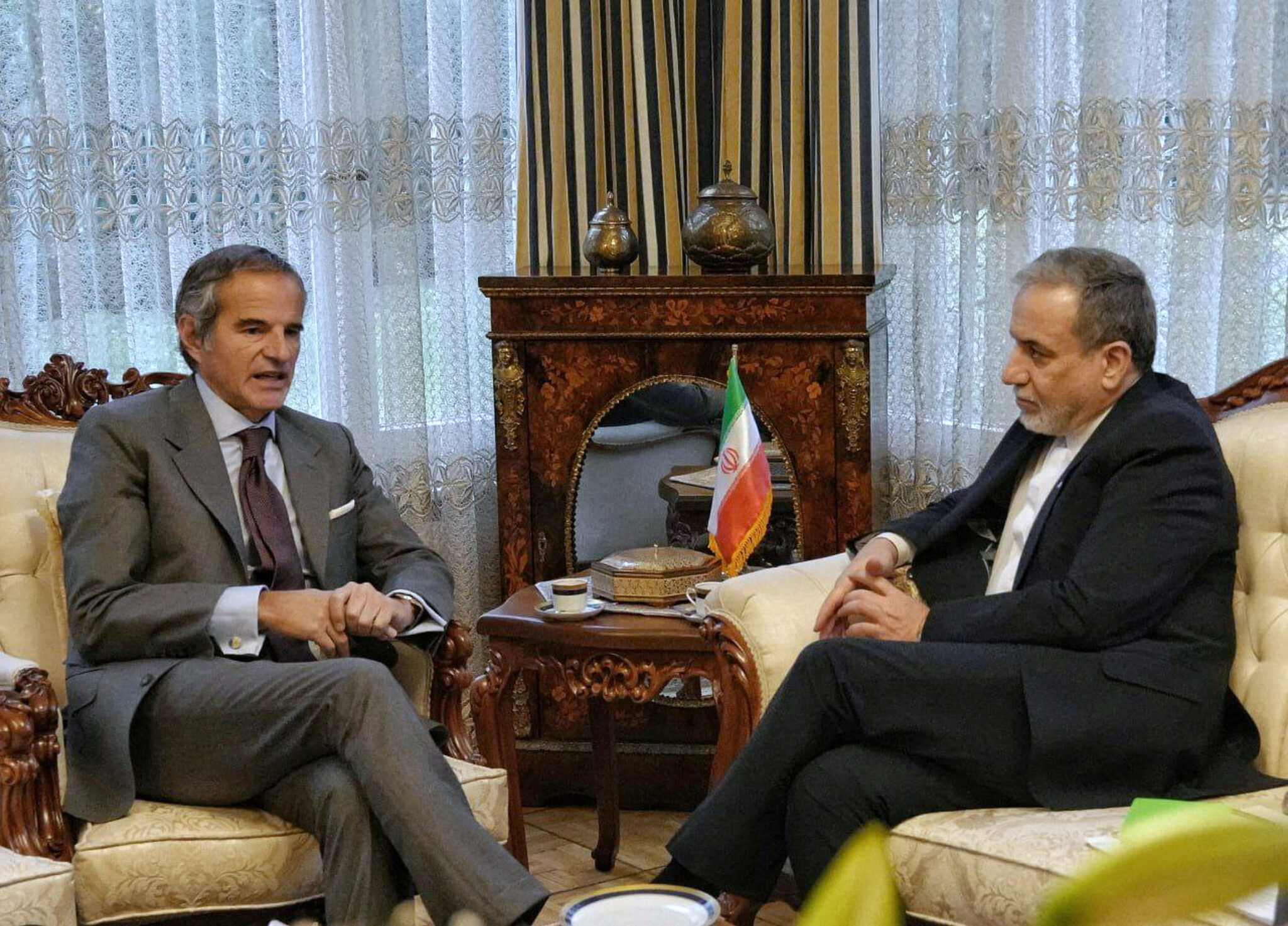
Iran, UN Nuclear Watchdog Confer Before US Negotiations/ Newslooks/ WASHINGTON/ J. Mansour/ Morning Edition/ Iran’s foreign minister met with the head of the U.N. nuclear watchdog in Geneva ahead of renewed U.S. negotiations. Tehran signaled openness to compromise in exchange for sanctions relief, while rejecting “submission before threats.” Meanwhile, Iran launched naval drills as the U.S. increased its military presence in the region.
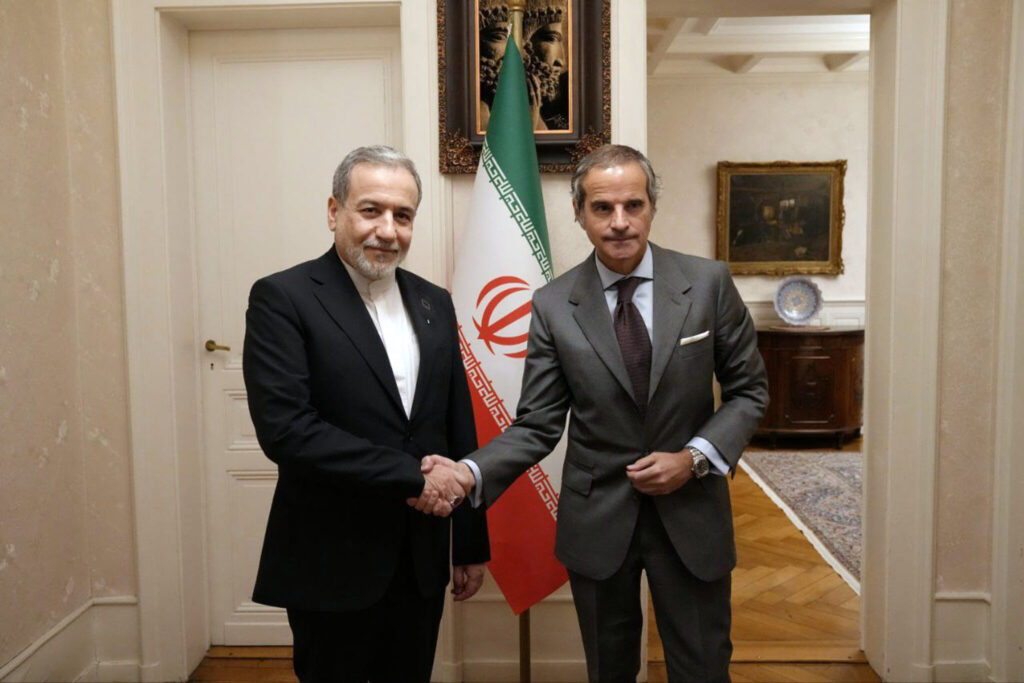
Iran US Nuclear Talks Geneva Quick Looks
- Abbas Araghchi meets IAEA chief Rafael Grossi
- Second round of U.S.-Iran talks set in Geneva
- Iran launches naval drills near Strait of Hormuz
- Trump orders additional aircraft carrier deployment
- Tehran open to compromise tied to sanctions relief
- IAEA unable to fully verify uranium stockpile
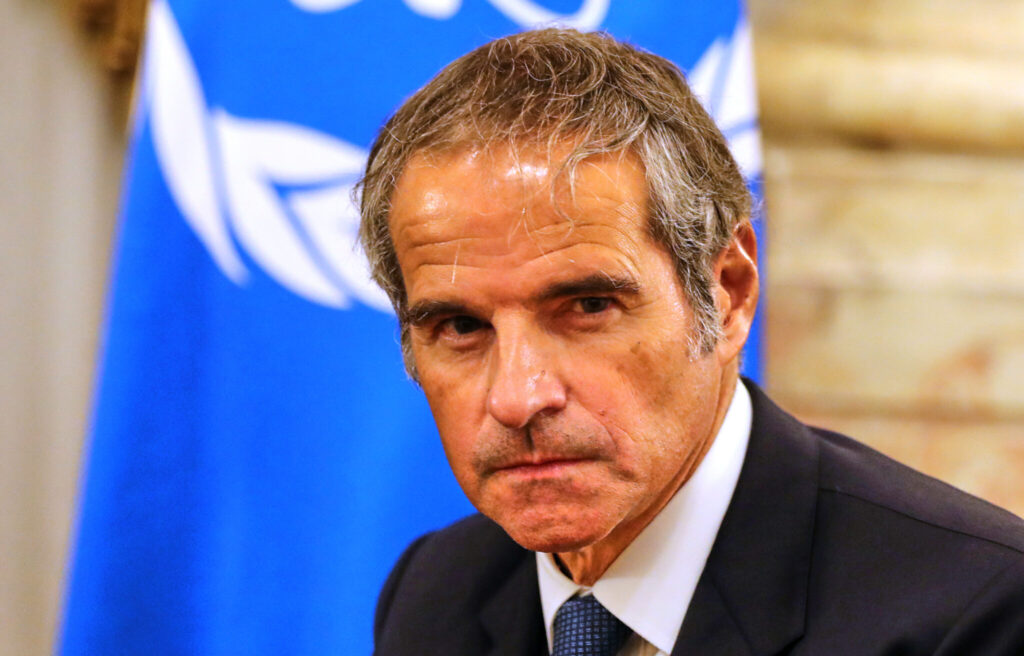
Deep Look: Iran Meets UN Nuclear Watchdog in Geneva Ahead of Second Round of US Talks
Iran’s top diplomat met Monday with the head of the United Nations nuclear watchdog in Geneva, signaling cautious diplomatic movement ahead of a second round of talks with the United States over Tehran’s nuclear program.
Iranian Foreign Minister Abbas Araghchi held discussions with Rafael Grossi, director-general of the International Atomic Energy Agency, as international tensions remain high over Iran’s uranium enrichment activities.
Araghchi said he would also meet with Omani Foreign Minister Badr al-Busaidi, whose country is facilitating indirect negotiations between Tehran and Washington. A second round of talks is scheduled for Tuesday in Geneva.
“I am in Geneva with real ideas to achieve a fair and equitable deal,” Araghchi wrote on social media. “What is not on the table: submission before threats.”
Military Maneuvers Raise Stakes
The diplomatic engagement comes as military tensions simmer in the Middle East.
President Donald Trump has ordered an additional aircraft carrier to the region, reinforcing the U.S. naval presence. Trump said the USS Gerald R. Ford, the world’s largest aircraft carrier, would deploy from the Caribbean to join other American assets in the Middle East.
In response, Iran launched a new naval drill, its second in recent weeks, according to state television. The exercises involve the Islamic Revolutionary Guard Corps and are being conducted in and around the Strait of Hormuz, as well as the Persian Gulf and the Gulf of Oman.
The Strait of Hormuz is a critical global energy chokepoint through which roughly 20% of the world’s oil supply passes. Maritime security firms reported that ships transiting the area received radio warnings about potential live-fire exercises in Iranian territorial waters.
Recent confrontations between U.S. and Iranian forces have further heightened tensions. Earlier this month, a U.S. Navy jet shot down an Iranian drone approaching the USS Abraham Lincoln in the Arabian Sea. The U.S. military also reported harassment of a U.S.-flagged merchant vessel in the Strait of Hormuz.
Iran Signals Conditional Flexibility
Despite the military backdrop, Iranian officials have suggested room for compromise.
Deputy Foreign Minister Majid Takht-Ravanchi told the BBC that Tehran may consider adjustments to its nuclear program if Washington demonstrates sincerity and offers meaningful sanctions relief.
“The ball is in America’s court,” he said, adding that Iran is prepared to discuss nuclear-related issues provided sanctions are addressed.
The Trump administration, however, has maintained that any agreement must prohibit uranium enrichment by Iran — a demand Tehran has repeatedly rejected.
Before a 12-day conflict last June between Israel and Iran, Tehran had enriched uranium to 60% purity, a short technical step from weapons-grade levels. Grossi has previously warned that Iran’s stockpile at that enrichment level could theoretically enable the production of multiple nuclear weapons, though he stressed that possessing enriched material does not mean Iran has built a bomb.
IAEA Access and Verification Challenges
The meeting between Araghchi and Grossi carries particular significance because Iran curtailed cooperation with the IAEA after last year’s conflict with Israel.
While Tehran has allowed inspectors limited access to certain undamaged facilities, the agency says it has not been able to fully verify the status of Iran’s near-weapons-grade uranium stockpile.
The renewed engagement suggests a possible pathway to restoring monitoring mechanisms, a key component of any durable agreement.
Regional and Global Context
The Geneva discussions unfold against a complex geopolitical backdrop. The U.S. is also hosting separate diplomatic engagements in Switzerland involving Russia and Ukraine as the fourth anniversary of Russia’s full-scale invasion approaches.
Israeli Prime Minister Benjamin Netanyahu traveled to Washington last week to press Trump to ensure that any agreement with Iran addresses Tehran’s ballistic missile program and its support for proxy groups such as Hamas and Hezbollah.
Trump has signaled that while he prefers a negotiated solution, military options remain available. Iran has warned that it would respond forcefully to any U.S. attack.
Uncertain Path Forward
As negotiators prepare for the second round of talks, fundamental disagreements persist — particularly over uranium enrichment and sanctions relief.
Iran insists its nuclear program is peaceful, though officials have increasingly hinted at the potential to pursue nuclear weapons if pressured further. The United States demands strict limits that would prevent Iran from reaching weapons-grade capability.
Whether the Geneva talks can bridge those divides remains unclear. But the direct engagement between Iran and the IAEA — coupled with renewed U.S.-Iran discussions — signals a critical diplomatic moment amid escalating military posturing in one of the world’s most volatile regions.