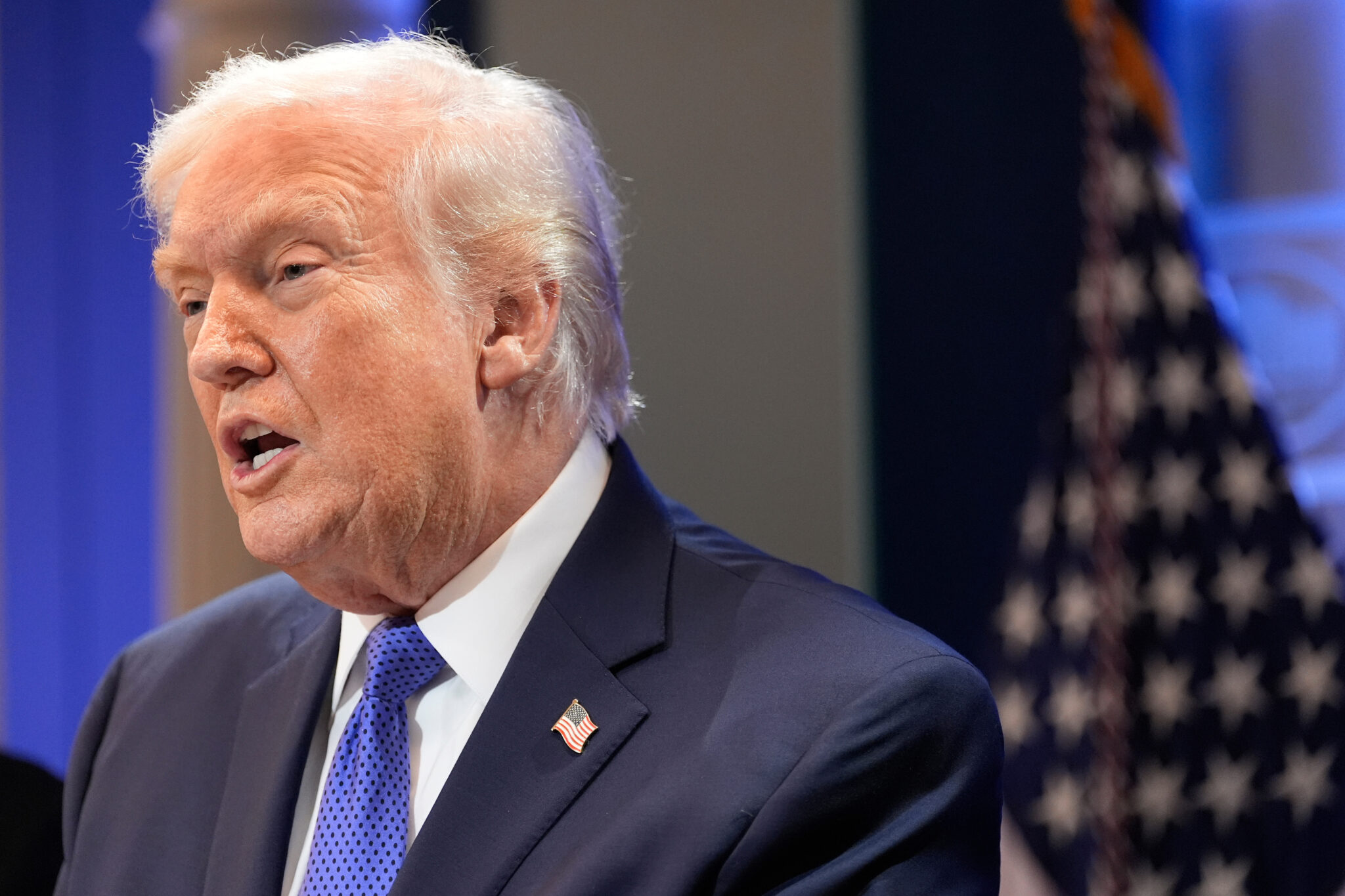
Tariff Ruling Sparks Trump’s Fury at Supreme Court Justices who Opposed him/ Newslooks/ WASHINGTON/ J. Mansour/ Morning Edition/ President Donald Trump lashed out at Supreme Court justices after they struck down his global tariffs. He reserved particular criticism for two conservative justices he appointed who joined the majority. The decision reignited tensions over executive power and judicial independence.
Trump Attacks Supreme Court After Tariff Defeat Quick Looks
- 6-3 ruling blocks emergency-based tariffs
- Trump criticizes justices who ruled against him
- Neil Gorsuch and Amy Coney Barrett joined majority
- Chief Justice John Roberts authored opinion
- JD Vance calls decision “lawlessness”
- Legal opposition crossed political lines
- Case tests limits of presidential power
- Tensions rise ahead of State of the Union
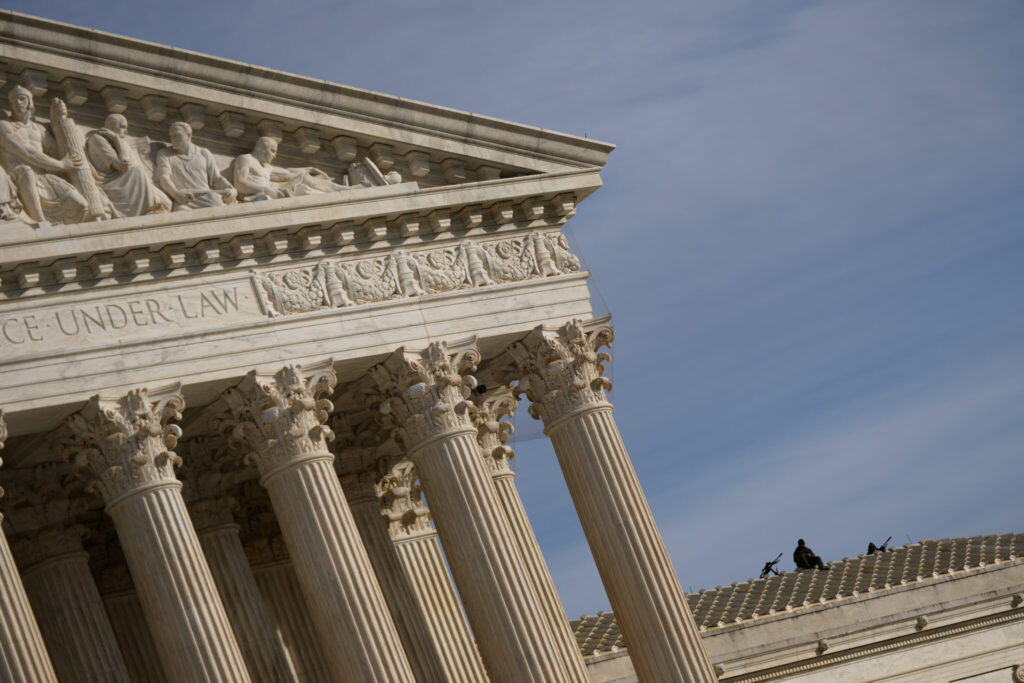
Deep Look: Tariff Ruling Sparks Trump’s Fury at Supreme Court Justices who Opposed him
President Donald Trump responded with anger Friday after the Supreme Court of the United States struck down his sweeping global tariffs, directing especially sharp criticism at two conservative justices he appointed who voted against him.
The 6-3 ruling invalidated Trump’s use of emergency powers to impose broad tariffs on nearly every country. Writing for the majority, Chief Justice John Roberts concluded that the Constitution assigns taxing authority to Congress, not the executive branch.
Trump publicly rebuked the justices, saying he was “absolutely ashamed” of certain members of the court and accusing them of lacking courage. While he said he expected opposition from the court’s three Democratic-appointed justices, he took particular aim at Justices Neil Gorsuch and Amy Coney Barrett, who joined the majority.
“I think it’s an embarrassment to their families,” Trump said of the two conservative justices.
The president praised the dissent authored by Justice Brett Kavanaugh and joined by Justices Samuel Alito and Clarence Thomas. Trump described Kavanaugh’s lengthy dissent as “genius” and argued the ruling would not ultimately prevent him from pursuing new tariffs under alternative legal authorities.
Clash Over Judicial Independence
The confrontation highlights a fundamental divide between Trump’s expectation of loyalty from his judicial appointees and the court’s assertion of institutional independence.
The tariff case tested the limits of presidential authority under a 1977 emergency powers statute that Trump used to justify sweeping import taxes. The majority opinion relied in part on the “major questions doctrine,” emphasizing that Congress must clearly authorize actions of major economic significance.
Legal challenges to the tariffs crossed ideological lines. The libertarian-leaning Liberty Justice Center led a key lawsuit, and pro-business organizations, including the U.S. Chamber of Commerce, voiced opposition to the tariffs.
Vice President JD Vance echoed Trump’s criticism on social media, calling the decision “lawlessness,” though he did not personally attack the justices.
A Long History of Tension
Trump’s relationship with the Supreme Court has fluctuated since his first term. He appointed three justices — Gorsuch, Kavanaugh and Barrett — reshaping the court’s ideological balance.
The president has won major victories before the court, including a 2024 ruling granting broad presidential immunity in connection with efforts to challenge the 2020 election results. During his second term, the court’s emergency docket has also allowed him to move forward with parts of his immigration agenda.
Still, presidential criticism of Supreme Court decisions is not new. President Thomas Jefferson objected to the landmark Marbury v. Madison decision that established judicial review. President Franklin D. Roosevelt famously attempted to expand the court after it struck down parts of his New Deal legislation.
In 2010, President Barack Obama publicly criticized the Citizens United ruling during his State of the Union address, prompting visible reactions from Justice Samuel Alito.
But Trump’s remarks stood out for their personal tone and direct criticism of justices he appointed.
Ed Whelan, a conservative legal scholar and former clerk to Justice Antonin Scalia, said it is appropriate for presidents to criticize rulings but warned against accusing justices of lacking courage.
State of the Union Looms
The timing of the clash is notable. Trump and the justices are expected to share the same chamber next week during the president’s State of the Union address, a setting that has previously highlighted tensions between the executive and judicial branches.
In past years, justices have reacted subtly — and sometimes visibly — to presidential comments made in their presence. Observers say it remains to be seen whether Friday’s sharp exchange will carry into that setting.
For now, the episode underscores the ongoing friction between Trump’s assertive view of executive power and the Supreme Court’s insistence on constitutional boundaries — even when that means defying the president who helped shape its current majority.