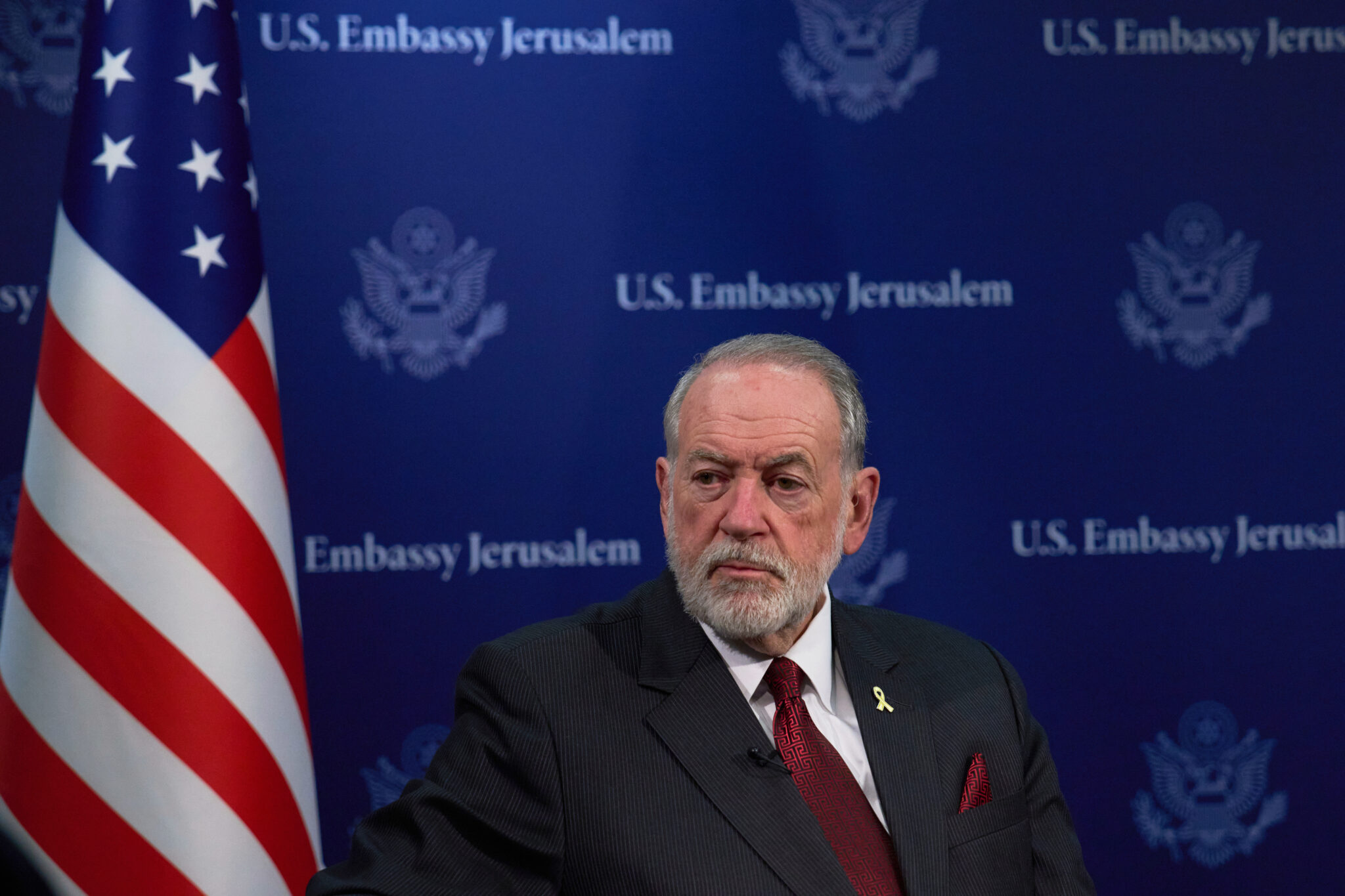
Huckabee Causes Uproar Claiming Israel Has Right to Much of Middle East/ Newslooks/ WASHINGTON/ J. Mansour/ Morning Edition/ U.S. Ambassador to Israel Mike Huckabee sparked sharp condemnation after suggesting Israel would be justified in taking much of the Middle East. Arab and Muslim nations called the remarks extremist and inconsistent with U.S. policy. The controversy comes amid ongoing regional tensions and fragile ceasefires.
US Ambassador Israel Controversy Quick Looks
- Ambassador Mike Huckabee made remarks in interview
- Referenced biblical land promises from Genesis
- Egypt, Jordan, OIC and Arab League condemn comments
- No immediate official response from Washington or Israel
- Comes amid Gaza ceasefire and regional instability
- Huckabee has long opposed two-state solution


Deep Look: Huckabee Causes Uproar Claiming Israel Has Right to Much of Middle East
The U.S. ambassador to Israel, Mike Huckabee, has drawn swift condemnation from Arab and Muslim governments after suggesting Israel would be justified in claiming much of the Middle East.
Huckabee made the remarks during an interview with commentator Tucker Carlson that aired Friday. Carlson referenced biblical passages from the book of Genesis describing land promised to Abraham’s descendants — territory that today would encompass much of the modern Middle East — and asked whether Israel had a right to it.
“It would be fine if they took it all,” Huckabee responded, before adding that Israel was not seeking territorial expansion and has a right to security in areas it legitimately controls.
The comments quickly triggered backlash across the region.
Regional Condemnation
Egypt’s foreign ministry described them as a “blatant violation” of international law, emphasizing that Israel does not possess sovereignty over occupied Palestinian territories or other Arab lands.
The Organization of Islamic Cooperation and the League of Arab States also condemned the statements, calling them extremist and provocative.
“Statements of this nature serve only to inflame sentiments and stir religious and national emotions,” the Arab League said in its response.
There was no immediate public comment from Israeli officials or from Washington addressing the controversy.
Borders and Ongoing Disputes
Since its founding in 1948, Israel’s borders have shifted through wars, ceasefires and peace agreements. During the 1967 Six-Day War, Israel captured the West Bank and east Jerusalem from Jordan, Gaza and the Sinai Peninsula from Egypt, and the Golan Heights from Syria. Israel later returned the Sinai to Egypt under a peace agreement and withdrew unilaterally from Gaza in 2005.
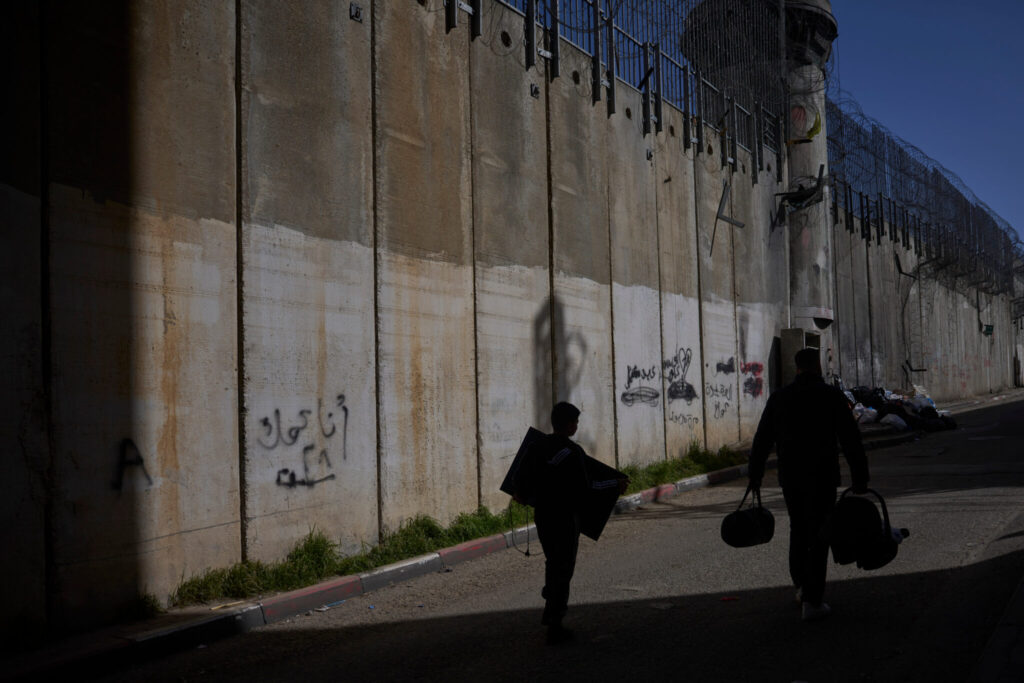
Today, the status of the West Bank remains one of the most contentious issues in the Israeli-Palestinian conflict. Palestinians seek an independent state in the West Bank and Gaza with east Jerusalem as its capital — a position supported by much of the international community.
In recent months, Israel has expanded settlement construction and legalized additional outposts in the West Bank. U.S. President Donald Trump has stated he would not permit formal annexation of the territory.
Meanwhile, Israel continues to operate within buffer zones along its northern borders. Following the ouster of Syrian President Bashar al-Assad in late 2024, Israeli forces moved into a demilitarized area along the Syrian frontier, describing the action as temporary. Israeli troops also remain in several hilltop positions inside Lebanese territory after a brief 2024 conflict with Hezbollah.
Longstanding Policy Debate
Huckabee has long opposed a two-state solution and has previously questioned the terminology used to describe Palestinians. In the interview, Carlson cited biblical descriptions of land extending “from the Nile to the Euphrates,” encompassing present-day Israel, Jordan, Syria, Lebanon and parts of Iraq and Saudi Arabia.
Huckabee responded cautiously when pressed on that specific interpretation but reiterated his broader view of Israel’s historic and security claims.
The controversy unfolds as Israel’s war with Hamas in Gaza remains under a fragile ceasefire. Under the current arrangement, Israeli forces have pulled back to designated buffer zones but still control significant portions of the territory. Further withdrawals are expected, though no firm timeline has been established.
Diplomatic Sensitivity
The remarks underscore the delicate balance the United States must navigate in the region. While Washington remains Israel’s closest ally, it has traditionally supported negotiated solutions to territorial disputes and emphasized adherence to international law.
Analysts say statements invoking religious claims over broad swaths of the Middle East risk complicating diplomatic efforts and heightening regional tensions.
For now, the episode has added another flashpoint to an already volatile geopolitical landscape — one where rhetoric can carry significant consequences.