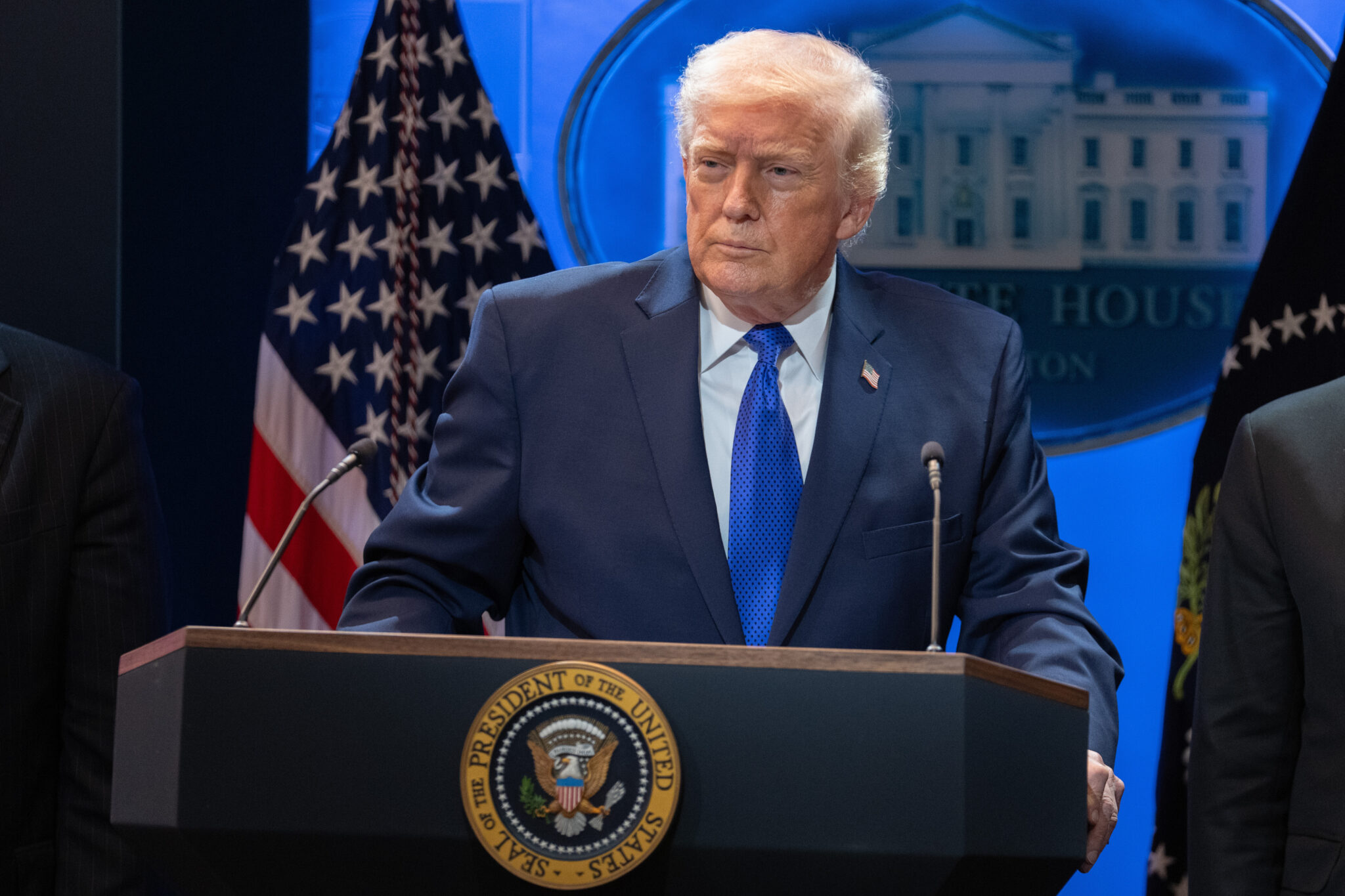
Trump State of the Union to be Delivered to Changed Nation, Congress He Sidelined/ Newslooks/ WASHINGTON/ J. Mansour/ Morning Edition/ President Donald Trump will deliver his State of the Union address to a nation reshaped by sweeping executive actions. Critics argue Congress has been sidelined as Trump expands presidential authority. The speech comes amid legal battles, political protests and rising tension over checks and balances.
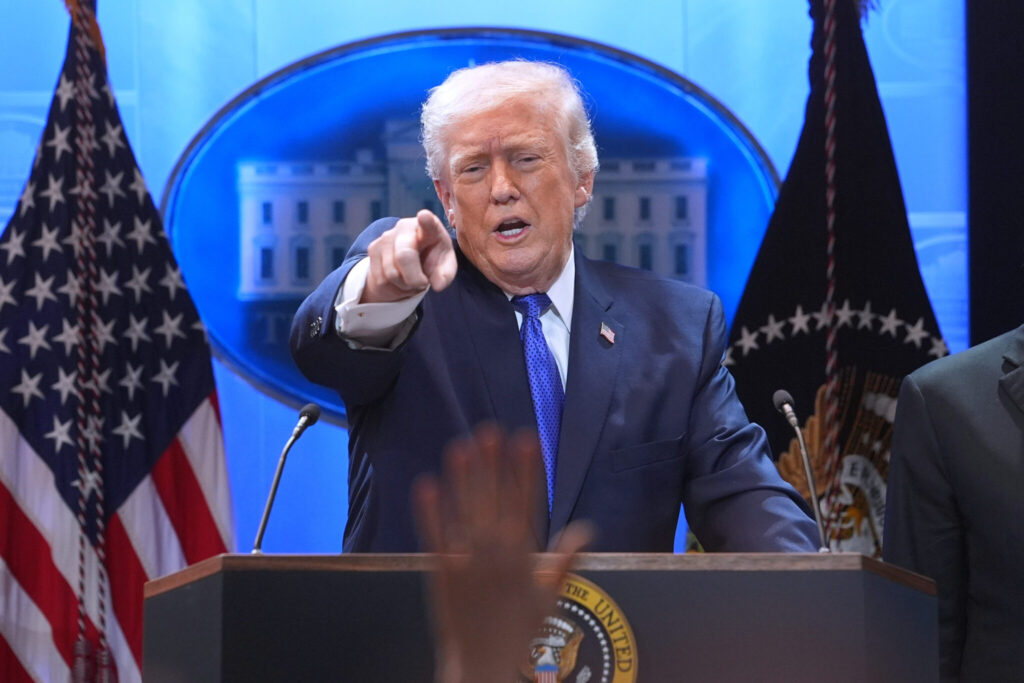
Trump State of the Union 2026 Quick Looks
- Address comes one year into Trump’s second term
- Congress accused of ceding authority to White House
- GOP tax cuts bill remains major legislative achievement
- Supreme Court rebuked Trump’s tariff authority
- Executive actions dominate immigration, workforce policy
- Democrats consider boycott or silent protest
- SAVE America Act looms as next legislative test
- Courts flooded with lawsuits against administration
Deep Look: Trump’s Big Speech to be Delivered to Changed Nation, Congress He Sidelined
When President Donald Trump steps into the House chamber Tuesday night for his annual State of the Union address, he will face a nation dramatically altered in just one year.
The moment carries unusual weight — not just for the policies he outlines, but for the balance of power between the White House and Congress.
A Presidency Redefining Boundaries
Since returning to office, Trump has aggressively pursued an agenda that reshaped domestic priorities, unsettled longstanding international alliances and tested the boundaries of executive authority.
Two Americans were killed during confrontations with federal agents amid immigration raids and mass deportation efforts — stark reminders of the intensity surrounding his enforcement strategy.
Rather than relying solely on Congress, Trump has often turned to executive actions to advance his policies. While his Republican allies hold narrow majorities, many key decisions have bypassed the traditional legislative process altogether.
Critics argue that Congress — constitutionally charged with crafting laws and serving as a check on executive power — has largely stood aside.
Legislative Wins and Executive Reach
Trump’s signature legislative accomplishment remains the GOP-backed tax cuts package. The bill introduced new savings accounts for children, eliminated federal taxes on tips, and created specialized deductions. It also imposed steep cuts to Medicaid and SNAP food assistance programs while channeling more than $170 billion to Homeland Security for immigration enforcement.
But beyond that legislation, Trump’s power has expanded through hundreds of executive orders — many now facing legal challenges.
The Supreme Court of the United States delivered a significant rebuke last week, ruling against Trump’s sweeping tariff policy. In a sharply worded opinion, Justice Neil Gorsuch warned that unchecked executive authority threatens the constitutional framework of separated powers.
“Retrieving a lost power is no easy business in our constitutional order,” Gorsuch wrote, emphasizing the court’s role in preventing the “permanent accretion of power in the hands of one man.”
Congress: Watchdog or Spectator?
The State of the Union arrives at what some lawmakers describe as an existential moment for Congress.
House Speaker Mike Johnson has praised Trump as potentially the most consequential president of the modern era. Republicans broadly argue that voters granted both the White House and Congress to the GOP in order to align legislative action with Trump’s agenda.
Democrats see it differently.
House Democratic Leader Hakeem Jeffries has said the “state of the union is falling apart,” accusing Republicans of surrendering legislative authority.
At times, bipartisan coalitions have flexed congressional muscle — including efforts led by Rep. Thomas Massie and Rep. Ro Khanna to demand transparency regarding the Jeffrey Epstein files. In another instance, the House voted to block Trump’s tariffs on Canada, though the measure faced veto threats.
Still, many votes have been symbolic, with insufficient support to override presidential vetoes.
Immigration, Workforce and Institutional Change
Trump’s administration has dramatically reduced the federal workforce. Approximately 300,000 employees were fired or reassigned, while about 100,000 new hires — primarily in Homeland Security — were added.
A Department of Government Efficiency initiative backed by billionaire Elon Musk has reshaped federal agencies, prompting lawsuits and political backlash.
Meanwhile, controversial actions — including mass deportation operations, rebranding historic federal sites, and military strikes targeting alleged drug-smuggling operations — proceeded with limited congressional resistance.
When Trump issued pardons on his first day back in office for approximately 1,500 individuals connected to the Jan. 6, 2021 Capitol attack, most Republican lawmakers remained silent.
Courts Become the Arena
Legal battles have proliferated. Advocacy groups have filed more than 150 lawsuits challenging various executive actions — one of the largest waves of litigation against a presidential administration in U.S. history.
The judicial system itself has faced mounting political pressure. Some Republican lawmakers have publicly criticized judges who ruled against administration policies, even displaying impeachment posters outside their offices.
The Next Test: Voting Legislation
A major flashpoint looms over the SAVE America Act, which passed the House. The bill would require proof of citizenship — such as a passport or birth certificate — to register for federal elections, along with photo identification at polling stations.
Supporters say the measure protects election integrity. Critics argue it could disenfranchise millions who lack immediate access to documentation.
While Republicans hold a Senate majority, they lack the 60 votes needed to overcome a Democratic filibuster. Trump has signaled he may pursue executive action if Congress does not deliver.
A Nation at a Crossroads
As the United States approaches its 250th anniversary, the State of the Union unfolds against a backdrop of political realignment and institutional strain.
The speech will not only outline legislative priorities but serve as a referendum on the evolving relationship between Congress and the presidency.
For some Americans, it signals decisive leadership. For others, it represents an erosion of checks and balances central to the constitutional system.
When Trump addresses lawmakers Tuesday night, he will do so in a chamber that once defined the contours of national policy — and now grapples with its role in an era of expanding executive power.