Trump Tariffs Blocked, But Trade Chaos Remains/ Newslooks/ WASHINGTON/ J. Mansour/ Morning Edition/ The Supreme Court struck down President Donald Trump’s sweeping emergency tariffs, limiting his authority under IEEPA. But legal uncertainty, alternative tariff tools, and unresolved trade deals mean instability will likely continue. Businesses now face confusion over new levies, possible Section 301 actions, and a complex refund process.
Supreme Court Tariff Ruling Fuels Trade Uncertainty – Quick Looks
- Supreme Court invalidates Trump’s IEEPA tariffs
- President pivots to Section 122 and Section 301 laws
- 10% tariff proposal raised to 15% within 24 hours
- EU delays ratification of U.S. trade agreement
- Questions mount over tariff refunds
- Businesses brace for fresh legal battles
- Trade policy volatility expected to persist
Deep Look


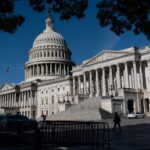
The Supreme Court of the United States delivered a major blow to President Donald Trump’s trade agenda by striking down his broad emergency tariffs imposed under the International Emergency Economic Powers Act (IEEPA).
Yet despite the high court’s dramatic ruling, few economists believe it signals a return to stability in U.S. trade policy. Instead, the decision may usher in a new phase of legal maneuvering, policy improvisation, and prolonged uncertainty for businesses and global markets.
“It’s only gotten more complicated for everybody,” said trade attorney Ryan Majerus, reflecting a widespread view that volatility — not clarity — remains the defining feature of Washington’s tariff strategy.
IEEPA Tariffs Gone — But Not Tariffs Themselves
The justices ruled that Trump overstepped his authority when he used the 1977 IEEPA statute to justify sweeping import taxes aimed at narrowing the U.S. trade deficit. That legal pathway is now effectively closed.
However, administration officials quickly signaled that tariff revenue would remain intact.
Treasury Secretary Scott Bessent said that overall tariff collections would be “unchanged this year and in the future,” suggesting the White House intends to rebuild much of its tariff framework under alternative statutes.
Within hours of the ruling, Trump announced he would invoke Section 122 of the Trade Act of 1974 — a provision allowing tariffs of up to 15% for 150 days without congressional approval. Initially floated at 10%, the proposed levy was raised to the statutory maximum of 15% the following day.
But Section 122 has never been used before. Critics argue it was designed to address balance-of-payments crises tied to the gold-backed dollar era of the 1960s and 1970s — conditions that no longer exist.
Legal experts warn that the administration’s reliance on Section 122 could trigger another wave of litigation. Trade lawyer Dave Townsend noted that, given the billions of dollars at stake, fresh court challenges are almost inevitable.
Section 301: A More Durable Weapon
A potentially stronger tool lies in Section 301 of the same 1974 trade law. That provision allows the U.S. to impose tariffs in response to what it considers “unjustifiable” or “discriminatory” foreign trade practices.
During Trump’s first term, Section 301 tariffs targeting Chinese imports survived legal scrutiny and were later maintained by the Biden administration. U.S. Trade Representative Jamieson Greer confirmed that new Section 301 investigations are already underway following the Supreme Court setback.
Those earlier China tariffs have proven remarkably durable. “We’re eight years in, and those China tariffs are still here,” Majerus said. “They’re sticky tariffs.”
The administration could now use Section 301 not just as a punitive measure, but as leverage to enforce trade deals negotiated under the shadow of the now-invalidated IEEPA tariffs.
Trade Deals in Limbo
The ruling also casts doubt over several trade agreements Trump negotiated last year. Many of those deals were secured under the threat of unlimited emergency tariffs.
Now that the Supreme Court has eliminated that authority, questions loom: Will trading partners reconsider their commitments?
The European Commission has already paused ratification of a U.S.-EU trade deal. European lawmakers are seeking clarity on whether Trump’s new 15% tariff would stack on top of existing “most favored nation” duties under World Trade Organization rules.
“A deal is a deal,” said European Commission spokesman Olof Gill, urging Washington to clarify its position.
Similarly, the United Kingdom negotiated a 10% tariff arrangement last year. Whether that rate will rise to 15% under the new framework remains uncertain.
Despite the confusion, most analysts expect U.S. trading partners to honor their agreements, wary of provoking retaliatory Section 301 tariffs, which can be expansive and long-lasting.
Refunds: A Legal and Administrative Maze
One of the thorniest issues left unresolved by the Supreme Court ruling involves the estimated $133 billion collected under the now-invalid IEEPA tariffs.
The justices declined to specify how refunds should be handled, leaving the matter to lower courts and U.S. Customs and Border Protection, which collects import duties.
Hundreds of companies are already seeking repayment. The refund process could stretch months or even years, particularly if claimants must file individual documentation or pursue litigation.
Financial strategists warn the administration could adopt either a streamlined “one-click” refund process — or impose bureaucratic hurdles requiring extensive paperwork and lawsuits, increasing costs for businesses.
Economic Impact: Uncertainty Outweighs Relief
In theory, striking down tariffs should ease price pressures and boost economic activity. But economists caution that any positive effects may be overshadowed by renewed policy unpredictability.
Mike Skordeles, head of U.S. economics at Truist, noted that the modest economic lift from lower tariffs is likely offset by the drag of persistent uncertainty.
For businesses, the core problem remains planning. Companies must decide whether to adjust supply chains, absorb higher costs, or raise consumer prices — all without knowing what tariff regime will prevail next month.
A New Phase of Trade Volatility
Rather than closing a chapter in Trump’s tariff agenda, the Supreme Court ruling may have opened a more complex one. The president retains multiple statutory tools, and Congress faces political constraints ahead of midterm elections.
Meanwhile, litigation, diplomatic friction, and refund disputes promise to keep trade policy at the forefront of economic debate.
The result is a landscape where tariffs may shift form, but unpredictability endures — leaving businesses, markets, and global trading partners navigating continued turbulence.