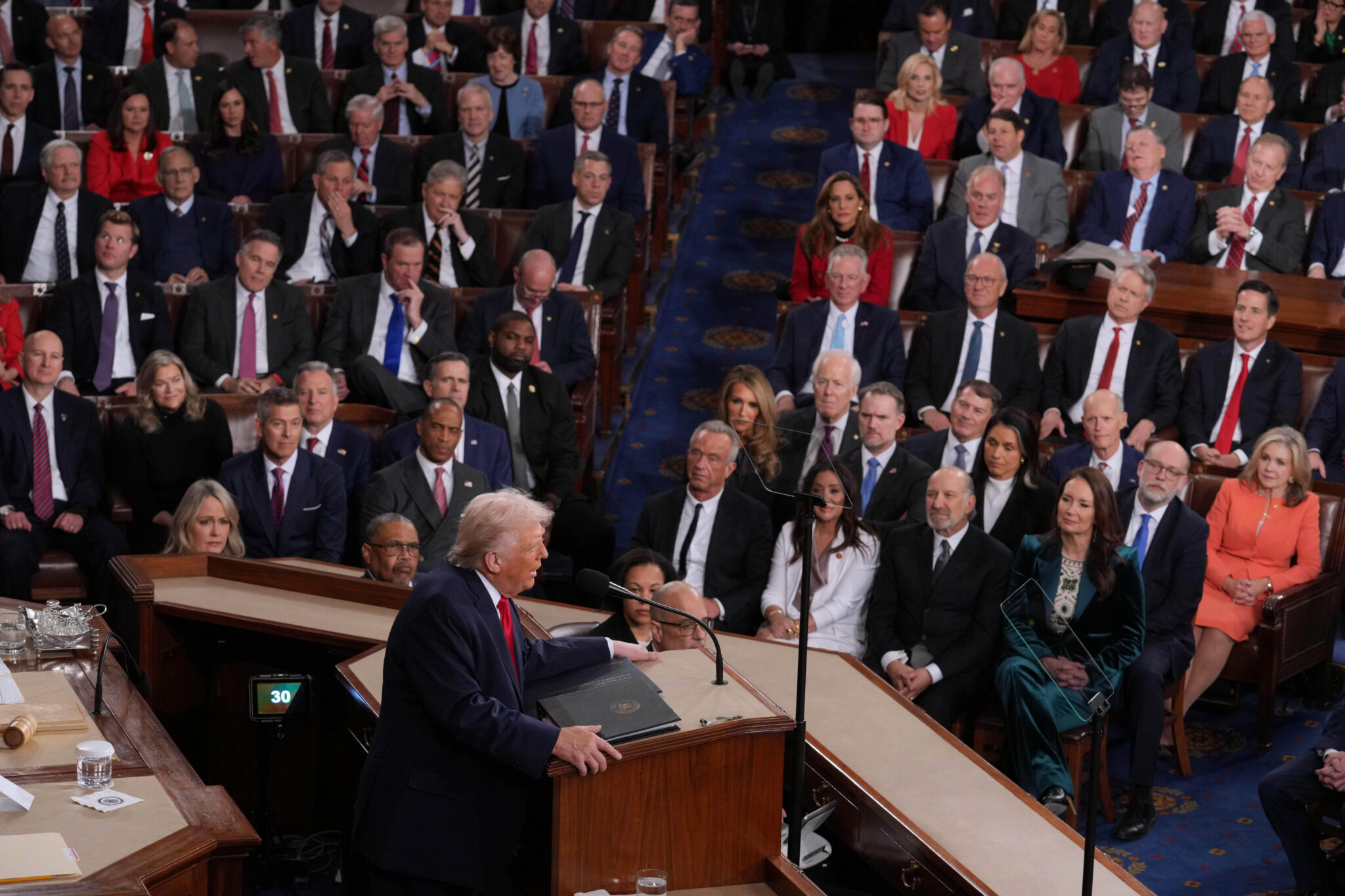
Trump Unveils New Retirement Plan at State of the Union Address/ Newslooks/ WASHINGTON/ J. Mansour/ Morning Edition/ President Donald Trump announced a new retirement savings initiative during his State of the Union address. The proposal would offer Americans without employer-sponsored 401(k)s access to a federal-style retirement plan with up to $1,000 in matching contributions. The move builds on Secure Act 2.0 and aims to expand stock market participation ahead of looming Social Security funding concerns.
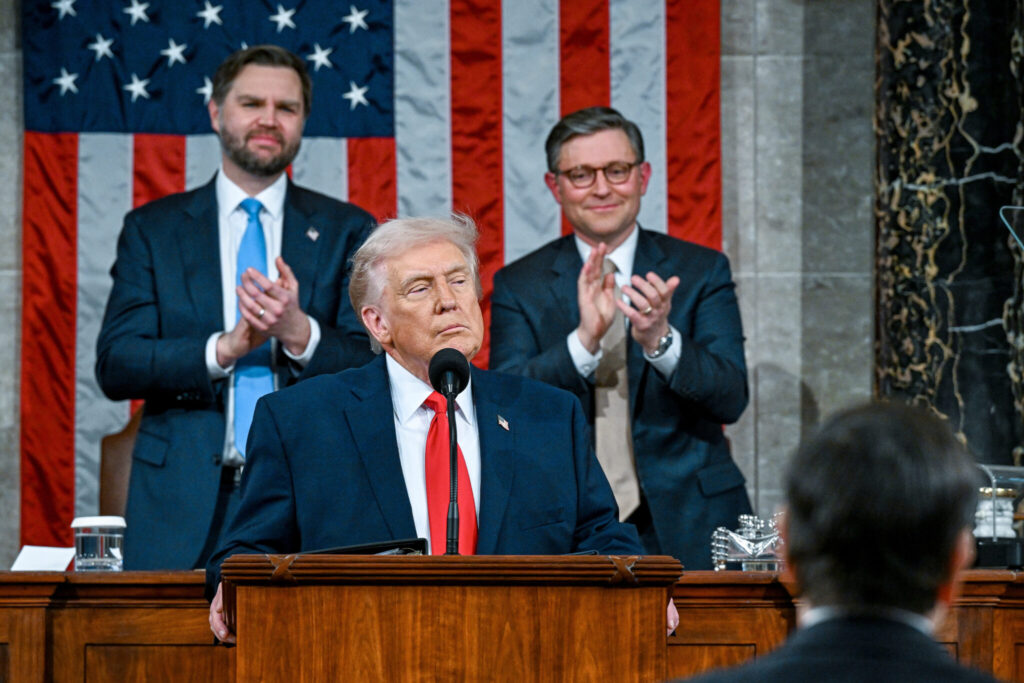
Trump Retirement Plan State of the Union + Quick Looks
- Trump proposes retirement accounts for workers without 401(k)s.
- Government would match up to $1,000 annually.
- Plan modeled after federal Thrift Savings Plan.
- Builds on Secure Act 2.0 signed under Biden.
- About 50 million Americans lack workplace retirement plans.
- Accounts may be opened via tax form checkbox.
- Social Security trust fund faces 2033 depletion deadline.
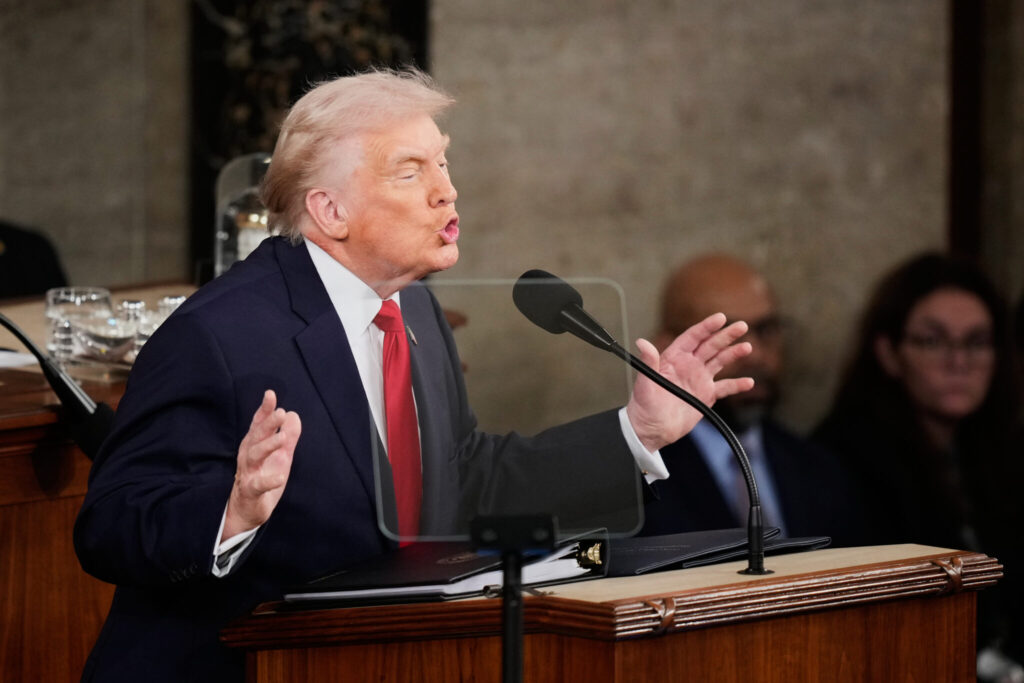
Deep Look: Trump Unveils New Retirement Plan at State of the Union Address
President Donald Trump used his State of the Union address to introduce a new retirement savings initiative aimed at expanding access to investment accounts for millions of Americans who currently lack employer-sponsored plans.
The proposal would allow workers without traditional 401(k) accounts to enroll in a federally modeled retirement program, with the government matching their contributions up to $1,000 annually. Trump framed the initiative as a way to ensure more Americans benefit from stock market gains and build long-term financial security.
“We will match your contribution with up to $1,000 each year as we ensure that all Americans can profit from a rising stock market,” Trump said during the address.
Expanding Access to Retirement Savings
Roughly 50 million Americans do not have access to workplace retirement plans such as 401(k)s, according to retirement policy experts. While individuals can open Individual Retirement Accounts (IRAs) independently, participation rates remain relatively low, often due to administrative complexity or lack of awareness.
The White House says the new proposal builds upon Secure Act 2.0, an update to earlier retirement legislation enacted during Trump’s first term and later expanded under former President Joe Biden. A provision taking effect next year will allow certain workers with existing retirement accounts to receive up to $1,000 in matching funds if they contribute $2,000 themselves.
Trump’s new initiative aims to extend similar benefits to workers who currently have no employer-based retirement account at all.
Modeled After the Thrift Savings Plan
According to administration officials, the structure would resemble the Thrift Savings Plan, the low-fee retirement system available to federal employees. The Thrift Savings Plan provides access to a limited selection of diversified funds, including investments tied to short-term U.S. Treasuries and broad stock market indexes like the S&P 500.
Under the proposal, individuals could enroll through a simplified process — potentially by checking a box on their tax return — removing a barrier that has discouraged many from opening IRAs on their own.
Teresa Ghilarducci, a labor economist at The New School who has worked on early versions of the concept, described the plan as significant because it acknowledges that many Americans lack consistent retirement savings. She previously collaborated with White House economic adviser Kevin Hassett in 2021 to explore bipartisan frameworks for expanding retirement access.
“The idea was to get someone far on the right and far on the left to come together,” she has said, describing the effort as an attempt to bridge ideological divides around retirement security.
Part of a Broader Investment Push
The retirement proposal fits into a broader White House strategy aimed at encouraging wider stock market participation. The administration has also promoted so-called “Trump accounts” designed to introduce children to investing at an early age. Officials suggest that philanthropic contributions may be permitted to supplement individual retirement accounts under the new plan, similar to the structure envisioned for youth accounts.
By increasing participation in equities and diversified funds, the administration argues that more Americans can benefit directly from rising markets — a central theme in Trump’s economic messaging.
The Social Security Shadow
While expanding private retirement savings could help many households, a larger structural issue remains unresolved: the future of Social Security Administration programs. The Social Security trust fund is projected to be depleted by 2033. If Congress does not act, beneficiaries could face automatic benefit reductions.
Retirement policy experts note that even well-designed savings programs cannot fully offset potential cuts to Social Security, which remains a foundational source of income for millions of retirees.
“There’s still more to be done,” Ghilarducci has cautioned, pointing to the urgency of broader retirement reform.
What Comes Next
Details about implementation remain limited. It is unclear whether the administration will seek new legislation from Congress or rely on regulatory authority to expand access. Funding mechanisms for the government match have also not yet been specified.
Retirement specialists caution that execution will be critical. Even policies with strong bipartisan intent can encounter logistical hurdles, participation challenges or unintended market effects.
Still, the proposal marks one of the most concrete retirement policy expansions announced during Trump’s second term. With millions lacking employer-based plans and midterm elections approaching, the initiative could become a centerpiece of the administration’s economic narrative.
If enacted successfully, the program would represent a significant shift in federal involvement in personal retirement savings — blending government matching funds with market-based investment options in an effort to address a longstanding gap in America’s retirement system.