Democrats Push for War Powers Vote After U.S. Strikes on Iran/ Newslooks/ WASHINGTON/ J. Mansour/ Morning Edition/ Democrats are demanding an immediate war powers vote after President Trump ordered strikes on Iran without congressional approval. Lawmakers argue the Constitution requires Congress to authorize military action. Republicans are divided, with some praising the strikes and others calling them unauthorized acts of war.

Quick Look
- Trump launched overnight strikes on Iran without a congressional vote
- Sen. Tim Kaine calls for immediate War Powers Resolution vote
- Senate returns Monday; House returns Wednesday
- Rubio briefed congressional leaders before the strikes
- Top Democrats warn of escalation and “another Middle East war”
- GOP leaders praise the operation as necessary for security
- Rep. Thomas Massie calls strikes “unauthorized acts of war”
- Debate centers on Congress’ constitutional war authority
Deep Look: Democrats Push for War Powers Vote After U.S. Strikes on Iran
Democrats are calling for an immediate congressional vote on war powers after President Donald Trump launched overnight military strikes on Iran without prior authorization from Congress.
The U.S. joined Israel in what Trump described as “major combat operations” aimed at crippling Iran’s military capabilities and pressuring its leadership. The move has triggered sharp criticism from Democratic lawmakers — and at least one Republican — who argue the president bypassed Congress.
Lawmakers Demand Immediate Action
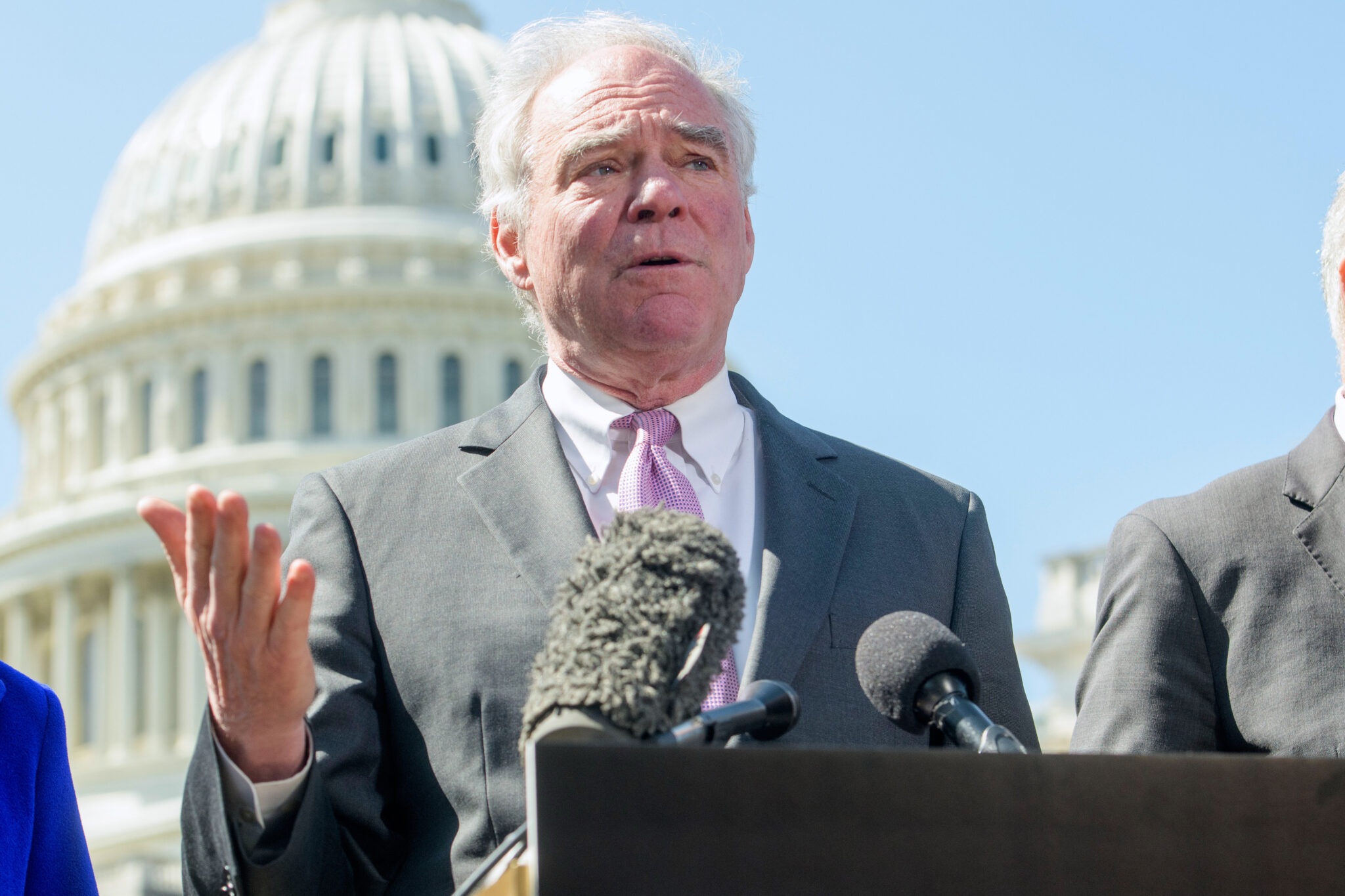
Sen. Tim Kaine (D-Va.) urged the Senate to return to session at once to vote on his War Powers Resolution, which would limit U.S. military involvement in Iran without congressional approval.
“Every single Senator needs to go on the record about this dangerous, unnecessary, and idiotic action,” Kaine said. He had already planned to force a vote next week before the strikes occurred.
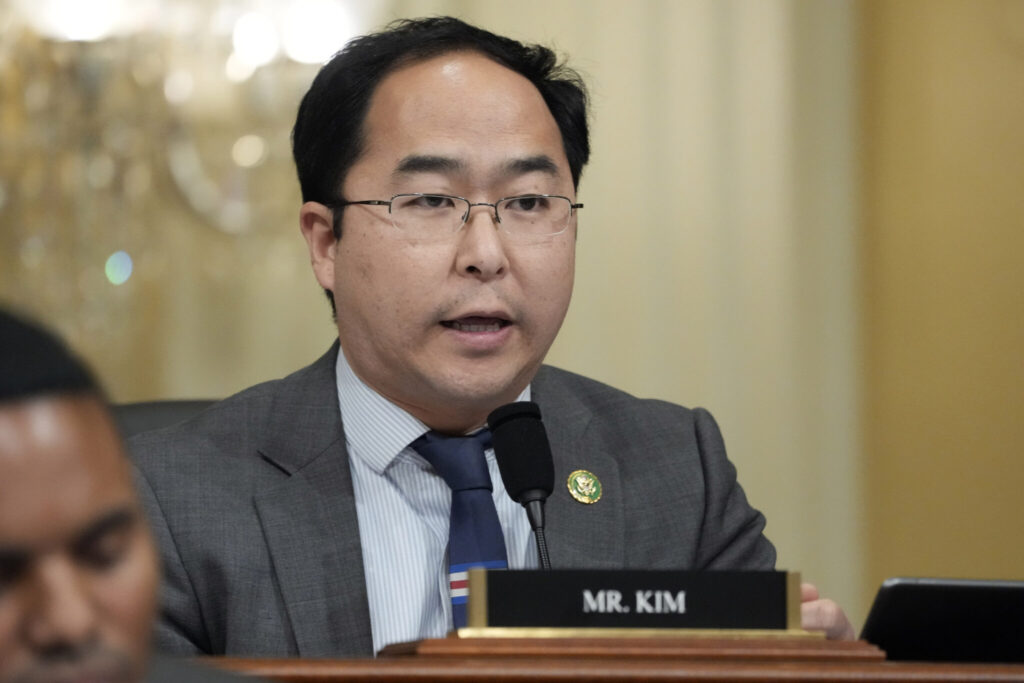
Sen. Andy Kim (D-N.J.) echoed that call, saying Congress should “immediately go back into session” to reassert the will of the American people, whom he said do not want war with Iran.
The Senate is scheduled to reconvene Monday, while the House is not expected back until Wednesday.
Intelligence Briefings and Democratic Criticism
Secretary of State Marco Rubio briefed House Speaker Mike Johnson (R-La.) shortly before the strikes and had updated the bipartisan “Gang of Eight” — congressional leaders and top intelligence committee members — earlier in the week.
Still, top Democrats on the intelligence committees accused the administration of sidestepping Congress.
Sen. Mark Warner (D-Va.), vice chair of the Senate Intelligence Committee, warned that Americans have “seen this playbook before,” referencing past conflicts justified by urgent intelligence claims.
Rep. Jim Himes (D-Conn.), the top Democrat on the House Intelligence Committee, said military action in the region “almost never ends well for the United States” and cautioned that conflict with Iran could escalate unpredictably.
Republican Support — and Dissent
While Democrats criticized the strikes, many Republican lawmakers praised the operation.
Sen. Lindsey Graham (R-S.C.), a longtime Iran hawk, called the move “well-planned” and said the fall of Iran’s ruling regime would be “necessary and more than justified.”
Senate Armed Services Committee Chair Roger Wicker (R-Miss.) described the action as a “pivotal and necessary operation to protect Americans and American interests.”
However, Rep. Thomas Massie (R-Ky.), a frequent Trump critic, broke with many in his party, calling the strikes “acts of war unauthorized by Congress.” Massie and Rep. Ro Khanna (D-Calif.) had been preparing to force a bipartisan House vote on war powers related to Iran.
“Congress must reconvene on Monday to vote on our war powers resolution to stop this war,” Khanna said.
What Happens Next?
Senate Majority Leader John Thune (R-S.D.) said administration officials are expected to brief all senators on the strikes in the coming days. Thune defended the president’s decision, citing Iran’s nuclear ambitions, ballistic missile development and support for regional militant groups.
A similar war powers effort aimed at restricting U.S. action in Venezuela failed earlier this year in both chambers.
The debate now centers on whether Congress will assert its constitutional authority over war-making powers — or allow the administration’s Iran campaign to proceed without formal authorization.