Trump’s Iran Strikes Mark the Riskiest Foreign Policy Gamble of His Presidency/ Newslooks/ WASHINGTON/ J. Mansour/ Morning Edition/ President Trump’s sweeping strikes on Iran mark the most significant and risky foreign policy move of his second term. He is pursuing the ambitious goal of weakening Iran’s military and encouraging regime change without deploying ground troops. Analysts warn the conflict could escalate regionally and shape Trump’s long-term legacy.
Quick Look
- Trump launches large-scale strikes under “Operation Epic Fury”
- Administration cites nuclear and missile threats from Iran
- Intelligence assessments reportedly dispute imminent U.S. missile threat
- Diplomacy with Tehran appears halted after failed talks
- Iran retaliates against U.S. and Israeli targets
- Regime change via air power viewed as unlikely by experts
- Conflict could destabilize Middle East and oil markets
- Move may define Trump’s second-term foreign policy legacy
Trump’s Iran Strikes Mark the Riskiest Foreign Policy Gamble of His Presidency
President Donald Trump’s sweeping military assault on Iran represents the most consequential — and potentially perilous — foreign policy decision of his second term, launching the United States into its largest conflict since the wars in Iraq and Afghanistan.
By joining Israel in large-scale strikes across Iran, Trump has embraced a high-stakes strategy that could reshape the Middle East — or spiral into a prolonged regional war with unpredictable consequences.
A Defining Moment for Trump’s Foreign Policy
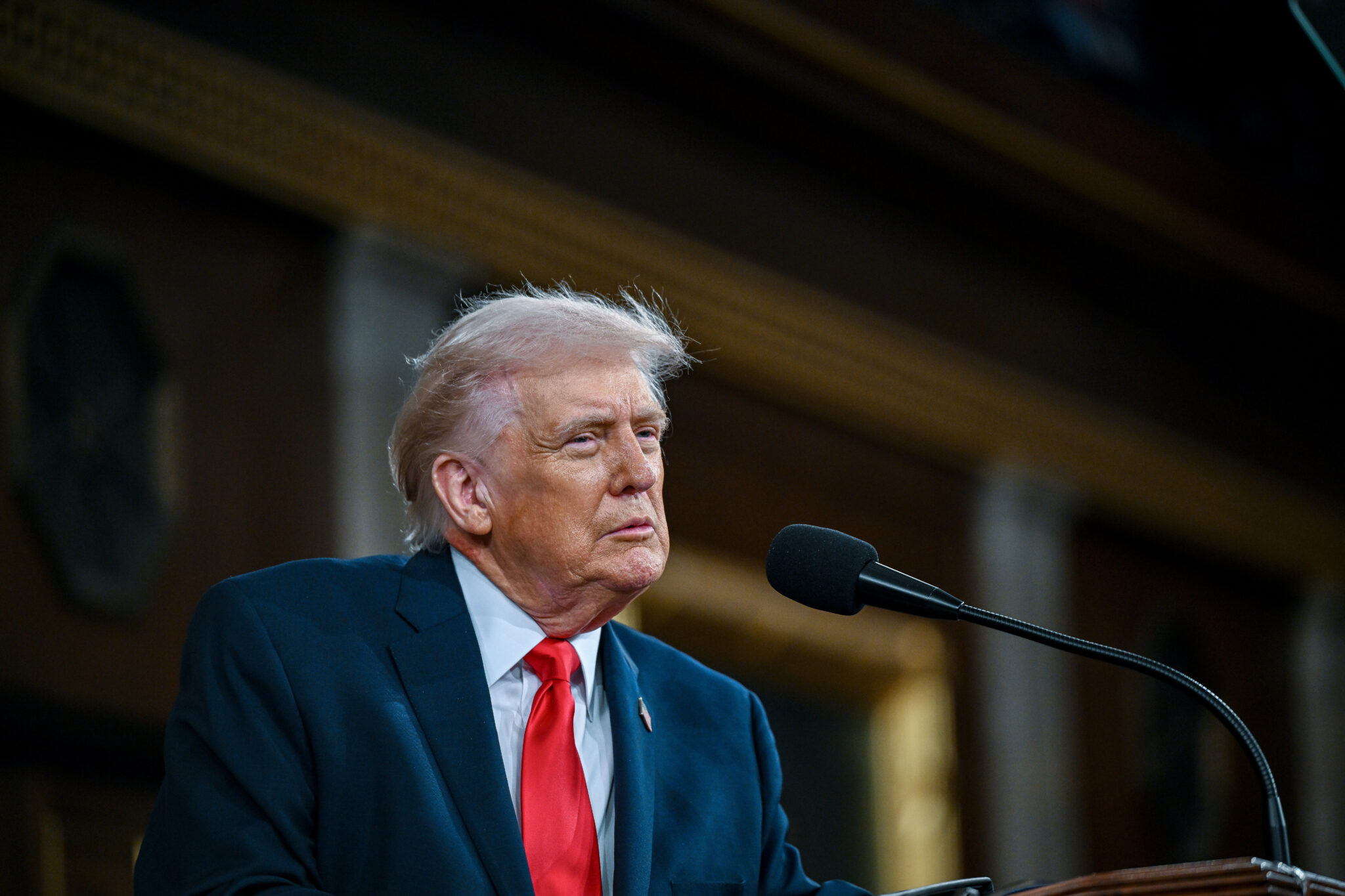
In a pre-dawn video announcing what the Pentagon has called “Operation Epic Fury,” Trump framed the attack as necessary to eliminate Iran’s nuclear and ballistic missile threats and create conditions for regime change in Tehran.
He argued that U.S. air power could dismantle Iran’s military infrastructure while giving the Iranian people an opportunity to overthrow their leaders.
But foreign policy experts warn that regime change through air strikes alone has historically failed without ground forces — something Trump has ruled out deploying.
“It’s hard to change a government from the air,” said Jon Alterman of the Center for Strategic and International Studies. “It’s hard to change the minds of a population through the air.”
Intelligence Disputes Over Missile Threat
Trump has repeatedly claimed Iran is close to developing missiles capable of striking the United States. However, sources familiar with U.S. intelligence assessments say those reports do not currently support the assertion that Iran poses an imminent direct missile threat to the U.S. homeland.
Similarly, some experts have questioned the administration’s characterization of how quickly Iran could advance toward building a nuclear weapon. Tehran maintains its nuclear program is peaceful.
The parallels to the 2003 Iraq war — when faulty intelligence about weapons of mass destruction helped justify invasion — have not gone unnoticed among critics.
Diplomacy Collapses as Conflict Expands
The strikes appear to have shut down any immediate path back to nuclear negotiations. A round of talks in Geneva earlier this week ended without progress.
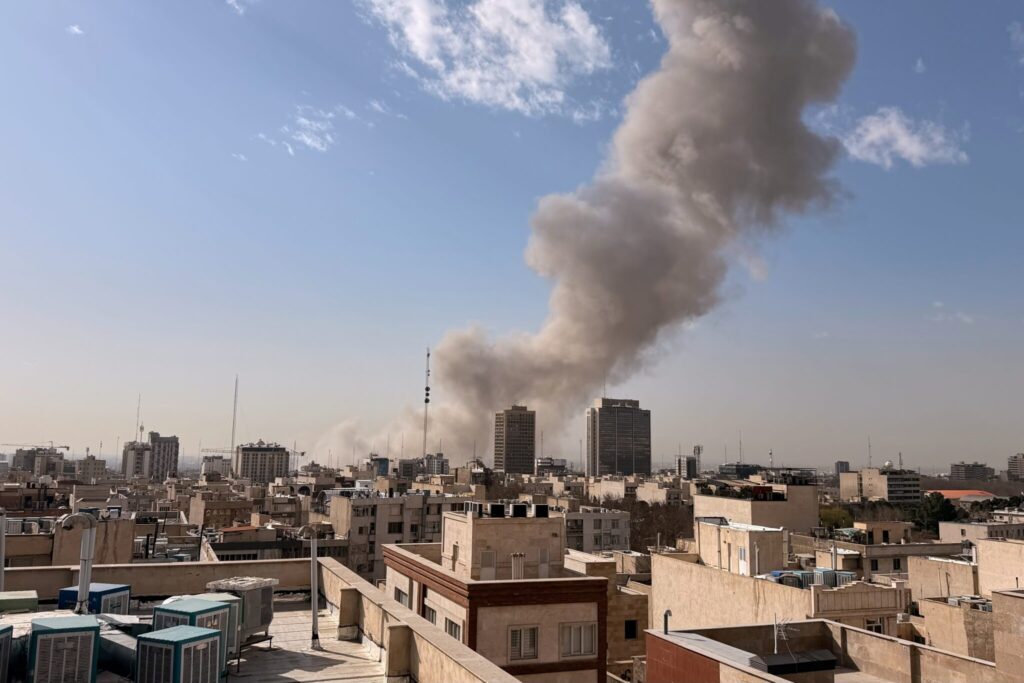
Some Trump advisers had suggested that military pressure could force Iran back to the bargaining table. Instead, Tehran responded with missile attacks on Israel and U.S. military installations in Gulf states, widening the confrontation.
Daniel Shapiro, a former U.S. ambassador to Israel and senior Pentagon official, said many Americans will wake up asking fundamental questions.
“Why are we at war with Iran? What is the goal? And why are U.S. bases now under attack?” he said.
Regime Change: A Lofty — and Uncertain — Objective
Trump has increasingly embraced the idea of regime change, openly encouraging Iranians to rise up against their government.
But analysts question whether external air strikes can destabilize a government that has survived decades of sanctions, protests and international isolation.
Even if senior Iranian leaders are eliminated, experts warn that chaos could follow — potentially empowering hardline factions or leading to military rule.
“Regime collapse doesn’t necessarily produce moderation,” analysts note. “It can produce fragmentation or something even more repressive.”
Political Risks at Home
The Iran campaign also carries domestic political risks. Public opinion polls show most Americans prioritize economic concerns, such as inflation and the cost of living, over foreign military engagement.
Privately, some of Trump’s advisers had urged him to focus on domestic economic issues ahead of November’s midterm elections, where Republicans face the possibility of losing congressional control.
Instead, Trump has leaned heavily into foreign policy and expanded military operations during the first 13 months of his second term, including a January raid in Venezuela and earlier strikes on Iranian nuclear facilities.
A Stronger Opponent Than Venezuela
Unlike Venezuela, Iran is a far more capable and entrenched adversary, with ballistic missiles, proxy forces across the region and a population of roughly 93 million people.
While prior joint U.S.-Israeli strikes degraded Iran’s air defenses, analysts say Tehran remains a formidable military power capable of escalating in ways Washington cannot fully predict.
“Iran is willing to cross lines they weren’t willing to cross before,” said Nicole Grajewski of the Carnegie Endowment for International Peace.
A Legacy on the Line
Supporters argue the gamble could pay off if it significantly weakens Iran’s nuclear and missile capabilities. Mark Dubowitz of the Foundation for Defense of Democracies said Iran’s weakened state presents a rare opportunity.
But the stakes are enormous. A prolonged regional war could engulf oil-producing Gulf states, threaten U.S. troops and disrupt global energy markets.
How the conflict unfolds may ultimately define Trump’s foreign policy legacy — as either a decisive assertion of American power or a costly miscalculation in one of the world’s most volatile regions.