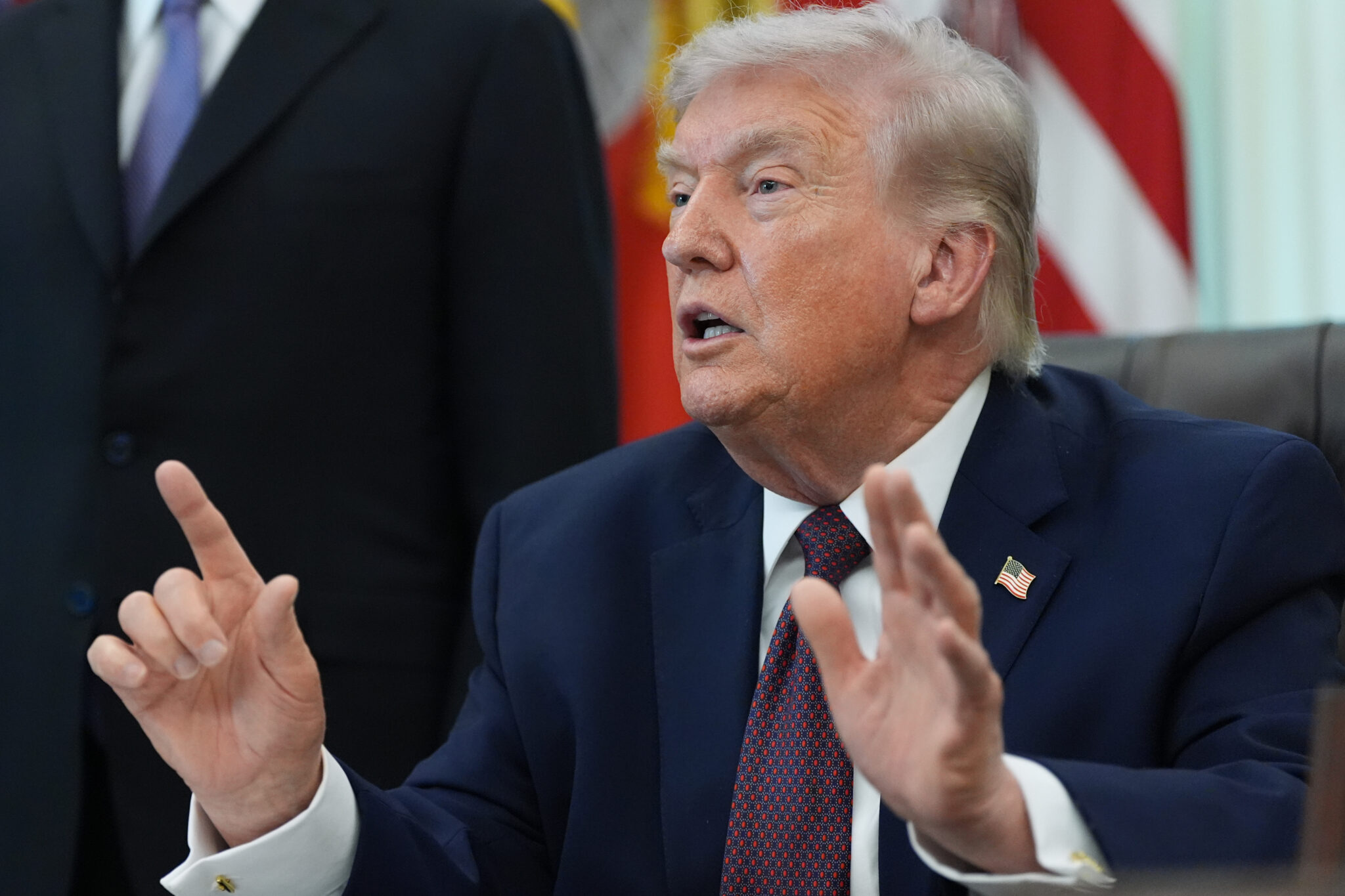
Trump Unveils 100% Tariff on Some Patented Drugs/ Newslooks/ WASHINGTON/ J. Mansour/ Morning Edition/ President Donald Trump announced tariffs of up to 100% on patented drugs. Companies that move manufacturing to the U.S. could avoid higher tariffs. The move marks the latest expansion of Trump’s aggressive trade policies.
Trump Pharmaceutical Tariffs Quick Looks
- Trump announces 100% tariff on patented drugs
- Companies get 120–180 days to negotiate
- 0% tariff for companies building U.S. facilities
- 20% tariff rises to 100% in four years
- 17 pricing deals already negotiated
- EU, Japan, Korea face 15% tariffs
- UK drugs receive 10% tariff
- Steel, aluminum tariffs updated to 50%
- Trade policy expands using Section 232 authority
Deep Look: Trump Unveils 100% Tariff on Some Patented Drugs
President Donald Trump signed a sweeping executive order that could impose tariffs of up to 100% on certain patented pharmaceutical imports, marking one of the most aggressive moves yet in his administration’s push to reshape global trade and bring drug manufacturing back to the United States.
The order, announced on the anniversary of Trump’s “Liberation Day” tariffs, gives pharmaceutical companies several months to negotiate pricing agreements and invest in U.S.-based manufacturing before facing steep import taxes.
Tariffs Could Reach 100%
Under the new policy, pharmaceutical companies that fail to reach pricing agreements or expand domestic manufacturing could face tariffs that escalate to 100%.
Companies that sign “most favored nation” pricing agreements and actively build manufacturing facilities in the United States would receive a 0% tariff. Firms that invest in U.S. production but do not reach pricing deals would initially face a 20% tariff, which would gradually increase to 100% over four years.
Administration officials said large pharmaceutical companies will have 120 days to negotiate agreements, while smaller companies will have 180 days.
A senior administration official said the government has already reached 17 pricing agreements with major drug manufacturers, with 13 companies having already signed deals.
However, officials did not identify specific companies or drugs that may be affected by the tariffs.
National Security Justification
In the executive order, Trump cited national security concerns as justification for the tariffs, arguing that reliance on foreign pharmaceutical imports poses risks to the United States.
The administration has increasingly framed supply chain independence — especially for medicines and pharmaceutical ingredients — as a national security priority.
The announcement comes exactly one year after Trump unveiled sweeping “Liberation Day” tariffs on imports from dozens of countries. Those tariffs rattled global markets and were later overturned by the Supreme Court earlier this year.
Despite that setback, the administration has continued pursuing alternative legal avenues to impose new tariffs.
Industry Pushback
The pharmaceutical industry quickly warned about potential consequences.
Stephen J. Ubl, CEO of the Pharmaceutical Research and Manufacturers of America (PhRMA), said tariffs on innovative medicines could raise costs and threaten investments.
Ubl argued that many imported medicines come from trusted U.S. allies and that new tariffs could disrupt global supply chains.
He also emphasized that the United States already maintains a large footprint in biopharmaceutical manufacturing.
Industry analysts warn that tariffs could increase costs for drugmakers, which may ultimately be passed on to consumers.
Deals With Major Drug Companies
The Trump administration has previously used tariff threats to negotiate deals with major pharmaceutical companies, including:
- Pfizer
- Eli Lilly
- Bristol Myers Squibb
These agreements reportedly included commitments to lower drug prices and increase domestic manufacturing investments.
Officials say the new tariffs are designed to accelerate additional deals and encourage companies to expand U.S. operations.
Country-Specific Tariff Agreements
In addition to company-specific tariffs, the administration announced country-based rates:
- European Union: 15% tariff
- Japan: 15% tariff
- South Korea: 15% tariff
- Switzerland: 15% tariff
- United Kingdom: 10% tariff
The administration noted that tariffs on British pharmaceuticals could eventually be reduced to zero under future trade agreements.
The United Kingdom previously said it secured tariff-free access for British medicines for at least three years.
Expanded Metal Tariffs
Trump also announced changes to tariffs on imported metals, including steel, aluminum, and copper.
The administration confirmed that:
- Fully metal products remain subject to 50% tariffs
- Tariffs now calculated based on full customs value
- New rules apply to derivative metal products
Products containing less than 15% metal content will only face country-specific tariffs. However, products with higher metal content — such as washing machines — may face a 25% tariff on the entire product value.
Officials say the new rules aim to prevent companies from avoiding tariffs by modifying product classifications.
More Tariffs Expected
Trump’s latest move reflects a broader shift toward sector-specific tariffs using Section 232 of the 1962 Trade Expansion Act.
The administration has already applied similar tariffs to:
- Automobiles
- Lumber
- Kitchen cabinets
- Metals
The Supreme Court recently blocked tariffs imposed under the 1977 International Emergency Economic Powers Act, but the administration has turned to other legal authorities to continue implementing tariffs.
Following the court ruling, Trump also imposed a temporary 10% tariff on all imports, though that measure can only remain in place for 150 days.
Several states have already filed legal challenges against the new tariffs.
Economic Impact and Debate
Trump has defended tariffs as necessary to reduce trade deficits and bring manufacturing back to the United States.
He argues the tariffs will restore economic strength and reclaim wealth lost through decades of trade imbalances.
However, critics warn that tariffs could increase costs for businesses and consumers, disrupt global supply chains, and worsen inflation.
Economists say the long-term impact will depend on whether companies move production to the United States or pass increased costs to consumers.
As Trump continues expanding trade restrictions, the pharmaceutical tariff policy could become one of the most consequential economic decisions of his second term.