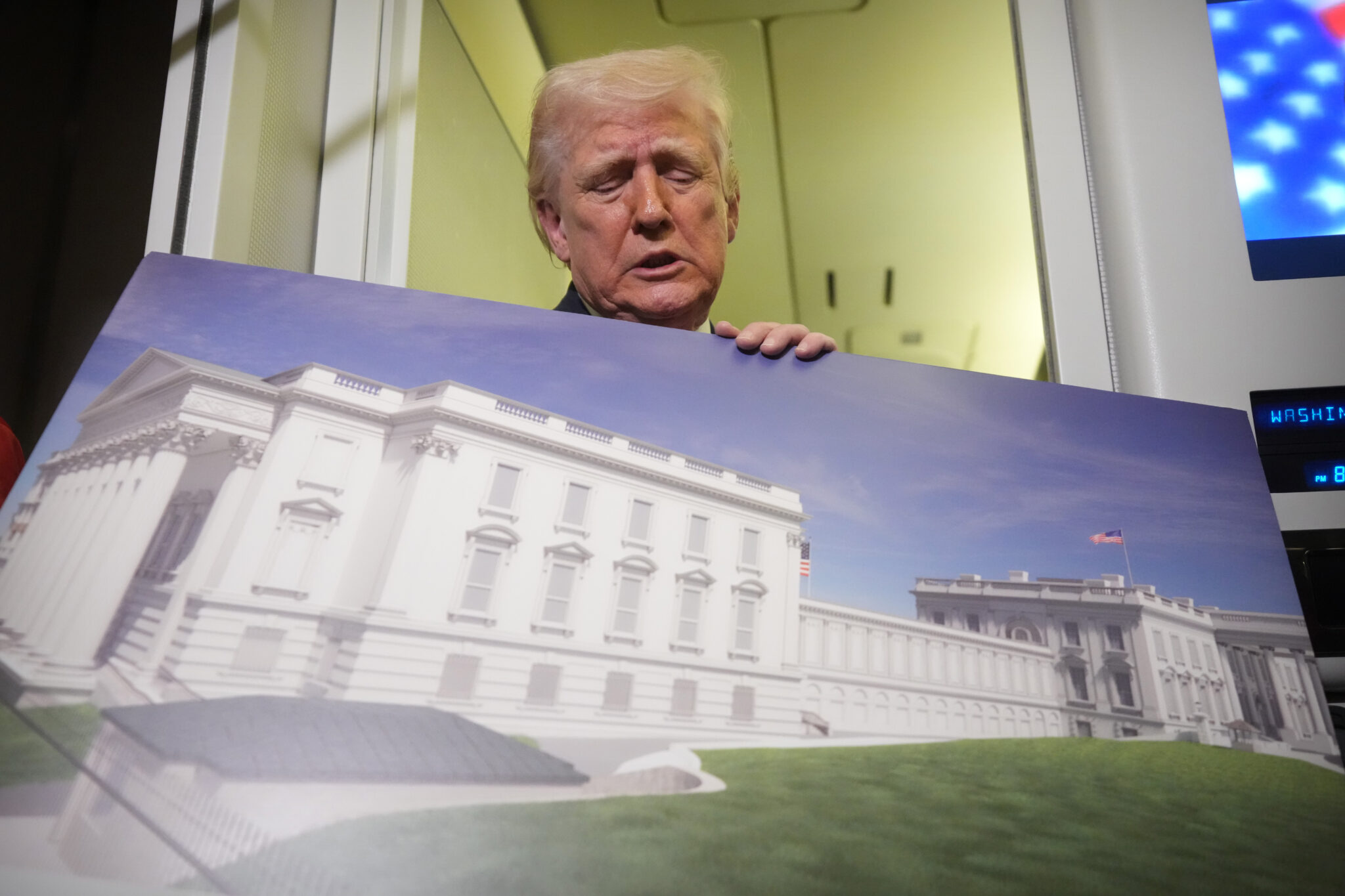
Trump White House Ballroom Wins Approval Despite Court Challenge/ Newslooks/ WASHINGTON/ J. Mansour/ Morning Edition/ President Donald Trump’s White House ballroom project received final planning approval. The vote came days after a federal judge ordered construction halted. Legal challenges and public opposition could still delay the project.
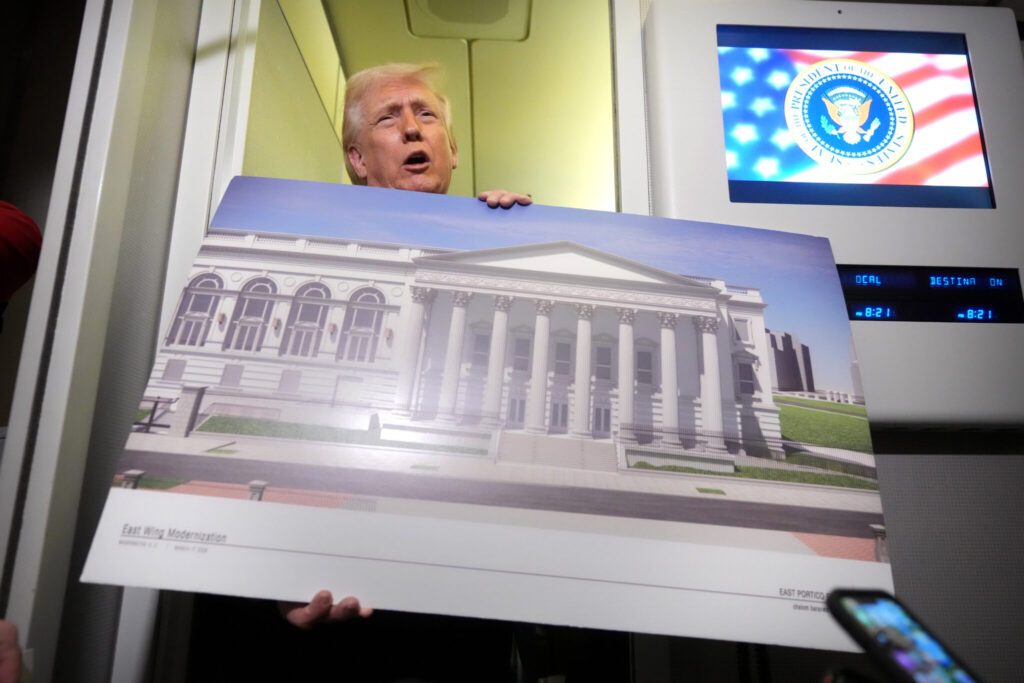
Trump White House Ballroom Quick Looks
- White House ballroom receives final planning approval
- Commission vote passed 8–1
- Federal judge ordered construction halt earlier
- Project estimated cost $400 million
- Ballroom size 90,000 square feet
- East Wing already demolished last year
- Public comments largely opposed project
- Legal challenges still ongoing
- Trump calls ballroom “greatest and most beautiful”
Deep Look: Trump White House Ballroom Wins Approval Despite Court Challenge
President Donald Trump’s controversial plan to build a massive White House ballroom received final approval from a key federal planning agency despite a recent federal court ruling ordering a halt to construction.
The National Capital Planning Commission voted 8-1 to approve the project, allowing planning to move forward even as legal challenges continue. The decision came just two days after U.S. District Judge Richard Leon ordered construction to stop unless Congress authorizes the sweeping structural change.
Commission Moves Forward Despite Court Order
Commission Chairman Will Scharf, a Trump appointee and White House aide, said the court ruling affects construction activities but does not prevent planning approvals.
Scharf also noted that the judge’s ruling has been temporarily stayed for two weeks while the administration seeks to appeal the decision.
“That ruling really does not impact our action here today,” Scharf said before the vote.
The approval represents a significant milestone for Trump’s ballroom project, which would be the largest structural change to the White House in more than 70 years.
However, the legal battle may still delay construction and complicate the administration’s timeline.
Trump’s Legacy Project
The ballroom project is part of a broader effort by Trump to reshape Washington, D.C., and leave a lasting mark on the presidency before his term ends in early 2029.
Supporters of the project argue that the White House lacks adequate space for large formal events and that a ballroom would improve the functionality of the historic complex.
Scharf defended the proposal by pointing to past White House additions that initially faced criticism but later became iconic features, including:
- The North Portico
- The South Portico
- The Truman Balcony
“I believe that in time this ballroom will be considered every bit as much of a national treasure,” Scharf said.
He also argued that some opposition stems from political disagreements with Trump rather than concerns about the project itself.
Public Opposition Remains Strong
The project has drawn significant criticism from public officials, preservationists, and advocacy groups.
Thousands of public comments submitted to the commission were overwhelmingly opposed to the ballroom.
Phil Mendelson, chairman of the D.C. Council, cast the lone “no” vote, criticizing both the design and the speed of the approval process.
“It’s just too large,” Mendelson said.
Public Citizen, a nonprofit advocacy group, also criticized the vote. Attorney Jon Golinger accused the commission of ignoring public opposition and the judge’s ruling.
“This approval is illegitimate and this vote is a joke,” Golinger said.
Trump Praises Approval
Following the vote, Trump thanked commissioners and praised the project in a social media post.
“When completed, it will be the Greatest and Most Beautiful Ballroom of its kind anywhere in the World,” Trump wrote.
The president has repeatedly described the ballroom as necessary to host major events without using temporary tents on the White House lawn.
Design Changes Announced
Before the vote, the commission reviewed design revisions made to the proposed 90,000-square-foot ballroom.
Trump removed a large staircase from the south side of the building and added an uncovered porch to the southwest side.
Critics had previously argued that the staircase was unnecessarily large and impractical.
Officials said additional refinements were made to the exterior design after feedback from oversight agencies and public comments.
Cost and Scope Expand
The project’s estimated cost has grown to approximately $400 million, significantly higher than earlier projections.
Trump first announced the ballroom last summer, citing the need for a permanent space for official functions.
In October, the East Wing of the White House was demolished to prepare for construction. Site preparation and underground work have already begun.
The ballroom complex is expected to include:
- Event space
- Offices for the first lady
- Kitchen facilities
- Theater space
Supporters argue the addition will improve the White House’s ability to host large events.
Support From Commission Members
Several Trump-appointed commissioners supported the project, emphasizing practical benefits.
Vice Chairman Stuart Levenbach said the current White House layout is not suitable for hosting large gatherings.
“This is not an expansion for its own sake,” Levenbach said, calling the ballroom a multipurpose facility.
James Blair, another Trump appointee, said visitors to the White House deserve a better experience.
Officials also noted that Trump himself would have limited use of the ballroom before leaving office.
Legal Challenges Continue
The group argued that Trump moved forward without proper approval from oversight agencies and Congress.
Judge Leon agreed to temporarily halt construction but allowed work related to security improvements to continue.
The lawsuit highlights broader concerns about preserving the historic White House structure.
Trump has said the ballroom will be funded through private donations, including contributions from wealthy donors and corporations. However, public funds are being used for underground security upgrades and related infrastructure.
Uncertain Future
Although the planning commission approval marks progress, the project still faces legal uncertainty.
Construction timelines could be delayed depending on court rulings and potential congressional involvement.
Still, the administration remains committed to completing the project before Trump leaves office in 2029.
If completed, the ballroom would represent one of the most dramatic changes to the White House in decades — and potentially one of the most controversial.