Trump Go-It-Alone Strategy Faces Iran War Challenges/ Newslooks/ WASHINGTON/ J. Mansour/ Morning Edition/ President Donald Trump’s confident claims about defeating Iran face new challenges as U.S. aircraft are shot down and global tensions rise. Allies remain hesitant to support the U.S.-led war, highlighting diplomatic isolation. Economic disruption, oil supply threats, and battlefield uncertainty are testing Trump’s go-it-alone approach.
Trump Go-It-Alone Strategy — Quick Looks
- Trump declared Iran “completely decimated”
- U.S. fighter jet shot down days later
- Second aircraft reportedly hit by Iranian defenses
- Strait of Hormuz disruptions spike oil prices
- Allies hesitant to support U.S. military campaign
- France and UK decline direct involvement
- NATO withdrawal threat sparks Republican concern
- War now entering sixth week
- Global oil markets impacted
- Domestic policy battles mirror foreign policy challenges
Deep Look: Trump’s Go-It-Alone War Strategy Faces Uncertainty
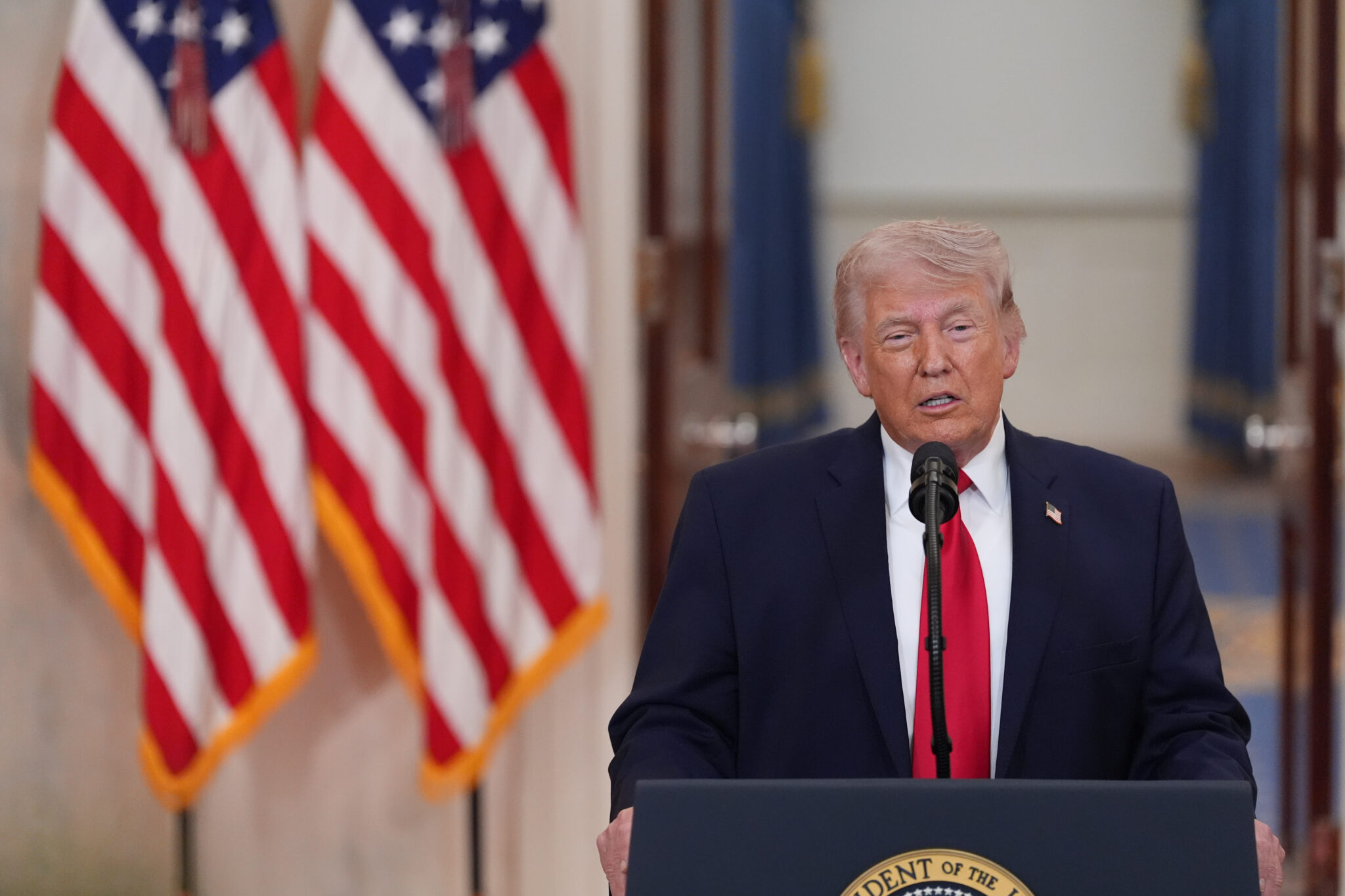
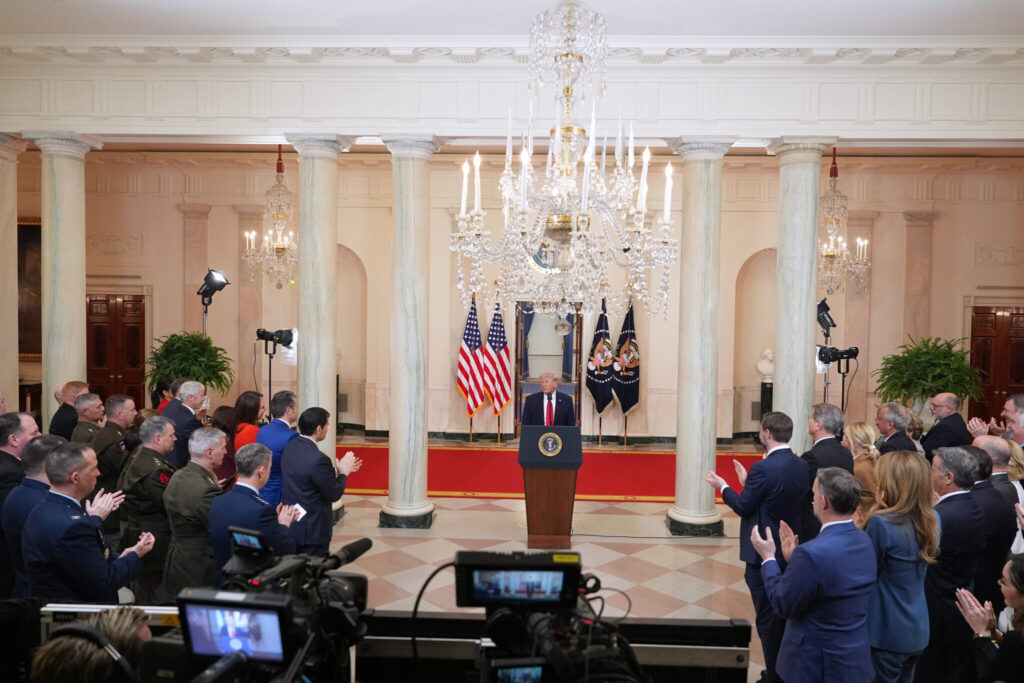
WASHINGTON — President Donald Trump projected confidence during his first national address about the Iran war, declaring the United States had “beaten and completely decimated Iran.” But days later, battlefield developments and diplomatic challenges are testing that certainty as the conflict deepens.
In a prime-time speech from the White House, Trump said Iran’s military capabilities had been devastated and claimed American forces were “unstoppable.” He also asserted that Iranian radar systems had been “100% annihilated,” signaling confidence in U.S. military dominance.
However, the downing of a U.S. fighter jet over Iran on Friday underscored the unpredictable nature of warfare. One American crew member was rescued, while another remained missing, prompting a search-and-rescue mission. Iranian state media also reported that another U.S. aircraft had been struck by air defenses, contradicting claims that Iran’s defensive capabilities had been eliminated.
The developments marked a sobering reminder of the risks associated with military conflict and raised questions about the accuracy of earlier assessments of Iran’s weakened military.
Trump, who did not appear publicly Friday, has also faced challenges responding to Iran’s broader actions across the region. Iran has launched attacks against Gulf neighbors and disrupted shipping through the Strait of Hormuz, a critical waterway for global oil supplies. These moves have driven up fuel prices and created economic uncertainty worldwide.
Efforts to rally international support have also proven difficult. Some traditional allies have declined to participate in the U.S.-led campaign, highlighting diplomatic friction.
French President Emmanuel Macron criticized the unilateral nature of the operation, stating that the United States “can hardly complain” about limited support after launching the campaign independently. Britain’s Prime Minister Keir Starmer similarly declined to involve the United Kingdom directly in the conflict, despite criticism from Trump.
France and the United Kingdom are instead focusing on diplomatic and logistical efforts to reopen global shipping routes once hostilities subside.
At home, Trump’s approach has also prompted debate within his own party. After the president threatened to withdraw from NATO, Senate Majority Leader John Thune emphasized the importance of alliances, noting that many lawmakers view NATO as a critical post-World War II partnership.
“We got an awful lot of people who think that NATO is a very critical, incredibly successful post-World War II alliance,” Thune said, reinforcing the importance of maintaining international cooperation.
Former national security adviser John Bolton also criticized the administration’s decision to launch military operations without consulting allies, calling it a strategic mistake. He argued that building coalitions before entering conflicts is essential for long-term success.
“If you don’t build your coalition before the war, it’s pretty tough to do it while you’re in it,” Bolton said.
Despite these criticisms, Trump’s governing style has long relied on confidence and unilateral action. During his 2016 presidential campaign, Trump famously declared, “I alone can fix it,” a philosophy that has influenced both domestic and foreign policy decisions.
The Iran conflict, launched alongside Israel without congressional approval or widespread international backing, represents one of the most significant tests of that leadership style.
Political historian Julian Zelizer noted that even the most assertive leaders cannot control events overseas.
“You can be the most assertive, aggressive president in the world, but you don’t control what happens overseas,” Zelizer said.
Trump’s independent approach has also extended to domestic policy. Recently, he signed executive orders affecting voting rules, pursued controversial immigration policies, and defended ambitious infrastructure plans at the White House.
However, several initiatives have faced legal and political obstacles. The Supreme Court struck down parts of his tariff program, and legal challenges quickly followed new voting-related executive actions. The administration also faced skepticism from justices regarding efforts to restrict birthright citizenship.
These developments mirror the unpredictability Trump now faces abroad.
During private remarks at a White House Easter gathering, Trump joked about the limitations of presidential authority, saying he could accomplish more if he were a king.
“I’m such a king I can’t get a ballroom approved,” Trump said, drawing laughter from attendees.
As the war with Iran enters its sixth week, Trump’s confidence is confronting the realities of military conflict, diplomatic resistance, and economic consequences.
The downing of U.S. aircraft, rising oil prices, and limited international support suggest the conflict may be more complicated — and longer — than initially anticipated.