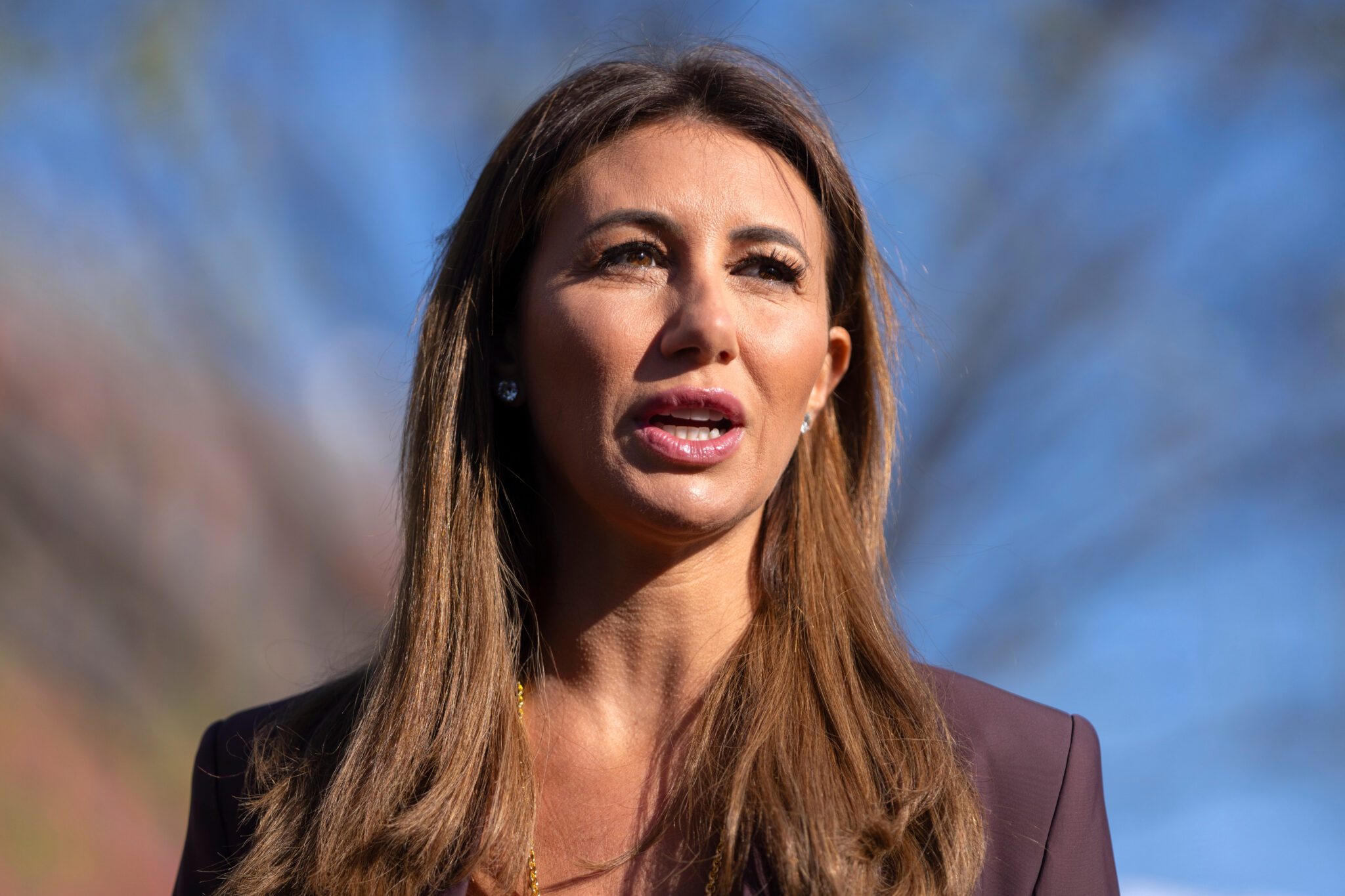
Appeals Court Disqualifies Alina Habba as New Jersey Prosecutor/ Newslooks/ WASHINGTON/ J. Mansour/ Morning Edition/ A federal appeals court has ruled that Alina Habba, former attorney to President Donald Trump, is disqualified from serving as New Jersey’s acting U.S. attorney. The decision upholds a lower court ruling that found her appointment legally invalid. The case highlights ongoing challenges to Trump-era appointments across federal offices.

Alina Habba Disqualification Quick Looks
- U.S. Court of Appeals affirms lower court ruling disqualifying Alina Habba.
- Habba’s appointment as U.S. attorney in New Jersey deemed unlawful.
- Judges cited legal irregularities and lack of Senate confirmation.
- Habba was previously Trump’s personal lawyer and White House adviser.
- Her interim appointment expired after 120 days in July.
- Trump administration reappointed her despite opposition from New Jersey senators.
- Habba pursued high-profile prosecutions, including a Democratic congresswoman.
- Federal courts are reviewing multiple Trump-era prosecutorial appointments.
- Appeals panel included judges appointed by both Republican and Democratic presidents.
- Decision raises questions about validity of charges filed under Habba’s tenure.
Deep Look
Appeals Court Rules Trump’s Ex-Lawyer Alina Habba Ineligible to Serve as U.S. Attorney in New Jersey
PHILADELPHIA — Alina Habba, a former personal lawyer to President Donald Trump, has been officially disqualified from continuing in her role as New Jersey’s top federal prosecutor, following a decision Monday by the 3rd U.S. Circuit Court of Appeals.
The court upheld an earlier ruling from a lower court that found Habba’s continued service as acting U.S. attorney for New Jersey was unlawful, citing procedural violations and a lack of Senate confirmation. The 32-page opinion, delivered by a panel of judges, pointed to the Trump administration’s attempts to bypass traditional legal processes to keep Habba in place.
“The citizens of New Jersey and the loyal employees in the U.S. Attorney’s Office deserve some clarity and stability,” the court wrote. “We will affirm the District Court’s disqualification order.”
Habba had appeared before the panel in October to defend her position. Judges on the panel included two appointed by Republican President George W. Bush and one appointed by Democratic President Barack Obama.
Legal and Political Tension
The ruling is a significant setback for the Trump administration, which had tried to extend Habba’s interim role beyond the 120-day limit set by federal law. After her appointment expired in July, and with no Senate confirmation, the administration maneuvered to keep her in office, even reappointing her after a federal court had named a career prosecutor to take her place.
Earlier this year, U.S. District Judge Matthew Brann found that Habba’s original appointment was arranged through a “novel series of legal and personnel moves” that did not align with federal statutes. While he allowed her to remain temporarily pending appeal, his concerns have now been validated by the higher court.
A Pattern of Disputed Appointments
The Habba decision is not isolated. Across the country, courts are reviewing the legality of several Trump-era prosecutorial appointments. Last week, a federal judge in Virginia threw out charges brought by another Trump appointee, Lindsey Halligan, ruling that her appointment as interim U.S. attorney was also invalid.
The Justice Department has said it plans to appeal that decision, signaling a broader conflict over the administration’s efforts to circumvent traditional appointment procedures.
Habba’s Controversial Tenure
Alina Habba’s rise within the Trump orbit began as one of the president’s personal attorneys. She represented him in both civil and criminal proceedings before joining the White House briefly as an adviser. Trump appointed her to the New Jersey U.S. Attorney role in March 2025.
Her time in office quickly became politically charged. Shortly after her appointment, she gave an interview in which she expressed a desire to “turn New Jersey red”—a rare political statement from a federal prosecutor. This drew criticism from opponents and concern within legal circles over the politicization of prosecutorial power.
She brought a trespassing charge against Democratic Newark Mayor Ras Baraka related to a visit to a federal immigration center. Though the charge was dropped, it raised questions about selective prosecution. She later filed an assault charge—still pending—against Democratic Congresswoman LaMonica McIver stemming from the same event.
Fallout and Future Uncertainty
The court’s decision leaves uncertainty about the cases pursued under Habba’s leadership since July. Legal experts say the ruling could open the door for challenges to actions taken during her disputed tenure, particularly in high-profile prosecutions.
In her defense, the administration argued that Habba’s appointment was lawful under a federal statute allowing the elevation of a first assistant U.S. attorney. Habba had been named to that role by Trump officials prior to her interim appointment.
However, her legitimacy was questioned further when New Jersey’s two Democratic senators—Cory Booker and Andy Kim—refused to support her Senate confirmation. When her term expired, federal judges in New Jersey used their authority to appoint a career prosecutor as her successor. That appointee was quickly removed by Attorney General Pam Bondi, who reinstated Habba.
Brann’s ruling emphasized that even the president must operate within statutory limits. “Presidential appointments are still subject to time limits and power-sharing rules outlined in federal law,” he wrote.
A Broader Legal and Political Clash
The court’s decision reflects broader institutional tensions as Trump’s second administration continues to test the boundaries of executive authority—particularly within the judiciary and Department of Justice.
As the dust settles, questions remain about the legality of similar appointments and whether federal prosecutors tied to political figures can maintain public confidence.