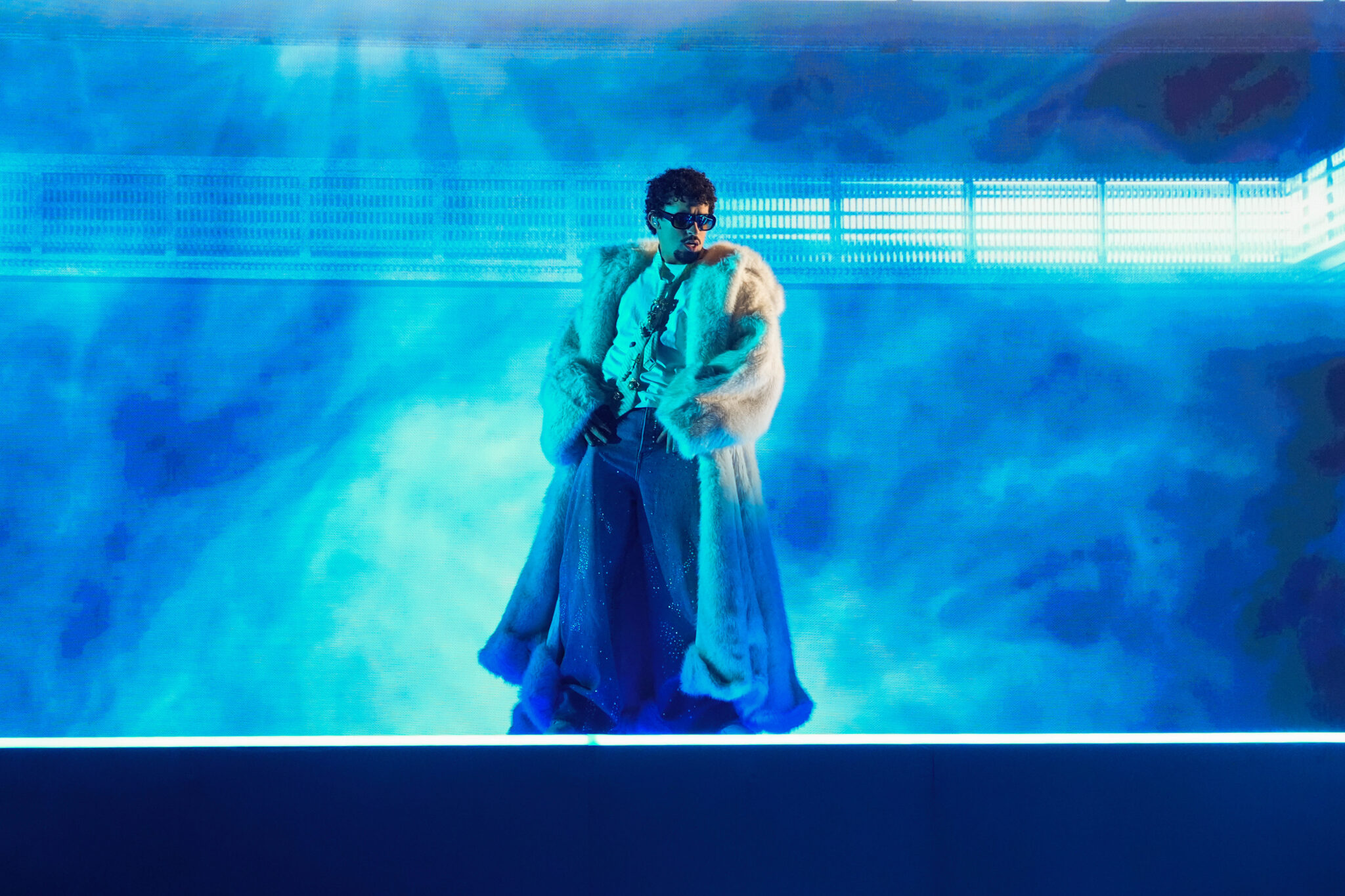
Bad Bunny Poised for Historic Grammy Night 2026 for Latino Culture/ Newslooks/ WASHINGTON/ J. Mansour/ Morning Edition/ Bad Bunny may make history at the 2026 Grammy Awards as the first Spanish-language artist nominated for Album, Song, and Record of the Year in the same year. His album Debí Tirar Más Fotos blends Puerto Rican folklore with modern Latin trap, pushing cultural and musical boundaries. Win or lose, he’s already reshaped Latino representation in global music.
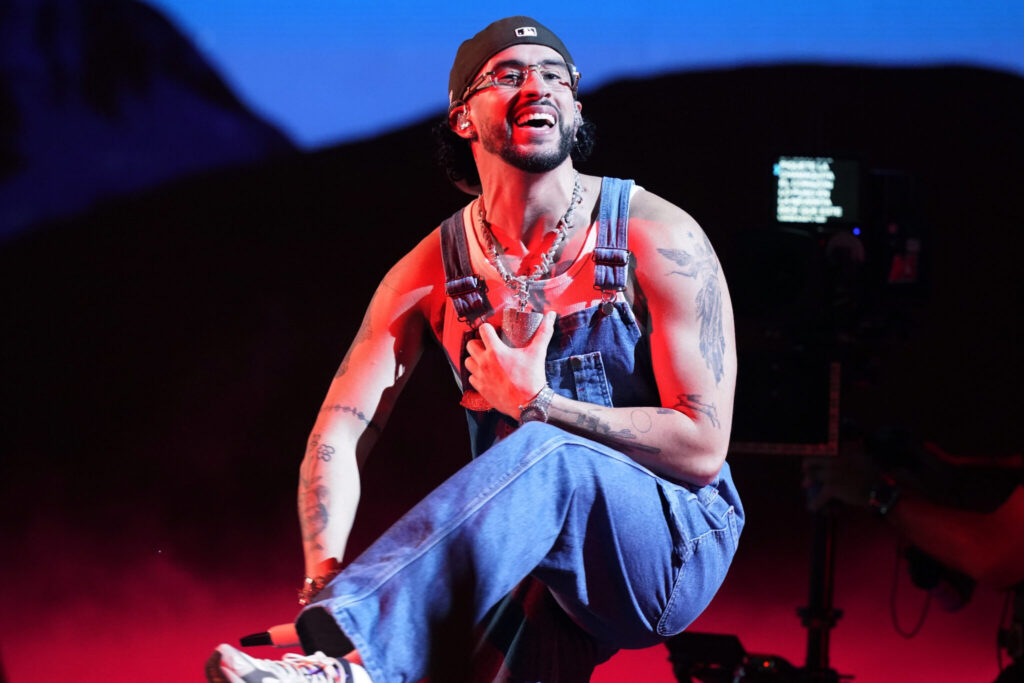
Bad Bunny Grammy Milestone Quick Looks
- Bad Bunny nominated for six Grammys in 2026
- First Spanish-language artist nominated in top three categories
- Debí Tirar Más Fotos is second Spanish-language Album of the Year nominee
- Bad Bunny also holds first with 2022’s Un Verano Sin Ti
- Album fuses reggaetón, Latin trap, salsa, bomba, jíbara, plena
- Recognition viewed as major cultural win for Latinos
- Grammy nods challenge historical exclusion of marginalized genres
- Bad Bunny to headline 2026 Super Bowl halftime show
- Scholars highlight album’s political, ancestral, and global relevance
- Lyrics tackle Puerto Rican resistance, gentrification, neocolonialism
- Artist remains most-streamed musician in the world
- Album resonates across generations due to innovative fusion
- Critics compare potential Grammy win to historic Oscar moments
Deep Look: Bad Bunny Poised for Historic Grammy Night 2026 for Latino Culture
NEW YORK — As the 2026 Grammy Awards approach, Puerto Rican global icon Bad Bunny is once again on the verge of making history — though for many, his cultural impact is already undeniable.
The artist, born Benito Antonio Martínez Ocasio, leads a groundbreaking moment in music with six Grammy nominations, including Album of the Year, Song of the Year, and Record of the Year — the first time a Spanish-language artist has achieved this trifecta in the same year. His album Debí Tirar Más Fotos is only the second Spanish-language album ever nominated for Album of the Year. The first? His own Un Verano Sin Ti in 2022.
Whether or not he wins, Bad Bunny’s historic presence in the 2026 Grammy nominations represents a major shift — both musically and symbolically — for Latinos in the global music industry.
Cultural Recognition Beyond Awards
“Bad Bunny’s Grammy nods are more than a personal triumph,” says Vanessa Díaz, a Chicano and Latino studies professor at Loyola Marymount University. “They represent overdue recognition of Latin music’s global influence — especially genres like reggaetón and Latin trap that have often been criminalized and marginalized.”
These styles, rooted in Puerto Rico’s most underserved communities, have long been looked down upon, both in the mainstream and even within the Latin music industry. Yet here is Bad Bunny — whose music is deeply embedded in those traditions — being recognized at the highest level by the Recording Academy.
Díaz, co-author of P FKN R: How Bad Bunny Became the Global Voice of Puerto Rican Resistance, believes this recognition is part of a broader cultural moment. “It’s not just about Benito,” she explains. “It’s about what it means for a genre and a people.”
Albert Laguna, a professor at Yale University, agrees. “Bad Bunny is the latest in a long line of Caribbean artists who’ve shaped global music,” he says. “But what sets him apart is his refusal to dilute his sound for global appeal. This is his most Puerto Rican album to date.”
Musical Identity Meets Political Expression
Across Debí Tirar Más Fotos, Bad Bunny collaborates with producers to weave traditional Puerto Rican sounds into his signature urban aesthetic. Tracks blend Latin trap, reggaetón, bomba, salsa, jíbara, plena, and even Christmas music forms like aguinaldo. The result is an album deeply rooted in heritage yet undeniably modern.
Laguna notes that this flies in the face of the usual music industry playbook, where artists often abandon their cultural roots in favor of more commercially viable, global sounds.
“Bad Bunny did the opposite,” he says. “He doubled down on his culture and history — and still conquered the world.”
The album’s political messaging is just as powerful as its music. Lyrics confront issues like gentrification in Puerto Rico, the island’s colonial status, tourism exploitation, and systemic inequality.
“It’s a sonic act of resistance,” says Díaz.
In “Lo que le pasó a Hawaii,” for example, Bad Bunny offers a direct critique of neocolonial dynamics. The track echoes global movements for cultural autonomy and land preservation, aligning the artist’s message with broader anti-colonial struggles worldwide.
“This music speaks to Puerto Rico, but it also speaks to Palestine, to Hawaii, to Indigenous communities — to any place grappling with cultural erasure,” Laguna says.
Rewriting the Global Playbook
Petra Rivera-Rideau, an American studies professor at Wellesley College and co-author of P FKN R, highlights the album’s innovative musical structure as one reason for its intergenerational appeal. “By integrating folkloric sounds with Latin trap, Bad Bunny makes the music more accessible to older listeners — while still staying true to his core,” she explains.
“Traditional genres are often dismissed as old or irrelevant,” Rivera-Rideau continues. “But Debí Tirar Más Fotos flips that notion. It makes ancestral sounds feel urgent and fresh.”
That multigenerational resonance was reflected in Bad Bunny’s recent residency shows in Puerto Rico, where grandparents and Gen Z fans sang side by side. His ability to fuse the past and present, Rivera-Rideau says, has created a rare moment of unity in an otherwise divided cultural landscape.
“If it were just nostalgia or just innovation, it wouldn’t work,” she adds. “But Bad Bunny is doing both — and doing it well.”
Latino Identity in a Tumultuous Political Climate
The timing of Bad Bunny’s Grammy moment is significant. Amid rising anti-immigrant sentiment in the United States and expanded deportation efforts under President Trump’s administration, Latino communities have faced heightened fear and scrutiny.
In a recent interview with i-D Magazine, Bad Bunny revealed that concerns about the targeting of Latinos played into his decision not to tour in the mainland U.S. this year. Hundreds have reportedly been detained in Puerto Rico alone since federal arrests escalated in late January.
“The U.S. has a long history of othering Latinos,” says Díaz. “So to see a Puerto Rican artist not just succeed but be celebrated on the world’s biggest stages — that’s powerful.”
She calls Debí Tirar Más Fotos a “soundtrack of resistance” in a time of cultural uncertainty.
Potential for a Historic Grammy Win
If Bad Bunny wins Album of the Year — a category long dominated by English-language pop and rock — it would be a watershed moment for the music industry.
“Think Halle Berry winning her Oscar. Think Rita Moreno becoming the first Latina EGOT winner,” Díaz says. “That’s the scale of what this moment could mean.”
However, experts remain cautiously optimistic. Despite being the world’s most-streamed artist for multiple years, Bad Bunny has only won Grammys in the música urbana categories — a sign of the Recording Academy’s lingering reluctance to honor non-English language music in major categories.
“If this doesn’t open doors for other Spanish-speaking or marginalized artists, it’ll feel like another missed opportunity,” Rivera-Rideau warns.
Still, the artist’s presence at the Grammys — combined with his headlining role at the 2026 Super Bowl halftime show — ensures his cultural imprint remains massive, win or lose.
The Bigger Picture
For millions, Bad Bunny’s success transcends trophies. It represents a broader shift in what global music looks and sounds like — and who gets to shape it.
“There’s beauty in this complexity,” Laguna reflects. “Bad Bunny offers pleasure, political critique, and cultural affirmation all in one. In a difficult time, his music is giving people a language to understand the present — and imagine something better.”