

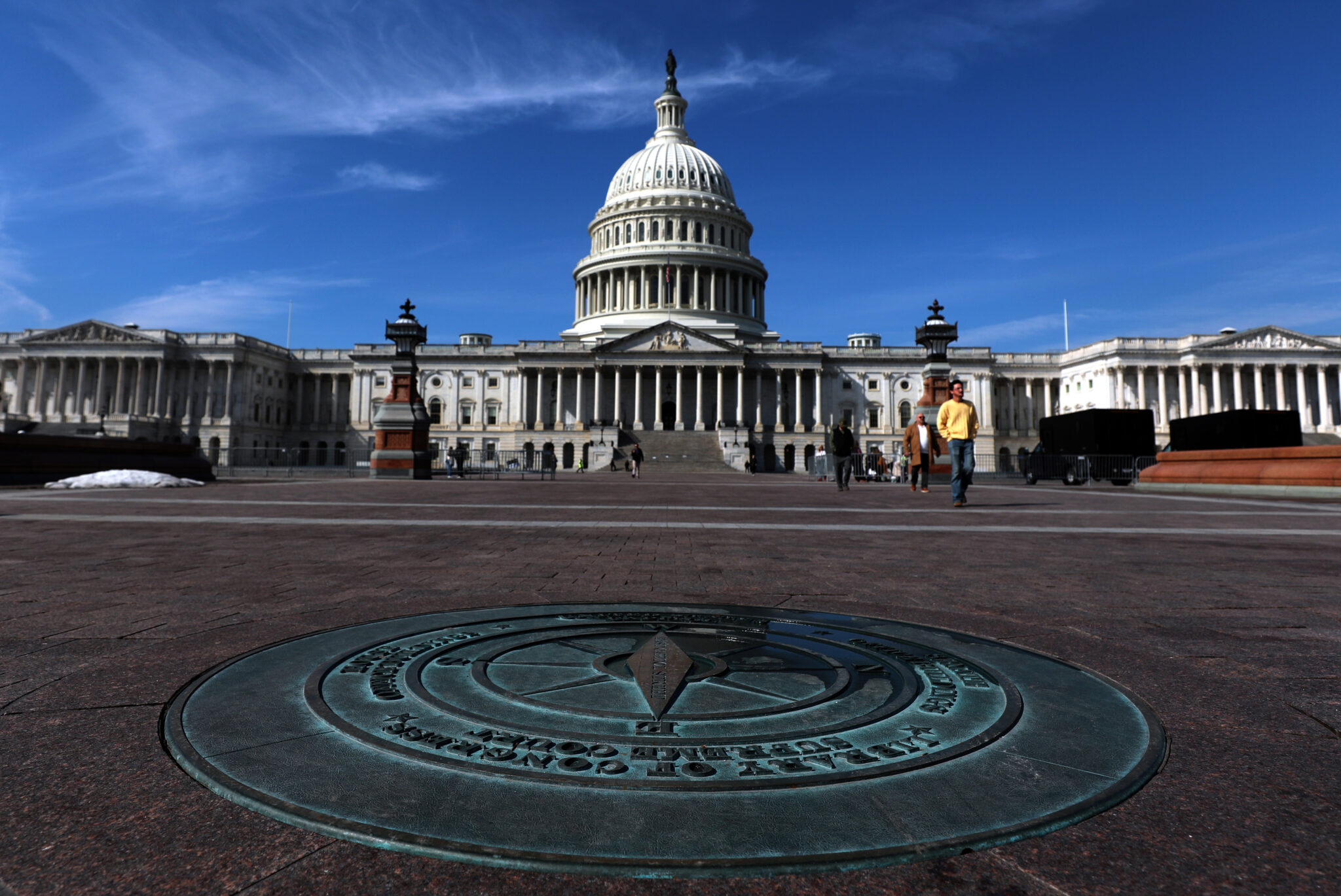
Congress Debates Trump’s Iran War Authority as Conflict Escalates/ Newslooks/ WASHINGTON/ J. Mansour/ Morning Edition/ Congress is preparing to debate President Donald Trump’s authority to launch military strikes on Iran after operations are already underway. At least four U.S. service members have been killed as Operation Epic Fury expands. Lawmakers are weighing constitutional war powers against a president asserting broad executive authority.
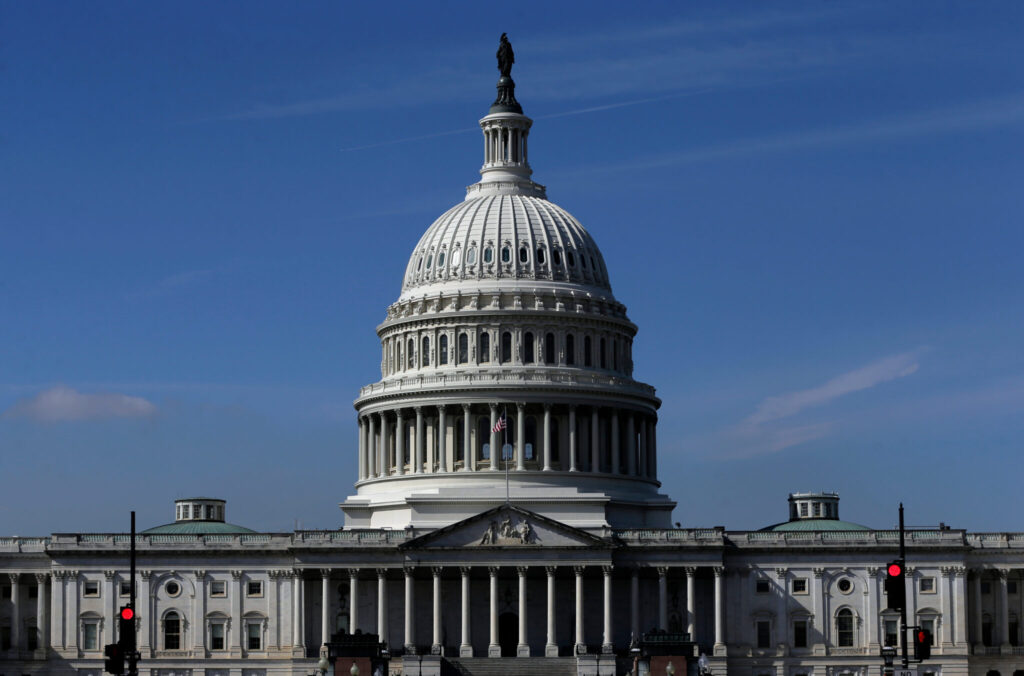
Congress Debates Trump’s Iran War Authority Quick Looks
- War powers debate begins after strikes underway
- Operation Epic Fury targets Iran leadership, infrastructure
- At least four U.S. military personnel killed
- Trump warns additional casualties likely
- House and Senate preparing war powers votes
- Democrats demand declaration of war or AUMF
- Republicans largely support extended air campaign
- Funding power remains Congress’ strongest check
- Closed-door briefings scheduled this week
Deep Look: Congress Debates Trump’s Iran War Authority as Conflict Escalates
WASHINGTON — The U.S. Congress is poised to open a contentious war powers debate over President Donald Trump’s authority to launch airstrikes against Iran — even as the military campaign is already well underway.
Bombs have fallen across Iranian territory, casualties are mounting, and retaliatory threats continue to escalate. At least four U.S. military personnel have been killed since the start of the operation, and Trump has cautioned that “there will likely be more.”
Unlike the lead-up to the 2003 Iraq War, when Congress held extended public deliberations before authorizing force, the current conflict — known as Operation Epic Fury — began with coordinated U.S.-Israeli strikes that eliminated Iran’s Supreme Leader Ayatollah Ali Khamenei and targeted military and nuclear infrastructure. The campaign is expected to continue for weeks, though its ultimate objectives remain undefined.
Now, lawmakers must grapple with their constitutional role in authorizing war after hostilities have already commenced.
Constitutional Authority and War Powers Clash
Under the U.S. Constitution, Congress holds the authority to declare war. However, modern military conflicts often proceed under broader executive interpretations of presidential power.
David Janovsky, acting director of The Constitution Project at the Project on Government Oversight, said the moment tests the balance of power envisioned by the nation’s founders.
“The Constitution is intended to prevent the accumulation of power in any one branch of government — and in any one person,” Janovsky said, emphasizing Congress’ responsibility as the voice of the people.
Historically, Congress has formally declared war only five times, most recently in 1941 following the attack on Pearl Harbor. Lawmakers instead have relied on Authorizations for Use of Military Force (AUMFs), including those passed for the 1991 Gulf War and for the post-9/11 conflicts in Afghanistan and Iraq.
During the Vietnam era, Congress enacted the War Powers Resolution to restrain presidents from engaging in prolonged military action without legislative consent. Both the House and Senate are preparing votes this week on war powers measures aimed at defining — or potentially limiting — Trump’s authority in Iran.
Lawmakers Split Over Strategy and Scope
Democrats have sharply criticized the administration for failing to present a comprehensive strategy or clearly articulate end goals.
Sen. Mark Warner, vice chair of the Senate Intelligence Committee, argued that when a president initiates what he called a “war of choice,” he must seek congressional authorization.
“When the president commits American forces to war, he needs to come before Congress and the American people,” Warner said in a televised interview.
Some members of Trump’s own political base have also voiced concern, arguing that the escalating conflict contradicts his “America First” pledge to avoid prolonged foreign wars.
Republicans, however, have largely backed the president. Sen. Tom Cotton, chairman of the Senate Intelligence Committee, said Trump has clearly outlined his approach — an extended air and naval campaign without deploying U.S. ground troops inside Iran.
“There’s no simple answer for what’s going to come next,” Cotton said, acknowledging the complexity of the unfolding conflict.
The Power of the Purse
While war powers resolutions can signal congressional intent, overriding a presidential veto would require a two-thirds majority in both chambers — an unlikely outcome given the current Republican control of the House and Senate.
Legal scholars note that Congress retains one powerful tool: control over federal funding.
John Yoo, a law professor at the University of California, Berkeley, observed that lawmakers can halt military operations by restricting or eliminating funding, as Congress ultimately did during the Vietnam War.
“Congress knows how to stop this if they want to,” Yoo said.
However, Congress recently approved roughly $175 billion in new Pentagon funding as part of a sweeping tax and spending package signed by Trump last year — reinforcing the administration’s military capabilities at a time of escalating conflict.
Closed-Door Briefings and Public Scrutiny
White House officials are expected to brief congressional leaders behind closed doors this week. The classified sessions will allow lawmakers to question administration officials about operational objectives, casualty projections, and long-term strategy.
Yet critics argue that holding the discussions privately limits public transparency at a time when American lives and significant taxpayer resources are at stake.
With U.S. forces engaged across multiple fronts in the Middle East and Iran’s leadership in transition following Khamenei’s death, the stakes of Congress’ decision carry profound implications for U.S. foreign policy and constitutional governance.
A Defining Moment for Congress
The debate unfolding on Capitol Hill may determine not only the trajectory of the Iran conflict but also the balance of power between Congress and the presidency.
Presidents from both parties — including Barack Obama in Libya and George H.W. Bush in Panama — have launched military operations without explicit congressional declarations of war. Over time, executive authority in matters of national security has steadily expanded.
Trump has signaled little willingness to cede authority, offering only brief references to Iran during his recent State of the Union address and emphasizing his administration’s objectives over legislative approval.
As bombs continue to fall overseas, Congress now faces a pivotal choice: assert its constitutional authority or allow the president’s military campaign to proceed largely unchecked.
The coming votes may not immediately alter the course of the war — but they will test the resilience of America’s constitutional framework at a moment of escalating global tension.





You must Register or Login to post a comment.