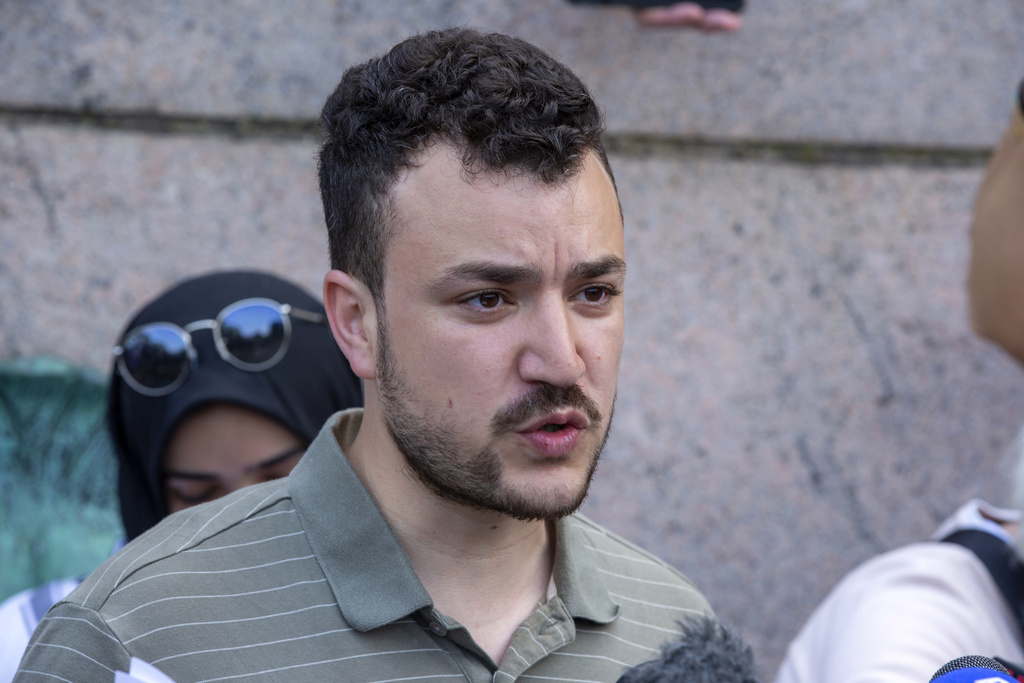
Court Ruling Threatens Deportation of Pro-Palestinian Activist Mahmoud Khalil/ Newslooks/ WASHINGTON/ J. Mansour/ Morning Edition/ A federal appeals court has reversed the release of pro-Palestinian activist Mahmoud Khalil, jeopardizing his immigration case and opening the door to possible re-detention. The ruling marks a win for the Trump administration but leaves key constitutional questions unresolved. Khalil’s legal team plans to appeal as his fight to remain in the U.S. continues.
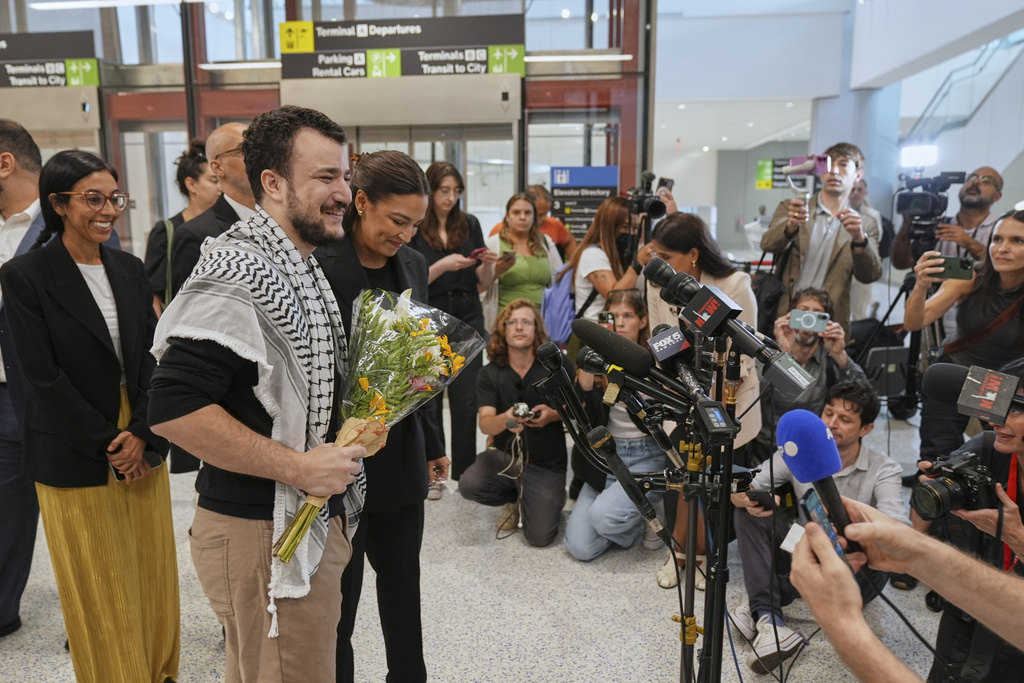
Mahmoud Khalil Case Quick Looks
- Appeals court reversed prior ruling that freed Khalil from immigration detention
- Court said federal judge lacked jurisdiction until immigration case concludes
- Ruling delays Khalil’s ability to challenge alleged unconstitutional deportation
- Khalil, a former Columbia student, was detained for pro-Palestinian activism
- DHS claims links to Hamas but offers no criminal charges or evidence
- Trump administration pursuing broader crackdown on pro-Palestinian protesters
- Legal experts argue ruling conflicts with other federal court decisions
- Khalil may appeal to full appeals court or U.S. Supreme Court
Deep Look: Court Ruling Threatens Deportation of Pro-Palestinian Activist Mahmoud Khalil
Mahmoud Khalil, a former Columbia University graduate student and outspoken pro-Palestinian activist, faces renewed uncertainty about his future in the United States after a federal appeals court ruled Thursday to reinstate the possibility of his detention and deportation.
In a 2–1 decision, the 3rd U.S. Circuit Court of Appeals overturned a lower court’s order that had freed Khalil from an immigration jail last year. While the panel did not address the central constitutional questions at the heart of the case, it determined that a federal judge in New Jersey acted prematurely by ruling on Khalil’s detention before his immigration proceedings were completed.
According to the court, federal immigration law requires noncitizens like Khalil to first exhaust their administrative remedies before seeking judicial relief.
“That scheme ensures that petitioners get just one bite at the apple — not zero or two,” the majority opinion stated, acknowledging that Khalil would have to wait to raise his constitutional claims.
The decision is seen as a victory for the Trump administration, which has escalated efforts to detain and remove noncitizens involved in anti-Israel protests, citing national security grounds.
Department of Homeland Security spokesperson Tricia McLaughlin described the ruling as “a vindication of the rule of law” and said the department would work to enforce Khalil’s “lawful removal order.”
Khalil, a legal permanent resident, remains out of custody for now. However, DHS has signaled that he could be re-detained pending final immigration proceedings. In a statement shared by the ACLU, Khalil called the ruling “deeply disappointing” but said he remained committed to “fighting through every legal avenue” to protect his rights and the rights of others facing similar threats.
Activism and Allegations
Khalil, 31, rose to prominence as a leading voice in the pro-Palestinian movement on Columbia University’s campus. He was arrested in March 2025 and spent three months in a Louisiana immigration jail, missing the birth of his first child during that time.
Federal officials have accused him of involvement in activities “aligned to Hamas,” although they have provided no direct evidence of links to the group and have not charged Khalil with any crimes. Instead, the government is relying on a rarely used statute that allows for the deportation of noncitizens whose beliefs are considered contrary to U.S. foreign policy interests.
Officials have also accused Khalil of omitting information on his green card application, another potential basis for removal. But civil rights organizations say the case is part of a broader campaign to punish political dissent and silence critics of Israeli policy.
In June, a district judge ruled that the justification for Khalil’s arrest was likely unconstitutional and ordered his release. The Trump administration quickly appealed, arguing that the judge lacked the authority to intervene while Khalil’s immigration case remained active.
Divided Legal Opinions
The appeals court ruling drew a strong dissent from Judge Arianna Freeman, who argued that Khalil’s case raised “now-or-never” constitutional claims that should be addressed before he faces the risk of removal. Freeman noted that her colleagues’ decision could leave Khalil with no meaningful remedy if he is deported before his claims are heard.
Legal experts point out that the ruling contradicts decisions by other federal courts, creating potential grounds for a broader review. Baher Azmy, Khalil’s attorney with the Center for Constitutional Rights, said the legal battle is far from over.
“Our legal options are by no means concluded, and we will fight with every available avenue,” Azmy said.
The ACLU echoed that view, stating that the government cannot lawfully detain Khalil again while the court decision is subject to appeal. Khalil’s legal team now has the option to request a rehearing by the full 3rd Circuit or take the case to the U.S. Supreme Court.
Support and Outcry
Public support for Khalil has remained strong among free speech and civil rights advocates. New York City Mayor Zohran Mamdani wrote on social media that Khalil’s case was “more than just a chilling act of political repression — it was an attack on all of our constitutional rights.”
Khalil himself has denied all accusations and characterized his detention as punishment for exercising free speech.
“I advocated for a free Palestine and an end to the genocide in Gaza,” he said in a previous statement. “That is not a crime — it’s a right.”
Future in Limbo
As the legal proceedings continue, the Board of Immigration Appeals is also weighing an earlier ruling that found Khalil could be deported to Algeria, where he has ancestral ties, or Syria, where he was born in a refugee camp to Palestinian parents. His lawyers have warned that deporting Khalil to either country would endanger his life.
For now, the activist remains free but under threat — a symbol, his supporters say, of a growing crackdown on political expression in the name of national security.