Cuba Mourns 32 Officers Killed in Trump’s Venezuela Raid/ Newslooks/ WASHINGTON/ J. Mansour/ Morning Edition/ Cuba released names of 32 military officers killed during the U.S. raid that captured Nicolás Maduro in Venezuela. The U.S. defended the operation at an OAS meeting, calling it a lawful action against an indicted criminal. International backlash is growing as Latin American nations decry the strike as a violation of sovereignty.
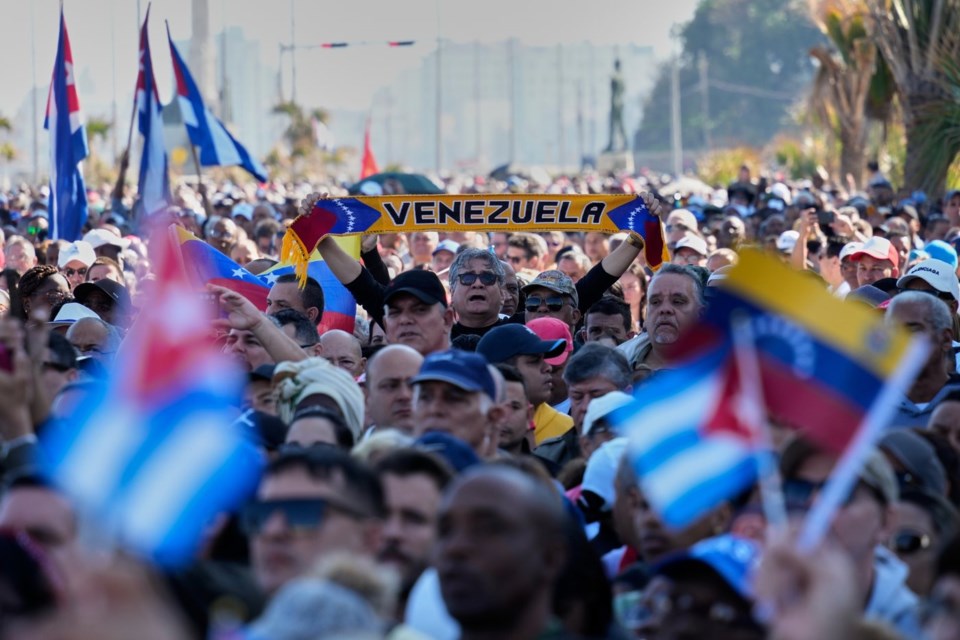
Cuban Losses in Venezuela Raid: Quick Looks
- Cuba confirms 32 military personnel killed in U.S. operation
- Names, ranks, and ages of the dead released Tuesday
- Victims were part of Cuba’s Revolutionary Armed Forces and Interior Ministry
- Officers ranged from 26 to 60, many held high ranks
- Cuba declares two days of national mourning
- Independent sources highlight lives and roles of those killed
- U.S. defends the strike at OAS, calling it “targeted enforcement”
- Protesters interrupt U.S. speech, decry Venezuela intervention
- Several Latin American nations condemn strike as illegal
- Cuba-Venezuela alliance under scrutiny amid deepening crisis
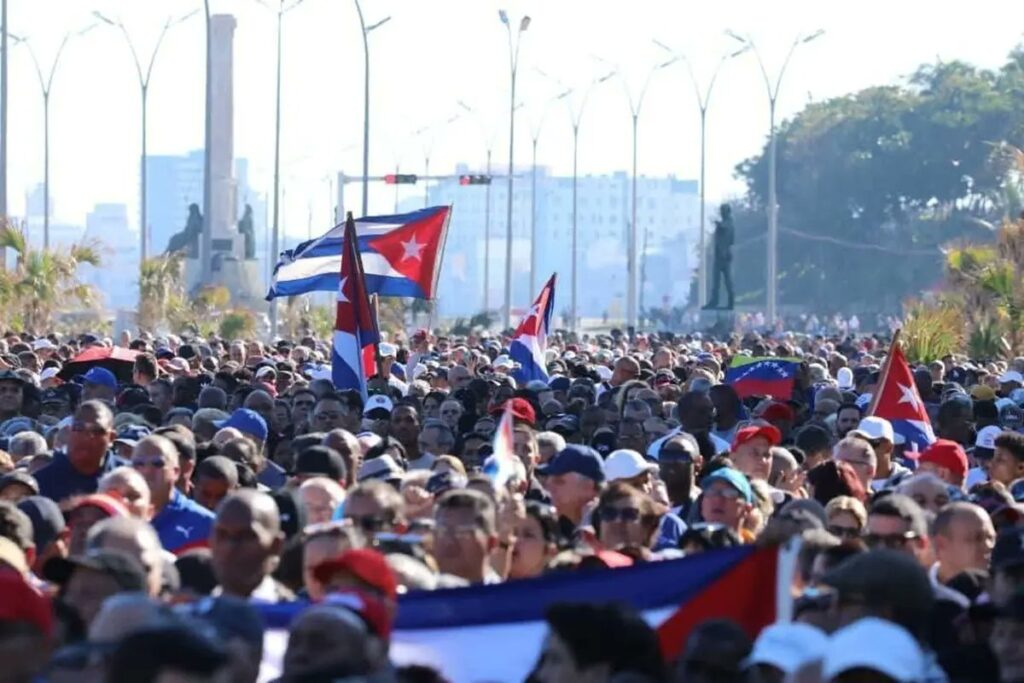
Cuba Mourns 32 Officers Killed in Trump’s Venezuela Raid
Deep Look
HAVANA, Cuba — The Cuban government has officially released the names and ranks of the 32 Cuban military and security officers killed during the dramatic U.S. military operation that captured Venezuelan President Nicolás Maduro over the weekend. The announcement came alongside the declaration of two days of mourning as Havana mourns its largest military loss in years.
The fallen, whose ages ranged from 26 to 60, included colonels, majors, lieutenants, and captains from both the Revolutionary Armed Forces and the Ministry of the Interior — Cuba’s top defense and intelligence agencies. Although Havana’s official statement did not detail how each officer died, it credited them with “fierce resistance in direct combat” and said some were killed by airstrikes on targeted facilities.
State media published their names and headshots, showing the fallen in olive-green uniforms. The tribute drew solemn messages of honor, though critics and independent media sources suggested that many in Cuba might privately question the mission’s cost and purpose.
Luis Domínguez, an exile who runs the Represores Cubanos website that monitors Cuban state actors accused of repression, noted that several high-ranking officials were among the dead. He pointed to Col. Humberto Alfonso Roca Sánchez — believed to have once commanded the former residence of Fidel Castro — and Col. Lázaro Evangelio Rodríguez Rodríguez, reportedly in charge of Cuba’s coast guard.
Though Cuba and Venezuela have long shared a close alliance — strengthened through military and economic pacts dating back to the early 2000s — their exact security cooperation has remained largely secret. This strike, and the lives lost, has thrust those ties into the spotlight.
In a post published Monday on La Joven Cuba, an independent blog, a profile of 1st Lt. Yunio Estévez offered a rare personal glimpse into the victims. The 32-year-old communications specialist, killed in the raid, was remembered with photos of his three young children in Guantánamo province. The post was later taken down at the family’s request.
Global Fallout and U.S. Defense
The international political fallout escalated Tuesday during a special meeting of the Organization of American States (OAS). U.S. Ambassador Leandro Rizzuto defended the operation as a legal and necessary act, not an invasion.
“This was a targeted law enforcement action,” he insisted, asserting that the U.S. had offered Maduro peaceful exits from power.
But tensions ran high. Activist Medea Benjamin of Code Pink disrupted Rizzuto’s remarks, shouting “Hands off Venezuela!” and calling for an end to U.S. sanctions. Security removed her as Rizzuto resumed his speech, addressing what he called “raw emotions” in the room.
Rizzuto went further, suggesting that Maduro’s capture opens a path to restoring democracy in Venezuela and freeing an estimated 1,000 political prisoners.
He emphasized that Venezuela’s oil wealth should not be controlled by what he described as “adversaries of the Western Hemisphere” and “oligarchs,” but by the Venezuelan people.
The U.S. administration maintains that its military action was lawful, necessary, and focused on bringing an indicted individual — Maduro — to justice on long-standing federal drug trafficking charges. Still, concerns persist about the operation’s regional and diplomatic consequences.
Condemnation and Calls for Caution
Several Latin American countries voiced strong opposition.
Colombia’s Vice Minister of Foreign Relations, Mauricio Jaramillo, labeled the strike “a clear violation of international law” and warned of the precedent it sets. “This is extremely worrying,” he said during the OAS session.
Peru’s ambassador called for a moment of silence — not just for the Cuban officers killed in the U.S. strike, but also for the many victims of Maduro’s regime. It was a moment that underscored the complexity and deep division over how to deal with Venezuela’s long-standing political and humanitarian crisis.
Outside the OAS building, a small group of protesters held signs reading “No War on Venezuela” and “Arepas Not Bombs,” symbolizing a growing anti-war movement among U.S. citizens wary of foreign interventions.
Despite the backlash, Washington appears steadfast.
Rizzuto reiterated the U.S.’s intention to work toward a “better, democratic future” for Venezuela, though it remains unclear how the administration plans to stabilize the country post-Maduro or how it will handle tensions with Havana and Bogotá.
As the international community absorbs the consequences of the operation, questions remain: Was this a one-time strike, or the beginning of a broader U.S. campaign of power projection in Latin America? And what impact will the deaths of these Cuban officers have on regional security alliances — and on the lives of those left behind?