EU Leader Warns: Trump Greenland Tariff Threat Risks Alliance Rift/ Newslooks/ WASHINGTON/ J. Mansour/ Morning Edition/ EU Commission President Ursula von der Leyen questioned President Trump’s reliability after he threatened new tariffs tied to Greenland. She said the US and EU already reached a trade agreement last year and warned escalation would benefit shared adversaries. European leaders are weighing countermeasures as diplomacy intensifies at Davos.
EU Questions Trump’s Greenland Tariffs Quick Looks
- Von der Leyen calls Trump’s tariff plan “a mistake”
- EU chief questions Trump’s trustworthiness after prior trade deal
- Trump plans 10% tariffs on eight European countries starting February
- EU vows response will be “unflinching, united and proportional”
- Denmark’s PM warns “the worst may still be ahead”
- EU considers tariffs, deal suspension, and anti-coercion “trade bazooka”
- Macron suggests a G7 meeting in Paris after Davos
- Trump posts doctored Greenland images and texts with leaders
- Russia’s Lavrov denies threats, calls Greenland a Danish “colonial gain”
- UK defends Chagos deal after Trump attacks sovereignty transfer
Deep Look: EU’s Top Official Challenges Trump’s Credibility as Greenland Tariff Threat Escalates
DAVOS, Switzerland — The European Union’s top executive leader openly questioned President Donald Trump’s trustworthiness Tuesday after he threatened a new round of tariffs targeting European nations in a dispute tied to Greenland, warning that escalating trade conflict between allies could strengthen the very adversaries both sides claim to fear.
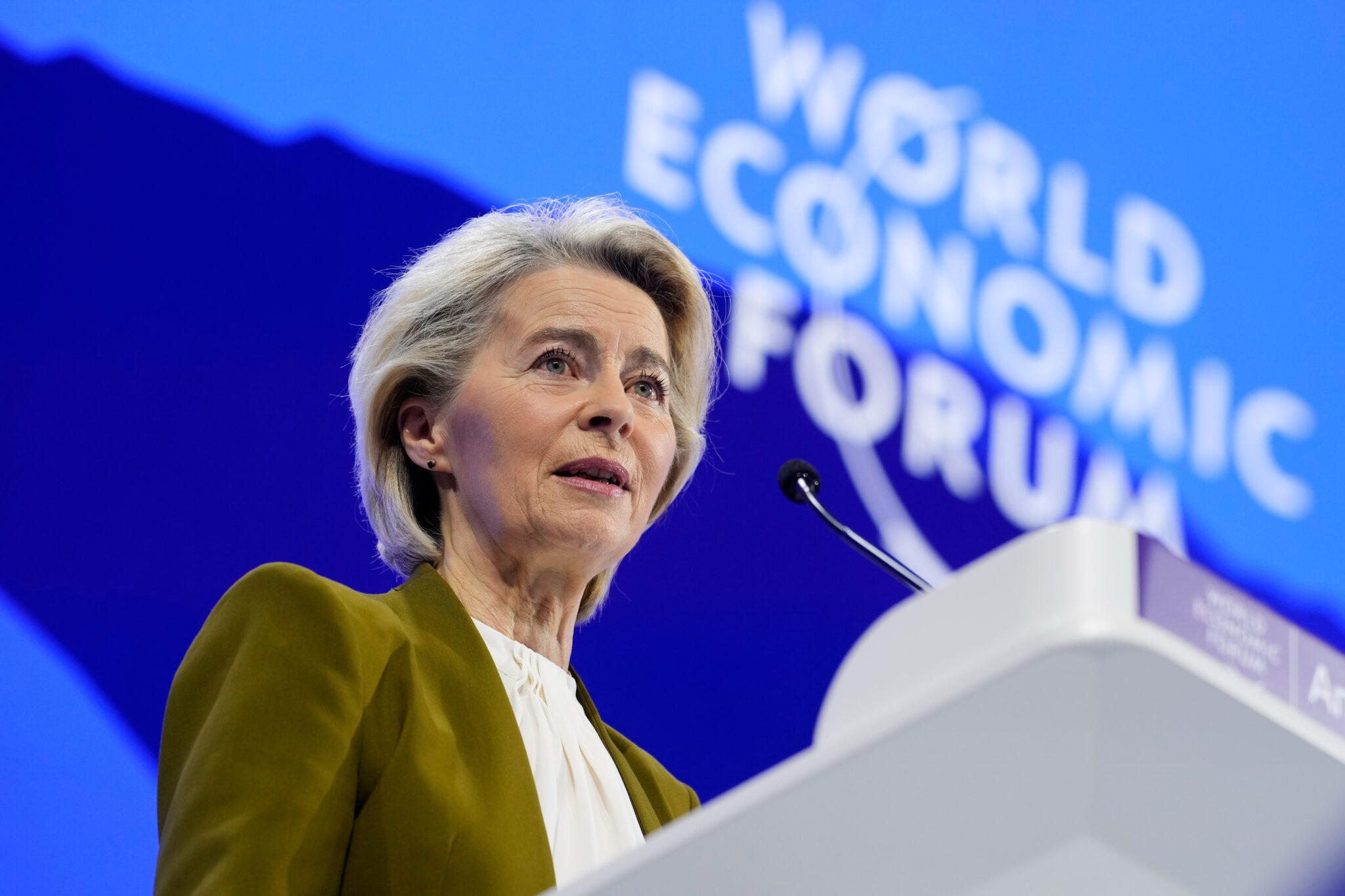
European Commission President Ursula von der Leyen, speaking at the World Economic Forum in Davos, described Trump’s planned tariffs as “a mistake,” particularly coming from a country that Europe considers a long-standing partner. Her sharper message, however, focused on credibility: she argued Trump had already agreed last year not to raise new tariffs on the European bloc.
“The European Union and the United States have agreed to a trade deal last July,” von der Leyen said, emphasizing that agreements must carry weight in both business and diplomacy. “And in politics as in business — a deal is a deal. And when friends shake hands, it must mean something.”
Trump’s latest tariff threat would impose a 10% import tax beginning in February on goods from eight European nations that have rallied behind Denmark as Trump escalates calls for the United States to take control of Greenland, a semi-autonomous territory of the Danish kingdom. Trump has repeatedly framed the issue as a national security imperative, claiming the island is necessary to counter potential threats from China and Russia in the Arctic.
Von der Leyen pushed back on the consequences of that approach, warning that the fallout would be shared on both sides of the Atlantic.
“We consider the people of the United States not just our allies, but our friends,” she said. “And plunging us into a downward spiral would only aid the very adversaries we are both so committed to keeping out of the strategic landscape.”
Her conclusion was blunt: Europe is preparing to respond.
Von der Leyen vowed the EU reaction would be “unflinching, united and proportional,” language that signals a willingness to escalate if Washington follows through.
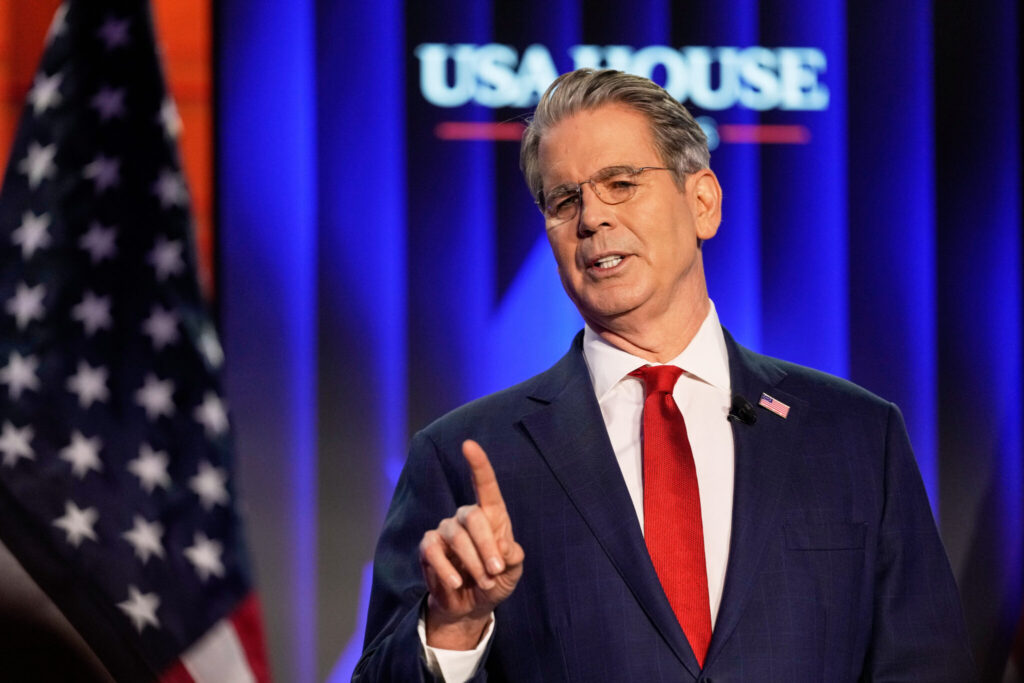
While the EU’s top official projected unity, officials in the United States tried to calm the growing storm. Treasury Secretary Scott Bessent urged European leaders and markets to avoid panic, saying the relationship remains strong and that the situation should be allowed to “play out.”
“I think our relations have never been closer,” Bessent said, encouraging trading partners to “take a deep breath.”
Denmark’s leadership, however, suggested Europe is bracing for a deeper rupture. Prime Minister Mette Frederiksen told lawmakers in Copenhagen that “the worst may still be ahead of us,” while stressing Denmark had not sought confrontation.
“We have never sought conflict,” she said. “We have consistently sought cooperation.”
Europe weighs retaliation — including the “trade bazooka”
Trump’s tariff threat has triggered a diplomatic scramble across Europe, with leaders discussing potential countermeasures that could reshape transatlantic trade relations. The EU has several major economic levers available, including retaliatory tariffs, suspension of the broader US-EU trade deal, and the possible first-ever use of the bloc’s Anti-Coercion Instrument — an enforcement mechanism widely referred to as the “trade bazooka.”
The anti-coercion tool is designed to punish countries seen as economically pressuring the EU into political concessions. In theory, it could be used to target individuals or institutions, restrict market access, or impose other measures intended to force de-escalation.
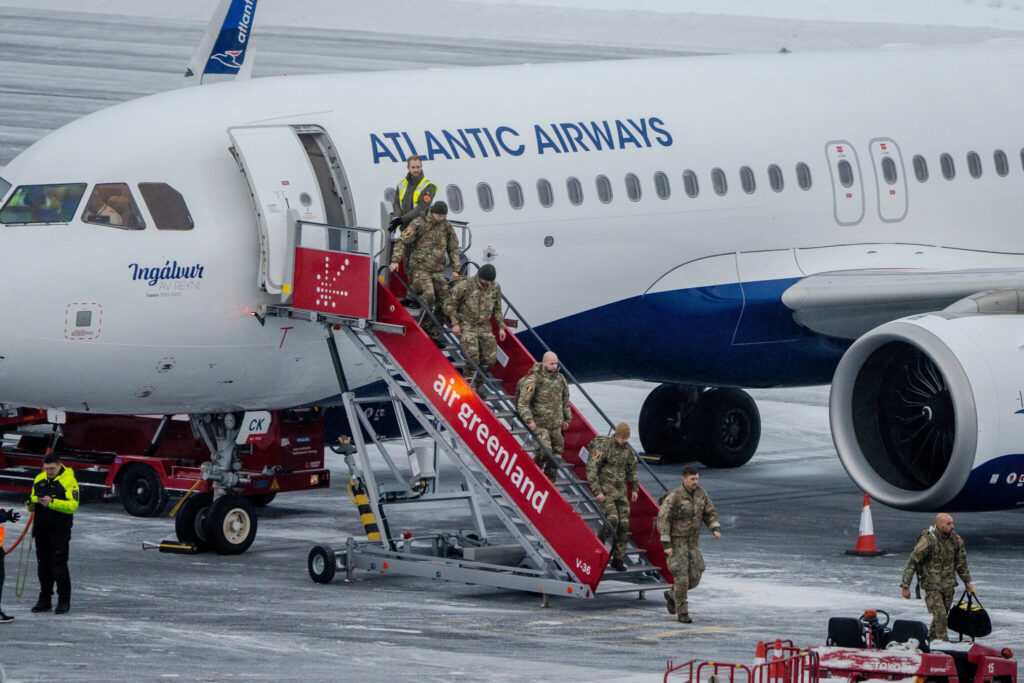
Trump has indicated the tariffs are linked to recent symbolic troop deployments by several European countries to Greenland, though he has also suggested the tariffs could serve as leverage in negotiations with Denmark over the island’s future.
As tensions rose, Trump added a new dimension to the dispute by broadcasting private diplomatic communications. He posted online that he had spoken with NATO Secretary General Mark Rutte and said he had agreed to a meeting among “various parties” in Davos.
He also shared a text message from French President Emmanuel Macron suggesting a follow-up meeting of G7 leaders in Paris after Davos ends. A French official close to Macron confirmed the message was genuine.
Trump then escalated the tone further by posting doctored images portraying Greenland as American territory. One showed him planting a US flag beside a sign reading “Greenland, U.S. Territory, Est. 2026.” Another displayed Greenland and Canada overlaid with the American flag on a map, signaling a broader posture of expansion and provocation.
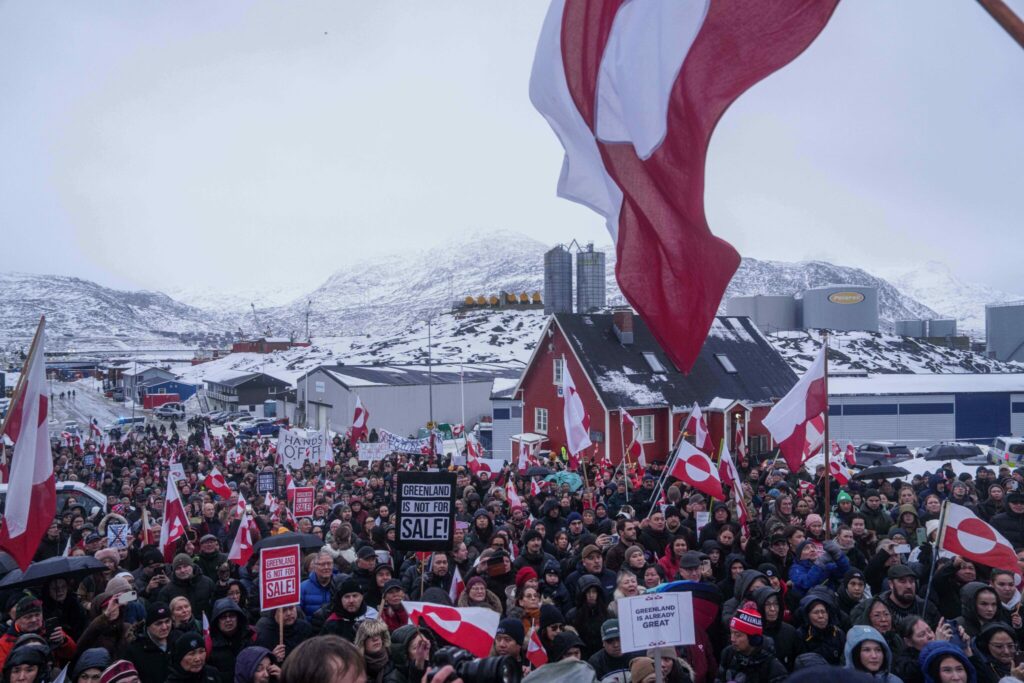
In Greenland itself, the dispute has sparked public anger. Thousands marched over the weekend, protesting any attempt to take over the island and signaling that local opposition could complicate any external power play.
Calls grow for Europe to stand firmer
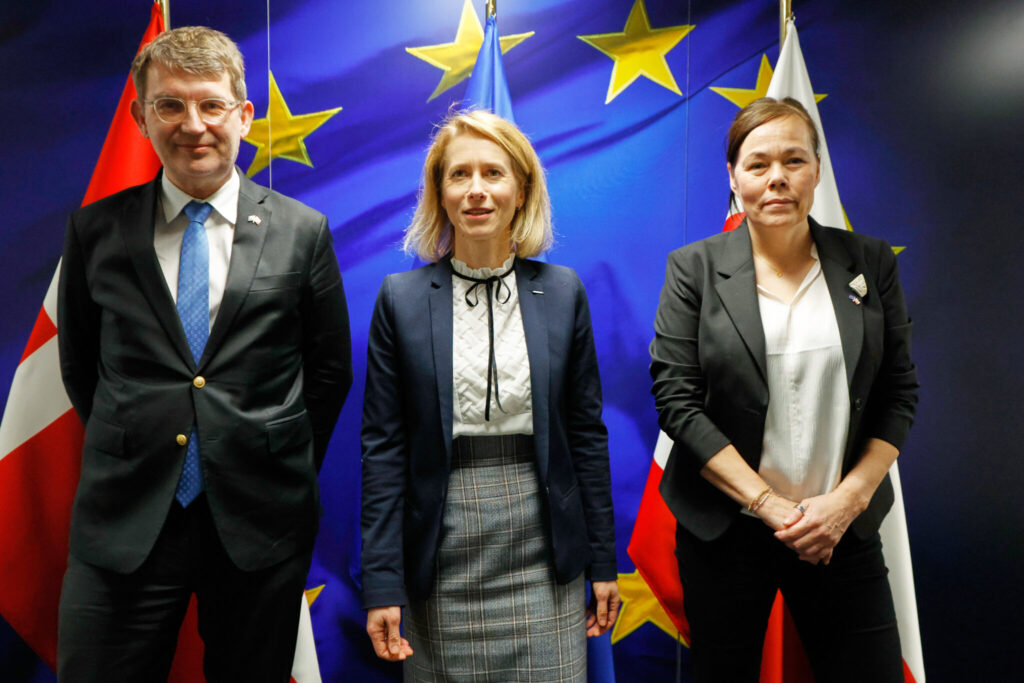
Denmark’s minister for European affairs called Trump’s tariff threat “deeply unfair,” while urging Europe to strengthen its independence without rushing into a trade war. She warned that the rhetoric coming from Washington reflects a shift in global dynamics.
“You just have to note that we are on the edge of a new world order,” Marie Bjerre said, adding that power politics appear to be returning and that the United States is adopting an increasingly condescending tone toward Europe.
Even outside Europe, criticism emerged. California Gov. Gavin Newsom, speaking on the sidelines of Davos, attacked the European response as too weak and urged leaders to show unity.
“It is time to get serious, and stop being complicit,” Newsom said. “It’s time to stand tall and firm, have a backbone.”
Meanwhile, European NATO members are considering ways to bolster security in the Arctic — including a more permanent military presence — a move that could address some of Washington’s stated concerns without conceding sovereignty. Swedish Defense Minister Pål Jonson said European partners are conducting a “reconnaissance tour” to identify infrastructure and training needs across the High North.
From Moscow, Russian Foreign Minister Sergey Lavrov rejected claims that Russia or China intends to threaten Greenland, while also describing Greenland as a “colonial gain” for Denmark and arguing it is not naturally part of Denmark.
UK defends Chagos deal as allied tensions spread
The Greenland dispute has also spilled into other strategic disagreements. Britain defended its decision to transfer sovereignty of the Chagos Islands to Mauritius after Trump attacked the move, calling it proof of European weakness and using it as another argument for why the US should acquire Greenland.
The Chagos Islands include Diego Garcia, a remote Indian Ocean site hosting a major American naval and bomber base. Despite Trump’s criticism, the British government said the agreement preserves long-term security access to the base.
In London, US House Speaker Mike Johnson attempted to lower the temperature, telling British lawmakers he hoped to “calm the waters” and stressing that the US and UK have a long history of resolving disputes as allies.
The bigger question now is whether this Greenland-driven tariff threat becomes a temporary shock — or the beginning of a lasting fracture in the Western alliance.