

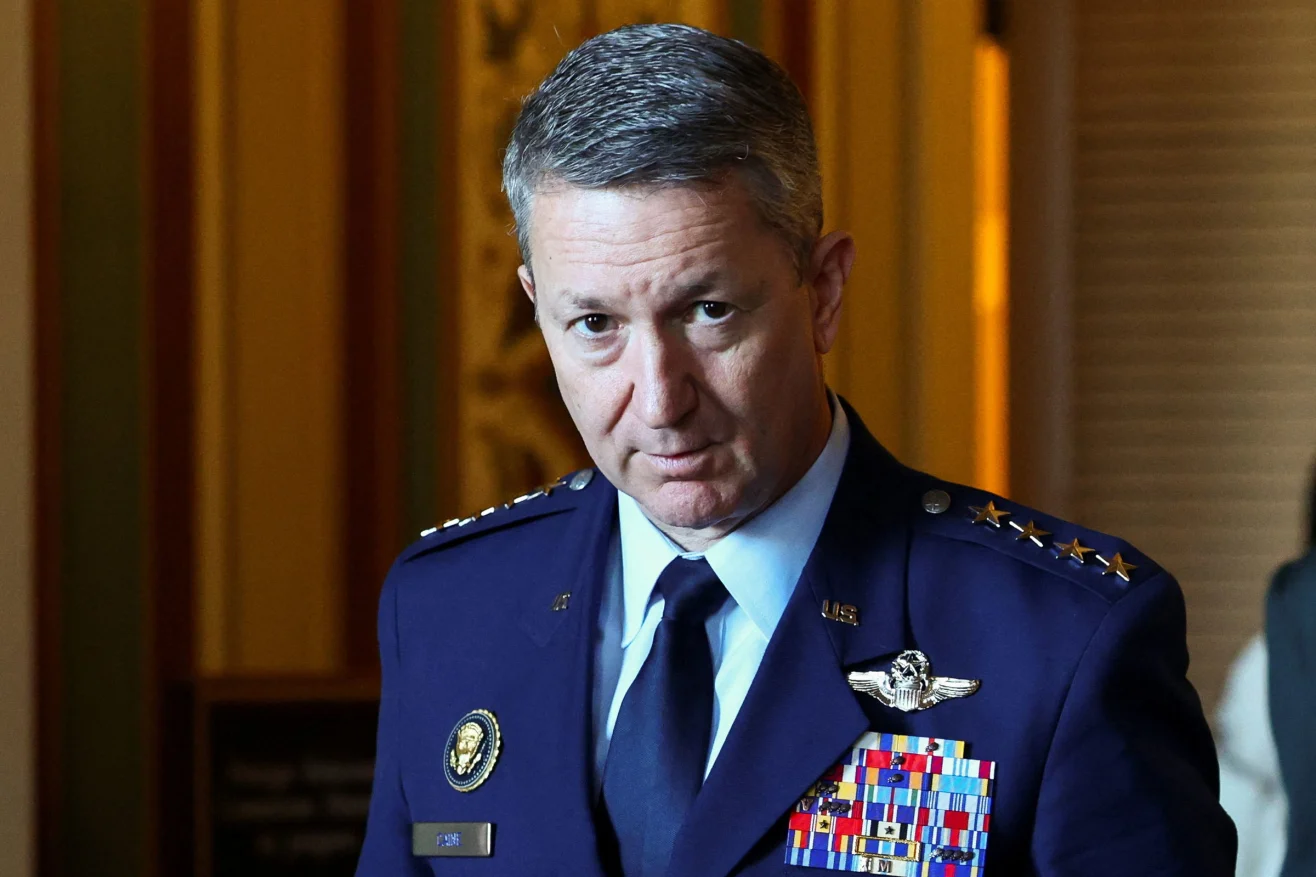
General Dan Caine Balances Trump and Iran War Plans/ Newslooks/ WASHINGTON/ J. Mansour/ Morning Edition/ Gen. Dan Caine is quietly shaping military options for Iran while trying to preserve influence with President Donald Trump. Sources describe him warning internally about operational risks even as the White House projects confidence and ramps up forces in the region. Caine’s approach contrasts with Gen. Mark Milley’s more confrontational style, reflecting a calculated effort to stay effective inside Trump’s orbit.
General Dan Caine balances Trump, Iran war plans Quick Looks
- Gen. Dan Caine, as chairman, is drafting military options against Iran while limiting leak risks through tightly controlled meetings.
- Instead of using the Pentagon’s “Tank,” senior Army, Navy, and Air Force officials are reportedly brought directly to Caine’s office.
- Sources say Caine has emphasized the risks of a major Iran operation: scale, complexity, and potential U.S. casualties.
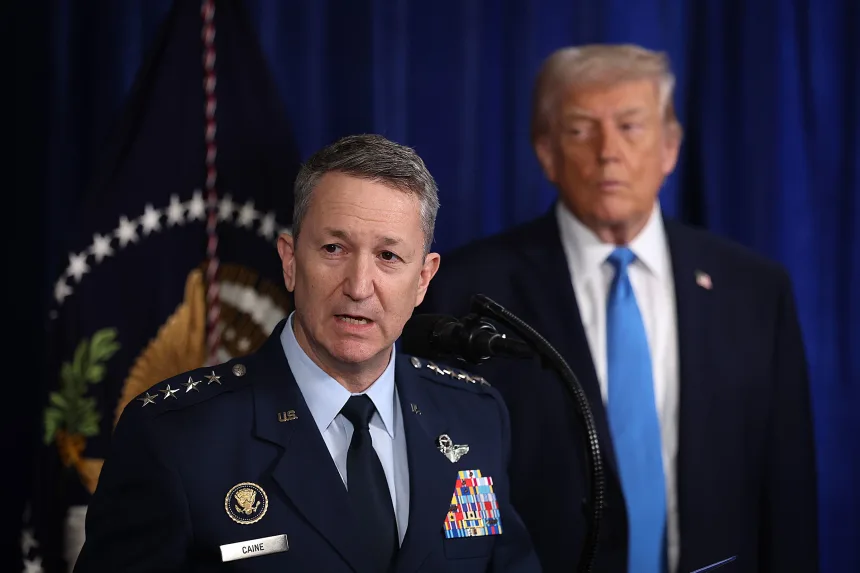
- White House messaging has been more confident about military success, with Trump publicly praising Caine’s ability to “WIN.”
- Caine is described as determined not to repeat what he views as Gen. Mark Milley’s mistake of clashing with Trump.
- Critics inside the national security ecosystem argue Caine can be overly cautious with Trump, while allies say he is sticking to the chairman’s advisory role.
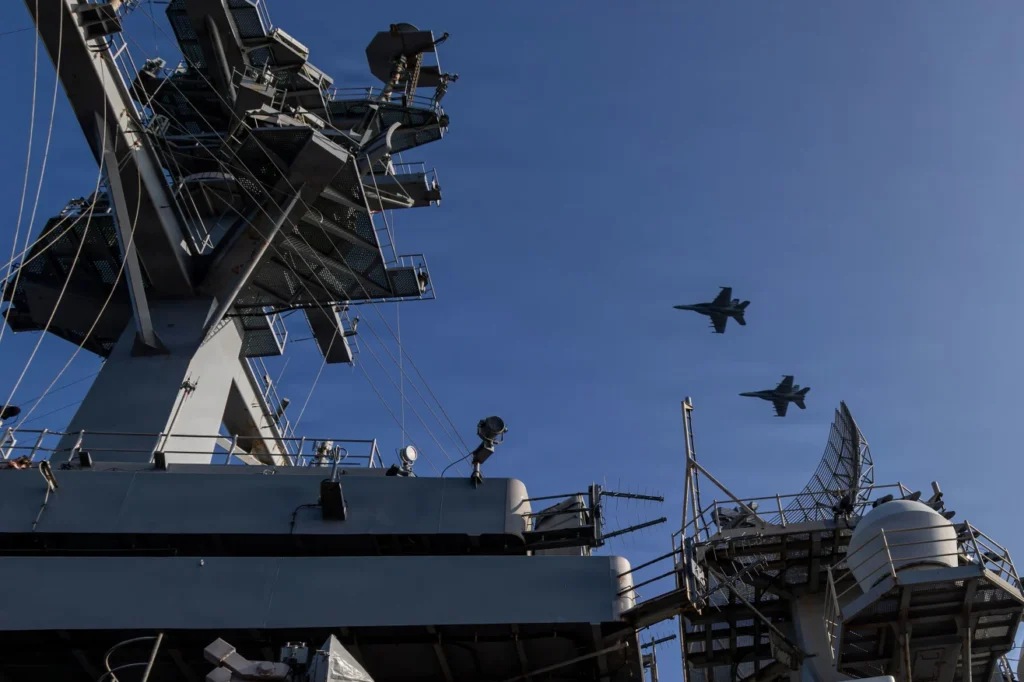
- A large U.S. force posture has been assembled in the Middle East, even as indirect nuclear talks continue.
- Caine’s unusual rise to chairman included being recalled to active duty after retirement and promoted ahead of other eligible senior officers.
- He has tried to keep the military apolitical in public settings, reportedly advising senior officers not to cheer or react at political events.
- The Pentagon’s internal dynamics include tension with Defense Secretary Pete Hegseth, particularly on personnel decisions and public messaging.
Deep Look: General Dan Caine Balances Trump and Iran War Plans
As the Trump administration weighs its next steps on Iran, the U.S. military’s top officer is navigating a set of pressures that rarely align neatly: planning for a possible major conflict while trying to maintain trust with a president who prizes loyalty, demands speed, and punishes dissent.
Gen. Dan Caine, serving as Chairman of the Joint Chiefs of Staff, has been working through an expanding menu of military options that could range from limited strikes against Iranian missile and nuclear infrastructure to scenarios that aim at decapitating Iran’s leadership and forcing regime change. At the same time, diplomatic contacts continue in parallel, creating a dual-track posture where negotiations move forward under the shadow of escalating force deployments.
According to officials familiar with the process, Caine has attempted to keep sensitive operational planning unusually compartmentalized. Rather than convene urgent, high-profile sessions in the Pentagon’s famous “Tank,” where the Joint Chiefs and senior leaders traditionally debate high-consequence military decisions, Caine has reportedly leaned on quieter, direct summons to his own office. The goal, sources say, is to reduce the risk of leaks and avoid obvious signals that could draw attention inside Washington’s rumor-and-reporting ecosystem. In an administration that has placed a premium on secrecy, even the pattern of who goes where in the building can become a story.
Behind those closed doors, however, Caine’s private message has been more cautious than the public posture emanating from the White House. Sources describe him as repeatedly raising concerns about what a large-scale campaign against Iran would actually entail: the complexity of the mission sets, the likelihood of escalation, the challenge of assessing real damage to buried or dispersed targets, and the potential for U.S. casualties if Iran retaliates across the region. This internal warning note, officials say, has existed alongside White House rhetoric suggesting a relatively straightforward path to victory, even as the definition of “success” remains fluid.
Caine’s delicate posture reflects a conscious decision to avoid becoming a repeat of his predecessor, Gen. Mark Milley, who often clashed with Trump during the president’s first term. Milley, in the view of many around Trump, became a symbol of an establishment military leadership willing to argue publicly, signal discomfort, and sometimes try to tamp down the president’s most inflammatory impulses through private reassurances to allies and counterparts. Caine appears determined not to follow that playbook. The chairman’s job, as his defenders frame it, is not to dictate policy but to provide the president and civilian leadership with military options and their risks, then execute lawful orders.
That philosophy has shaped the way Caine is said to engage Trump: reserved, careful, and focused on presenting choices rather than pushing a single preferred course. For some current and former officials, that restraint is a feature, not a flaw—an attempt to preserve access and influence in a high-temperament administration. For others, it creates frustration. Several sources characterize him as more blunt behind closed doors with senior military leaders than he is in the Oval Office, a dynamic that can leave subordinates feeling he is “pulling punches” at the moment when direct, unvarnished military counsel may be most needed.
Caine’s spokesman, however, disputes the idea that the chairman softens his advice. The Joint Staff position is that Caine provides a full spectrum of options and clearly explains risks, second-order effects, and broader implications—confidentially, as the role requires. The chairman’s defenders argue that the public rarely sees the most important part of the job because the most consequential conversations occur out of view.
Still, the broader environment is hard to separate from the chairman’s behavior. Trump has repeatedly signaled that he values officials who do not publicly contradict him, and he has elevated Caine into a trusted inner circle that reportedly includes Vice President JD Vance, Secretary of State Marco Rubio, and White House chief of staff Susie Wiles. The reporting suggests Trump trusts Caine deeply on operational matters, even more than Defense Secretary Pete Hegseth in certain contexts. That trust can be both a shield and a burden. It gives Caine direct influence, but it also ties him closely to decisions that carry enormous consequences, especially if an Iran campaign expands or goes poorly.
Caine’s own path to the chairmanship is portrayed as highly unconventional. He was recalled to active service after retiring as a three-star officer and elevated over numerous eligible four-star officers who typically populate the shortlist for America’s most senior military position. This unusual ascent has fueled speculation inside military circles about what the White House expected from him, particularly regarding loyalty and alignment. Caine, for his part, has denied a sensationalized account Trump has repeated about their first meeting—an anecdote in which Trump claimed Caine expressed personal devotion while wearing political merchandise. During his confirmation process, Caine emphasized the importance of nonpartisanship and “speaking truth to power,” language that is often invoked to reassure lawmakers the military will not become an instrument of domestic politics.
Yet the tension between principle and practice has only grown as the administration has pushed the boundaries of how and where military power can be used. In this climate, Caine is described as trying to rebuild confidence in the institution of the Joint Chiefs and in the military’s apolitical tradition, even as he provides options for aggressive operations—both abroad and, in some cases, within the United States—under the umbrella of civilian control.
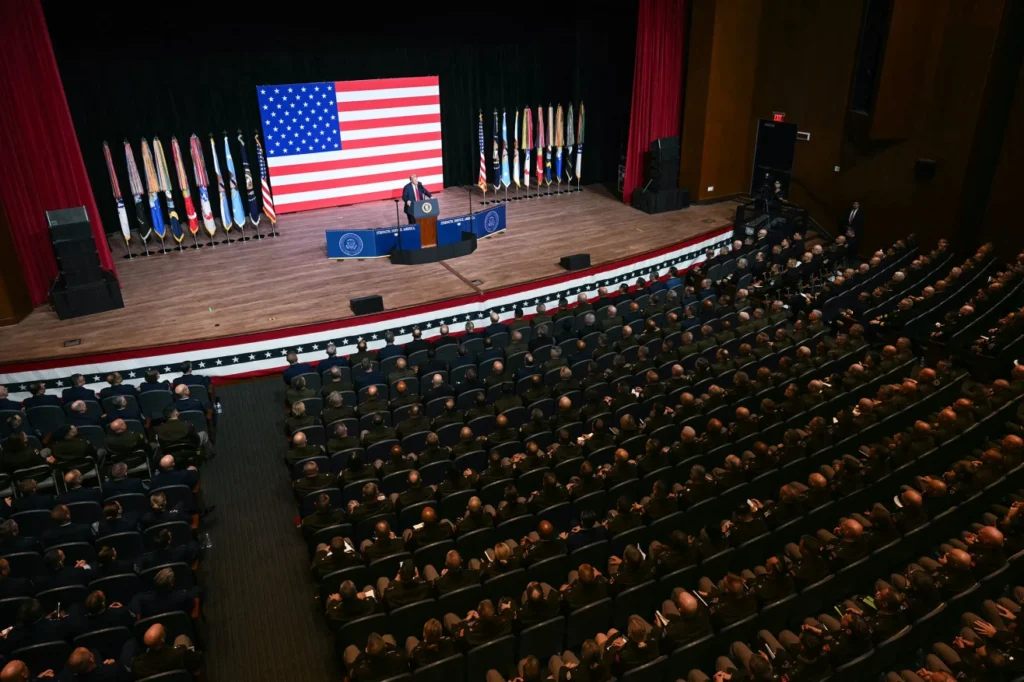
That balancing act has extended to public optics. In one account, Caine advised senior military officers to remain stoic during a highly political event featuring Trump and Hegseth, counseling them not to cheer or visibly react in ways that could make the armed forces appear partisan. The idea was simple: treat the setting like a State of the Union, where uniformed leaders traditionally keep a neutral posture. The reported outcome was discomfort on Trump’s side, with the president commenting on the room’s silence and suggesting applause was welcome. Pentagon officials dispute aspects of this characterization, but the underlying theme—Caine attempting to keep the military from being pulled into political theater—fits with how sources describe his broader approach.
At the Pentagon, Caine is also portrayed as a counterweight to a defense secretary who is viewed by many career officials as less experienced in managing large-scale national security machinery and more focused on ideological fights. That contrast appears in accounts of Caine raising concerns about strategic priorities and operational choices, including the balance between Western Hemisphere missions and preparations for a potential Indo-Pacific conflict. There are also suggestions that Caine urged winding down a costly Yemen effort against the Iran-backed Houthis, with Trump later announcing a ceasefire. Whether those episodes reflect decisive influence or simply alignment with the president’s shifting instincts depends on who is telling the story.
Where Caine seems to have struggled most, according to the reporting, is personnel. In an administration that has pushed out senior officers perceived as insufficiently aligned, Caine has reportedly tried—and often failed—to protect certain leaders from abrupt removals. This has created uncertainty within the force, as officers attempt to anticipate the political consequences of operational disagreements or legal caution. Some commanders, sources suggest, have expressed concerns about the lawfulness or strategic wisdom of certain missions, only to find themselves under pressure from civilian leadership that wants speed and spectacle.
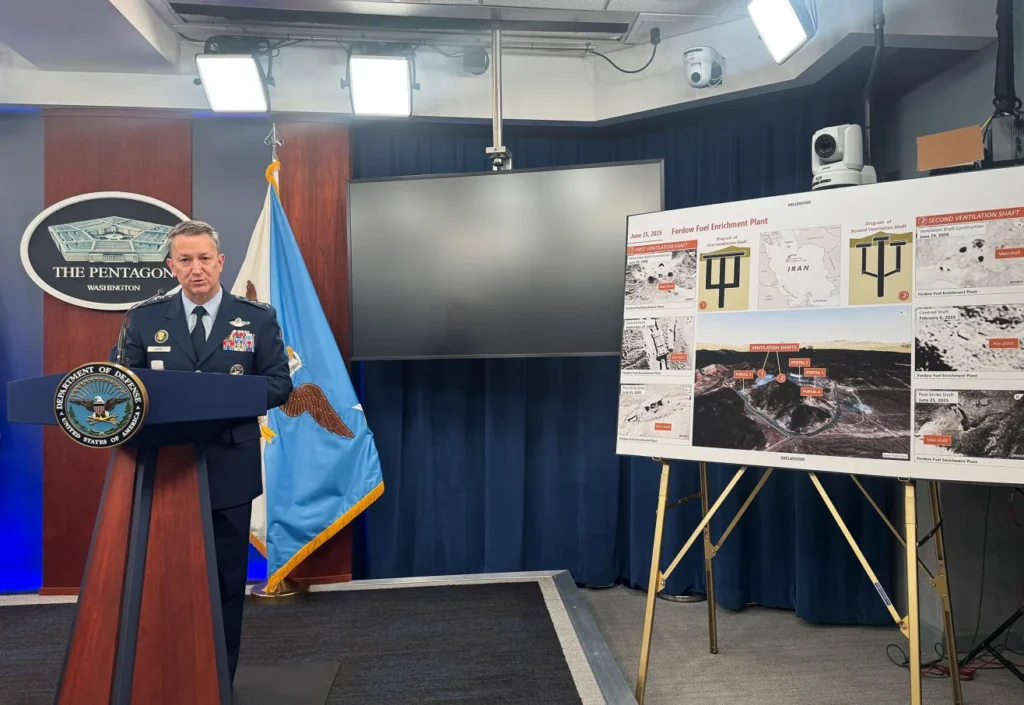
Despite his preference for low visibility, Caine has occasionally been thrust into the spotlight. One major example described is a Pentagon press conference after U.S. strikes on Iran’s nuclear facilities, where the administration sought to counter an early intelligence assessment that raised questions about long-term impact. In that setting, Caine reportedly chose a technical explanation—emphasizing weapons, timelines, and execution—rather than wading into the political argument. He has also been tied publicly to a dramatic U.S. operation that captured Venezuela’s leader in January, an outcome that may have raised expectations in the White House about how clean and decisive military force can be.
That expectation matters now. Planning for Iran is not planning for Venezuela. The scale, geography, capabilities, alliances, and escalation pathways are radically different. The chairman’s warnings about complexity and casualties are therefore not mere bureaucratic hedging—they are the practical implications of confronting a capable state with missile forces, regional partners, and a demonstrated willingness to retaliate.
For Caine, the core challenge is to stay close enough to the president to influence decisions without becoming the face of a policy he cannot control, and to preserve the military’s professional credibility in an era when the institution is being tested by politicization, secrecy, and rapid-fire crisis decision-making. The outcome will shape not just the next phase of U.S.-Iran tensions, but also the evolving relationship between the White House, the Pentagon, and the norms that have long governed civil-military boundaries in the United States.



You must Register or Login to post a comment.