

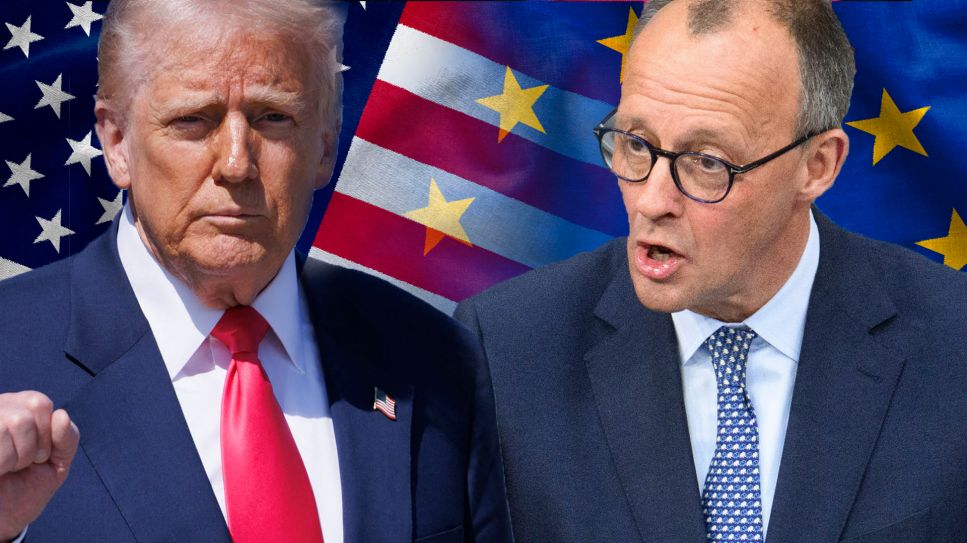
German Chancellor Merz Heads to Washington in Shadow of War in Iran/ Newslooks/ WASHINGTON/ J. Mansour/ Morning Edition/ German Chancellor Friedrich Merz travels to Washington as the U.S.-Israeli operation in Iran reshapes global security dynamics. Merz has avoided direct criticism of the strikes while emphasizing NATO unity and Europe’s defense commitments. The visit highlights Europe’s limited role in the unfolding conflict and renewed tensions over trade and military spending.
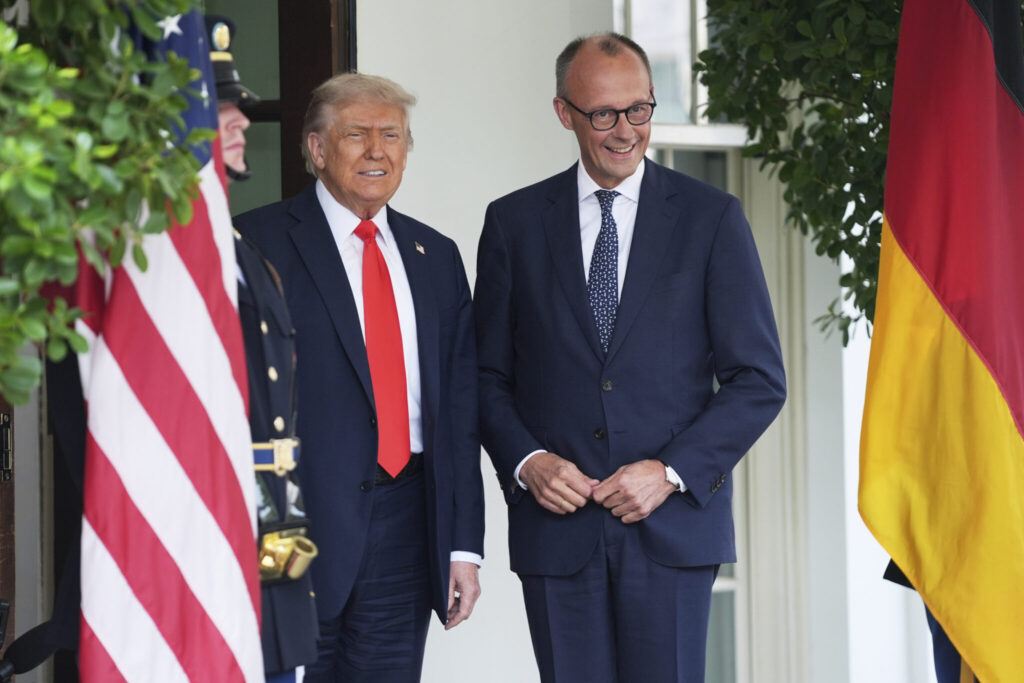
Merz Visits Washington Amid Iran War Crisis Quick Looks
- Merz first European leader to meet Trump since strikes
- Visit overshadowed by killing of Ayatollah Ali Khamenei
- Germany avoids direct criticism of military action
- Oil shipping routes and air travel disrupted
- Europe again sidelined in U.S. strategic decisions
- Merz reaffirms NATO partnership
- Germany pledges increased defense spending
- Trade tensions remain unresolved
Deep Look: Merz Visits Washington Amid Iran War Crisis and NATO Uncertainty
BERLIN — German Chancellor Friedrich Merz heads to Washington on Tuesday for high-stakes talks with President Donald Trump, as the rapidly escalating war in Iran reshapes global security and strains transatlantic diplomacy.
Merz will become the first European leader to meet Trump since the joint U.S.-Israeli operation that killed Iran’s Supreme Leader Ayatollah Ali Khamenei over the weekend. The strike has intensified instability across the Middle East, disrupted critical oil shipping routes, and thrown global air travel into disarray.
The visit, already expected to focus on NATO, defense spending, and trade tensions, now unfolds under the shadow of widening regional conflict.
Careful Tone on U.S.-Israeli Operation
Merz has taken a measured stance on the military campaign, refraining from open criticism while stopping short of full endorsement.
Speaking Sunday, the German leader acknowledged the complexity of the situation.
“We recognize the dilemma,” he said, noting that decades of diplomatic efforts had failed to halt Iran’s nuclear ambitions or address internal repression.
“So we’re not going to be lecturing our partners on their military strikes against Iran,” he added, while conceding that “despite all the doubts, we share many of their aims.”
The carefully calibrated language reflects Germany’s balancing act — maintaining solidarity with Washington while navigating domestic and European skepticism about the legality and strategic implications of the strikes.
Europe Sidelined Again
The conflict has once more highlighted Europe’s limited influence over U.S. strategic military decisions, even when such actions directly affect European security and economic interests.
On Sunday, Merz joined French President Emmanuel Macron and British Prime Minister Keir Starmer in signaling readiness to cooperate with the United States “to defend our interests and those of our allies in the region.”
Yet the speed and scale of the U.S.-Israeli operation underscored how little prior consultation European capitals appeared to have in the decision-making process.
With oil shipping lanes under strain and airspace closures affecting major European airlines, the war’s economic fallout is already being felt across the continent.
NATO and Defense Spending Front and Center
Beyond the Iran crisis, Merz’s Washington visit was initially designed to recalibrate Germany’s relationship with the Trump administration after months of sharp criticism from U.S. officials over Europe’s defense spending, immigration policy, and trade imbalances.
A longtime Atlanticist, Merz has consistently defended the NATO alliance while acknowledging the need for Europe to assume greater responsibility for its own defense.
“I want NATO to remain a Western alliance between America and Europe,” he said last week, emphasizing that Germany’s “hand remains outstretched.”
Following Russia’s invasion of Ukraine, Merz pledged unprecedented borrowing to modernize Germany’s armed forces after decades of underinvestment. At last month’s Munich Security Conference, he conceded that past U.S. criticism of Europe’s military spending had merit.
The renewed instability in the Middle East could further reinforce Berlin’s argument for accelerated defense reforms.
Trade and Economic Pressures
Trade tensions also loom over the meeting.
Germany’s export-driven economy has been rattled by the Trump administration’s fluctuating tariff policies. While some measures were recently struck down by the U.S. Supreme Court, uncertainty continues to cloud transatlantic trade relations.
Merz has pledged to coordinate closely with European Union partners in responding to any new tariffs or trade measures, but analysts say his ability to influence Washington remains uncertain.
A Diplomatic Test
The Washington visit represents a diplomatic test for Merz, who must balance strategic alignment with the United States against growing European calls for greater autonomy in foreign and defense policy.
The escalating conflict in Iran adds urgency and complexity to the talks. With global markets unsettled and geopolitical risks rising, Merz’s discussions with Trump are expected to focus not only on NATO unity but also on crisis management and the broader stability of the Middle East.
For Germany — and Europe — the challenge lies in remaining a key transatlantic partner while asserting a stronger, more independent role in an increasingly volatile global order.


You must Register or Login to post a comment.