

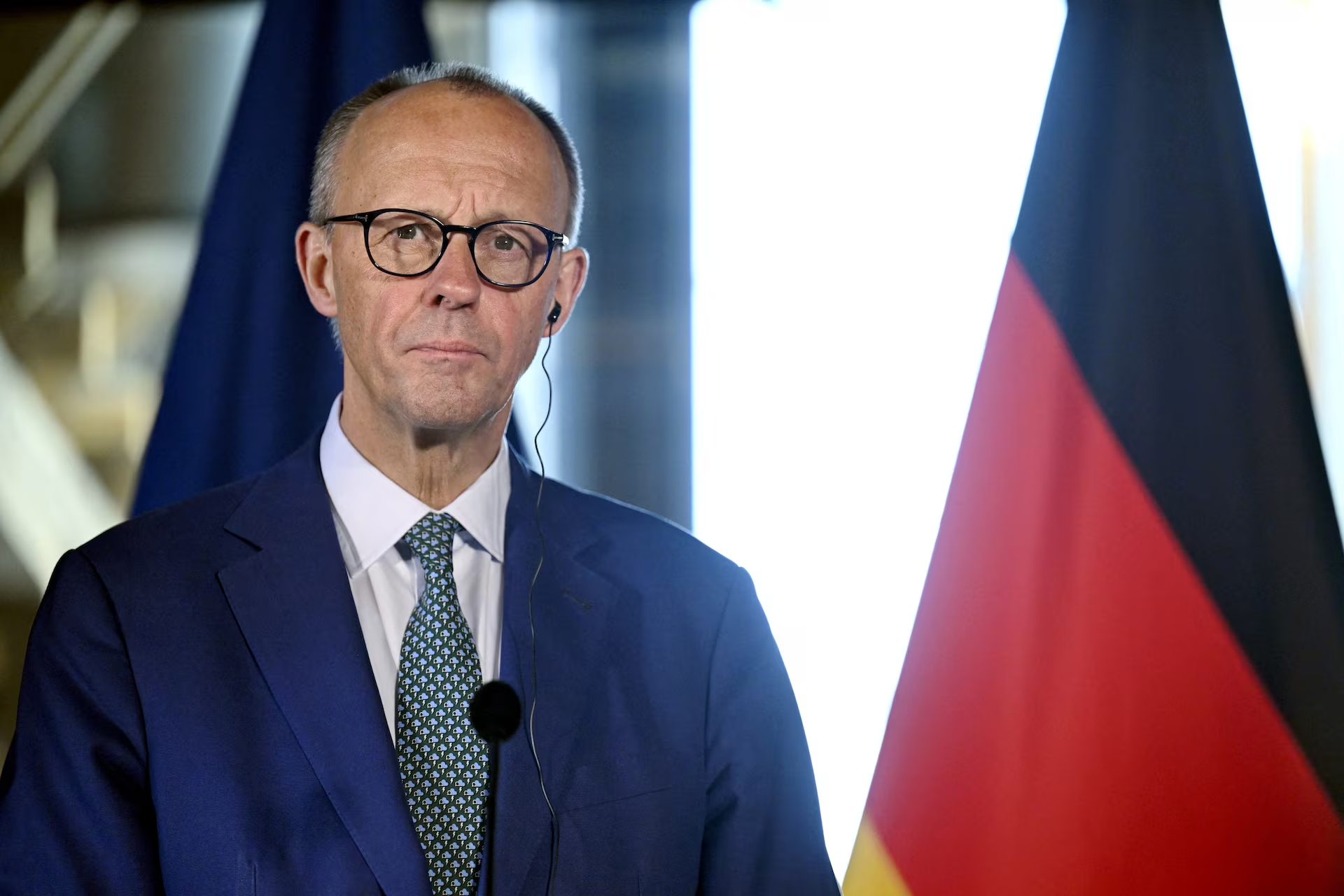
Germany Rejects Trump Call to Secure Hormuz Strait/ Newslooks/ WASHINGTON/ J. Mansour/ Morning Edition/ Germany rejected pressure from Donald Trump to help secure the Strait of Hormuz, saying the war involving Iran is not NATO’s responsibility. Berlin stated it will not participate in any military mission to reopen the key oil corridor while fighting continues. The dispute highlights growing tensions between the United States and European allies over the Iran conflict.
Germany Rejects Trump Hormuz Mission Quick Looks
- Germany rejects U.S. request to help reopen Strait of Hormuz.
- Berlin says the Iran war “is not NATO’s war.”
- Government spokesman stresses NATO is a defensive alliance only.
- Germany will not join any military operation to secure the strait.
- Trump previously warned NATO allies of a “very bad future.”
- European leaders remain divided on involvement in the conflict.
- Germany initially supported pressure on Iran’s government.
- Berlin now questions the U.S. strategy and exit plan.
Deep Look: Germany Rejects Trump Call to Secure Hormuz Strait
Germany’s government has firmly rejected calls from U.S. President Donald Trump for NATO allies to help secure the strategically vital Strait of Hormuz, arguing that the ongoing conflict involving Iran is not the responsibility of the transatlantic military alliance.
Speaking in Berlin on Monday, government spokesperson Stefan Kornelius made it clear that Germany does not intend to participate in any military effort aimed at reopening the critical maritime corridor.
“This war has nothing to do with NATO. It’s not NATO’s war,” Kornelius told reporters. He emphasized that NATO exists primarily as a defensive alliance focused on protecting member states’ territory rather than engaging in external conflicts.
“NATO is a defensive alliance, an alliance for the defense of its territory,” he said.
Trump Pushes Allies to Protect Global Oil Route
Trump has intensified pressure on NATO members and other international partners to assist the United States in securing the Strait of Hormuz, which carries roughly one-fifth of the world’s seaborne oil shipments.
The narrow passage connecting the Persian Gulf to the Gulf of Oman has become a focal point of global concern as tensions rise during the war involving Iran.
The U.S. president recently warned NATO allies they could face a “very bad future” if they decline to help reopen the shipping corridor and stabilize global energy supplies.
Trump has proposed forming an international naval coalition to escort oil tankers and ensure safe passage through the strait, suggesting that allies contribute ships and specialized vessels such as minesweepers.
Germany Draws a Clear Line
Berlin, however, says it will not participate in any military operation tied to the conflict while fighting continues.
“As long as this war continues, there will be no involvement — not even in an option to keep the Strait of Hormuz open by military means,” Kornelius said.
He also noted that the German government has not received any formal request from Washington to take part in such a mission.
The spokesperson added that the United States and Israel launched the war without consulting European allies, making it difficult for Germany to justify military involvement now.
“I would also like to remind you that the U.S. and Israel did not consult us before the war,” Kornelius said. “Washington explicitly stated at the beginning that European assistance was neither necessary nor desired.”
Merz’s Position Evolves
Germany’s stance marks a notable shift in tone from earlier in the conflict.
Initially, Chancellor Friedrich Merz appeared more supportive of U.S. and Israeli actions against Iran than several other European leaders.
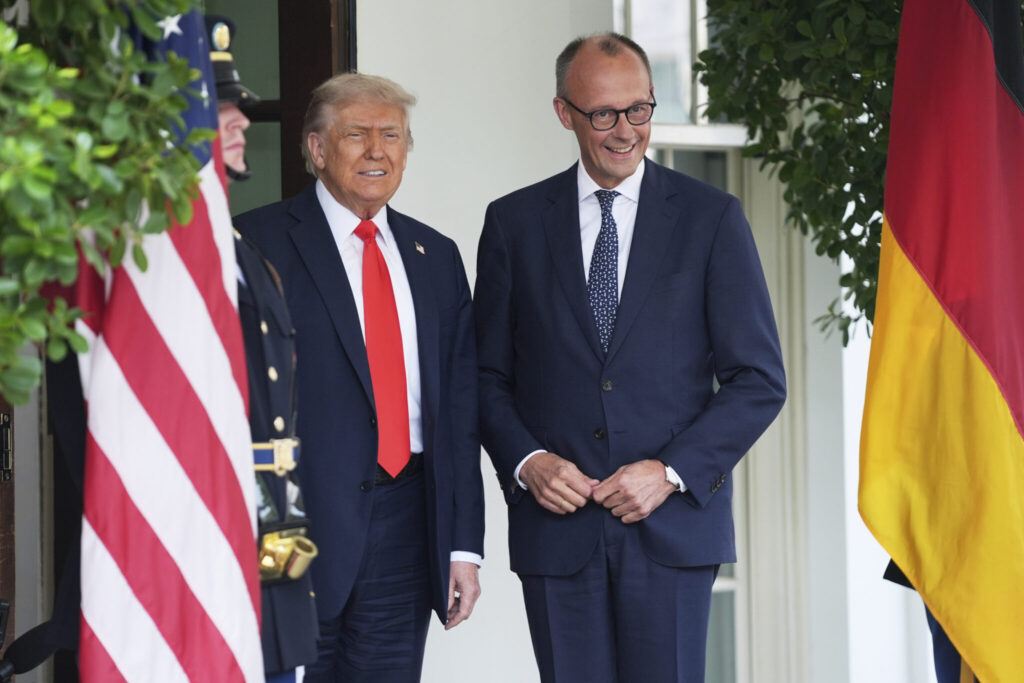
While figures such as Emmanuel Macron and other European Union leaders criticized the strikes as unlawful, Merz traveled to Washington and met Trump at the Oval Office, signaling agreement on the goal of challenging Iran’s government.
During that visit, Merz told Trump that Germany was “on the same page” regarding the need to confront the Iranian regime.
Growing Concerns in Berlin
As the conflict has continued, however, German officials have grown increasingly uneasy about the war’s economic and strategic consequences — particularly for Europe’s largest economy.
The ongoing instability in the Persian Gulf has already disrupted global energy markets and raised concerns about supply chains and trade routes that are critical for European industries.
Kornelius indicated that Germany still shares the broader objective of encouraging political change in Iran but is increasingly questioning the strategy being used to achieve that outcome.
“Germany’s position has always been that we agree in principle with the goal — bringing about a change in the political situation in Iran in order to facilitate a peaceful solution for the region,” he said.
“However, we increasingly have questions about the correct path to achieving this goal.”
Transatlantic Tensions Rise
Germany’s refusal to join a U.S.-led effort in the Strait of Hormuz underscores widening divisions between Washington and some European allies over how to handle the escalating crisis.
While the United States continues to push for a broader international coalition to secure global oil routes, many European governments remain wary of becoming directly involved in a conflict that could expand across the Middle East.
The disagreement also highlights the ongoing debate within NATO about the alliance’s role in global security challenges beyond the defense of its own member states.
For now, Germany’s position appears clear: Berlin will not participate in any military mission to reopen the Strait of Hormuz while the war with Iran continues.





You must Register or Login to post a comment.