

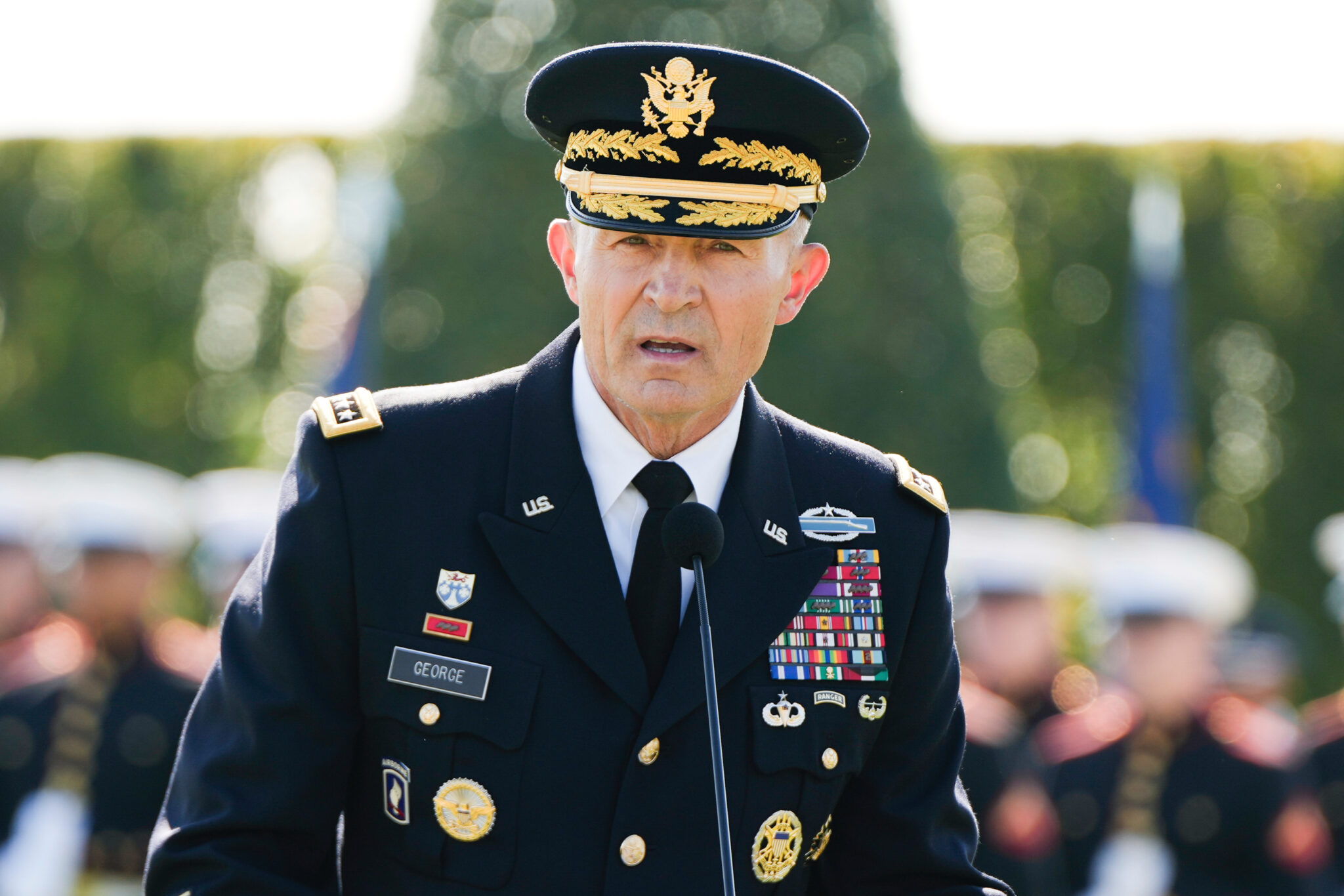
Hegseth Asks Army Chief Gen. Randy George to Step Down During Iran War/ Newslooks/ WASHINGTON/ J. Mansour/ Morning Edition/ Defense Secretary Pete Hegseth asked Army Chief Gen. Randy George to step down amid the Iran conflict. The move comes during ongoing U.S. military deployments to the Middle East. Lt. Gen. Christopher LaNeve is expected to become acting Army chief.
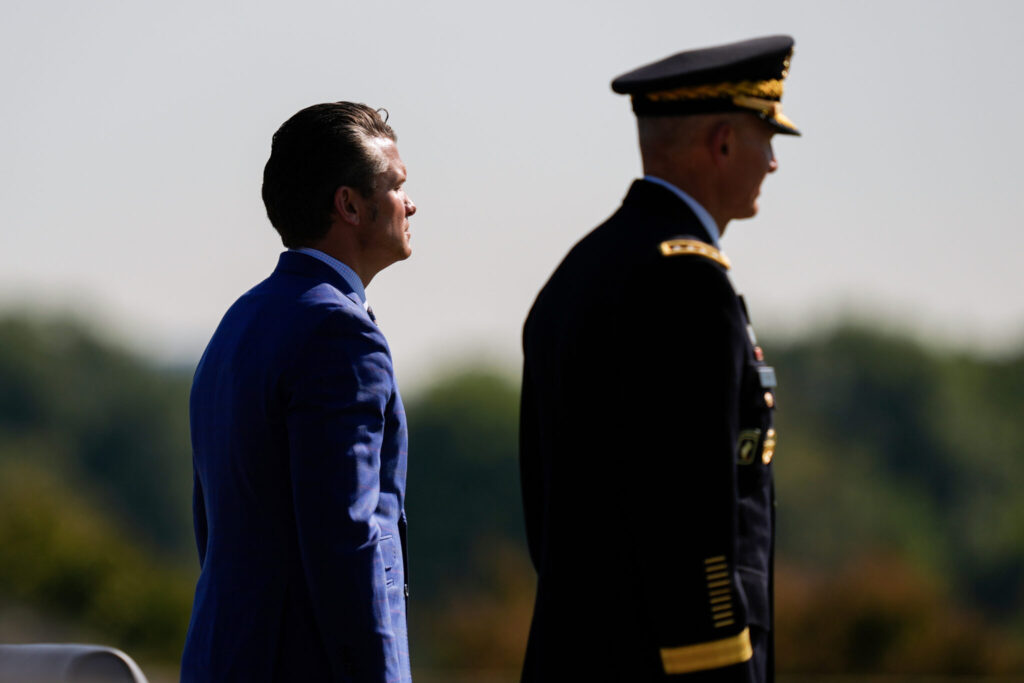
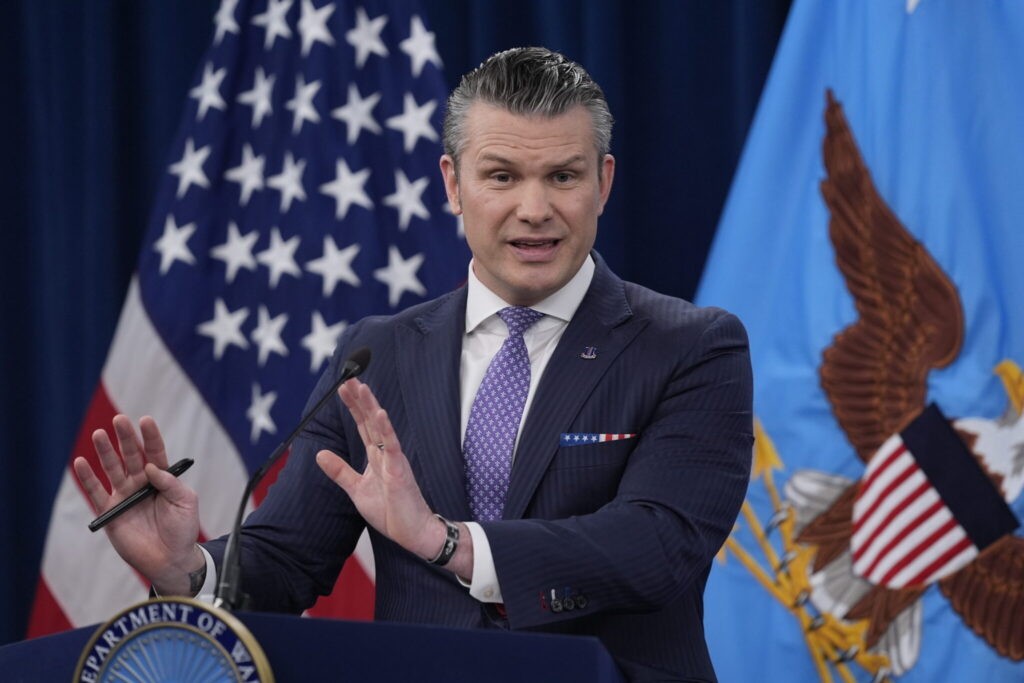
Pentagon Leadership Shakeup Quick Looks
- Army Chief Gen. Randy George asked to step down
- No official reason provided by Pentagon
- Move comes during U.S.-Iran conflict
- Lt. Gen. Christopher LaNeve expected to replace
- 82nd Airborne deploying to Middle East
- More than a dozen generals removed under Hegseth
- Leadership changes during ongoing military operations
- Trump signals intensified attacks on Iran
- Pentagon avoids ground troop questions
- George served since August 2023
- Military leadership reshuffle continues
- Iran criticizes Trump “Stone Age” remarks
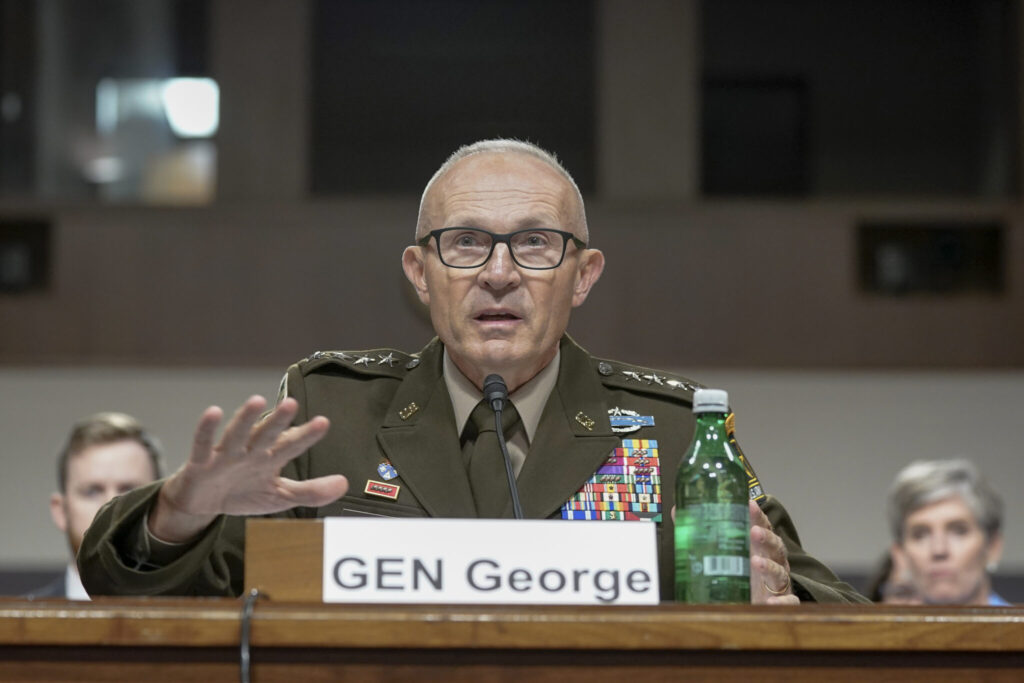
Deep Look: Army Leadership Shakeup Comes During Iran Conflict
WASHINGTON — Defense Secretary Pete Hegseth has asked the Army’s top uniformed officer, Gen. Randy George, to step down, the Pentagon confirmed Thursday, marking another major leadership shakeup as the United States continues military operations against Iran.
Pentagon spokesman Sean Parnell said George will retire immediately from his role as the 41st Chief of Staff of the Army. No reason was provided for the sudden departure, which comes nearly five weeks into U.S.-Israeli military operations against Iran.
George had served in the position since August 2023 after being appointed during the Biden administration. Army chief of staff terms typically last four years.
The move represents the latest in a series of leadership changes under Hegseth. Since taking office last year, the defense secretary has overseen more than a dozen removals or early retirements of top generals and admirals.
Lt. Gen. Christopher LaNeve to Take Over
Lt. Gen. Christopher LaNeve is expected to become acting Army chief of staff, according to a Pentagon official familiar with the decision.
LaNeve’s rise has been rapid. Just two years ago, he held a two-star rank. Most recently, he served as Hegseth’s top military aide after commanding the Eighth Army in South Korea.
The change follows earlier leadership reshuffles, including the removal of George’s deputy, Gen. James Mingus. Mingus had served as vice chief of staff for less than two years before Trump nominated LaNeve to replace him.
The leadership shift marks a continued restructuring of senior military leadership during a period of active conflict.
George’s Military Career
Gen. Randy George is a West Point graduate and veteran infantry officer. He served in the first Gulf War, as well as operations in Iraq and Afghanistan.
George also served as Defense Secretary Lloyd Austin’s senior military aide from 2021 to 2022 before assuming senior Army leadership roles.
He survived the first round of leadership changes in early 2025, when Hegseth removed several top military leaders, including:
- Navy Chief Adm. Lisa Franchetti
- Air Force Vice Chief Gen. Jim Slife
- Joint Chiefs Chairman Gen. Charles “CQ” Brown Jr.
Since then, more senior military officials have either retired early or been removed.
Military Deployments Continue
The leadership change comes as U.S. forces deploy additional troops to the Middle East. Army paratroopers from the 82nd Airborne Division are heading to the region along with Marines and other military assets.
The Pentagon has declined to confirm whether ground troops could be deployed into Iran, maintaining uncertainty about the next phase of the conflict.
President Donald Trump addressed the nation Wednesday night, signaling continued military action.
“We are going to hit them extremely hard over the next two to three weeks,” Trump said, adding that Iran would be pushed “back to the Stone Ages.”
Defense Secretary Hegseth echoed the message in a social media post reading, “Back to the Stone Age.”
Iran’s mission to the United Nations criticized the remarks, calling them reflective of “ignorance, not strength,” and highlighting Iran’s long civilization history.
Leadership Changes During Wartime
The removal of the Army’s top officer during active military operations is unusual and underscores ongoing shifts within the Pentagon.
With troop deployments increasing and the conflict continuing without a clear timeline, the leadership change adds another layer of uncertainty to U.S. military planning.
As the United States escalates operations against Iran and reshapes military leadership, the Pentagon faces the dual challenge of managing active conflict while navigating internal transitions at the highest levels.






You must Register or Login to post a comment.