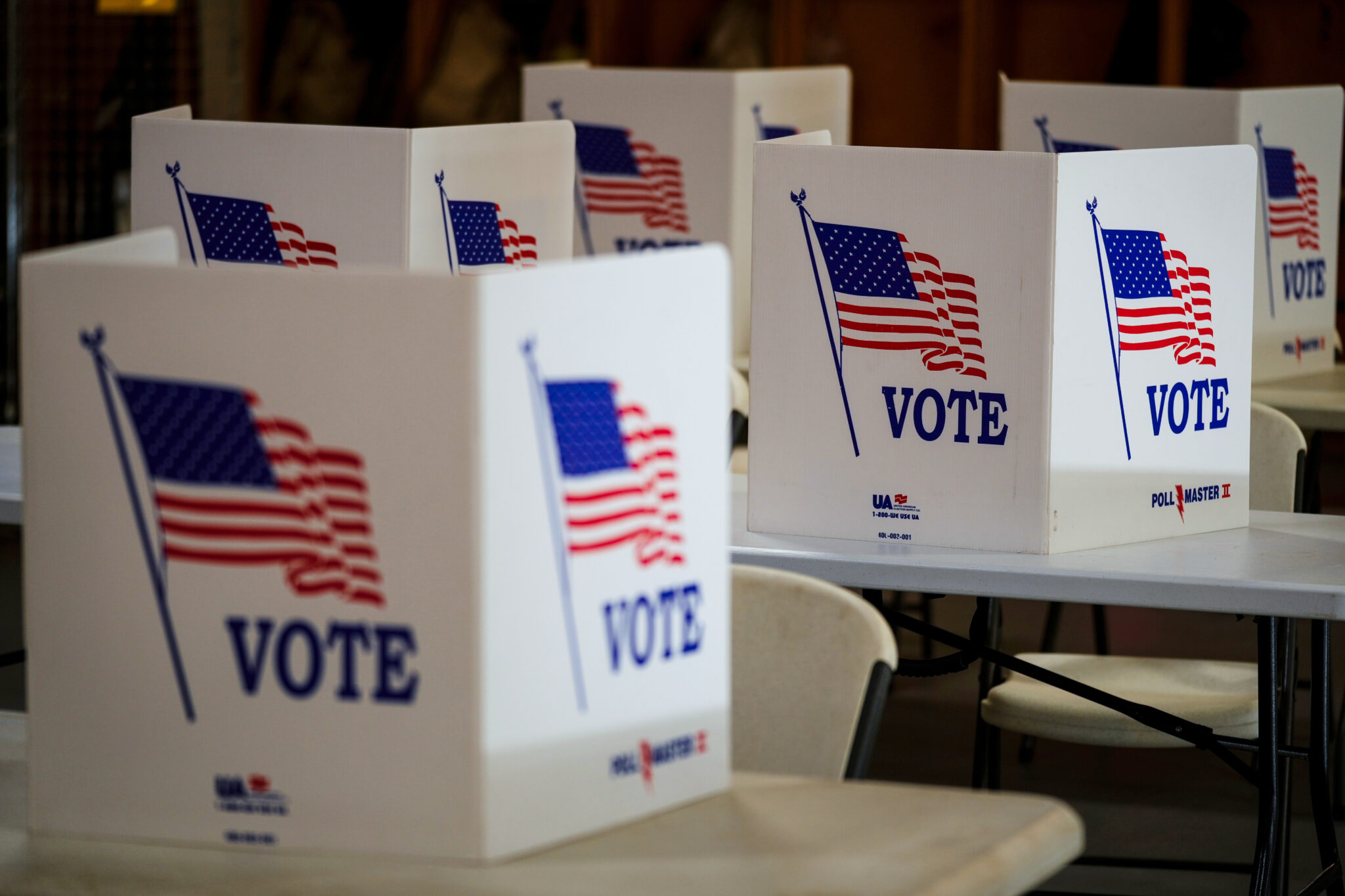
House GOP Pushes New Voting Laws Before Midterms/ Newslooks/ WASHINGTON/ J. Mansour/ Morning Edition/ House Republicans unveiled sweeping voting legislation aimed at tightening voter ID rules, banning ranked choice voting, and restricting mail-in ballots ahead of the 2026 midterms. The bill, backed by President Trump, reflects GOP priorities to standardize federal election procedures. Democrats warn the changes would suppress voter turnout and undermine democracy.

Republican Voting Reform Quick Looks
- GOP bill proposes voter ID, proof of citizenship rules.
- Trump-backed legislation eyes 2026 midterms and future elections.
- Bill bans universal vote-by-mail and ranked choice voting.
- States must use paper ballots and purge voter rolls monthly.
- Noncompliance risks losing federal election funding.
- Democrats call it voter suppression, vow to block it.
- Proposal requires DOJ coordination to flag alleged voter fraud.
- Fulton County election office raided as Trump seeks 2020 ballots.
- Critics say bill overrides states’ rights in running elections.
- Legislation revives Trump-era election control ambitions.
Deep Look
House Republicans Push National Voting Overhaul Backed by Trump as 2026 Midterms Near
WASHINGTON — House Republicans introduced a wide-reaching election reform bill that would impose tighter voting restrictions and reshape federal election procedures, escalating their push to reshape how Americans cast ballots ahead of the 2026 midterms.
The legislation — dubbed the “Make Elections Great Again Act” — echoes long-standing demands from President Donald Trump, who has continued to claim, without evidence, that the 2020 election was stolen. The proposal includes strict voter ID requirements, proof of citizenship, a ban on universal vote-by-mail, and the elimination of ranked choice voting — with some provisions slated to take effect as soon as this fall.
Rep. Bryan Steil (R-WI), chair of the House Administration Committee, said the changes are aimed at restoring faith in the electoral process.
“These reforms will improve voter confidence, bolster election integrity, and make it easy to vote, but hard to cheat,” he said.
While the legislation may pass in the Republican-led House, it faces strong opposition in the Democratic-controlled Senate, where similar proposals have previously stalled.
Major Changes Proposed in the GOP Bill
The 120-page bill proposes the following major reforms:
- Photo ID requirement to vote in federal elections starting in 2027.
- Citizenship verification at voter registration, also beginning in 2027.
- Immediate ban on universal mail-in voting and ranked choice systems, both popular in states like Maine and Alaska.
- Mandatory auditable paper ballots in all federal elections.
- States must update voter rolls every 30 days.
- Data-sharing agreements with the DOJ required to retain federal election funding.
The bill threatens to withhold federal election funding from states that fail to comply with key provisions.
Democratic Pushback and Accusations of Voter Suppression
Rep. Joe Morelle (D-NY), ranking Democrat on the House Administration Committee, blasted the proposal as a direct attempt to suppress voter turnout. “This is their latest attempt to block millions of Americans from exercising their right to vote,” he said, vowing to fight the bill “at every turn.”
Voting rights advocates echoed those concerns. Prior efforts to require proof of citizenship have been criticized for disproportionately affecting married women, naturalized citizens, and low-income voters who may not have documentation readily available. A 2023 Brennan Center report estimated that 21.3 million U.S. citizens of voting age lack immediate access to proof of citizenship, and nearly half of Americans don’t have a passport.
Critics also warn that the legislation would erode state autonomy in administering elections. Stephen Richer, a Republican elections official from Arizona, called the bill a “flattening of federalism” that strips states of control over their own systems.
Trump Administration Eyes 2026 With Renewed Election Focus
The proposal comes amid a renewed Trump administration focus on election oversight ahead of the midterms. On Wednesday, federal agents raided the election headquarters in Fulton County, Georgia, a key Democratic stronghold that includes most of Atlanta, seeking ballots from the 2020 election.
The move followed comments from Trump earlier this month suggesting that charges tied to that election might soon be filed. It also echoes efforts during his first term to investigate alleged voter fraud.
Last year, Trump signed an executive order that imposed similar voting requirements at the federal level, including a citizenship verification mandate. The House previously passed a bill to codify that order — the “Safeguard American Voter Eligibility Act” — but it stalled in the Senate.
With the 2026 elections looming and control of Congress at stake, Republicans appear determined to press forward. The latest proposal signals a clear shift toward nationalizing election laws — a break from the tradition of state-level control over voting procedures.