

Hungary’s Orbán Ousted After 16 Years in Stunning Election Upset/ Newslooks/ WASHINGTON/ J. Mansour/ Morning Edition/ Hungarian Prime Minister Viktor Orbán was ousted after 16 years in power. Pro-European challenger Péter Magyar won in a stunning election upset. The result reshapes EU politics and weakens global far-right movements.
Hungary Election Shock Quick Looks
- Viktor Orbán loses after 16 years
- Péter Magyar wins with pro-EU agenda
- Election turnout near 80% record
- Orbán ally of Trump and Putin
- Victory reshapes European politics
- Anti-Russia chants fill Budapest streets
- EU leaders congratulate Magyar
- Hungary policy shift expected
Deep Look: Hungary’s Orbán Ousted After 16 Years in Stunning Election Upset
BUDAPEST — Hungarian voters delivered a historic political upset Sunday, removing Prime Minister Viktor Orbán after 16 years in power and electing pro-European challenger Péter Magyar in a dramatic election result expected to reshape European politics.
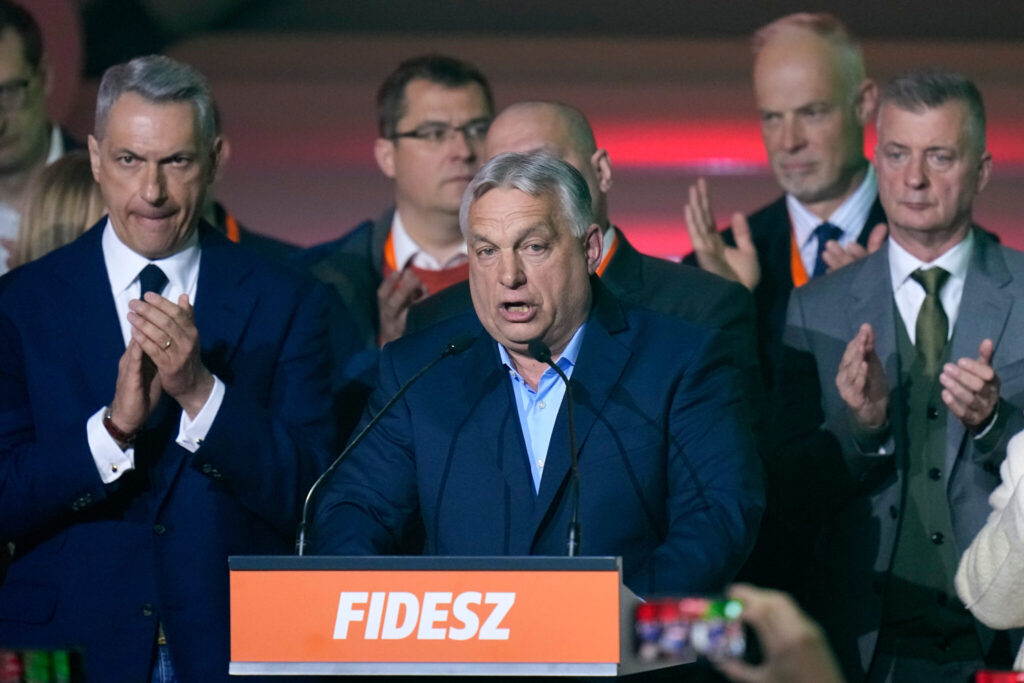
Orbán, one of Europe’s longest-serving leaders and a prominent figure in global nationalist politics, conceded defeat after what he described as a “painful” election outcome.
“I congratulated the victorious party,” Orbán told supporters.
“We are going to serve the Hungarian nation and our homeland from opposition.”
The defeat marks a stunning reversal for Orbán, who had cultivated close ties with U.S. President Donald Trump and Russian President Vladimir Putin and had dominated Hungary’s political landscape since 2010.
Péter Magyar Claims Victory
Election winner Péter Magyar, a former Orbán ally turned reform candidate, pledged to rebuild Hungary’s ties with the European Union and NATO, which deteriorated during Orbán’s rule.
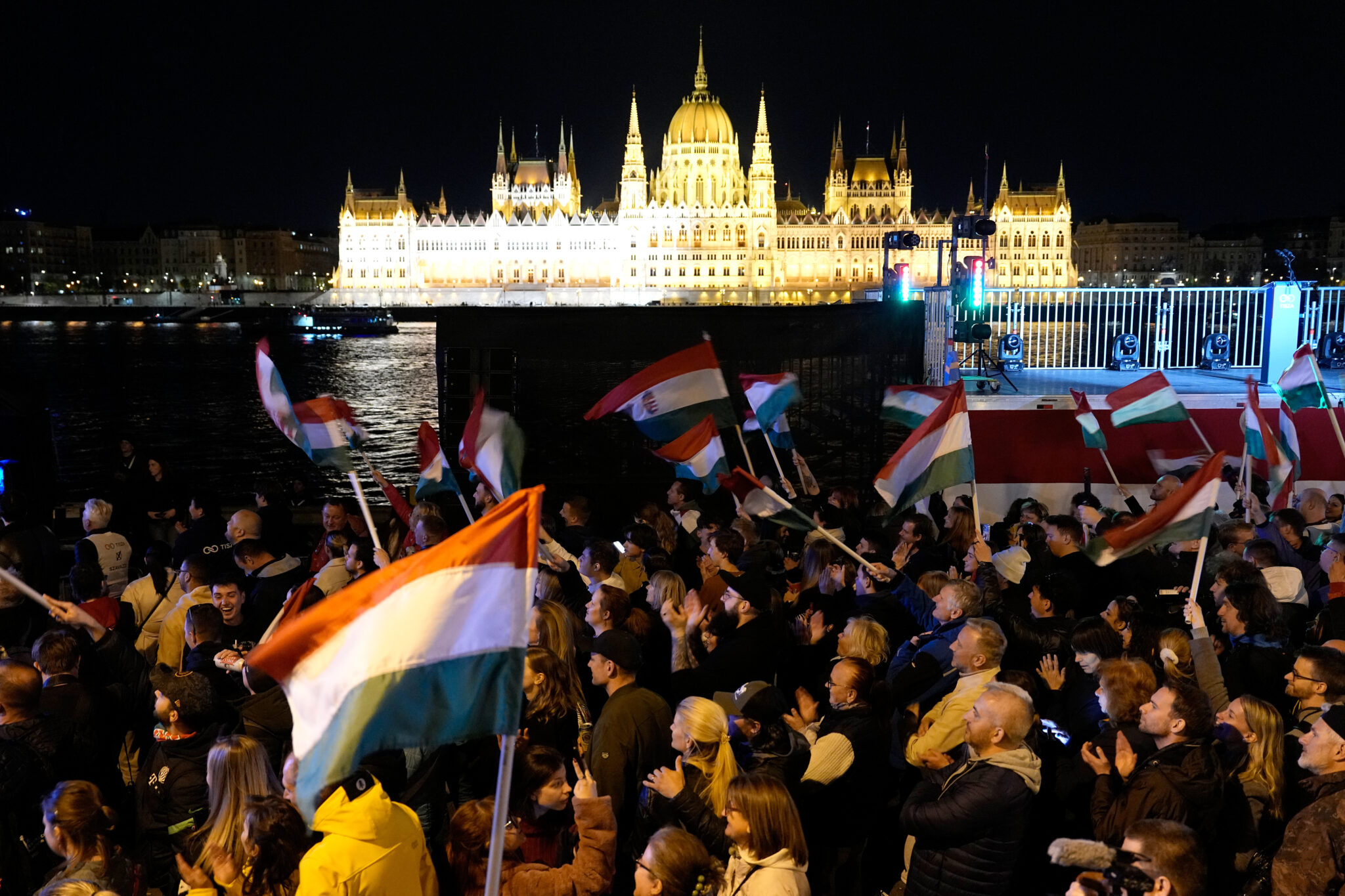
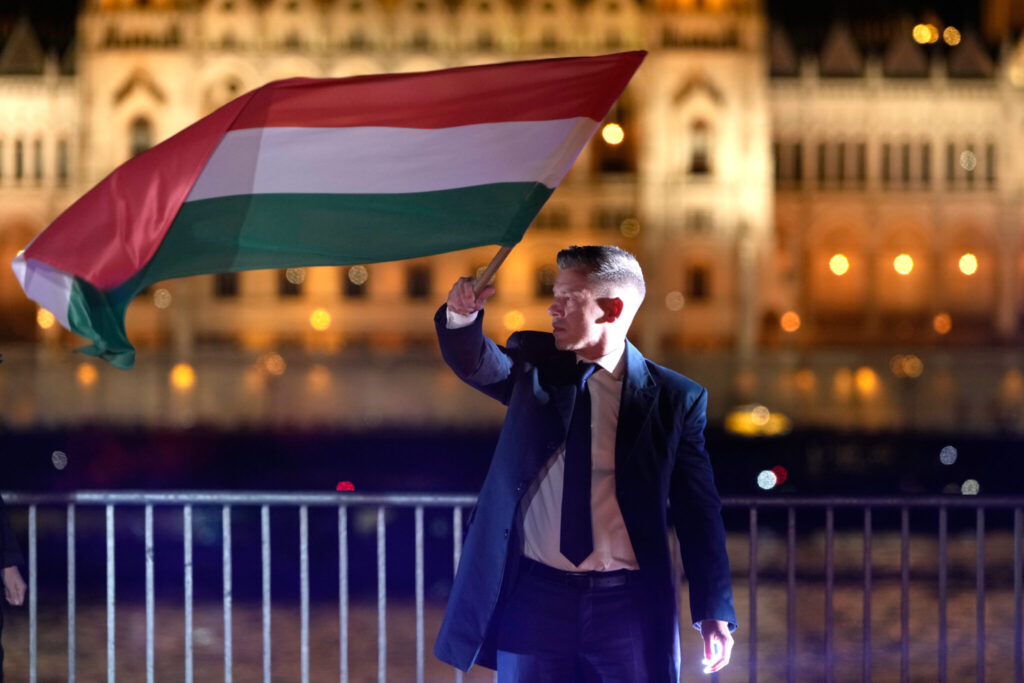
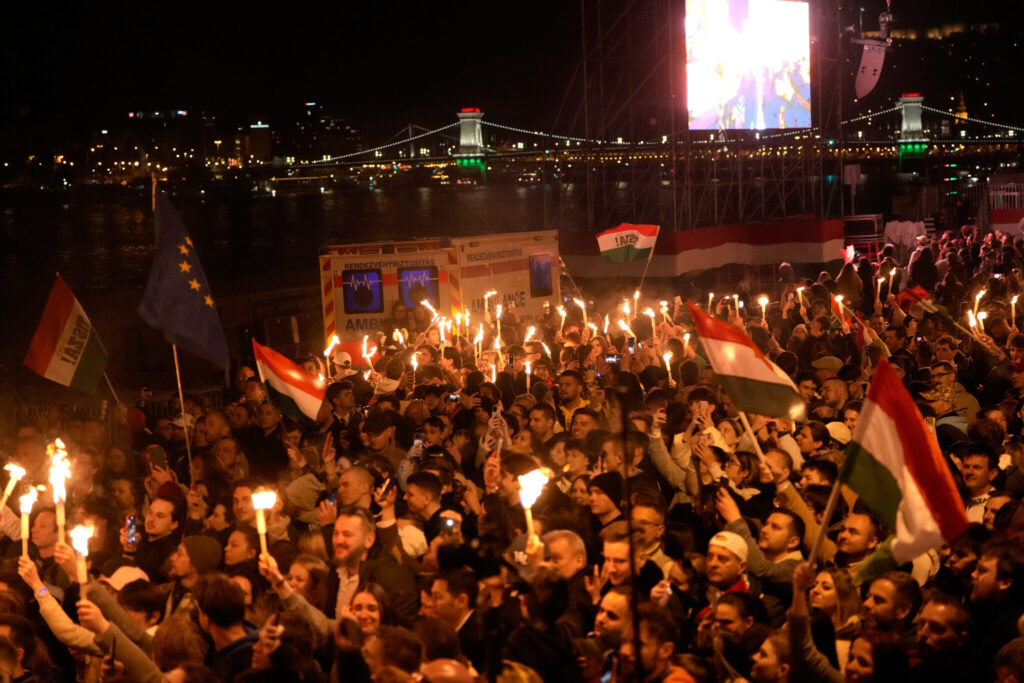
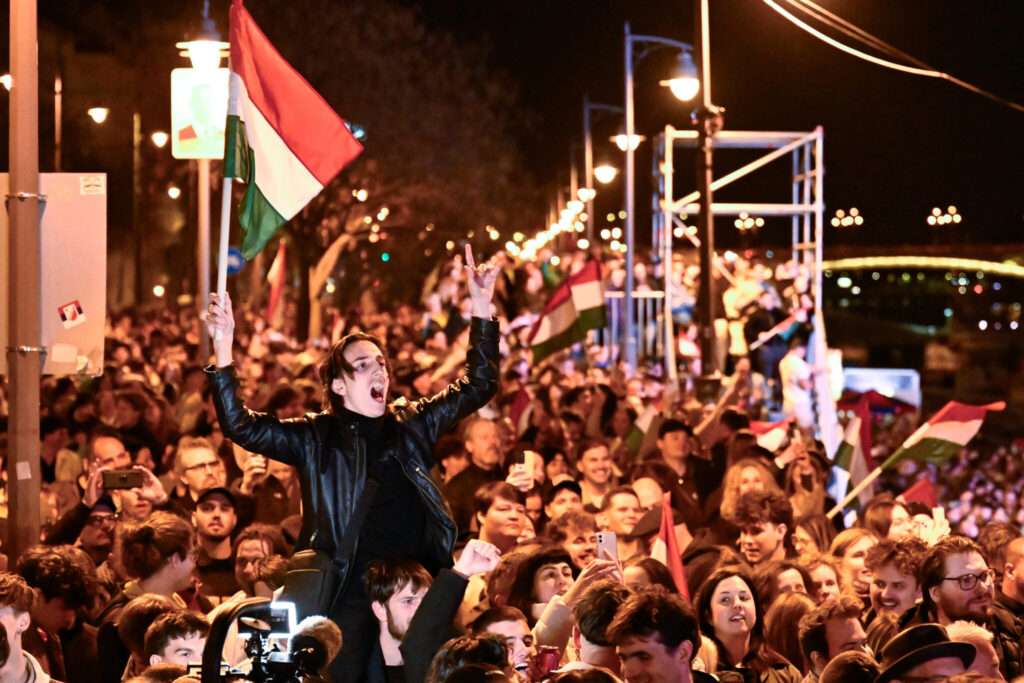
Speaking to tens of thousands of cheering supporters along the Danube River, Magyar framed the result as a turning point for Hungary.
“Tonight, truth prevailed over lies,” Magyar declared.
“Today, we won because Hungarians didn’t ask what their homeland could do for them — they asked what they could do for their homeland.”
Celebrations erupted across Budapest, with crowds chanting “Ruszkik haza!” — meaning “Russians go home,” a slogan dating back to Hungary’s 1956 anti-Soviet uprising.
Drivers honked horns and played anti-government songs as supporters celebrated the historic victory.
Record Turnout Signals Political Shift
Turnout reached nearly 80%, according to Hungary’s National Election Office — the highest in the country’s post-Communist history.
With 93% of votes counted:
- Magyar’s Tisza Party received over 53%
- Orbán’s Fidesz Party received about 37%
- Tisza projected to win 94 of 106 districts
It remained unclear whether Magyar would secure a two-thirds parliamentary majority needed for major constitutional changes.
Orbán’s Global Influence
Orbán had become a leading figure among global far-right movements, championing nationalist policies, strict immigration controls, and conservative cultural values.
Supporters of Trump’s “Make America Great Again” movement frequently cited Orbán as a model for conservative governance.
However, critics accused Orbán of:
- Weakening democratic institutions
- Restricting media freedom
- Targeting minority rights
- Favoring political allies economically
Orbán denied corruption allegations but faced growing domestic opposition.
Shift Toward Europe
Magyar’s victory could transform Hungary’s position within the European Union, where Orbán frequently blocked major decisions.
Most recently, Orbán vetoed a 90-billion-euro EU aid package for Ukraine, drawing criticism from European partners.
European leaders quickly congratulated Magyar, anticipating improved cooperation.
Magyar previously described the election as a referendum on Hungary’s geopolitical direction.
“This election is about whether Hungary continues drifting toward Russia,” Magyar said earlier, “or returns to democratic European values.”
Voters Seek Change
Many Hungarian voters said they supported change after years of political division.
Marcell Mehringer, 21, said he voted to restore Hungary’s European identity.
“I voted so Hungary will finally be a European country,” he said.
“We need to unite the nation and break down boundaries born of hatred.”
Campaign From Within
He toured the country extensively, sometimes visiting six towns per day in a grassroots campaign.
Despite Orbán’s advantage in media coverage and electoral boundaries, Magyar built momentum by focusing on everyday issues such as:
- Healthcare
- Public transport
- Corruption
- Cost of living
International Implications
The election result is expected to reverberate across Europe and beyond.
Orbán had been:
- EU’s longest-serving leader
- A frequent veto player in EU policy
- A close ally of Russia
- A nationalist symbol worldwide
His defeat may strengthen European unity and weaken nationalist movements.
Russia’s relationship with Hungary also faces uncertainty, particularly regarding energy imports and Ukraine policy.
What Comes Next
Key priorities expected:
- Reengage EU partnerships
- Support Ukraine policy
- Strengthen democratic institutions
- Address domestic economic concerns
After 16 years of Orbán’s rule, Hungary now faces a new political era — one that could reshape both the country’s future and broader European politics.




You must Register or Login to post a comment.