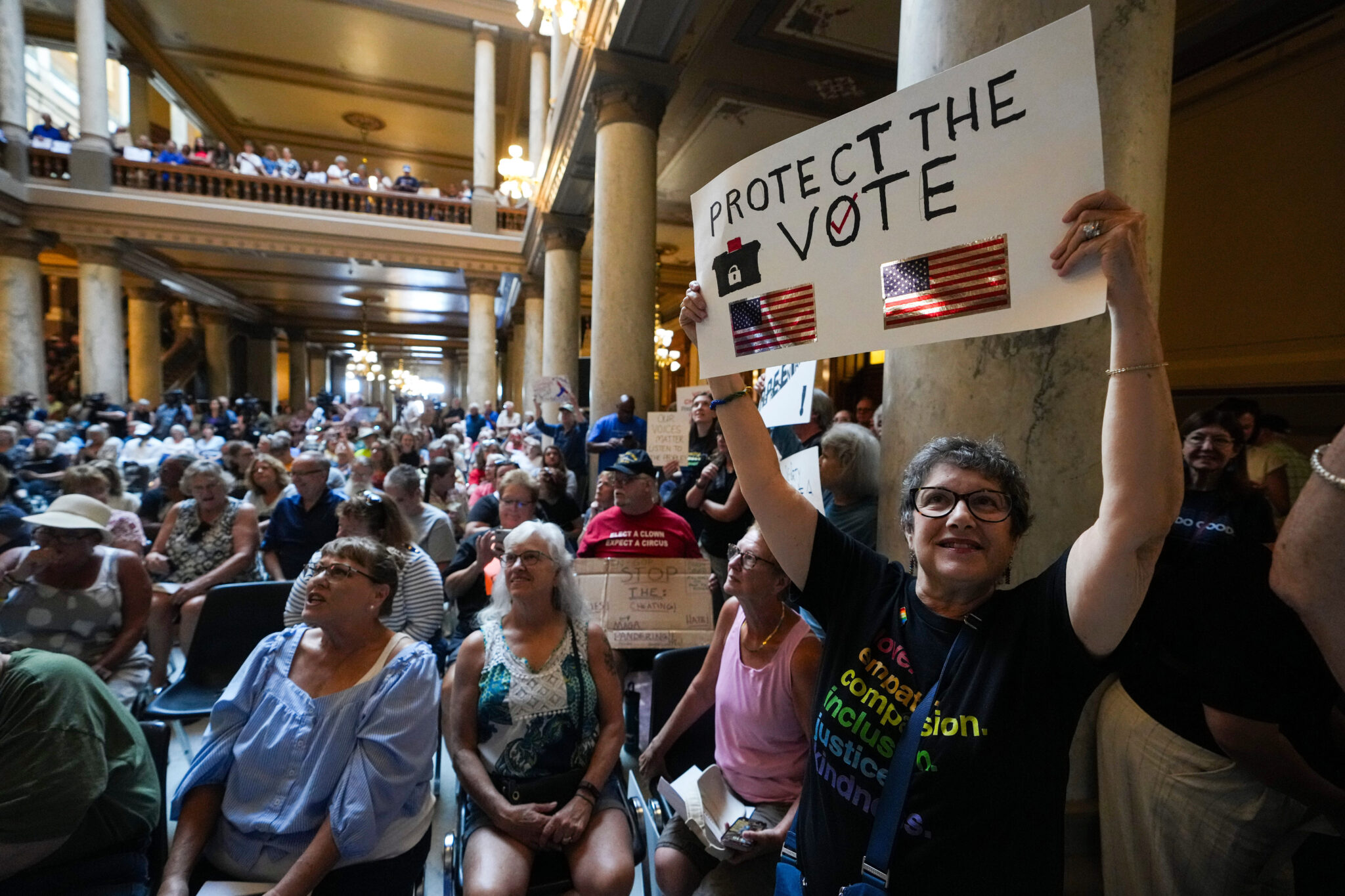
Indiana House Passes Trump-Backed Redistricting Map Proposal/ Newslooks/ WASHINGTON/ J. Mansour/ Morning Edition/ Indiana House Republicans passed a Trump-supported congressional map that divides Indianapolis, aiming to secure GOP dominance across all nine seats. The map now moves to the state Senate, where its future remains uncertain amid internal GOP divisions. Democrats argue the proposal dilutes minority voting power and accelerates partisan redistricting.
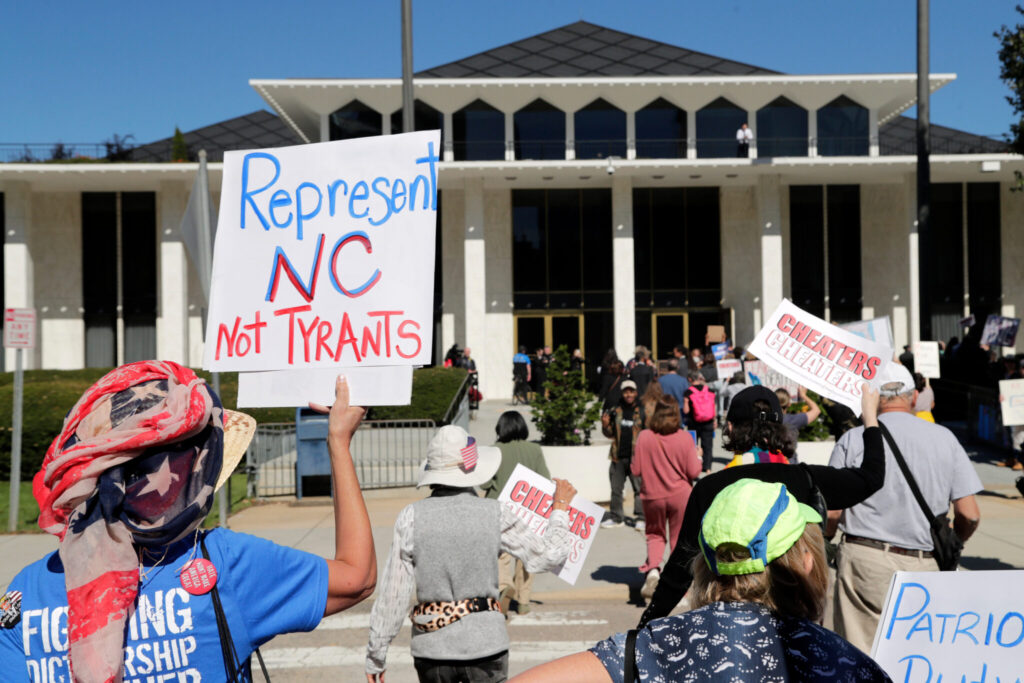
2026 Indiana Redistricting Quick Looks
- Indiana House Republicans passed a Trump-endorsed congressional redistricting map.
- The new map splits Indianapolis into four districts, aiding GOP chances.
- Bill moves to the state Senate, where votes are not guaranteed.
- Democrats claim the map weakens Black and minority voting strength.
- Rep. Greg Porter accused GOP of cracking Marion County.
- Redistricting pressures align with a broader national GOP effort.
- Trump urged Indiana senators to pass the map “AS IS.”
- Senate GOP remains divided; threats and swatting attempts reported.
- U.S. Supreme Court recently upheld a similar GOP-favored Texas map.
- Mid-decade redistricting could become the new political normal.
Deep Look: Indiana House Republicans Pass Trump-Backed Redistricting Map Amid Party Tensions
INDIANAPOLIS — In a significant development that could reshape Indiana’s political landscape, House Republicans on Friday approved a controversial redistricting plan backed by former President Donald Trump. The new congressional map now moves to the state Senate, where it faces uncertainty despite GOP control.
The bill passed with a 57-41 vote in the Republican-majority House. It carves up Indianapolis — traditionally a Democratic stronghold — into four separate congressional districts, potentially allowing the GOP to claim all nine of the state’s seats in the U.S. House. Currently, Republicans hold seven.
The map, introduced just days earlier on Monday, has drawn heavy criticism from Democrats and voting rights advocates who say the redistricting effort was rushed and designed to marginalize minority voters.
Democratic state Rep. Greg Porter, who represents Indianapolis, accused Republicans of racial gerrymandering.
“What we’re doing today with this proposed legislation is taking away the rights of Black and brown people in Indiana,” he said during floor debate. “It cracks Marion County!” Porter’s remarks referred to the breaking apart of Indianapolis — located in Marion County — which could diminish the electoral influence of Black residents.
U.S. Rep. André Carson, the only Black member of Indiana’s congressional delegation, could lose his seat under the new design. Carson has represented the Indianapolis area for 17 years.
Trump Pushes for Aggressive Mid-Cycle Redistricting
Traditionally, redistricting takes place once every decade following the U.S. Census. However, this year’s effort — fueled by Trump and national Republican groups — represents a new wave of mid-decade redistricting. The aim is to fortify GOP control ahead of the high-stakes 2026 midterms.
Trump and his allies have encouraged states like Indiana to follow the lead of Texas, Missouri, Ohio, and North Carolina, all of which have recently redrawn their maps to Republican advantage. In response, blue states like California and Virginia are pursuing similar strategies.
Trump took to social media Friday evening to champion the Indiana map and apply pressure on the state Senate, urging them to approve the proposal “AS IS.” He specifically named nine Republican senators he said need “encouragement to make the right decision.”
“I urge the Senate to move quickly next week and adopt this map so Indiana can move forward with confidence,” added Governor Mike Braun, a close Trump ally.
Senate Path Remains Uncertain
The Indiana Senate’s top Republican, Rodric Bray, previously expressed doubt about whether enough votes exist to pass the legislation. Republicans would need at least 25 votes in the 50-member chamber, with the possibility of a 26th tiebreaker from Lt. Gov. Micah Beckwith.
A Senate committee is scheduled to review the map on Monday. But the vote count remains unclear, and divisions within the Republican caucus are deepening. Some GOP senators have even reported threats and “swatting” incidents over their positions on redistricting.
Trump has warned of primary challenges against any Republican senators who oppose the proposal. However, about half of the chamber, including Bray, will not face reelection until 2028, lessening immediate electoral pressure.
National GOP Involvement and Strategic Goals
The bill’s sponsor, Republican Rep. Ben Smaltz, revealed that the map and bill language were provided by the National Republican Redistricting Trust, a GOP-aligned organization also responsible for Texas’ new congressional map. According to Smaltz, Indiana Republicans were only given one map option.
He acknowledged that tit-for-tat redistricting may become a recurring theme in American politics. “This may be the new normal,” Smaltz said Friday.
Speaker of the House Todd Huston also defended the proposal, stating that Indiana’s redistricting efforts are part of a larger national picture. “We don’t operate in a vacuum,” he said, pointing to strategic moves across various states.
Under the new proposal, East Chicago and Gary, both historically Democratic cities, would be combined with several Republican counties, which could jeopardize the seat of Democratic Rep. Frank Mrvan in northwest Indiana.
The impact of such redistricting could be substantial. Republicans currently hold a narrow majority in the U.S. House, and Democrats need to flip only a handful of seats to reclaim control. With Trump-aligned states redrawing maps to favor Republicans, each seat becomes increasingly vital heading into the 2026 midterms.
On Thursday, the U.S. Supreme Court dealt a blow to redistricting challenges when it allowed Texas to proceed with its new map, which could net the GOP up to five additional seats. That ruling is likely to bolster Republican efforts in other states — including Indiana.
As both parties dig in for what’s shaping up to be one of the most aggressive redistricting cycles in modern history, Indiana now finds itself at the center of the national struggle for congressional power.