

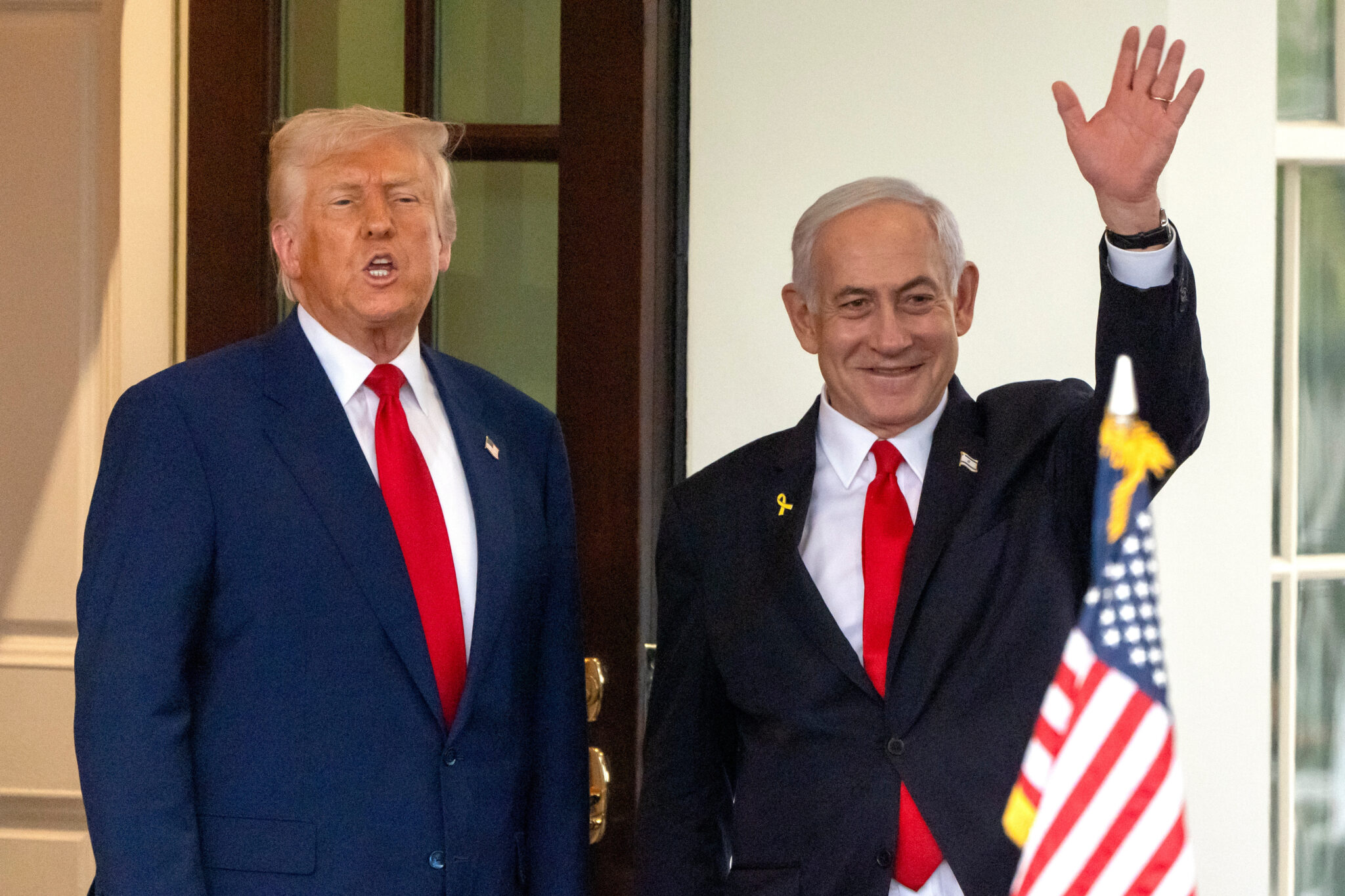
Inside Trump’s Decision to Join Israel in War Against Iran/ Newslooks/ WASHINGTON/ J. Mansour/ Morning Edition/ President Trump approved military action against Iran after internal debates. Israeli Prime Minister Benjamin Netanyahu pushed for a joint attack. Vice President JD Vance strongly opposed a full-scale war.
Trump Iran War Decision Quick Looks
- Netanyahu presentation influenced Trump decision
- Situation Room meetings shaped final approval
- JD Vance strongly opposed full-scale war
- CIA warned regime-change plan “farcical”
- Military raised risks of long conflict
- Trump confident war would be quick
- Hegseth pushed for military action
- Final approval: “Operation Epic Fury”
Deep Look: How Trump Decided to Join Israel in War Against Iran
WASHINGTON — President Donald Trump’s decision to join Israel in launching attacks on Iran followed weeks of high-level internal debates, intelligence warnings, and competing advice from his closest advisers, according to detailed accounts of White House deliberations.
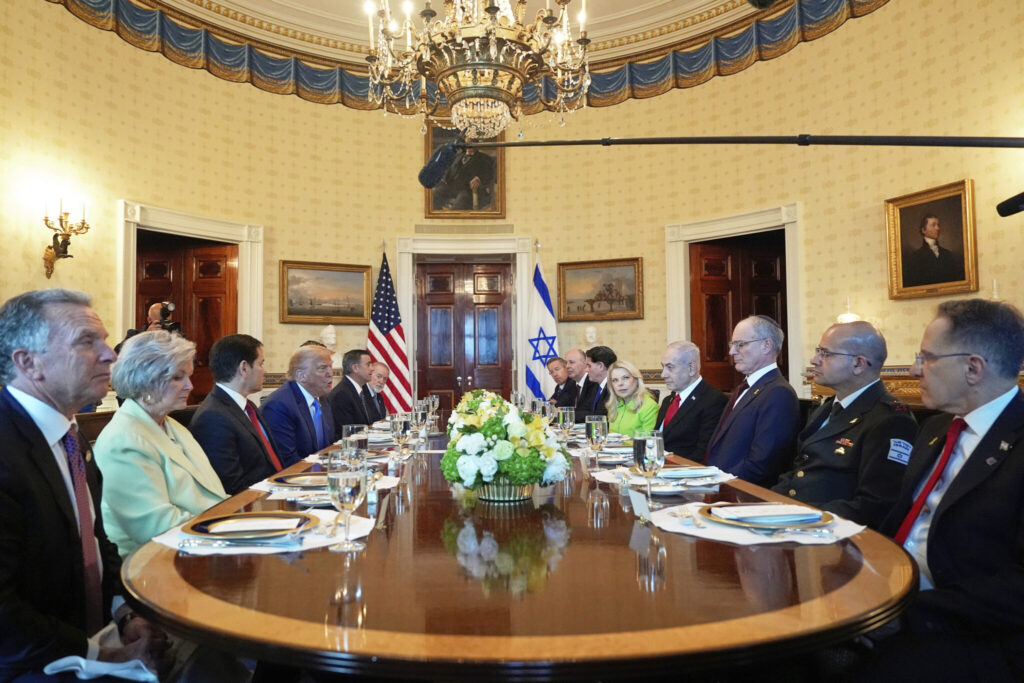
The turning point came on Feb. 11, when Israeli Prime Minister Benjamin Netanyahu arrived at the White House for a highly classified presentation in the Situation Room — an unusual setting for a foreign leader and a signal of the stakes involved.
Netanyahu, who had pressed for months for U.S. support in a military strike, delivered a detailed pitch outlining how a joint U.S.-Israeli operation could weaken Iran and potentially trigger regime change.
Netanyahu’s Case for War
During the presentation, Netanyahu argued that Iran was vulnerable and that military action could dismantle the Iranian government.
He highlighted intelligence suggesting:
- Iran’s missile program could be destroyed quickly
- Protests inside Iran could topple leadership
- Kurdish fighters might open a new front
- Regime collapse could follow bombing campaign
At one point, Israeli officials played a video showing possible future Iranian leaders, including Reza Pahlavi, the exiled son of Iran’s last shah.
“The risks of inaction are greater than the risks of action,” Netanyahu argued, warning that Iran would strengthen its defenses if the U.S. delayed.
Trump responded positively.
“Sounds good to me,” Trump told Netanyahu, signaling early support for military action.
Intelligence Pushback
The next day, U.S. intelligence officials delivered a sobering assessment.
CIA Director John Ratcliffe described regime-change scenarios as unrealistic.
“Farcical,” Ratcliffe said when briefing Trump.
Secretary of State Marco Rubio reinforced the skepticism.
“In other words, it’s bullshit,” Rubio said, referring to the regime-change proposal.
Officials agreed that killing Iranian leadership and weakening military capabilities were possible — but a broader regime collapse was unlikely.
Vice President JD Vance Opposes War
Vice President JD Vance emerged as the strongest internal opponent of the conflict.
He warned Trump that a full-scale war would be costly and unpredictable.
“A huge distraction of resources” and “massively expensive,” Vance said about a potential war.
Vance also warned that conflict could divide Trump’s political coalition and lead to rising gas prices if Iran disrupted the Strait of Hormuz.
He argued that Iran’s retaliation was unpredictable and that rebuilding a stable Iran would be difficult.
“You know I think this is a bad idea,” Vance told Trump during final discussions, though he added he would support the president if he chose to proceed.
Military Concerns
Joint Chiefs Chairman Gen. Dan Caine outlined risks:
- U.S. weapons stockpiles could be depleted
- Strait of Hormuz could be blocked
- Conflict could expand regionally
General Caine repeatedly asked: “And then what?” — warning about unintended consequences.
Still, he emphasized that the military would execute any order.
Cabinet Divisions
Defense Secretary Pete Hegseth strongly supported military action.
“We would have to take care of the Iranians eventually, so we might as well do it now,” Hegseth argued.
Secretary of State Marco Rubio took a more cautious stance.
“If our goal is regime change… we shouldn’t do it,” Rubio said.
“But if the goal is to destroy Iran’s missile program, that’s a goal we can achieve.”
White House Chief of Staff Susie Wiles worried about political consequences and rising gas prices but ultimately deferred to Trump’s judgment.
CIA Director Ratcliffe emphasized new intelligence suggesting Iranian leadership could be targeted.
White House counsel David Warrington called the operation legally permissible and noted personal motivations after losing a colleague to Iranian-backed violence.
Trump’s Final Decision
On Feb. 26, Trump convened a final Situation Room meeting.
After hearing from advisers, Trump announced his decision.
“I think we need to do it,” Trump told the room.
Trump emphasized two priorities:
- Prevent Iran from obtaining nuclear weapons
- Stop missile attacks against Israel
General Caine informed Trump he had until 4 p.m. the next day to approve.
The following afternoon, aboard Air Force One, Trump gave the order.
“Operation Epic Fury is approved. No aborts. Good luck.”
The decision marked a major turning point, launching the United States into direct conflict with Iran and reshaping Middle East geopolitics.
This story was first published in the New York Times by Jonathan Swan who is a White House reporter for The Times, covering the administration of Donald J. Trump and Maggie Haberman who is a White House correspondent for The Times, reporting on President Trump.





You must Register or Login to post a comment.