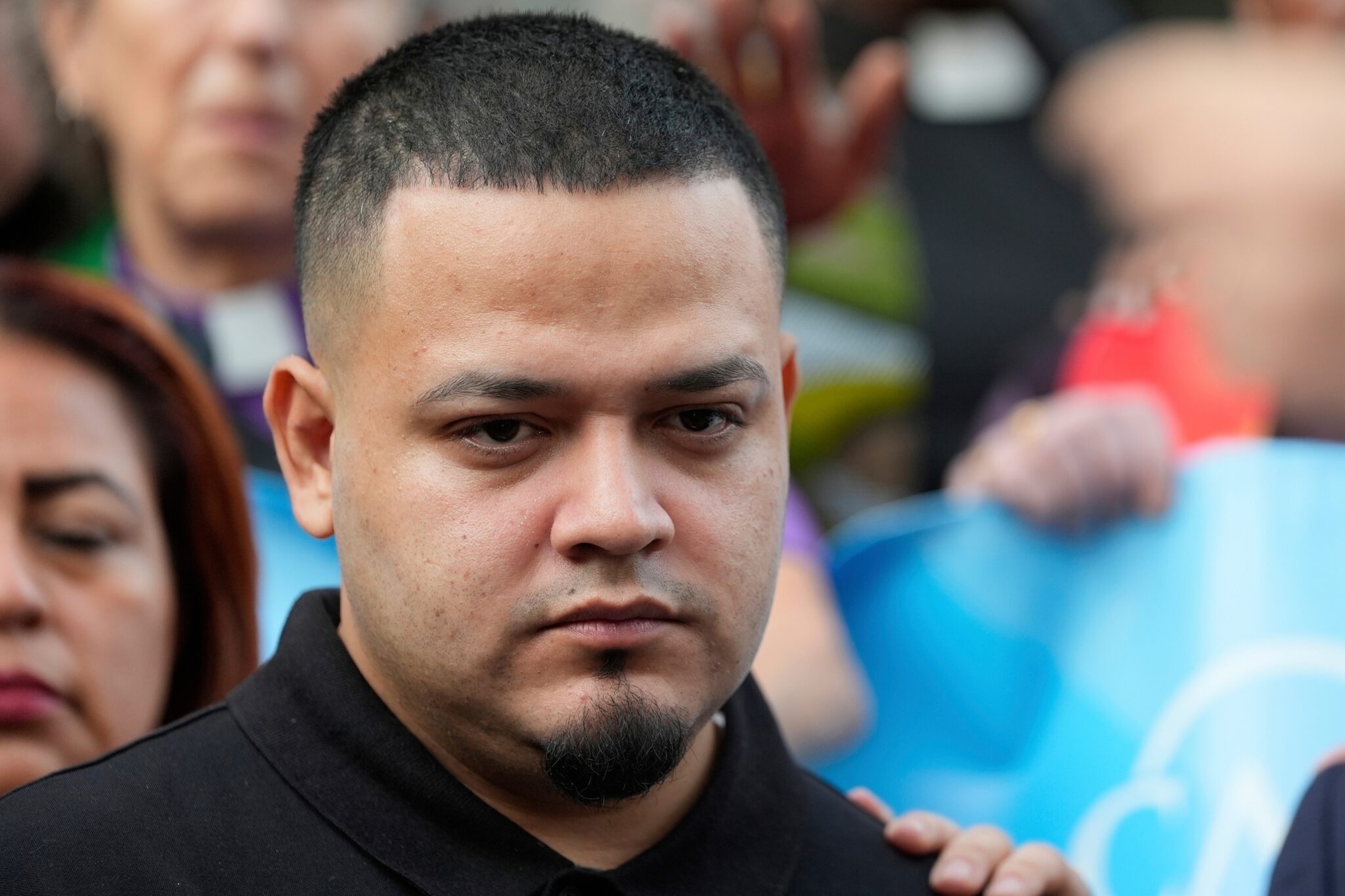
Judge Orders ICE to Release Kilmar Abrego Garcia/ Newslooks/ WASHINGTON/ J. Mansour/ Morning Edition/ A federal judge in Maryland has ordered Kilmar Abrego Garcia’s immediate release from ICE detention, citing unlawful re-arrest. Abrego Garcia, a Salvadoran national, was mistakenly deported earlier this year and returned by court order. His case has become a symbol of pushback against aggressive deportation tactics under the Trump administration.

Kilmar Abrego Garcia Released from ICE Custody: Quick Looks
- Judge rules Abrego Garcia’s detention unlawful, orders release
- Previously deported to El Salvador in error, then returned by court order
- ICE attempted new deportation to African countries
- Garcia’s federal lawsuit claims deportation used as punishment
- Facing unrelated federal smuggling charges in Tennessee
- Tennessee judge finds evidence prosecution may be retaliatory
- Trump-era immigration crackdown under scrutiny in legal proceedings
- Judge cites statements by DOJ officials raising concern
Judge Orders ICE to Release Kilmar Abrego Garcia
Deep Look
A federal judge in Maryland on Thursday ordered the immediate release of Kilmar Abrego Garcia from U.S. immigration custody, citing unlawful detention following his mistaken deportation to El Salvador earlier this year.
U.S. District Judge Paula Xinis ruled that Immigration and Customs Enforcement (ICE) had no legal authority to re-detain Abrego Garcia, and granted his petition for release while his legal battles continue in both immigration and federal criminal court.
“Since Abrego Garcia’s return from wrongful detention in El Salvador, he has been re-detained, again without lawful authority,” Judge Xinis wrote in her decision.
ICE and the U.S. Department of Justice did not immediately comment on the ruling.
Mistaken Deportation and Legal Fallout
Abrego Garcia, a Salvadoran national who has lived in Maryland for years with his American wife and child, entered the U.S. as a teenager without documentation. In 2019, an immigration judge determined he could not be deported to El Salvador due to documented threats from gangs who had previously targeted his family.
Despite that ruling, ICE erroneously deported him to El Salvador in March 2025, sparking outrage among immigrant rights groups. Under pressure from legal advocates and public protests, he was returned to the U.S. by court order.
Now, his federal lawsuit accuses the Trump administration of using the deportation system as retaliation, arguing that ICE and the Department of Justice deliberately attempted to punish him for challenging the government’s mistake.
Rather than reattempting deportation to El Salvador — which has been legally prohibited — ICE has allegedly tried to deport him to multiple African nations, which Abrego Garcia’s legal team says is baseless and vindictive.
Ongoing Immigration and Criminal Proceedings
In tandem with the federal civil case, Abrego Garcia is also petitioning in immigration court to reopen his asylum claim, hoping to secure legal status in the United States based on the threats he faces in his home country.
But his legal troubles don’t end there.
Abrego Garcia is also facing human smuggling charges in federal court in Tennessee, where he has pleaded not guilty. He has filed a motion to dismiss the charges, claiming the prosecution was initiated in retaliation for his successful legal challenge against the wrongful deportation.
The judge in that case has scheduled an evidentiary hearing, noting that there is preliminary evidence suggesting the prosecution may be vindictive.
In support of that possibility, the judge cited public remarks from Deputy Attorney General Todd Blanche, who made statements suggesting that Abrego Garcia’s criminal charges were a direct response to the government losing its deportation case against him.
The court found that comments from senior Trump administration officials “raise cause for concern,” particularly if prosecution decisions were influenced by political embarrassment or legal retribution.
A Flashpoint in U.S. Immigration Policy
The case has become emblematic of broader criticism surrounding President Donald Trump’s immigration crackdown, especially in its second iteration. Abrego Garcia’s experience highlights the intersection of immigration policy, due process, and civil liberties — raising legal questions about how far federal authorities can go in attempting to undo their own missteps.
His supporters view his release as a temporary but significant victory in the fight against what they describe as an abuse of immigration enforcement powers.
As both immigration and criminal proceedings continue, Abrego Garcia’s legal team plans to press forward with claims that the government’s actions represent a dangerous misuse of prosecutorial and deportation authority.