Judge orders Trump Admin to Return Slavery Exhibits Removed from Philadelphia Museum/ Newslooks/ WASHINGTON/ J. Mansour/ Morning Edition/ A federal judge ordered the Trump administration to restore slavery exhibits removed from Philadelphia’s Independence National Historical Park. Citing George Orwell’s 1984, the court ruled the federal government cannot alter historical content without consulting the city. The dispute highlights broader tensions over cultural institutions and historical narratives ahead of America’s 250th anniversary.


Slavery Exhibit Restoration Order Quick Looks
- U.S. District Judge Cynthia Rufe ordered exhibit panels restored.
- Ruling referenced George Orwell’s 1984 and “Ministry of Truth.”
- Slavery exhibit was removed from President’s House Site in Philadelphia.
- City sued, arguing federal officials failed to consult locally.
- Court said Interior Department lacked unilateral authority.
- Case unfolds amid broader cultural policy shifts under Trump.
- Pennsylvania Gov. Josh Shapiro criticized exhibit removal.
- White House reviewing Smithsonian and other institutions.

Deep Look: Judge orders Trump Admin to Return Slavery Exhibits Removed from Philadelphia Museum
A federal judge has ordered the Trump administration to restore a long-standing slavery exhibit removed from Philadelphia’s historic district, invoking the dystopian warnings of Nineteen Eighty-Four in a sharply worded ruling.
U.S. District Judge Cynthia Rufe granted the City of Philadelphia’s request to return the display panels to Independence National Historical Park while legal proceedings continue. The judge, appointed by former President George W. Bush, compared the federal government’s actions to the fictional “Ministry of Truth” from Orwell’s novel — a regime that rewrote history to consolidate power.
“As if the Ministry of Truth in George Orwell’s 1984 now existed, with its motto ‘Ignorance is Strength,’ this Court is now asked to determine whether the federal government has the power it claims — to dissemble and disassemble historical truths when it has some domain over historical facts. It does not,” Rufe wrote.
The President’s House Site Dispute
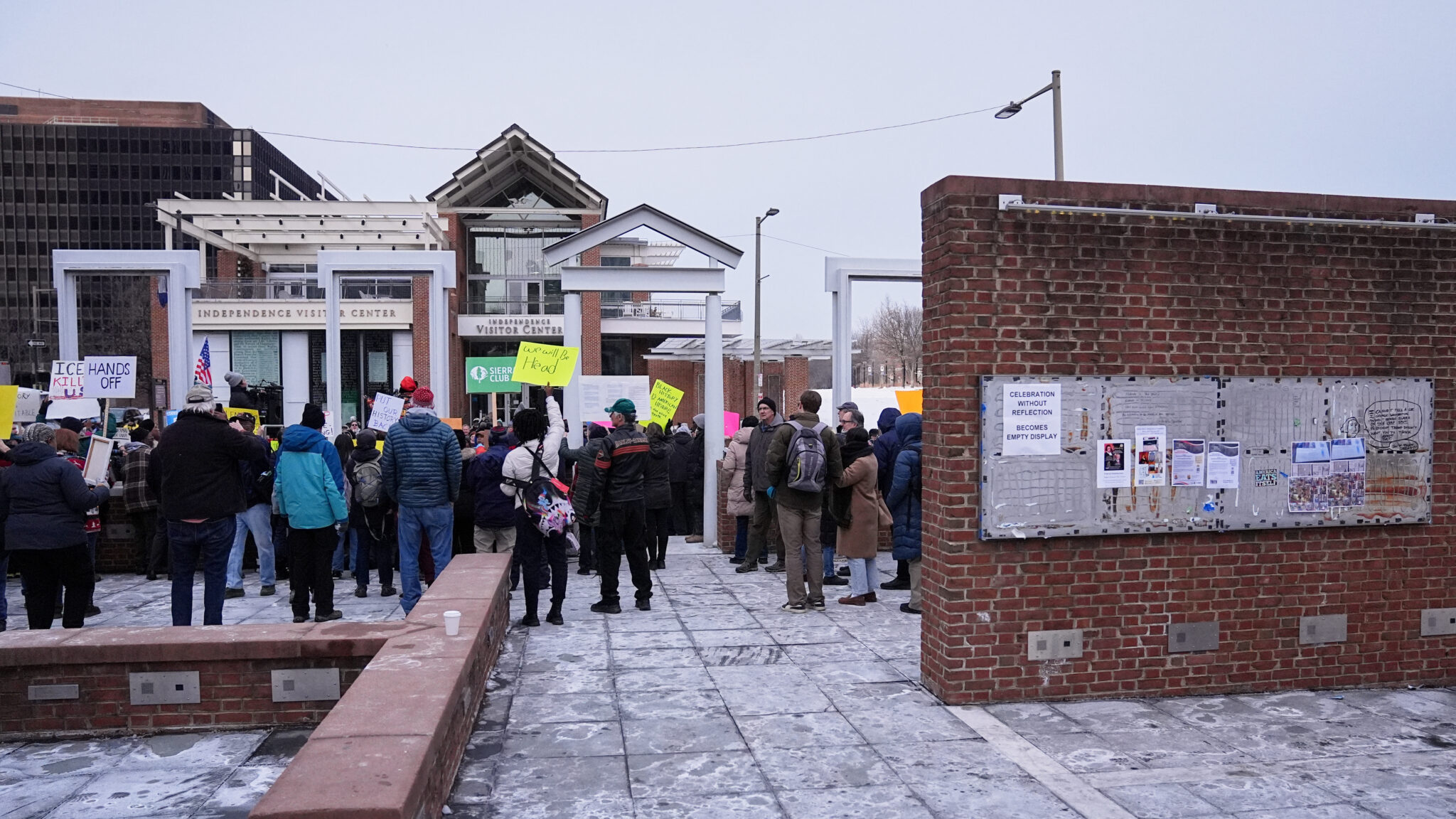
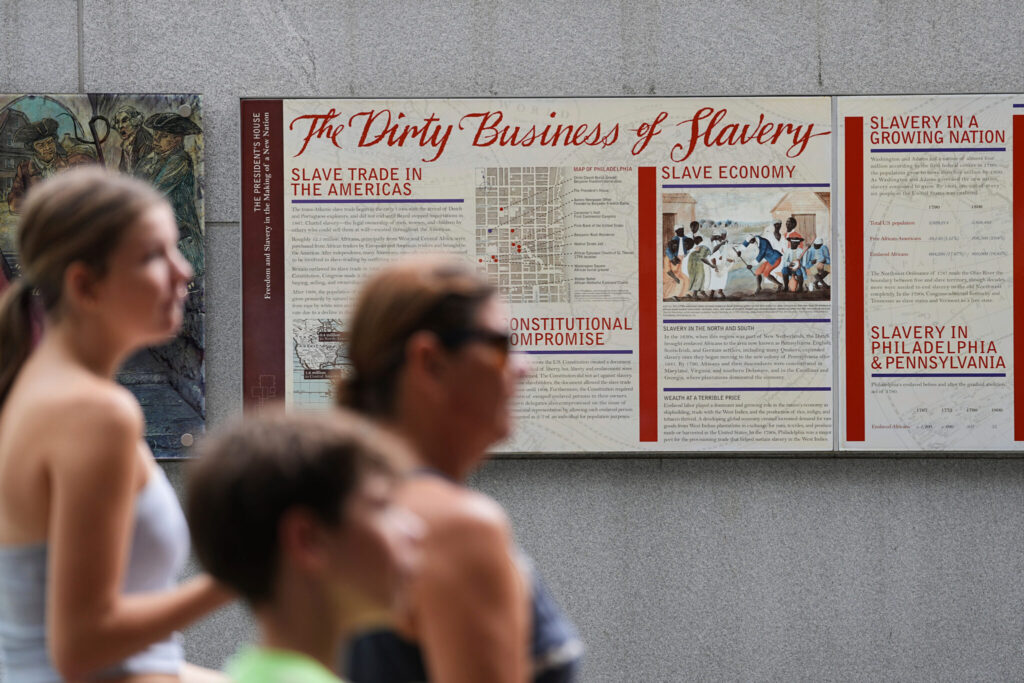
The controversy centers on the President’s House Site, a section of the park marking the former residence of Presidents George Washington and John Adams. The outdoor exhibit included detailed panels explaining not only the early presidency but also the lives of enslaved people who lived and worked at the residence.
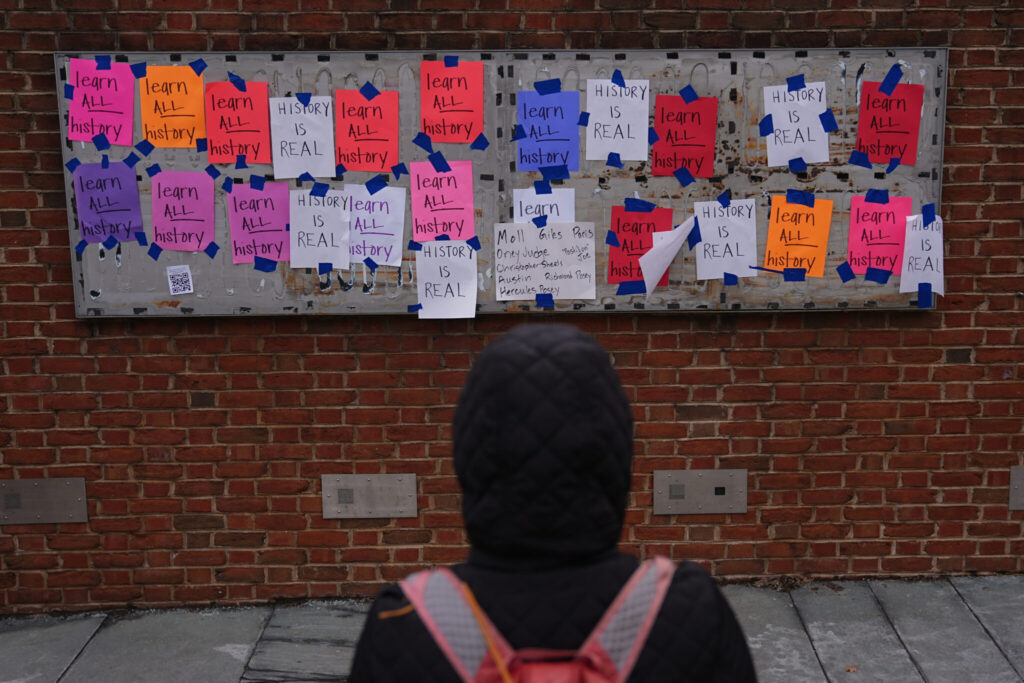
Last month, federal work crews removed large signage panels addressing slavery at the site. Shortly afterward, Philadelphia filed suit, arguing that federal officials were legally required to consult with the city before making alterations to the historically significant exhibit.
Judge Rufe sided with the city, noting that Congress had “specifically limited” the authority of the Interior Department to unilaterally alter or control elements of the park. While the federal government retains authority over national parks, the ruling emphasized that changes to this particular site require adherence to statutory consultation requirements.
“The government can convey a different message without restraint elsewhere if it so pleases,” Rufe wrote. “But it cannot do so to the President’s House until it follows the law and consults with the City.”
Cultural Flashpoint Ahead of America’s 250th Anniversary
The dispute unfolds amid broader efforts by President Donald Trump to reshape narratives presented at federally supported cultural institutions.
In an executive order issued last March, Trump accused the prior administration of promoting what he called “corrosive ideology.” The order specifically referenced Independence Park and directed the Interior secretary to remove content that “inappropriately disparage Americans past or living.”
Since then, the administration has initiated reviews of museums and federal exhibits, including those at the Smithsonian Institution, to assess what officials characterize as anti-American messaging. In December, White House officials warned that Americans would not tolerate museums perceived as “diffident about America’s founding” or uncomfortable presenting a “positive view” of the nation’s accomplishments.
The legal battle in Philadelphia reflects mounting tensions over how American history — particularly the nation’s legacy of slavery — should be presented as the country approaches its 250th anniversary in July.
Political and Public Reaction
Philadelphia City Council President Kenyatta Johnson celebrated the court’s decision, writing on X that “Black history is American history, and we won’t let Trump erase our story.”
Democratic Pennsylvania Gov. Josh Shapiro previously criticized the exhibit’s removal, accusing the White House of attempting to “whitewash” history.
The White House, the Interior Department and Philadelphia Mayor Cherelle Parker did not immediately comment following the ruling.
The case also echoes other recent controversies over cultural symbolism. In New York, the Trump administration recently removed a Pride flag from the Stonewall National Monument, a historic site central to the LGBTQ+ rights movement. Meanwhile, the American Battle Monuments Commission removed a cemetery display in the Netherlands that honored African American World War II soldiers and acknowledged the discrimination they faced.
Broader Legal Implications
Legal experts say the Philadelphia case could establish important boundaries for executive authority over federally managed historical sites. While administrations often influence interpretive narratives, courts may scrutinize efforts that bypass procedural safeguards or statutory consultation requirements.
By invoking Orwell’s 1984, Judge Rufe signaled that the stakes extend beyond a single exhibit. The ruling frames the dispute as a question of historical integrity and governmental power — whether federal authorities can reshape public memory without constraint.
For now, the court’s order means the slavery exhibit panels must be returned to public view as litigation proceeds. The decision underscores an enduring national debate over who controls America’s historical narrative — and whether confronting uncomfortable truths strengthens or undermines the nation’s identity.
As the United States prepares to mark two and a half centuries since its founding, the legal clash in Philadelphia highlights the continuing struggle to reconcile the country’s ideals with its complex and often painful past.